Home
Home
Does Meal Train Take a Percentage of Gift Cards or Donations?
Meal Train does not take a percentage or platform fee from gift card purchases. The recipient receives 100% of the gift card's face value. However, if you contribute to a "Donation Fund" (cash), a total fee of 7.9% + $0.30 is deducted to cover platform costs and credit card processing.
When organizing support for a friend or family member, understanding the financial nuances of the platform is essential. Meal Train offers two primary ways to provide financial assistance: purchasing digital gift cards or contributing to a cash Donation Fund. While both serve the same goal, they operate under entirely different fee structures and processing rules.
According to official Meal Train documentation , the platform aims to keep gift card transactions as straightforward as possible for the donor. By partnering with third-party fulfillment services, they ensure that the intended recipient gets the full benefit of your contribution without platform-level deductions.
How Meal Train Gift Card Fees Work Compared to Cash Donations
Why Gift Cards Retain 100% of Their Face Value
When you purchase a gift card through a Meal Train page, you are not technically "donating" to a fund managed by the site. Instead, you are using a specialized portal provided by The Gift Card Shop (InComm) . Because this is a direct retail transaction for a digital product, Meal Train does not treat it as a charitable or personal donation on their own books.
This partnership allows the platform to offer a wide range of brands—such as DoorDash, UberEats, and Grubhub—without needing to take a cut of the transaction. The recipient receives a 16-digit PIN via email that represents the exact dollar amount you paid. For example, if you spend $50 on a DoorDash gift card, the recipient sees exactly $50 in their account once redeemed.
Breaking Down the 7.9% Fee on Donation Funds
The "Donation Fund" is a different story. This feature allows organizers to collect cash that the recipient can transfer directly to their bank account. Because this involves secure financial integration and ongoing platform maintenance, it carries a cost. As of 2026, the fee structure is broken down as follows:
- 5% Platform Fee: This goes to Meal Train to support the website, customer service, and technical infrastructure.
- 2.9% + $0.30 Processing Fee: This is the standard fee charged by Stripe, the financial processor, to securely handle credit card transactions.
While this total of 7.9% + $0.30 may seem high compared to some crowdfunding sites, it is a common choice for those who prefer the flexibility of cash over specific restaurant credits. According to the Meal Train Terms of Service , these fees are automatically deducted from each donation before it reaches the recipient's balance.
| Feature | Donation Fund (Cash) | Gift Card (Digital) |
|---|---|---|
| Platform Fee | 5% | 0% |
| Processing Fee | 2.9% + $0.30 | 0% |
| Recipient Receives | ~92% of total | 100% of face value |
| Delivery Method | Bank Transfer | Email (16-digit PIN) |
| Flexibility | High (Use for any bill) | Medium (Merchant specific) |
Important Restrictions for Users in Hawaii and New Mexico
Why You Cannot Use Meal Train Gift Cards in Hawaii
A significant pain point that often catches users by surprise is the geographic restriction for residents of Hawaii. Due to specific state-level financial regulations and the requirements of their third-party processor, The Gift Card Shop , residents with a Hawaii billing address are currently unable to purchase gift cards through the platform.
If you attempt to use a credit card tied to a Hawaii zip code, the transaction will typically be rejected at the checkout stage. Furthermore, recipients located in Hawaii may find that certain digital gift cards cannot be redeemed if the merchant (like a local restaurant) does not participate in the national digital program. If you are supporting someone in Hawaii, the Donation Fund (cash) is generally a more reliable option, despite the fees.
The $1,000 Daily Limit for New Mexico Residents
For those in New Mexico, there is a specific regulatory cap to keep in mind. According to The Gift Card Shop's FAQ , users with a New Mexico billing address are limited to $1,000 in gift card purchases within any 24-hour period. This is an anti-fraud and anti-money laundering measure required by state law.
If a community is rallying to support a family with a very large gift card goal, New Mexico residents should coordinate their timing or consider smaller, staggered contributions to avoid hitting this hard limit and having their transactions flagged or cancelled.
Common Problems When Sending or Redeeming Meal Train Gift Cards
The Email Lock-In Issue and How to Fix It
One of the most frequent support requests involves incorrect email addresses. Once a gift card order is completed, the system "locks in" the recipient's email address. Meal Train staff generally cannot change the delivery email after the fact because the fulfillment is handled by InComm.
The Fix:
If you realize you sent a card to the wrong email, the
purchaser
must contact the gift card shop directly. Alternatively, if the organizer has access to the delivery notification, they can sometimes forward the email from
delivery@orders.thegiftcardshop.com
to the correct address. However, the most effective way to avoid this is to double-check the recipient's email in the Meal Train settings before clicking "Buy."
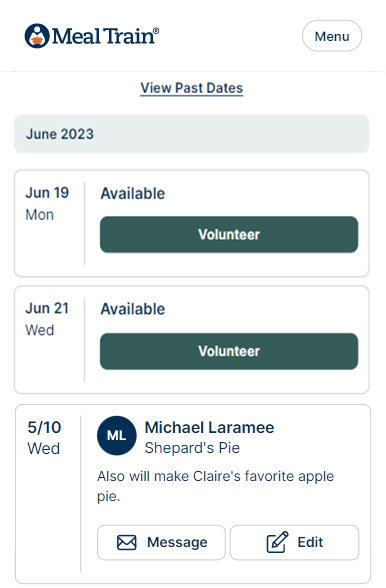
Image source: Meal Train
Why Your Gift Card Balance Might Seem Lower Than Expected
When using a general-purpose gift card (like a Visa, Mastercard, or Amex card) for food delivery, merchants often place a temporary authorization hold of up to 20% above the order total to account for potential tips or service fees.
Consider this scenario: A recipient has a $50 Visa gift card from Meal Train. They try to place a DoorDash order for $48. The transaction is declined. Why? Because DoorDash may attempt to authorize $57.60 (the $48 order + a 20% hold). Since the card only has $50, the bank rejects the charge. To avoid this, recipients should ensure their order total is at least 20% lower than the card's remaining balance when using general-purpose cards.
Understanding the Non-Refundable Nature of Gift Cards
Unlike the Donation Fund, which can sometimes be refunded if the money hasn't been claimed within 60 days, gift card purchases are strictly non-refundable . Once the digital code is generated and sent, the transaction is considered final. This is a standard policy across the gift card industry to prevent fraud.
There is a small exception: if a payment is flagged for manual review (which can take 1-3 days), the transaction may be cancelled before the card is issued. But once that 16-digit PIN hits an inbox, the money is committed. Donors should be certain of the recipient's needs before choosing a specific brand card.
How to Redeem Your Meal Train Gift Card Without Issues
Redeeming a card is a multi-step process that happens outside of the Meal Train website. Many recipients mistakenly look for a "spend" button on their Meal Train dashboard, but the funds must be moved to the specific merchant's app.
Search your inbox for an email from
delivery@orders.thegiftcardshop.com
. This is separate from the standard Meal Train notification.
Click the link in the email to view your digital card. You will see a 16-digit number and, in some cases, a security code or PIN.
Go to DoorDash, UberEats, or the specific restaurant's app. Navigate to "Account" -> "Gift Cards" or "Payment Methods."
Enter the 16-digit code. The funds will now appear as a credit in that app, ready to be used for your next order.
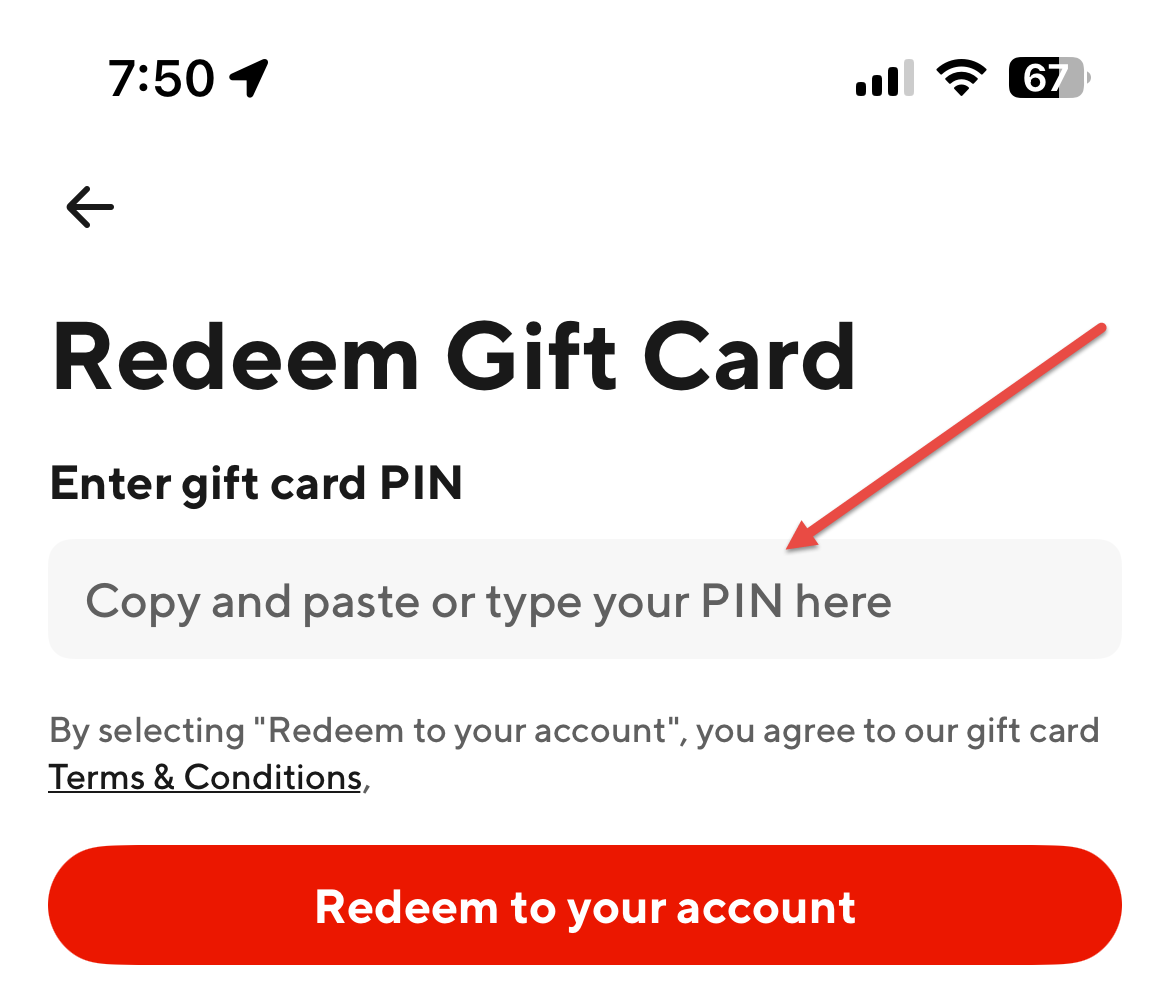
Image source: Meal Train
Tax Implications and Legal Requirements for Meal Train Organizers
Why Donations Are Generally Not Tax-Deductible
A common misconception is that contributing to a Meal Train is a tax-deductible charitable act. In the eyes of the IRS, these contributions are classified as "Personal Gifts." Because the money is going to a specific individual rather than a registered 501(c)(3) non-profit organization, donors cannot claim these amounts on their tax returns.
Meal Train does not issue tax receipts or 1099-K forms to recipients. For the person receiving the help, these funds are typically not considered taxable income, as they fall under the gift tax exclusion limits (which are quite high for individuals). However, for very large funds exceeding $18,000 from a single donor, consulting a tax professional is a wise step.
Identity Verification and Anti-Money Laundering Laws
If you are the organizer of a Donation Fund, you will eventually be asked to provide sensitive information to Stripe. This often includes the last four digits of your Social Security Number (SSN) and your date of birth. This is not a Meal Train requirement, but a federal legal requirement known as "Know Your Customer" (KYC) laws.
These laws are designed to prevent money laundering and the financing of illegal activities. If the organizer fails to provide this verification, Stripe may pause payouts, and funds could eventually be returned to the donors. This is another reason why gift cards—which do not require this level of verification for the recipient—are often a simpler choice for smaller community efforts.
Frequently Asked Questions
Yes, the recipient receives 100% of the face value. If you buy a $100 gift card, they get $100 to spend at the merchant. Unlike the Donation Fund, there are no platform or processing fees deducted from the gift card amount.
There is no platform fee for the buyer. However, if you choose a "General Purpose" card like a Visa or Mastercard, there may be a small activation fee (typically $3.95 to $5.95) that is standard for those types of cards everywhere. Brand-specific cards (like Starbucks or DoorDash) usually have no purchase fees.
Brand-specific cards like DoorDash or UberEats typically do not expire. For general-purpose Visa or Mastercard gift cards, the physical (or digital) card may have an expiration date of 9 years, but the underlying funds do not expire. If a card expires with a balance, the recipient can usually request a replacement card from the issuer.
You can choose to hide your name from the public activity feed. However, the organizer and the recipient will still be able to see who made the donation or purchased the gift card in their private management dashboard. There is no way to be completely anonymous to the person receiving the gift.
If the recipient or organizer does not link a bank account to the Donation Fund within 60 days of the first donation, the platform will automatically refund all contributions to the original donors. This ensures that money isn't left sitting in a dormant account indefinitely.
Final Thoughts
Choosing between a gift card and a cash donation on Meal Train involves balancing convenience against cost. While gift cards offer the most value for your dollar, cash provides the recipient with the flexibility to cover non-food expenses like medical bills or utilities.
- Verify the recipient's email address twice before completing any gift card purchase.
- Check for Hawaii residency ; if they are in HI, stick to the Donation Fund or local options.
- Account for merchant holds by advising recipients to keep their orders 20% below the card balance.
- Understand the 7.9% fee for cash donations as a trade-off for maximum flexibility.
- Look for the fulfillment email from The Gift Card Shop, not just the Meal Train receipt.
- Remember that gift cards are non-refundable once the digital code has been issued.
Before you make your next contribution, consider asking the organizer which format would be most helpful for the recipient's current situation.