Home
How to Choose Effective Teambuilding for Companies in Denmark to Boost Performance
Professional teambuilding in Denmark has shifted from simple "fun" to strategic social capital investment. According to CoastZone , the most effective programs follow a 7-step flow focusing on sparring and evaluation to ensure long-term behavioral change.
In the modern Danish workplace, the concept of "teambuilding virksomheder" (teambuilding for companies) has evolved significantly. It is no longer just about an afternoon of go-karting or a casual Friday beer. Instead, forward-thinking organizations view these events as a critical tool for building psychological safety —the single most important predictor of team success, as identified by Google’s Project Aristotle.
As of late 2026, the Danish corporate landscape prioritizes inclusivity, sustainability, and measurable ROI. Whether you are a tech startup in Aarhus or a multinational headquartered in Copenhagen, choosing the right activity requires balancing engagement with strategic goals. This article provides a comprehensive framework for selecting, planning, and executing teambuilding events that deliver lasting value to your organization.

Image source: Teambuilding Kompagniet
Why Modern Teambuilding Is More Than Just Having Fun
The traditional view of teambuilding often focused on "socializing." While social bonds are important, modern research suggests that the true value lies in strategic social capital . This refers to the trust, shared values, and understanding that allow a team to function effectively under pressure. When employees feel safe to take risks and be vulnerable in front of each other, innovation flourishes.
The economic argument for this is compelling. Data from the McKinsey Health Institute suggests that improving holistic employee health—which includes social and mental well-being—could generate up to $11.7 trillion in global economic value. In a Danish context, where the "flat" hierarchy is standard, teambuilding serves as the glue that maintains these non-linear communication channels.
Furthermore, the shift toward hybrid work models has made physical gatherings more precious. When teams only meet in person a few times a month, those interactions must be high-impact. Professional providers now focus on activities that simulate workplace challenges in a low-stakes environment, allowing teams to practice conflict resolution and collective decision-making without the risk of a project failure.
How to Choose the Right Activity for Your Specific Team Goals
Before browsing a list of activities, you must define your SMART goals. Are you trying to integrate new hires? Are you looking to reward a team after a high-stress period? Or are you trying to break down silos between departments? Your goal dictates the "Team Archetype" you should target.
Low-Stakes Creative Flow
Teams coming off a major deadline need to decompress. Activities like music workshops or culinary schools (e.g., Timm Vladimirs Køkken) allow for "flow state" without the pressure of competition.
Collaborative Problem Solving
When two cultures collide, they need a shared language. "The Domino Effect" or "Chain Reaction" builds require every person to contribute to a single, massive goal, fostering immediate trust.
High-Engagement Hybrid
Remote teams often suffer from "digital fatigue." A physical retreat with nature-based GPS challenges can reset the social battery and build lasting memories that sustain them through months of Zoom calls.
Defining Your SMART Goals
Effective teambuilding must be Specific, Measurable, Achievable, Relevant, and Time-bound. For example, instead of saying "we want to work better together," a SMART goal would be "we want to reduce the time spent in weekly alignment meetings by 15% by improving our internal communication protocols during a 4-hour workshop." According to UAGC research , this clarity ensures that the "fun" has a functional outcome.
A Comparison of Indoor vs Outdoor Teambuilding Activities
The choice between indoor and outdoor environments often depends on the Danish weather, but it also influences the psychological "vibe" of the event. Indoor activities tend to be more focused and analytical, while outdoor activities encourage movement and broader perspective-taking.
| Activity Type | Environment | Inclusivity Rating | Primary Goal |
|---|---|---|---|
| Escape Room | Indoor | 3/5 | Critical Thinking |
| GPS Nature Challenge | Outdoor | 4/5 | Strategic Planning |
| The Domino Effect | Indoor | 5/5 | Total Collaboration |
| Outdoor Cooking | Outdoor | 4/5 | Social Bonding |
| Step Competition | Hybrid | 5/5 | Health & Habits |
Indoor options like those offered by World of Adventure are excellent for year-round reliability. However, outdoor activities in places like Dyrehaven or the Aarhus Marselisborg forests provide a "nature pill" that has been shown to lower cortisol levels in office workers. The hybrid reality of 2026 means many providers now offer "weather-proof" transitions, where an outdoor start can move indoors if the Danish rain sets in.
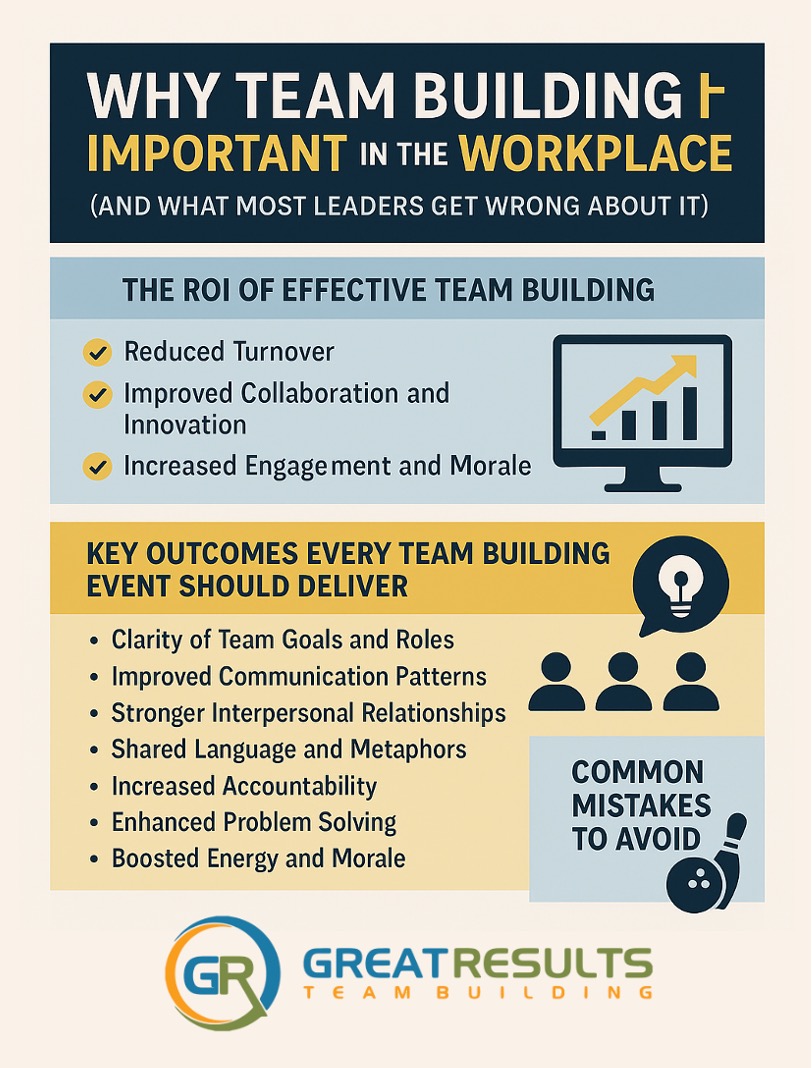
Image source: Great Results Teambuilding
The Inclusivity Audit: Is Your Event Excluding Your Best Employees?
A common pitfall in corporate teambuilding is choosing activities that inadvertently alienate certain groups. High-adrenaline sports like paintball or go-karting may be exciting for some, but they can be exclusionary for introverts, older employees, or those with physical limitations. An "Inclusivity Audit" is now a standard part of the planning process for top-tier HR departments.
The "Tæl Skridt" (Step Competition) model is a highly regarded example of inclusive teambuilding. As noted by Tæl Skridt , these campaigns often see 60-80% participation because they meet employees where they are. Everyone can walk, and the goal is collective progress rather than individual dominance. When selecting an activity, ask: "Can every single person on my team participate fully without feeling embarrassed or physically strained?"
Activities that rank high on the inclusivity spectrum include:
- Collaborative Builds: Where different roles (planners, builders, decorators) are all equally valued.
- Creative Workshops: Painting, cooking, or music where there is no "wrong" way to participate.
- Nature Walks: Low-impact movement that allows for deep conversation.
What Does Professional Teambuilding Actually Cost in Denmark?
Budgeting for teambuilding requires looking beyond the "price per head." In Denmark, professional agencies typically charge a base fee for the event setup and facilitation, followed by a variable cost per participant. According to market data from World of Adventure , a high-quality indoor event like "The Domino Effect" starts at approximately DKK 6,890 for the first 10 participants .
Additional costs to consider include:
- Per-Person Fees: Typically ranging from DKK 350 to DKK 500 for each additional participant.
- Venue Rental: If the activity isn't held at your office, expect to pay for a conference room or outdoor space.
- Catering: A full-day event usually requires lunch, coffee, and potentially dinner, adding DKK 400-800 per head.
- Logistics: Transport for the team and the agency's equipment, plus insurance and VAT (Moms).
For a team of 25 people, a premium half-day experience in Copenhagen or Aarhus will likely cost between DKK 15,000 and DKK 25,000 all-in. While this may seem high, the cost of replacing a single disengaged employee is often estimated at 1.5x to 2x their annual salary, making teambuilding a highly cost-effective retention strategy.
How to Plan Your Event Using the 7-Step Professional Flow
To ensure your investment pays off, follow the structured methodology used by leading Danish agencies like CoastZone. This flow moves the event from a "one-off day out" to a "strategic intervention."
- Inquiry & Goal Setting: Contact a provider with your date, headcount, and—most importantly—your desired outcome.
- Sparring: This is the most critical phase. A professional consultant will challenge your assumptions and help refine the activity to match your team's specific dynamics.
- The Proposal: You receive a detailed plan including logistics, timing, and how the activity links back to your goals.
- Booking & Logistics: Finalizing the contract and ensuring the venue is ready.
- Alignment (2 Days Prior): A final check-in to adjust for any last-minute changes in headcount or weather.
- Execution: The event itself, led by professional facilitators who manage the energy and safety of the group.
- Evaluation: A post-event debrief to discuss what was learned and how those lessons can be applied in the office on Monday morning.
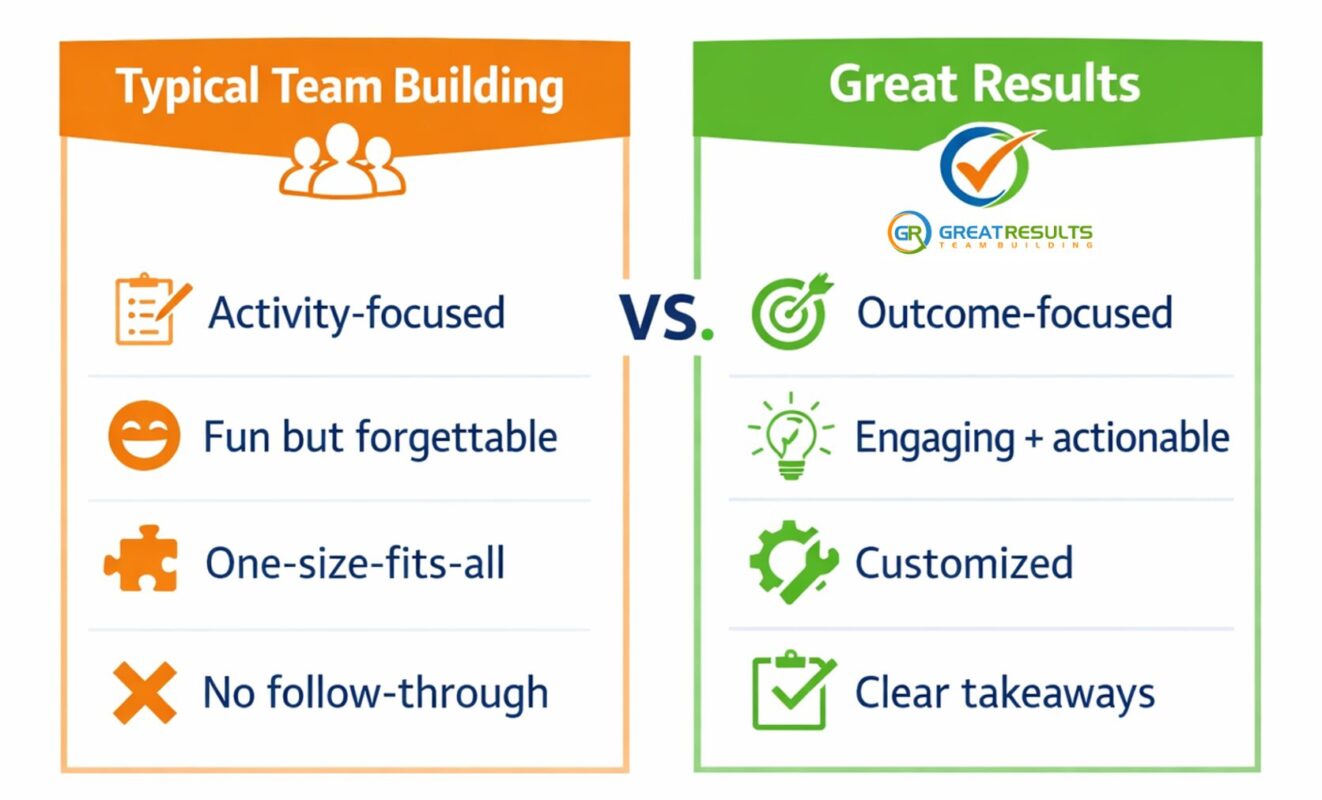
Image source: Great Results Teambuilding
Finding Teambuilding Providers Across Denmark
Denmark offers a rich ecosystem of teambuilding providers, ranging from large nationwide agencies to boutique local specialists. The choice often depends on your location and the scale of your event.
Copenhagen (København)
The capital is a hub for high-end, urban experiences. You will find everything from sophisticated escape rooms in the city center to maritime challenges in the harbor. Providers like Humanic specialize in city-based events that utilize the unique architecture and history of Copenhagen.
Aarhus & Central Jutland
Aarhus offers a blend of urban and nature-based teambuilding. The proximity to forests and beaches makes it a top choice for outdoor challenges. Many nationwide agencies have their main hubs here, providing easy access to the entire Jutland peninsula.
Odense & Aalborg
These cities are emerging as centers for specialized teambuilding, often focusing on the tech and manufacturing sectors. Local providers here often offer more competitive pricing while maintaining high standards of facilitation.
Sustainable and Green Teambuilding: The New Corporate Standard
In 2026, Environmental, Social, and Governance (ESG) criteria are at the forefront of corporate strategy. Teambuilding is no exception. "Green teambuilding" involves activities that have a neutral or positive impact on the environment. This could include volunteering at a local nature reserve, planting trees, or participating in a "circular economy" workshop where teams build something useful from recycled materials.
According to the McKinsey Health Institute, employees—especially Gen Z and Millennials—report higher levels of engagement when their company's social activities align with their personal values. A day spent cleaning up a local beach or building birdhouses for a city park can build more pride and loyalty than a standard dinner-and-drinks event.
Low-Budget and DIY Ideas for Small Teams and Startups
Not every teambuilding event needs a DKK 20,000 budget. For startups and small teams, building social capital can be done through consistent, low-cost rituals. These "micro-teambuilding" moments are often more effective at sustaining culture than a single annual blowout.
- Random Coffee: Use a tool like Donut (for Slack) to pair employees for a 15-minute coffee chat. This breaks down silos for the cost of a cup of coffee.
- Show & Tell: Once a month, have a team member present a hobby or a skill unrelated to work. This builds "personal knowledge" which is a cornerstone of trust.
- Brown Bag Lunches: Informal learning sessions where the company provides lunch and the team discusses a relevant book or podcast.
As noted by Tæl Skridt , the key is consistency. A team that walks together for 15 minutes every day will often have stronger bonds than a team that only sees each other at the annual Christmas party.
Frequently Asked Questions
- Hvad koster teambuilding for virksomheder?
- Prices vary based on the provider and activity. A professional benchmark for a high-quality event in Denmark is approximately DKK 6,890 for the first 10 participants, with additional costs of DKK 350-500 per person. This usually excludes VAT, catering, and venue rental.
- Hvor længe bør et teambuilding arrangement vare?
- For a specific activity, 2 to 4 hours is typical. However, for lasting behavioral change, many experts recommend programs that span several days or involve follow-up sessions over 14 days to ensure the new habits stick.
- Hvilke aktiviteter er mest velegnede til introverte medarbejdere?
- Introverts often thrive in collaborative, task-oriented environments rather than high-pressure social or physical ones. Activities like "The Domino Effect," cooking classes, or creative workshops allow them to contribute their skills without being the center of attention.
- Kan man lave teambuilding virtuelt?
- Yes, virtual teambuilding is possible through digital escape rooms and online workshops. However, be mindful of "digital fatigue." For remote teams, a physical meeting once or twice a year is usually more impactful than monthly virtual events.
- Hvor finder man teambuilding i Aarhus?
- Aarhus has several major providers like CoastZone and World of Adventure, as well as local hubs that utilize the city's forests and harbor. Most nationwide agencies offer full service in the Aarhus area.
Final Thoughts on Maximizing Your Teambuilding Investment
Teambuilding is not a luxury; it is a strategic investment in your company's most valuable asset—its people. To get the most out of your next event, keep these key takeaways in mind:
- Prioritize Psychological Safety: Choose activities that build trust and allow for vulnerability rather than just "fun."
- Use the Inclusivity Audit: Ensure every team member, regardless of age or physical ability, can participate fully.
- Align with SMART Goals: Know exactly what you want to achieve before you book a provider.
- Budget for Quality: Expect to invest roughly DKK 700-1,000 per head for a professional, facilitated experience.
- Follow the 7-Step Flow: Don't skip the sparring and evaluation phases; that's where the real ROI is found.
- Consider Sustainability: Align your events with ESG goals to build employee pride and social impact.
Start by identifying one specific communication challenge your team currently faces and look for an activity that directly addresses it.