Home
How to Choose or Build the Perfect Cheese Gift Basket for Any Occasion
A high-quality cheese gift basket should balance four distinct textures: Bold/Crumbly, Nutty, Smooth/Sweet, and Mellow/Buttery . For reliable shipping, look for vendors that guarantee 1-2 day delivery with insulated packaging. Expect to spend approximately $10–$15 per person for a well-curated selection. Whether you choose a regional Wisconsin crate or an artisanal Brooklyn box, prioritize shelf-stable items like aged cheddars and summer sausages if immediate refrigeration isn't guaranteed.
What Should You Look for in a High-Quality Cheese Gift Basket?
When evaluating a cheese gift basket, the distinction between a "mass-market" sampler and a "gourmet" experience often comes down to the quality of the components and the intentionality of the pairing. A standard basket typically includes what experts call the "Big Four": a sharp cheddar, a savory summer sausage, artisanal crackers, and a stone-ground mustard. According to Hickory Farms , these core components provide a reliable foundation for gifting due to their extended shelf life and broad appeal.
However, a truly exceptional basket goes beyond the basics by implementing a texture-balancing strategy. Experts at Goot Essa recommend a four-pillar approach to ensure the palate remains engaged throughout the tasting experience. This includes:
- Bold & Crumbly: Typically an aged sharp cheddar or a blue cheese that provides a sharp, acidic punch.
- Nutty & Firm: A Swiss-style or Gruyere-inspired cheese that offers a savory, earthy depth.
- Smooth & Sweet: A creamy Gouda or a Havarti that softens the intensity of the sharper varieties.
- Mellow & Buttery: A mild Weissa or young Monterey Jack that acts as a palate cleanser.
Beyond the cheese itself, the "filler" items should be functional rather than decorative. High-end baskets replace generic crackers with sea salt flatbreads or sourdough crisps. They also include "bridges"—flavor components like fig jam, Marcona almonds, or pickled cornichons—that help transition the taste buds from one cheese variety to the next. When these elements are combined, the basket ceases to be a collection of snacks and becomes a curated culinary journey.
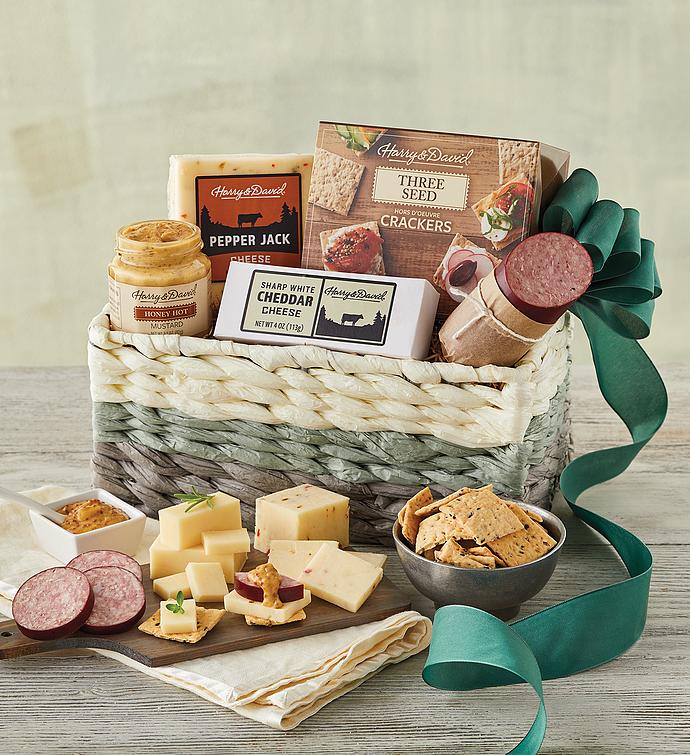
Image source: Harry & David
Which Regional Cheese Style Fits Your Recipient?
The geography of American cheese production has created distinct regional "personalities" that can help you tailor your gift to the recipient's tastes. Understanding these styles allows you to choose a basket that feels personal rather than generic.
Wisconsin: The Traditional Gold Standard
Wisconsin is widely regarded as the heart of American cheesemaking, particularly for those who appreciate traditional European styles adapted for the Midwest. Baskets from the Wisconsin Cheese Mart often feature branded wooden crates filled with award-winning cheddars, colbys, and unique "squeaky" cheese curds. This style is an excellent choice for recipients who value heritage, hearty portions, and classic flavor profiles.
Vermont: The Farm-to-Table Specialist
Vermont cheese gifts, such as those from Cabot Creamery , tend to focus on the purity of the milk and the intensity of the aging process. Vermont is famous for its "white gold"—extra-sharp white cheddars that lack the annatto coloring found in Wisconsin varieties. These baskets often feel more rustic and farm-focused, frequently paired with local maple syrup or apple butters.
Brooklyn & Artisanal: The Modern Curator
For a recipient with a more adventurous or "foodie" palate, artisanal curators like Bklyn Larder offer small-batch selections. These baskets often feature "live" cheeses (non-processed) and unique accompaniments like pickled red onions, small-batch honey, and hand-crafted salamis. The focus here is on discovery and supporting independent makers.
| Region | Signature Cheese | Best For | Average Price |
|---|---|---|---|
| Wisconsin | Aged Yellow Cheddar | Traditionalists & Families | $45 – $85 |
| Vermont | Extra Sharp White Cheddar | Farm-to-Table Enthusiasts | $50 – $90 |
| Brooklyn | Small-Batch Artisanal | Foodies & Urbanites | $75 – $150 |
| Texas/South | Smoked Gouda / Jalapeño Jack | Hearty Snacking | $40 – $70 |
How to Avoid Spoilage When Shipping Perishable Cheese
One of the most significant concerns for gift-givers is "spoilage anxiety"—the fear that a premium gift will arrive warm, oily, or unsafe to consume. This is a valid concern, as cheese is a biological product that reacts to temperature fluctuations. To mitigate this risk, it is essential to distinguish between shelf-stable and perishable items.
Shelf-stable cheeses, often found in commercial baskets, are processed or vacuum-sealed in a way that allows them to remain at room temperature until opened. These are ideal for fundraisers or situations where the recipient might not be home to receive the package immediately. In contrast, artisanal "live" cheeses require a strict cold chain. According to shipping standards at Bklyn Larder, high-end vendors must use FedEx 1-2 day delivery combined with insulated envelopes and reusable ice packs to maintain quality.
If you are shipping during the summer months, avoid soft cheeses like Brie or Camembert. These varieties have high moisture content and are prone to liquefying or developing off-flavors if the temperature rises above 60°F. Instead, opt for hard, aged cheeses like Parmesan, Manchego, or extra-aged Cheddar, which are naturally more resilient due to their lower moisture levels.
How Much Should You Spend on a Quality Gift Basket?
Budgeting for a cheese gift basket requires looking past the sticker price and calculating the "price-per-head." This ensures the gift is substantial enough for the intended group without unnecessary overspending. Data from Di Bruno Bros. suggests that serving sizes are the most reliable way to categorize these gifts.
Price-Per-Head Budgeting Tool
- Small (2–4 people): $35–$50. This typically includes two cheeses, one meat, and a small box of crackers. It is a top-rated choice for a "date night" or a thank-you gift.
- Medium (4–8 people): $60–$95. This range allows for the "four-pillar" texture strategy and usually includes a larger variety of accompaniments like jams or nuts.
- Large (10–12+ people): $120–$160. Often referred to as "party crates," these include multiple pounds of cheese and full-sized sausages.
- Luxury/Corporate (15–20 people): $200+. These "Extravaganza" crates often include durable wooden keepsakes, cheese knives, and premium wine pairings.
When budgeting, always account for shipping costs. Because perishable cheese requires expedited shipping, you may encounter fees ranging from $20 to $40 for overnight or two-day delivery. Some vendors include this in the base price, while others add it at checkout, so verify the total cost before finalizing your purchase.
How to Use the CheeseClock Method for a Better Tasting Experience
If you want your gift to stand out as a professional-grade experience, consider the "CheeseClock®" method developed by Artisanal Premium Cheese . This technique guides the recipient through a logical progression of flavors, preventing a strong cheese from overwhelming a milder one.
- The 6 O'Clock Position
- Start with the mildest, youngest cheese (e.g., a fresh goat cheese or a mild Weissa). This wakes up the palate gently.
- The 9 O'Clock Position
- Move to a semi-firm cheese with nutty or buttery notes (e.g., a young Gouda or Alpine-style cheese).
- The 12 O'Clock Position
- Introduce the bold, sharp flavors (e.g., a 2-year aged Cheddar or a sharp Provolone).
- The 3 O'Clock Position
- Conclude with the most intense variety, such as a pungent Blue cheese or a washed-rind variety.
By arranging the cheeses in this order within the basket and including a small note explaining the progression, you transform a simple gift into an interactive tasting event. This level of detail is a significant advancement over standard, unorganized gift boxes.
How to Build a Professional Cheese Gift Basket at Home
Building a DIY basket allows for complete personalization and often results in a higher quality-to-price ratio. The key to a professional-looking DIY basket is the "tightness" of the arrangement and the quality of the packaging materials.
Step-by-Step DIY Strategy
- Select a Sturdy Base: Avoid flimsy wicker. Instead, use a Parisian-style wooden box or a reusable bamboo cutting board. This adds immediate perceived value.
- Choose Resilient Cheeses: For DIY, stick to vacuum-sealed aged cheddars, Goudas, and hard Italian cheeses. These can withstand the assembly process without losing their shape.
- Layer the "Filler": Use wood wool or high-quality crinkle paper to create a nest. Place the heaviest items (sausages and large cheese blocks) in the center and work outward.
- The Pro Hack: To get that "store-bought" look, use a large shrink-wrap bag. Once the basket is filled, place it inside the bag and use a standard hair dryer on high heat to shrink the plastic tightly around the items. This prevents shifting during transport.
"The secret to a great DIY basket isn't just the cheese; it's the balance of sweet and savory. A jar of local honey or a small tin of smoked almonds can make a $10 block of cheddar feel like a $50 gourmet experience." — Community Wisdom from the Disney Budget Board
What Are the Best Options for Special Dietary Needs?
In 2026, dietary inclusivity is a hallmark of a thoughtful gift-giver. Many traditional cheese baskets are heavy on gluten and lactose, but modern vendors have made significant strides in offering alternatives.
Gluten-Free: Many summer sausages contain grain-based fillers. However, brands like Hickory Farms explicitly flag their Sweet & Smoky Turkey Summer Sausage as gluten-free. Pair these with nut-based crackers or seed-heavy crisps to ensure the entire basket is safe for those with Celiac disease or gluten sensitivity.
Keto-Friendly: Cheese and meat are naturally keto-friendly, but standard baskets are often padded with high-carb crackers and sugary jams. To create a keto-specific gift, focus on "meat and cheese only" crates and replace the jam with olives, pickles, or roasted nuts.
Lactose-Intolerant: It is a common misconception that those with lactose intolerance must avoid all cheese. In reality, the aging process naturally breaks down lactose. Aged cheeses like 24-month Cheddar, Parmesan, and Manchego contain trace amounts of lactose and are typically well-tolerated. Avoid soft, fresh cheeses like Mozzarella or Ricotta for these recipients.
Frequently Asked Questions
How long can a cheese gift basket sit out at room temperature?
The answer depends on whether the cheese is "shelf-stable" or "perishable." Shelf-stable processed cheeses and vacuum-sealed aged hard cheeses can typically sit out for several hours (or even days, if unopened and kept in a cool, dry place). However, artisanal or soft cheeses should not be out of refrigeration for more than two hours. Once opened, all cheese should be wrapped tightly and refrigerated to prevent mold growth and flavor degradation.
Can I ship a cheese gift basket internationally?
Shipping cheese internationally is highly complex due to customs regulations and spoilage risks. Many countries have strict bans on importing dairy and meat products from abroad to prevent the spread of agricultural diseases. Furthermore, the transit time for international shipping often exceeds the safe window for perishable items. It is generally recommended to order from a vendor located within the recipient's country to ensure safety and compliance.
Which cheese is highly recommended for a housewarming gift?
For a housewarming, crowd-pleasers are the safest choice. A medium-aged Gouda or a mild Wisconsin Cheddar are widely enjoyed and versatile for snacking or cooking. Including a "keepsake" item, such as a small slate cheese board or a stainless steel cheese knife, adds a lasting element to the gift that the new homeowners can use long after the cheese is gone.
Why is my cheese basket "sweating" after arrival?
"Sweating" occurs when cheese undergoes a rapid temperature change, causing the natural fats and oils to rise to the surface. This is common in vacuum-sealed cheeses that have been shipped with ice packs. While it may look unappealing, it does not necessarily mean the cheese is spoiled. Simply pat the cheese dry with a paper towel and place it in the refrigerator to firm up before serving.
Do I need to include a cheese knife in a gift basket?
While not strictly necessary, a cheese knife is a significant value-add for luxury or corporate gifts. Different cheeses require different blades—for example, a skeleton knife for soft cheeses to prevent sticking, or a spade for hard, crumbly cheeses. Including a basic multi-purpose cheese tool makes the gift "ready-to-eat," which is highly appreciated by recipients at offices or parties.
Key Takeaways for the Perfect Cheese Gift
Choosing the right cheese gift basket requires a balance of culinary knowledge and logistical planning. Here are the essential points to remember:
- Prioritize texture balance by including a mix of bold, nutty, smooth, and mellow cheeses.
- Verify shipping standards , ensuring the vendor uses 1-2 day delivery with insulated packaging for artisanal selections.
- Match the regional style to the recipient, choosing Wisconsin for tradition or Brooklyn for modern artisanal flair.
- Use the price-per-head guide ($10–$15/person) to ensure the basket size matches the group.
- Address dietary needs by selecting aged cheeses for lactose-sensitive recipients or meat-heavy crates for keto followers.
- Implement the CheeseClock method to guide the recipient through a professional tasting progression.
- Consider a DIY approach for maximum personalization, using the hair dryer shrink-wrap hack for a professional finish.
Before you make your final selection, double-check the "best by" dates and refrigeration requirements to ensure your gift arrives in peak condition.