Home
Home
How to Choose the Right Chinese Wedding Gifts and Follow Traditional Etiquette
In Chinese culture, cash in a red envelope (Hongbao) is the standard wedding gift. The amount should typically cover the cost of your banquet seat, ranging from $100 to $500+ depending on your relationship with the couple. Always choose amounts ending in lucky numbers like 8 or 9 , and strictly avoid the number 4 . Present the envelope with both hands to show respect, and ensure the bills are crisp and new.
Understanding the Role of Gifts in Chinese Wedding Culture
Gift-giving in Chinese wedding traditions is far more than a simple gesture of goodwill; it is a sophisticated social ritual rooted in the concepts of "Face" ( Mianzi ) and reciprocity ( Guanxi ). For centuries, these exchanges have served as a public declaration of respect and a way to strengthen the bonds between families. When you provide a gift at a Chinese wedding, you are participating in a tradition that dates back to the "Three Covenants and Six Rites" of the Warring States period, as noted by the Chinese Historical & Cultural Project .
In modern contexts, while the specific items may have changed, the underlying intent remains the same. A gift is a wish for the couple’s prosperity, fertility, and longevity. It is also a practical contribution to the couple's new life together. Because Chinese weddings often involve lavish banquets that can be quite expensive for the hosts, the tradition of giving cash helps the couple offset these costs, allowing the community to collectively support the start of a new household.
Navigating these waters can feel high-stakes for those unfamiliar with the nuances. However, the primary goal is to show that you have put thought into the cultural significance of your offering. Whether you are attending a traditional ceremony in Shanghai or a hybrid celebration in New York, understanding the balance between ancient symbolism and modern practicality is key to being a respectful guest.
How Much Money Should You Put in a Chinese Wedding Red Envelope?
The Hongbao , or red envelope, is widely considered one of the most appropriate gifts you can offer. Unlike Western weddings where registries are common, cash is the primary currency of celebration in Chinese culture. The most important rule to follow is the "Cover Your Seat" principle. This means your gift should, at a minimum, equal the estimated cost the couple spent to host you at the wedding banquet.
According to data from East Meets Dress , the average cost per guest at a wedding banquet can range from $127 to $278 depending on the venue and location. If the wedding is held at a luxury hotel in a Tier 1 city like San Francisco, London, or Hong Kong, you should expect to adjust your gift upward by at least 20% to account for the higher overhead.
| Relationship Tier | Recommended Amount (USD) | Context & Rationale |
|---|---|---|
| Acquaintance or Colleague | $100 – $150 | Covers the basic cost of the meal and shows polite respect. |
| Close Friend | $150 – $250 | Reflects a deeper bond; often includes a "lucky" bonus amount. |
| Immediate Family / Best Friend | $300 – $500+ | A significant contribution to the couple's future and a sign of high status. |
| Unable to Attend | $50 – $100 | A token of regret and a wish for their happiness, sent via mail or digital transfer. |
When deciding on the final number, consider your own financial situation as well. While "Face" is important, most modern couples prioritize the presence of their loved ones over the specific dollar amount. However, staying within these general tiers ensures you meet the social expectations of the event.
Why You Must Choose Lucky Numbers and Avoid Taboo Amounts
In Chinese culture, numbers carry profound linguistic weight. The way a number sounds can determine whether it is viewed as a blessing or a curse. This is particularly true for wedding gifts, where the goal is to invite as much good fortune as possible into the couple's union.
The Power of Eight and Nine
The number 8 (bā) is a top choice for any gift amount because it sounds similar to the word for "wealth" or "prosper" ( fā ). Giving an amount like $88, $168, or $888 is seen as a direct wish for the couple to achieve financial success. Similarly, the number 9 (jiǔ) is highly favored because it is a homophone for "long-lasting" or "permanence," symbolizing a marriage that will endure for a lifetime.
The Strict Taboo of Four
Conversely, you must avoid the number 4 (sì) at all costs. In Mandarin and many other Chinese dialects, the word for four sounds nearly identical to the word for "death." Giving a gift that starts with, ends with, or totals to a number containing four is considered extremely unlucky and can be seen as an accidental insult to the couple and their families.
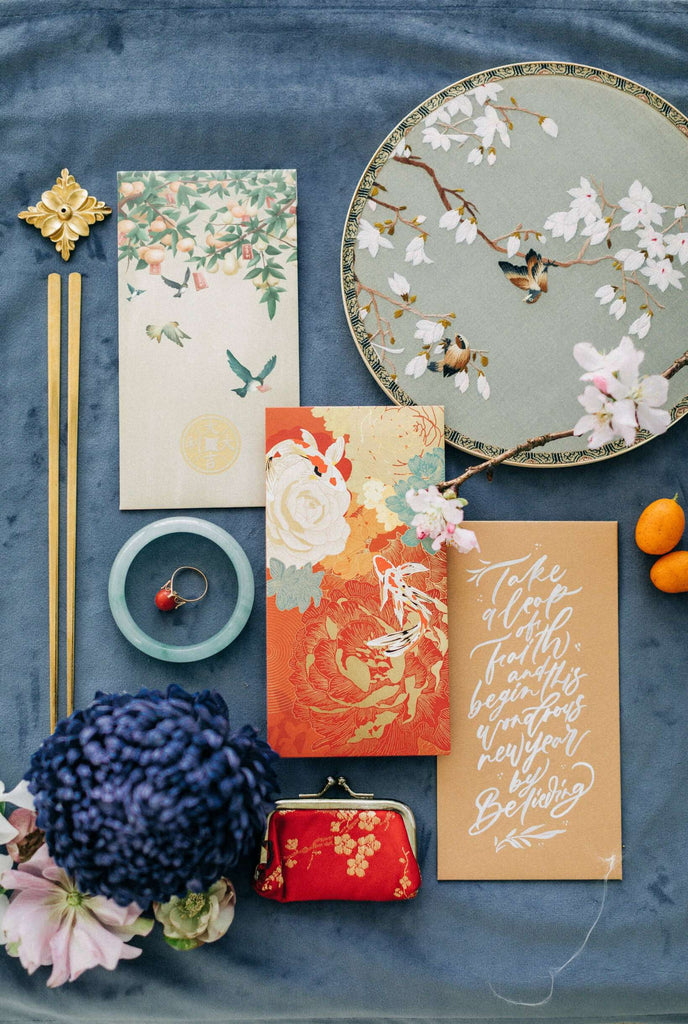
Image source: East Meets Dress
Even Numbers and New Bills
Weddings are celebrations of pairs, so even numbers are generally preferred over odd numbers. The exception, of course, is the number four. An amount like $100 or $200 is acceptable, but $168 (which combines 1, 6, and 8) is often seen as even more auspicious. Furthermore, the physical condition of the money matters. You should visit a bank to obtain crisp, new banknotes . Using old, wrinkled, or torn bills is seen as disrespectful and suggests that the gift was an afterthought rather than a deliberate gesture of support.
How to Properly Present and Receive a Red Envelope
The physical act of giving the gift is just as important as the gift itself. Chinese etiquette places a high value on humility and the visible demonstration of respect. Following these steps will ensure you navigate the reception desk or tea ceremony with grace.
Always present the red envelope using both hands. This gesture signifies that you are offering the gift with your full heart and respect. Similarly, if you are the recipient, you should accept it with both hands.
Don't leave the envelope blank. Write the couple's names on the front and a traditional blessing on the back. Common phrases include Bǎi nián hǎo hé (百年好合), meaning "A harmonious union for a hundred years."
In most modern banquets, there is a sign-in table at the entrance. You should present your Hongbao there. However, if you are a close relative participating in the private tea ceremony, you will present it then.
It is also worth noting that you should not expect the couple to open the envelope in front of you. In Chinese culture, opening a gift immediately upon receiving it can appear greedy. The couple will typically set the envelopes aside to be opened privately after the festivities have concluded.
Traditional Physical Gifts and Their Symbolic Meanings
While cash is the most common gift, certain physical items hold deep traditional value, especially when given by elders or very close family members. These items are often chosen for their specific symbolic connections to fertility, protection, and domestic harmony.
- Dragon and Phoenix Gold Jewelry
- Often given by the mother-in-law to the bride, these bangles represent the perfect balance of male (Dragon) and female (Phoenix) energy. They are a significant investment and a top-tier heirloom.
- The Gold Pig Necklace
- A necklace featuring a mother pig with a row of piglets hanging below it. This is a traditional wish for fertility, symbolizing the hope that the couple will be blessed with many children and a bustling household.
- Tea Sets
- A high-quality tea set is both a practical gift for the home and a nod to the central role of the tea ceremony in Chinese weddings. Look for sets featuring the "Double Happiness" (囍) motif.
- Auspicious Fruit Baskets
- Baskets containing oranges (for luck), pomelos (for abundance), and seeds (for fertility) are common supplementary gifts, particularly during the pre-wedding visits.
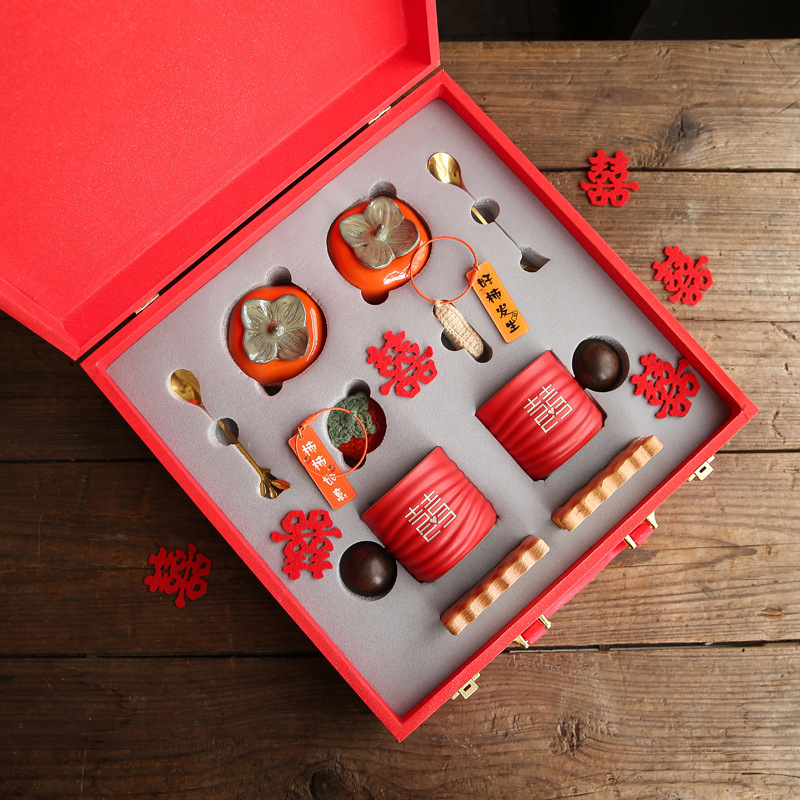
Image source: Bello Bello
Understanding the Guo Da Li Betrothal Gift Exchange
The Guo Da Li is a formal betrothal ceremony that takes place two to four weeks before the wedding day. It is the moment when the groom’s family officially presents gifts to the bride’s family to confirm the marriage agreement. This ritual is a significant advancement in the wedding timeline and involves a specific list of items that vary by region.
The Groom's Presentation
The groom typically brings items that symbolize abundance and a "sweet" life. This includes traditional wedding cakes ( Xi Bing ), peanut candies, dates, and seafood like dried abalone or sea cucumber. In many traditions, the groom also provides a "Grand Gift" of cash, which is separate from the wedding day Hongbao. According to The Wedding Notebook, these gifts should be presented by an elder family member who is considered to have "good fortune" ( fú qi ), such as someone who is happily married with children.
The Return Gift (Hui Li)
Etiquette dictates that the bride’s family should not keep all the gifts. To show that they are not "selling" their daughter and to demonstrate their own generosity, they perform a Hui Li (Return Gift). They typically return about 20% to 50% of the gifts to the groom’s family. This exchange reinforces the idea that the two families are becoming one equal unit.
Regional Nuances
- Cantonese Traditions: Often place a heavy emphasis on "Tea Presents" and specific tropical fruits like coconuts, which symbolize the "grandfather and son" (continuity of the male line).
- Taiwanese Traditions: Have seen a modern shift toward commercially packaged hams and noodles wrapped in red paper, emphasizing practicality and longevity.
- Mainland China: Depending on the province, there may be a focus on specific local delicacies or even raw materials like charcoal, symbolizing a "glowing" and warm future for the couple.
How to Navigate Modern Registries and Hybrid Weddings
As more couples celebrate hybrid weddings that blend Chinese and Western traditions, guests often face a dilemma: should they buy from the registry or give a red envelope? This is a common point of anxiety, but a balanced approach is usually the most effective strategy.
If a couple has a Western-style registry, it is perfectly acceptable to purchase a gift from it, especially if you are a friend from a non-Chinese background. However, if you are participating in a traditional tea ceremony, you should still prepare a small Hongbao. The cash given during the tea ceremony is less about the amount and more about the ritual of the elders blessing the younger generation. In this case, a smaller "lucky" amount like $68 or $88 is a thoughtful way to honor the tradition without overextending your budget.
For guests who are unsure, community wisdom from diaspora forums suggests that cash remains the most appreciated gift. If you choose to go with a registry item, consider including a red envelope with a small token amount and a handwritten card with a traditional Chinese blessing. This shows that you have taken the time to understand and respect both sides of the couple's heritage.
Gift Giving Mistakes and Taboos You Must Avoid
Even with the best intentions, it is easy to make a cultural faux pas if you aren't aware of the specific taboos surrounding Chinese celebrations. Avoiding these common mistakes will ensure your gift is received with the joy it was intended to bring.
Never use white or black wrapping paper, ribbons, or envelopes. In Chinese culture, these are the colors of mourning and funerals. Stick to red, gold, or bright festive colors.
Avoid giving clocks (sounds like "attending a funeral"), sharp objects like knives (symbolizes cutting the relationship), or handkerchiefs (associated with crying and grief).
We cannot stress this enough: do not give $40, $400, or any amount that features the number 4 prominently. It is a significant social error that is easily avoided.
Another common mistake is forgetting to sign your name clearly on the red envelope. At a large wedding with hundreds of guests, the couple needs to know who gave which envelope so they can properly thank you and keep a record for future reciprocity. Use a gold or black marker to write your name clearly on the back of the envelope.
Frequently Asked Questions
What should I do if I cannot attend the wedding?
If you are invited but cannot attend, etiquette suggests you should still send a red envelope. The amount can be slightly less than what you would give if you were attending (since you aren't "covering a seat"), but it should still be a lucky number. Sending $68, $88, or $100 is a standard way to show you care about the couple despite your absence. You can send this via mail or, increasingly, through digital payment apps like WeChat Pay or AliPay if the couple uses them.
Is it okay to give a gift card instead of cash?
Generally, gift cards are not recommended for traditional Chinese weddings. Cash is preferred because of its flexibility and its direct connection to the historical tradition of the Hongbao. A gift card limits the couple to a specific store, whereas cash allows them to pay off wedding expenses or save for a down payment on a home. If you want to give something other than cash, a physical gift with symbolic meaning is a better choice than a gift card.
Do I give the gift to the parents or the couple?
In most modern weddings, the gift is intended for the couple. However, if you are a close friend or business associate of the parents and don't know the couple well, you might present the gift to the parents. At the banquet reception desk, there are often separate sign-in books for the bride's guests and the groom's guests. Simply hand your envelope to the attendants at the appropriate table, and they will ensure it reaches the right person.
What if the couple explicitly says "no gifts"?
In Chinese culture, "no gifts" can sometimes be a polite formality. If the invitation says "no gifts," you should still bring a red envelope but keep it in your pocket or purse. Observe what other guests are doing. If you see a reception desk with a collection box, it is safe to present your gift. If there truly is no place to give a gift, a thoughtful card with a heartfelt blessing is a safe and respectful alternative.
Should the amount be per person or per couple?
The amount is typically calculated per person. If you are attending as a couple, you should combine your gift into one red envelope, but the total should reflect the cost of two seats. For example, if the individual recommendation is $150, a couple should give $300 or a lucky equivalent like $338 or $388. This ensures the hosts are not financially burdened by your attendance.
Key Takeaways for Chinese Wedding Gifts
- Prioritize cash in a red envelope (Hongbao) as it is the most respected and traditional gift choice.
- Aim to cover your seat , with typical amounts ranging from $100 to $250 for friends and $300+ for close family.
- Select lucky numbers like 8 and 9, while strictly avoiding the number 4 due to its association with death.
- Use crisp, new bills to symbolize a fresh start and show respect for the occasion.
- Present with both hands to demonstrate humility and follow proper physical etiquette.
- Avoid taboos like white or black packaging, clocks, and sharp objects which carry negative connotations.
- Include a blessing such as "Double Happiness" or a traditional proverb on the envelope.
By following these traditional guidelines, you can confidently celebrate the couple's union while honoring the rich cultural heritage that makes Chinese weddings so unique.