Home
Delta Flight Emergency Landing: What Happened on DL251 and Your Rights as a Passenger
On September 27, 2026, Delta Flight DL251, an Airbus A330 en route from Barcelona to Boston, declared an emergency due to smoke in the cabin. The aircraft diverted to Porto, Portugal, where 11 individuals required medical attention. This incident highlights critical passenger rights regarding EU 261 compensation and safety protocols during transatlantic diversions.
Summary of Recent Delta Emergency Landings and Safety Protocols
In recent months, Delta Air Lines has faced a series of high-profile diversions that have put their safety protocols under intense public scrutiny. The most notable event occurred on September 27, 2026, when Flight DL251 was forced to make an unplanned landing in Portugal. According to reports from The Independent , the flight was carrying 283 passengers and 13 crew members when the emergency was declared over the Atlantic.
Safety investigations are currently focused on mechanical failures within the environmental control systems. While Delta maintains a strong safety record overall, the frequency of "smoke in the cabin" and "fumes in the cockpit" incidents has led to increased oversight from the Federal Aviation Administration (FAA). These events are not isolated; they represent a significant challenge for transatlantic operators who must balance tight schedules with the absolute necessity of passenger safety.
The status of Delta’s safety investigations remains active. The airline has stated that the safety of its customers and crew is its "number one priority," a standard phrase used during such crises. However, for the 283 passengers on DL251, the reality was a terrifying descent and a scramble for medical care upon landing. As of October 2026, the FAA is reviewing the Service Difficulty Reports (SDR) filed by Delta to determine if there is a systemic issue with the Airbus A330 fleet's ventilation systems.
What Caused the Delta Flight DL251 Emergency Landing in Porto?
The timeline of Flight DL251 began with a standard departure from Barcelona-El Prat Airport at approximately 3:15 PM local time. The flight was scheduled for a routine crossing to Boston Logan International. However, roughly two hours into the flight, the crew detected smoke and an unusual odor in the passenger cabin. Following established safety checklists, the pilots declared a "Mayday" and initiated an immediate descent toward the nearest suitable airfield: Francisco Sá Carneiro Airport in Porto, Portugal.
The aircraft landed safely at 5:45 PM. Upon arrival, emergency services were already stationed on the tarmac. The situation was urgent; The Hill confirmed that 11 passengers required immediate treatment for smoke inhalation and related distress. While the majority were cleared after an initial assessment, three individuals were transported to a local hospital for further observation. This highlights the physical toll that even a "safe" emergency landing can take on travelers.
Initial technical assessments suggest the smoke may have originated from a malfunction in the aircraft's "bleed air" system. This system draws air from the engines to pressurize and heat the cabin. If an engine seal fails, oil or hydraulic fluid can enter the air stream, creating a "fume event" or visible smoke. Delta technicians in Porto worked alongside local authorities to inspect the A330-300, but the aircraft remained grounded for several days following the incident, causing significant ripple effects for Delta's transatlantic schedule.
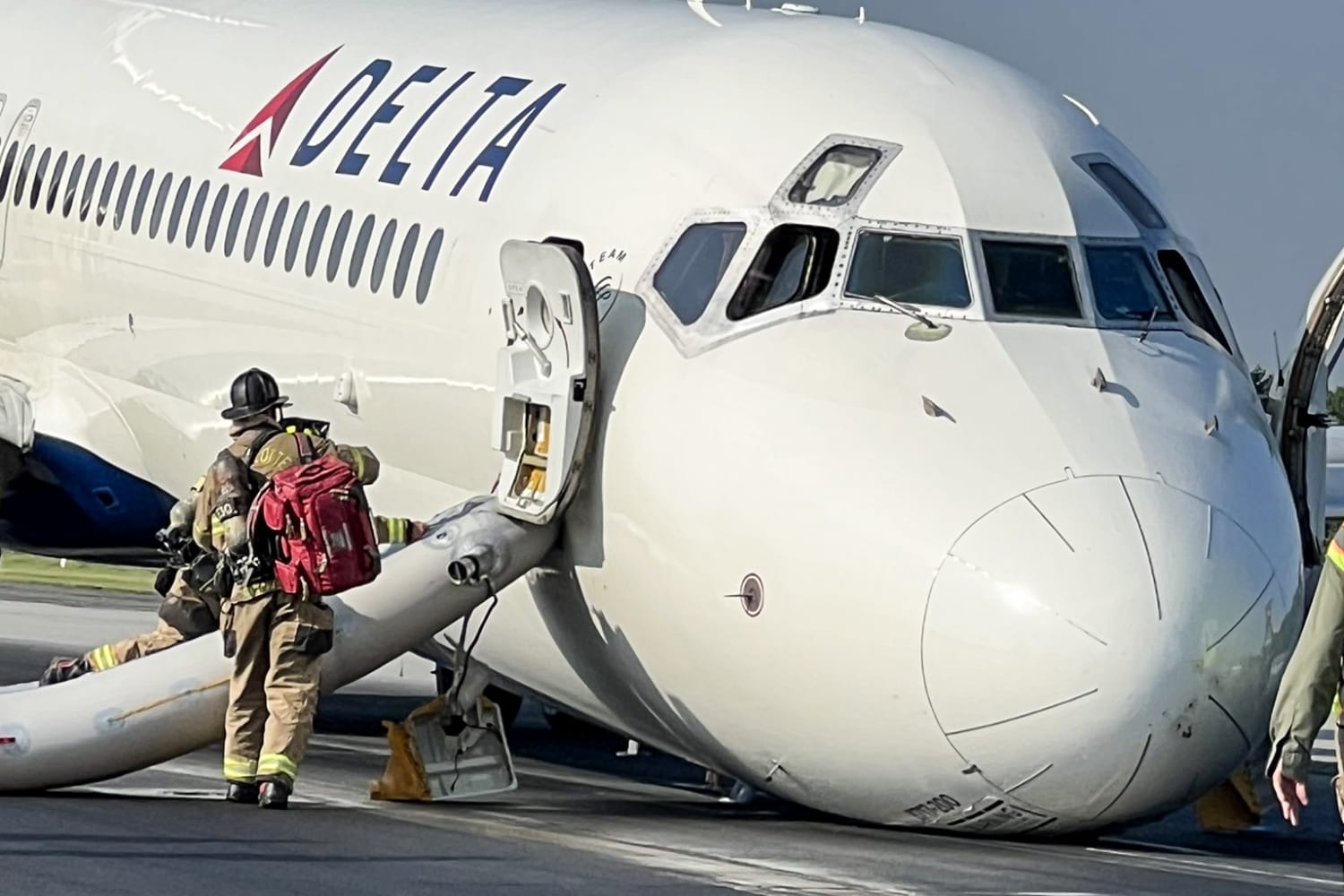
Image source: NBC News
Why Smoke and Fumes in the Cabin Trigger Immediate Diversions
To the average passenger, the smell of something burning at 35,000 feet is a cause for panic. To a pilot, it is a technical emergency that requires a specific, non-negotiable response. It is important to distinguish between "smoke" and "fumes," as the technical cause often dictates the severity of the diversion.
- Smoke
- Typically indicates an active combustion process, such as an electrical fire, a short circuit in the galley, or a fire in the cargo hold. Smoke is often visible and carries a distinct acrid smell.
- Fumes
- Often described as a "dirty sock" or "chemical" smell. These usually result from "bleed air" contamination, where engine fluids leak into the ventilation system. While not always visible, fumes can be toxic.
The FAA maintains strict ventilation standards under 14 CFR 25.831, which mandates that cabin air must be free from harmful concentrations of smoke and gases. When a crew detects these elements, they must assume the worst-case scenario: an uncontained fire. Because fire spreads rapidly in the oxygen-rich environment of a pressurized cabin, pilots are trained to land at the nearest suitable airport—often within 15 to 20 minutes—rather than attempting to troubleshoot the issue mid-flight.
Furthermore, Delta is legally required to file a Service Difficulty Report (SDR) for any incident involving smoke or fumes. These reports are a matter of public safety record and allow the FAA to track trends across specific aircraft models. For example, if multiple A330s report similar fume events, the FAA may issue an Airworthiness Directive (AD) requiring all airlines to replace specific seals or valves. This data-driven approach is a cornerstone of modern aviation safety, ensuring that one flight's emergency becomes a lesson for the entire industry.
How Delta Pilots Manage High-Altitude Emergencies
Managing a wide-body aircraft during a crisis requires a combination of technical skill and intense psychological composure. In recent months, Delta crews have demonstrated this during several harrowing incidents. On September 6, 2026, Flight DL2311 experienced a rapid decompression that forced the plane to drop 27,000 feet in just 10 minutes. This maneuver, while terrifying for passengers, is a controlled safety procedure designed to reach an altitude where passengers can breathe without supplemental oxygen.
During such descents, pilots utilize specialized configurations known as "MSP Flaps" or specific speed-brake settings to increase drag. This allows the aircraft to descend rapidly without exceeding its structural speed limits. The goal is to get below 10,000 feet as quickly as possible. According to NBC News , the coordination between the cockpit and Air Traffic Control (ATC) during these moments is seamless, with ATC clearing all other traffic out of the emergency flight path.
Another critical aspect of emergency management is handling pilot incapacitation. In an incident on August 28, a Delta pilot fell ill mid-flight, requiring the co-pilot to take full control and divert the aircraft. Modern commercial jets are designed for "Single Pilot" operation in emergencies, meaning one person can safely land the plane if their colleague is unable to perform their duties. These protocols, combined with rigorous simulator training, ensure that even when the unexpected happens, the flight remains under professional control.
Why Porto and the Azores Are Common Transatlantic Diversion Points
For flights crossing the "North Atlantic Tracks," there are very few places to land if something goes wrong. This is where ETOPS (Extended-range Twin-engine Operational Performance Standards) comes into play. ETOPS ratings determine how far a twin-engine plane can fly from a "safe haven" airport. Porto, Portugal, and the Azores islands (specifically Lajes Field on Terceira Island) are the primary safety valves for the southern transatlantic routes.
While these locations are life-saving landing spots, they often present a significant "Infrastructure Gap." A wide-body Airbus A330 or Boeing 767 can carry nearly 300 people. When such a plane diverts to a small island like Terceira, the local infrastructure is often overwhelmed. During the "Azores Incident" on July 6, over 200 Delta passengers were stranded on an island that had only 160 available hotel rooms. This led to reports of passengers sleeping on airport floors and scrambling for food.
"The landing was the easy part. The real emergency started on the ground where there was no food, no information, and no place to sleep for hundreds of us." — Passenger report cited in the New York Times analysis of the July 6 diversion.
Delta’s official statements often highlight their "gestures of care," but community reports from the New York Times suggest a different reality. Passengers frequently face a "communication blackout" where automated texts provide conflicting information, and ground staff—often third-party contractors—lack the authority to issue vouchers or book hotels. Understanding this gap is crucial for any traveler: in a diversion to a remote location, you must be prepared to be your own advocate.
Are You Entitled to Cash Compensation After a Delta Diversion?
One of the most misunderstood aspects of a Delta emergency landing is the right to financial compensation. If your flight departs from an airport located in the European Union (like DL251 from Barcelona), you are protected by **EU Regulation 261/2004**. This law is exceptionally strong and mandates that airlines pay passengers for significant delays, regardless of the airline's nationality.
The EU 261/2004 Rule
Under EU 261, if your flight is delayed by more than three hours upon arrival at your final destination, you are entitled to **€600 (approximately $650)** in cash compensation. This applies to all transatlantic flights departing from the EU. Crucially, "mechanical issues" are generally not considered "extraordinary circumstances" that exempt the airline from paying. Smoke in the cabin or engine failure are considered inherent risks of operating an airline and thus qualify for compensation.
The "Gesture of Care" Trap
A common tactic used by major carriers is to offer a "flight credit" or "miles" immediately following a diversion. For example, Delta might email you a $200 or $400 voucher as a "gesture of care." While this seems helpful, accepting these credits can sometimes include fine print that waives your right to the mandatory €600 cash payment required by law. Always read the terms before clicking "accept" on a digital voucher.
| Feature | Delta Flight Credit | EU 261 Cash Payment |
|---|---|---|
| Amount | Typically $200 - $400 | Fixed at €600 (~$650) |
| Form | Voucher (Expires) | Cash/Bank Transfer |
| Legal Standing | Voluntary "Gesture" | Mandatory Legal Right |
| Flexibility | Must be used with Delta | Spend anywhere |
How to Get Reimbursed When Delta Fails to Provide a Hotel
During a mass diversion, Delta’s systems often fail to secure enough hotel rooms for all passengers. If you find yourself in Porto or the Azores without a room, you may need to take matters into your own hands. The law requires the airline to provide "duty of care," which includes meals, two phone calls, and hotel accommodations. If they fail to provide these, you are entitled to reimbursement for "reasonable" expenses.
Airlines often deny initial reimbursement claims, citing that the passenger didn't "ask" for help first. To protect yourself, always find a Delta representative (or their ground agent) and explicitly ask for a hotel voucher. If they say none are available, record the time and the agent's name. This documentation is vital for your subsequent claim.
When self-booking, stick to mid-range hotels. If you book a five-star luxury suite, the airline may successfully argue the expense was not "reasonable" and only reimburse a portion. Keep every single receipt—not just the credit card statement, but the itemized receipt showing what was purchased. This includes water, meals, and transportation to and from the airport. According to passenger advocates, persistence is key; many claims are only paid after the third or fourth follow-up email.
Frequently Asked Questions
How much compensation do I get for a diverted Delta flight?
If your flight departed from an EU airport (like Barcelona or Paris), you are entitled to €600 under EU 261/2004 if the delay exceeds three hours. For domestic US flights, there is no federal law requiring cash compensation for delays, though Delta may offer travel vouchers ranging from $100 to $500 depending on the severity and cause of the incident.
Is it safe to fly Delta right now?
Statistically, Delta remains one of the safest airlines in the world. While recent emergency landings like DL251 are concerning, they represent a tiny fraction of the thousands of successful flights Delta operates daily. The fact that these planes landed safely and crews followed protocols actually demonstrates the effectiveness of modern aviation safety systems.
What is the difference between a precautionary and an emergency landing?
A precautionary landing is a proactive decision by the pilot to land due to a non-critical issue (like a minor sensor glitch) to prevent it from becoming an emergency. An emergency landing (declaring a "Mayday" or "Pan-Pan") is used when there is an immediate threat to the aircraft, such as fire, smoke, or engine failure, requiring priority handling by Air Traffic Control.
Does Delta pay for hotels during an emergency landing?
Legally, yes. Under both EU and US Department of Transportation (DOT) guidelines, airlines are responsible for providing accommodations if a mechanical delay forces an overnight stay. However, in remote locations like the Azores, hotels may be sold out. In these cases, you should book your own room and submit the receipts to Delta for reimbursement.
What should I do if I smell smoke on a plane?
Immediately notify a flight attendant. Do not wait to see if the smell goes away. Provide specific details: Where are you sitting? Does it smell like electrical burning or chemicals? Is there visible haze? Once you have alerted the crew, follow all instructions, keep your seatbelt fastened, and locate your nearest emergency exit.
Final Thoughts on Navigating a Delta Flight Emergency
An emergency landing is a high-stress event, but knowing your rights can significantly reduce the long-term frustration of the experience. Use this checklist to ensure you are protected:
- Prioritize immediate safety by following all crew instructions and remaining seated during the emergency descent.
- Document the incident by taking photos of smoke (if safe) and saving timestamps of all communications from Delta.
- Verify your EU 261 eligibility if your flight originated in Europe; this is a legal right to €600 cash.
- Keep all original receipts for hotels, meals, and transport if Delta fails to provide vouchers on the ground.
- Avoid signing waivers when accepting initial "gesture of care" miles or small flight credits.
- File a formal claim through Delta’s website and follow up every 14 days until you receive a resolution.
The most effective way to handle a diversion is to remain calm, stay informed of your legal entitlements, and maintain a paper trail of every expense incurred during the delay.