Home
Explore the Florida Gulf Coast with This Detailed Map of Beaches and Towns
The Florida Gulf Coast spans over 700 miles, divided into four primary regions: the Panhandle (famous for emerald waters), the Big Bend (a marshy nature coast), the Suncoast (urban beaches like St. Pete), and Southwest Florida (tropical mangroves and luxury). For white quartz sand, look to Siesta Key; for solitude, visit St. George Island; and for nature, explore Horseshoe Beach.
Understanding the Four Major Regions of the Florida Gulf Coast
Mapping the Florida Gulf Coast requires an understanding of its vast geographical diversity. Stretching from the Alabama border in the northwest to the tip of the Florida Keys in the south, this coastline offers a variety of ecosystems that change significantly every few hundred miles. According to the Wikipedia overview of the Gulf Coast , this region is defined by its humid subtropical climate in the north and a truly tropical climate as you move toward the southern tip.
The first major section is the Panhandle , often referred to as the "Emerald Coast." This area is characterized by high-energy waves and fine, white quartz sand that feels like powdered sugar. Moving east and south, you encounter the Big Bend or "Nature Coast." This is a significant "mapping gap" for many travelers, as it lacks the traditional sandy beaches found elsewhere, replaced instead by shallow salt marshes and productive fishing grounds.
Further south lies the Central Gulf , or the Suncoast, encompassing the vibrant Tampa Bay area. This region balances urban amenities with award-winning shorelines. Finally, Southwest Florida offers a transition into a mangrove-heavy landscape. As noted by the Florida DEP Coastal Guide , this area relies heavily on barrier islands and mangrove swamps for coastal protection, creating a low-energy environment with shallow, calm waters ideal for families.
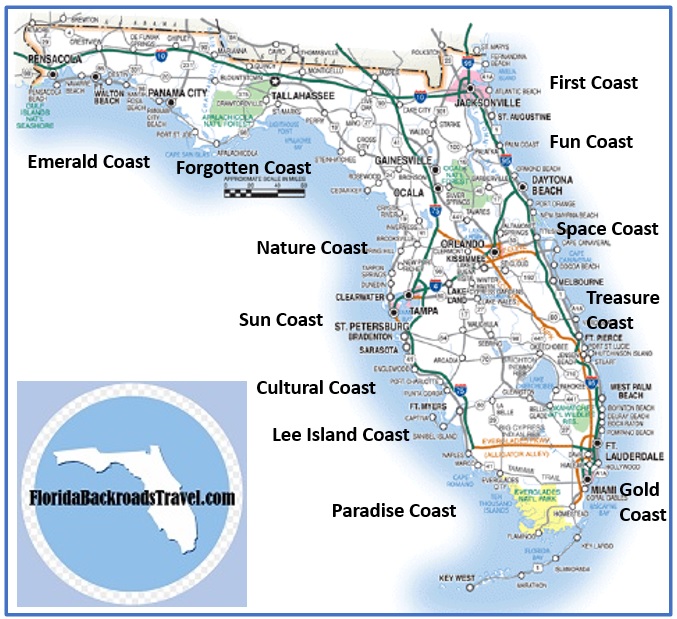
Image source: Florida Backroads Travel
Exploring the Emerald Coast and the Florida Panhandle
The Panhandle is widely considered one of the top destinations for beach purists. Cities like Destin and Panama City Beach draw millions of visitors annually, primarily due to the striking contrast between the bright white sand and the clear, emerald-tinted water. The sand here is unique; it is composed of nearly pure quartz washed down from the Appalachian Mountains over millennia, which keeps it cool to the touch even in the peak of summer.
While Destin offers high-energy nightlife and world-class fishing charters, those seeking a quieter experience should look toward the "Forgotten Coast." St. George Island, for instance, provides 22 miles of calm, undeveloped beaches. It stands out as a top choice for travelers who want to avoid the high-rise density of Panama City Beach while still enjoying the same environmental quality. The climate here is humid subtropical, meaning winters can be surprisingly brisk compared to the tropical south.
Key Panhandle Destinations
- Destin: Known as the "World's Luckiest Fishing Village," offering deep-sea adventures and the famous Crab Island sandbar.
- Panama City Beach: A hub for spring break and family entertainment with extensive pier-side shopping.
- St. George Island: A serene retreat with a historic lighthouse and pet-friendly shorelines.
- Pensacola Beach: Home to the iconic Gulf Islands National Seashore and the Blue Angels flight team.
Discovering the Hidden Nature Coast in the Big Bend
The Big Bend is the most misunderstood segment of the Florida Gulf Coast map. If you are looking for sprawling sandy beaches, you won't find them here. Instead, this region offers a glimpse into Florida's prehistoric past. The coastline is dominated by vast salt marshes, winding tidal creeks, and dense hardwood hammocks. It is a paradise for kayakers, birdwatchers, and offshore anglers.
One of the most remote beach locations in this region is Horseshoe Beach . Located at the end of a long, 18-mile drive through pine forests, this small fishing village offers a rugged beauty that few other places match. There is no traditional "beach" for sunbathing; rather, the focus is on the water. The transition from the sandy Panhandle to these marshy wetlands is a significant advancement in ecological diversity, providing critical habitats for manatees and migratory birds.
Navigating the Suncoast and Central Florida Beaches
The Central Gulf Coast, or Suncoast, is where urban culture meets the sea. Centered around the Tampa Bay metropolitan area, this region includes St. Pete Beach and Clearwater Beach. St. Pete Beach was notably recognized as a top-tier destination by travelers in 2021, praised for its wide shorelines and vibrant sunset views. The sand here begins to transition from the pure quartz of the north to a mix of quartz and crushed shells.
Clearwater Beach is a leading choice for families, featuring the famous Pier 60, which hosts nightly sunset celebrations. However, for those who prefer a softer, more powdery texture, Siesta Key in Sarasota is a strong contender. Its sand is 99% pure quartz, similar to the Panhandle, making it one of the most acclaimed beaches in the United States. The Central Coast also offers unique cultural stops, such as the Greek sponge-diving community in Tarpon Springs.
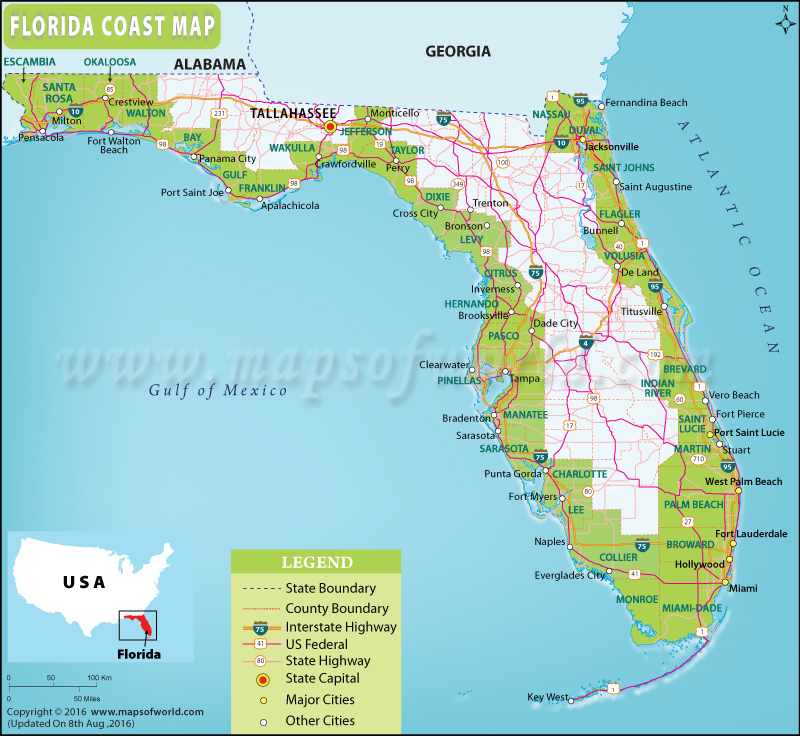
Image source: World Map
Visiting the Tropical Barrier Islands of Southwest Florida
As you move into Southwest Florida, the environment becomes decidedly more tropical. Cities like Fort Myers, Naples, and Marco Island are defined by their sophisticated atmosphere and calm, shallow waters. The Florida DEP highlights that this region is characterized by low-energy shorelines, which means the waves are typically very small, making it an excellent choice for young children and elderly swimmers.
Sanibel and Captiva Islands are world-renowned for shelling. Because of the islands' east-west orientation, they act as a "scoop" for shells traveling across the Gulf floor. Further south, Naples offers a high standard of luxury, with pristine beaches backed by multimillion-dollar estates and manicured parks. The presence of extensive mangrove forests in areas like the Ten Thousand Islands provides a unique opportunity for eco-tours and sighting dolphins in the wild.
Traveling the Overseas Highway Through the Florida Keys
While technically bordering both the Atlantic and the Gulf, the Florida Keys represent the final frontier of the Gulf Coast journey. The entry point is Key Largo, known for the John Pennekamp Coral Reef State Park. As you travel down the Overseas Highway, you reach Marathon, often called the "heart" of the Keys, and eventually Key West, the southernmost point in the continental United States.
The beaches in the Keys are different from the mainland; they are often smaller and composed of coral sand. However, the water clarity is exceptionally strong, making this the premier location for snorkeling and scuba diving. According to travel data from Atlist , Plantation Key is a specific hidden gem for those looking to explore shallow reefs and historical sites away from the primary tourist corridors of Key West.
Comparing Top Florida Gulf Coast Beach Destinations
Choosing the right beach depends on your priorities. The following table compares several prominent locations based on sand type, typical crowd levels, and primary appeal.
| Beach Name | Region | Sand Type | Best For | Crowd Level |
|---|---|---|---|---|
| Siesta Key | Suncoast | Quartz/White | Families & Sunbathing | High |
| St. George Island | Panhandle | Fine White | Solitude & Nature | Low |
| Destin | Panhandle | Emerald/Quartz | Nightlife & Fishing | High |
| Sanibel Island | Southwest | Shell-Heavy | Shelling & Wildlife | Moderate |
| Horseshoe Beach | Big Bend | Marshy/Rocky | Fishing & Boating | Very Low |
Managing the Impact of Sargassum and Seaweed on Your Trip
A common concern for Gulf Coast travelers is the presence of Sargassum, a type of floating brown seaweed. While it is a natural part of the marine ecosystem, large blooms can wash ashore, creating a "rotten egg" smell as they decompose. This can sometimes lead to less-than-ideal swimming conditions, particularly during the warmer months of late spring and summer.
However, it is important to note that seaweed plays a vital role in coastal health. According to environmental experts, Sargassum helps build and stabilize sand dunes by providing nutrients for beach plants. The impact of seaweed varies significantly by region and current; the Panhandle and the Alabama coast often share similar seaweed patterns, while the barrier islands of Southwest Florida may remain clear. Checking local beach cams and Sargassum trackers before your trip is a highly recommended practice.
Visualizing the Florida Gulf Coast Shoreline in 2050
For those considering long-term investments or relocation, understanding the future of the coastline is essential. According to the Global and Regional Sea Level Rise Report , the Gulf Coast is projected to see sea levels rise by 14 to 18 inches by the year 2050. This represents one of the highest projected changes in the United States, primarily due to the low-lying nature of the land and regional subsidence.
Low-lying areas like Sanibel Island, the Florida Keys, and parts of the Tampa Bay area are identified as high-risk zones. This "future-mapping" suggests that coastal protection measures, such as mangrove restoration and sea wall enhancements, will become increasingly critical. While the beaches remain a top-tier choice for vacationers today, long-term planning must account for these significant environmental shifts.
Finding Quiet Spots for Shelling and Snorkeling
While Sanibel is the most famous spot for shelling, it can become crowded during peak season. For a more secluded experience, consider Cayo Costa State Park . Accessible only by boat, this island offers miles of untouched beaches where you can find lightning whelks, olives, and tulip shells without the crowds. It is widely regarded as one of the top spots for those who value tranquility.
For snorkeling, the Florida Keys offer the most diverse reef systems, but the Panhandle has its own hidden gems. The St. Andrews State Park in Panama City Beach features a "jetty" area that acts as a natural aquarium, allowing snorkelers to see a variety of tropical fish in relatively shallow water. These spots provide a significant step forward in variety for travelers who want to do more than just sunbathe.
Identifying Affordable Towns for Living and Visiting
The cost of visiting or living on the Gulf Coast varies wildly. Naples and Marco Island rank among the most expensive areas, with high property taxes and luxury rental rates. Conversely, the Big Bend and Nature Coast offer some of the most budget-friendly options. Towns like Steinhatchee or Suwannee provide a low cost of living and affordable vacation rentals, though they lack the traditional resort amenities found in Clearwater or Sarasota.
In the Panhandle, towns like Navarre often provide a more affordable alternative to the neighboring Destin. By choosing these "in-between" locations, travelers can enjoy the same emerald waters and white sands at a fraction of the price. The Suncoast also has pockets of affordability, particularly in the residential areas of northern Pinellas County or southern Pasco County.
Choosing the Right Time of Year for Your Gulf Coast Visit
Timing is everything when planning a Gulf Coast trip. The "wettest months" are typically July and August, when afternoon thunderstorms are a daily occurrence. This is also the peak of hurricane season, which runs from June through November. While rare, the region has even experienced seismic events, such as a 6.0 earthquake in the Gulf in 2006 that was felt as far away as Tampa.
For the most pleasant weather, many consider the months of March through May or October through November to be the ideal window. During these times, the humidity is lower, and the water temperatures are still warm enough for swimming. The winter months are popular for "snowbirds" in Southwest Florida, but the Panhandle can see temperatures drop into the 40s and 50s, making it less suitable for a traditional beach holiday.
Key Takeaways for Your Florida Gulf Coast Adventure
- Choose your sand: Visit the Panhandle or Siesta Key for white quartz, or Southwest Florida for shell-rich shorelines.
- Respect the Nature Coast: The Big Bend is for fishing and marshes, not traditional sunbathing.
- Plan for Sargassum: Check local reports during summer months to avoid heavy seaweed accumulations.
- Seek solitude: St. George Island and Cayo Costa are top choices for avoiding large crowds.
- Consider the future: Be aware of the 14-18 inch sea-level rise projections for 2050 if looking at real estate.
- Shelling beyond Sanibel: Explore Cayo Costa or the Ten Thousand Islands for a quieter experience.
- Budget wisely: Look to the Big Bend or Navarre for more affordable coastal stays.
Start your journey by identifying which of the four major regions aligns with your interests, then use local maps to pinpoint the specific barrier islands that offer the amenities you desire.
Frequently Asked Questions About the Florida Gulf Coast
- What is the prettiest beach on the Gulf coast of Florida?
- Beauty is subjective, but Siesta Key is frequently cited for its pure white quartz sand, while Destin is celebrated for its vibrant emerald waters. Both rank among the top choices for scenic beauty, though they offer very different atmospheres.
- What is the cheapest Florida Gulf Coast town to live in?
- Towns within the Big Bend or Nature Coast, such as Steinhatchee or Horseshoe Beach, generally offer the lowest cost of living. In the Panhandle, Navarre and Pensacola are often more affordable than luxury hubs like Destin or 30A.
- Is the Gulf side of Florida better than the Atlantic side?
- The Gulf side is typically preferred for its calmer, warmer waters and spectacular sunsets. The Atlantic side is better suited for surfing and high-energy water sports. According to Visit Florida, the Gulf is often the leading choice for families and those seeking a relaxed pace.
- Where can I avoid crowds on the Florida Gulf Coast?
- To avoid crowds, head to the "Forgotten Coast" in the Panhandle, specifically St. George Island. Cayo Costa State Park in Southwest Florida is another excellent option, as it is only accessible by boat and remains largely undeveloped.
- Does the Florida Gulf Coast have a lot of seaweed?
- Seaweed, specifically Sargassum, is seasonal and depends on currents. It is most common in late spring and summer. While it can be a nuisance for swimmers, it is a healthy part of the ecosystem that helps maintain the beach's natural defenses.