Home
How a Community Development Department Works and How to Access Its Services
A Community Development Department (CDD) is a local government agency responsible for improving the social, economic, and physical health of a municipality. Unlike planning departments that focus on zoning, CDDs primarily manage federal and state funds—such as CDBG grants —to support affordable housing, home repairs for seniors, and job creation for low-to-moderate income residents. As of 2026, many departments have expanded their scope to include "Missing Middle" housing strategies and Accessory Dwelling Unit (ADU) support.
What Is the Main Purpose of a Community Development Department?
The primary mission of a Community Development Department is to foster sustainable, equitable growth within a city or county. While a Building Department focuses on safety codes and a Planning Department focuses on land use, the Community Development Department is the administrative engine that drives social equity. According to the New York State Office of Community Renewal , these agencies focus heavily on improving the quality of life for low-to-moderate income (LMI) residents.
Defining the Mission
The mission is typically three-fold: physical revitalization, economic empowerment, and social stability. Physical revitalization involves rehabilitating aging housing stock and improving public infrastructure like sidewalks and parks in distressed neighborhoods. Economic empowerment focuses on providing small business loans and job training. Social stability is achieved through homelessness prevention and senior services.
The Quality of Life Mandate
Departments balance these goals by creating a "Consolidated Plan," a multi-year strategy required by the federal government. This mandate ensures that tax dollars are not just spent on general maintenance, but are targeted toward areas where they will have the most significant impact on poverty reduction and neighborhood stabilization. In recent years, this mandate has evolved to include environmental justice, ensuring that LMI neighborhoods are not disproportionately affected by pollution or lack of green space.
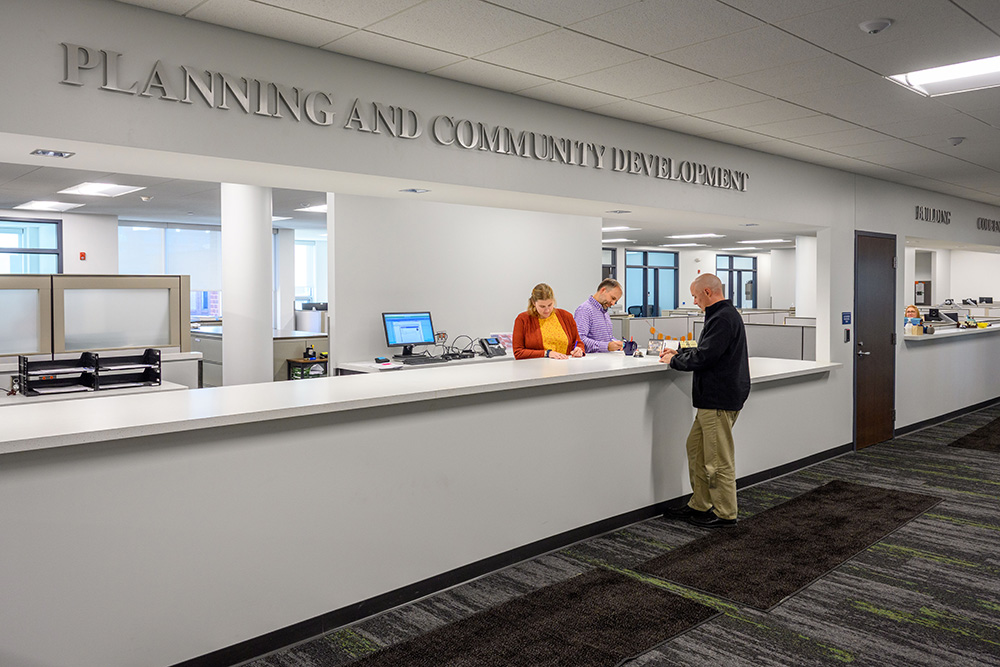
Image source: Mishawaka, IN - IN.gov
How Community Development Differs From the Planning Department
It is common for citizens to confuse the Planning Department with the Community Development Department, especially since they often share the same office space in smaller municipalities. However, their functions are distinct. The Planning Department is the "architect" of the city, while the Community Development Department is the "investor" and "social worker."
Vision vs. Execution
The Planning Department creates the "Master Plan," which dictates where high-rise buildings can go, where parks should be located, and how traffic should flow. They deal with zoning laws and land-use permits. The Community Development Department (CDD) takes that vision and finds the money to make it happen for people who might otherwise be left behind. For example, if the Planning Department zones an area for "mixed-use residential," the CDD might provide the grants to ensure 20% of those units are affordable for local service workers.
Regulatory vs. Social
Planning is largely regulatory. They ensure that a new deck meets setback requirements or that a new shopping center has enough parking. Community Development is social and administrative. They manage the complex paperwork required to receive federal HUD money and ensure that the money is spent according to strict federal guidelines. As noted by the Fall River Community Development Agency , the focus is often on the administration of programs rather than the enforcement of zoning codes.
| Feature | Planning Department | Community Development Department |
|---|---|---|
| Primary Focus | Land use, zoning, and long-term city layout. | Social equity, housing grants, and LMI support. |
| Primary Tool | Zoning Ordinances and Master Plans. | CDBG, HOME, and ESG federal grants. |
| Typical Projects | Approving a new subdivision or bike lane. | Funding a senior home repair or a food bank. |
| Public Interaction | Public hearings for developers and neighbors. | Application portals for residents and non-profits. |
Where Does the Funding for Community Development Come From?
Most local community development activities are not funded by local property taxes alone. Instead, they rely on a flow of federal dollars from the U.S. Department of Housing and Urban Development (HUD). This funding is distributed to "Entitlement Communities" (larger cities and counties) and to state governments, which then distribute funds to smaller "Non-Entitlement" towns.
The HUD Connection
HUD provides the backbone of community development through several key programs. The most versatile of these is the Community Development Block Grant (CDBG) . CDBG funds are often described as the "Swiss Army Knife" of local government because they can be used for almost anything—from paving streets to funding after-school programs—as long as the primary beneficiaries are LMI residents.
HOME and ESG Programs
Beyond CDBG, departments manage HOME Investment Partnerships , which are specifically dedicated to creating affordable housing. This might include down-payment assistance for first-time homebuyers or funding for non-profit developers to build low-income apartments. Additionally, Emergency Solutions Grants (ESG) provide critical funding for homeless shelters and rapid re-housing programs, helping individuals transition from the streets into stable living environments.
"Successful community development requires a financing partnership between banks, government, and the private sector—it is rarely just government money." — Insights from the Federal Reserve regarding project sustainability.
How Individuals Can Get Direct Help From Their Local Department
While much of the funding goes to non-profits and infrastructure, many departments offer direct assistance to residents. These programs are often the best-kept secrets of local government, providing thousands of dollars in aid that does not have to be repaid if certain conditions are met.
Emergency Repairs for Seniors (RESTORE)
Programs like RESTORE are designed for homeowners aged 60 and older. These grants address emergency repairs that pose a threat to health and safety, such as a failing roof, a broken furnace, or hazardous electrical wiring. According to Rockland County Community Development , these programs help seniors age in place rather than being forced into assisted living due to home deterioration.
Lead-Based Paint Remediation
For families living in homes built before 1978, lead paint is a significant health risk. Community Development Departments often provide grants to identify and remove lead hazards. These programs are typically available to both homeowners and landlords who rent to LMI tenants, ensuring that children are protected from lead poisoning regardless of their family's housing status.
Section 3 Economic Opportunities
Under HUD's Section 3 regulation, any project funded by a certain amount of federal money must, to the greatest extent feasible, provide job training and employment opportunities to local low-income residents. If you are a resident of public housing or a low-income neighborhood, your local department can help you get priority for jobs created by local construction or service contracts.
Why Departments Are Shifting Toward Middle-Income Housing Strategies
As of 2026, a significant shift has occurred in the field of community development. For decades, the focus was almost exclusively on those earning less than 80% of the Area Median Income (AMI). However, the "Missing Middle"—households that earn too much for traditional subsidies but not enough to afford market-rate housing—has become a primary concern for local governments.
The Missing Middle Gap
In many high-cost areas, teachers, firefighters, and nurses are being priced out of the communities they serve. Community Development Departments are now utilizing "Middle-Income Financing Strategies." This includes creating workforce housing trusts and providing incentives for developers to build townhomes and duplexes rather than just luxury apartments or single-family mansions.
ADU Grants and Planning
One of the most notably innovative strategies in 2026 is the promotion of Accessory Dwelling Units (ADUs) . These are secondary apartments on a single-family lot, such as a basement suite or a backyard cottage. The Colorado Department of Local Affairs has highlighted how departments are now providing pre-approved architectural plans and low-interest loans to homeowners who agree to rent their ADUs at affordable rates.
How Local Governments Choose Which Projects to Fund
Citizens often wonder why one neighborhood gets a new park while another waits years for sidewalk repairs. This decision-making process is guided by a strategic framework often referred to as the ABCDE Model . This ensures that projects are selected based on data rather than political favoritism.
The ABCDE Strategic Framework
- Assessment
- Conducting a SWOT analysis (Strengths, Weaknesses, Opportunities, Threats) of the neighborhood to identify what is actually needed.
- Baseline
- Identifying current service gaps. For example, does the neighborhood have a "food desert" or a lack of accessible childcare?
- Components
- Aligning potential projects with the city’s overall mission and the requirements of the funding source (e.g., HUD guidelines).
- Down to Specifics
- Creating a detailed "Action Plan" that includes budgets, timelines, and specific contractors.
- Evaluation
- Measuring the impact. Did the new community center actually increase youth employment? Did the housing rehab program raise property values?
Understanding Disaster Recovery and Mitigation Programs
When a natural disaster strikes, the Community Development Department becomes the primary hub for long-term recovery. This is distinct from the immediate emergency response provided by FEMA. CDDs handle the years-long process of rebuilding homes and making infrastructure more resilient.
CDBG-DR vs. CDBG-MIT
There are two primary types of disaster funding. CDBG-DR (Disaster Recovery) is money allocated after a specific event, like a hurricane or flood, to help residents rebuild. For example, the City of Columbia managed nearly $20 million in recovery funds specifically for single-family residence rehabilitation after major flooding. CDBG-MIT (Mitigation) is a newer, proactive funding stream. It focuses on long-term risk reduction—such as building sea walls or improving drainage systems—to prevent future property loss before the next disaster occurs.
Legal Rules and Ethics in Community Development
Because Community Development Departments handle millions of dollars in grants, they are subject to strict ethical and legal guardrails. These rules protect the integrity of the process and ensure that public funds are not misused.
Ex Parte Contacts
In the context of planning and development cases, "Ex Parte" refers to private communications between a decision-maker (like a Planning Commission member) and a party involved in a pending case. To ensure fairness, most jurisdictions prohibit these private conversations. If you want to influence a development project, you must do so during a public hearing where all parties can hear your arguments.
Conflicts of Interest
Department employees and local officials must disclose any financial interest they have in a project receiving funds. For instance, a city council member cannot vote to award a CDBG grant to a non-profit where their spouse serves as the Executive Director. These rules are strictly enforced by state ethics commissions and federal HUD auditors.
Image source: Chester County
How to Find Your Local Community Development Office
Finding your local office can be confusing because the name varies significantly from one city to another. If you search for "Community Development Department" and find nothing, try these common variations:
- Office of Community Renewal (OCR): Common in New York and the Northeast.
- Community Development Agency (CDA): Often used by counties that manage funds for multiple small towns.
- Department of Community & Economic Development (DCED): Frequently used in Pennsylvania and the Midwest.
- Housing and Neighborhood Services: A common name in Southern states.
The One-Stop Shop Concept
Many modern cities are moving toward a "One-Stop Shop" model. This combines planning, building permits, and community development into a single citizen portal. This reduces "search friction," allowing a small business owner to apply for a facade improvement grant and a signage permit in the same digital location. When searching, always look for a .gov extension to ensure you are on an official site rather than a third-party lead-generation page.
The Bottom Line
Community Development Departments are the primary bridge between federal resources and local neighborhood needs. By understanding how they operate, you can better access the services designed to improve your quality of life.
- CDDs are administrative: They manage federal HUD funds like CDBG, HOME, and ESG rather than just setting zoning laws.
- Focus on LMI residents: Most programs are legally required to benefit those earning less than 80% of the Area Median Income.
- Direct help is available: Individuals can access grants for emergency senior home repairs, lead paint removal, and first-time homebuyer assistance.
- 2026 Trends: Look for new programs targeting the "Missing Middle" and incentives for building Accessory Dwelling Units (ADUs).
- Strategic Selection: Projects are chosen using the ABCDE framework to ensure data-driven neighborhood improvement.
- Disaster Resilience: Departments manage both immediate recovery (DR) and long-term mitigation (MIT) funding.
- Check for name variations: Look for "Office of Community Renewal" or "Economic Development" if "Community Development" doesn't appear in your city's directory.
To get started, visit your city's official website and search for the "Consolidated Plan" to see which projects are scheduled for your neighborhood this year.
Frequently Asked Questions
Can I get a CDBG grant as an individual?
Technically, HUD does not award CDBG grants directly to individuals. Instead, the funds are given to local governments and non-profit organizations. However, these entities then create programs that provide grants or low-interest loans to individuals. For example, a city might use its CDBG allocation to run a "Homeowner Rehabilitation Program" where you can apply for a grant to fix your roof. So, while you don't get the money directly from the federal government, you can receive the benefits through your local Community Development Department.
What is the income limit for "Low-to-Moderate Income" status?
The income limit is not a single national number. It is based on the Area Median Income (AMI) of your specific county or metropolitan area. Generally, "Low-Income" is defined as 50% of the AMI, and "Moderate-Income" is defined as 80% of the AMI. These numbers are updated annually by HUD. For a family of four in a high-cost city, 80% of the AMI might be $90,000, while in a rural area, it might be $45,000. You can find your local limits on your department's "Eligibility" page.
Does the Community Development Department handle building permits?
In many smaller towns, the answer is yes, as they often operate as a "One-Stop Shop" for all development needs. However, in larger cities, these are usually separate. The Building Department handles the technical safety inspections and code enforcement, while the Community Development Department handles the social programs and grant funding. If you are doing a home repair funded by a CDD grant, you will likely interact with both: the CDD for the money and the Building Department for the permit to do the work.
How do I report a lead paint hazard in my apartment?
If you suspect lead paint hazards, you should contact the Housing Rehabilitation or Environmental Health division within your local Community Development Department. Many departments have specific "Lead-Safe" programs that provide free testing for LMI households. If hazards are found, the department can often provide the landlord with a grant or deferred loan to remediate the lead, ensuring the safety of the tenants without causing an immediate spike in rent.
What is a New Markets Tax Credit (NMTC)?
The New Markets Tax Credit is a federal tool used by Community Development Departments to attract private investment into distressed communities. It provides a tax credit to individual or corporate investors who make equity investments in "Community Development Entities." This capital is then used for projects like grocery stores, healthcare centers, or manufacturing facilities in neighborhoods that have historically lacked access to traditional bank financing. It is a key tool for large-scale economic revitalization.
What documents do I need to apply for home repair assistance?
While requirements vary, you will typically need: 1) Proof of ownership (a copy of your deed), 2) Proof of income for all household members (tax returns or W2s), 3) Proof of residency (utility bills), and 4) Documentation of the specific repair needed (contractor estimates or photos of the damage). Most departments now offer digital portals where you can upload these documents directly. If you are a senior applying for the RESTORE program, you will also need proof of age, such as a driver's license or birth certificate.