Home
How to Contact AVCOG Staff for Community and Economic Development Support
The Androscoggin Valley Council of Governments (AVCOG) is a regional planning agency serving Androscoggin, Franklin, and Oxford Counties in Maine. To engage with staff for economic development , contact Jon Janson or Ethan Vinson. For community development and CDBG grants, reach out to the municipal planning team. Communications are decentralized; there is no single "Communications Director," so users should contact program-specific leads directly.
Address: 125 Manley Rd, Auburn, ME 04210 | Phone: (207) 783-9186
Navigating regional government structures can often feel like a complex puzzle, especially when your project involves multiple layers of funding, zoning, and inter-municipal cooperation. The Androscoggin Valley Council of Governments (AVCOG) serves as a critical bridge for these needs. Established in 1962 as a 501(c)(3) non-profit, AVCOG is not a state agency but a voluntary association of local governments. It covers a vast 4,200-square-mile territory, supporting approximately 196,000 residents across 75+ member communities.
Whether you are a small business owner in Lewiston looking for a microloan, a town manager in Farmington seeking CDBG technical assistance, or a developer in Rumford planning a new commercial site, understanding the staff hierarchy and communication channels at AVCOG is the first step toward success. This guide provides a detailed roadmap to the agency's professional staff and their specific portfolios in community and economic development.
How Does AVCOG Handle Staff Communications and Outreach?
One of the most common points of confusion for those searching for "AVCOG staff communications" is the absence of a centralized public relations or communications department. Unlike larger state-level organizations, AVCOG utilizes a decentralized communication model. This means that outreach, media inquiries, and public notices are managed by the specific department overseeing the project in question.
Municipal and Public Communications
For town officials and residents, communications regarding regional planning or infrastructure are typically led by the Community Resilience Coordinators and Regional Planners . These staff members act as the primary liaison between the Council and the member municipalities. They facilitate public hearings, manage community surveys, and ensure that local voices are integrated into regional strategies like the Comprehensive Economic Development Strategy (CEDS).
Business Outreach and Counseling
Communications directed toward the private sector are largely funneled through the Maine Small Business Development Center (SBDC) advisors hosted at AVCOG. These advisors provide one-on-one counseling and serve as the "voice" of the agency for entrepreneurs. If you are looking for information on workshops, business resources, or networking events, the SBDC staff are your primary points of contact.
Project-Specific Public Notices
When AVCOG manages large-scale transportation or environmental projects, such as those overseen by the Transportation Director, communications follow strict federal and state guidelines. Public notices for transit changes or environmental assessments are published through local media outlets and the official AVCOG staff directory project pages. This ensures transparency without the need for a dedicated PR officer.
Who Are the Key Staff Members for Economic Development?
The economic development wing of AVCOG is designed to foster job creation and private investment throughout Western Maine. The team is small but highly specialized, focusing on bridging the gap between local needs and state/federal resources. As of late 2023, the agency maintains a professional staff of approximately 15 to 16 individuals, with a core group dedicated to economic growth.
Meet the Economic Development Leadership
Jon Janson stands out as a primary lead for business development and regional strategy. His role involves coordinating with state agencies like the Maine Department of Economic and Community Development (DECD) and federal partners like the Economic Development Administration (EDA). Janson is often the first point of contact for large-scale regional initiatives and strategic planning.
Ethan Vinson , an Economic Development Specialist, focuses on the technical implementation of development programs. His work often involves the nitty-gritty of grant administration and ensuring that projects meet the rigorous compliance standards required by funding sources. For businesses or municipalities in the middle of a project, Vinson provides the essential technical support to keep initiatives on track.
Small Business Support via the Maine SBDC
AVCOG is a vital hosting organization for the Maine SBDC . This partnership allows the agency to offer free, confidential business counseling to entrepreneurs in Androscoggin, Franklin, and Oxford Counties. The SBDC advisors at AVCOG help with:
- Developing comprehensive business plans and financial projections.
- Navigating the requirements for various loan programs.
- Conducting market research to validate new business concepts.
- Preparing for "pitch" sessions with private lenders or investors.
"The SBDC advisors at AVCOG act as a practical navigator for businesses, helping them stack resources like microloans and state tax credits to achieve their goals." — Regional Economic Analysis, 2026.
Which Community Development Resources Are Available to Municipalities?
Community development at AVCOG is distinct from economic development in its focus on public infrastructure, land use, and municipal capacity. The staff in this department work directly with selectboards, planning boards, and town managers to improve the quality of life for residents.
Navigating the Community Development Block Grant (CDBG) Program
The CDBG program is a cornerstone of AVCOG’s service to its member communities. Staff provide essential technical assistance to help towns apply for and manage these federal funds. CDBG grants can be used for a wide range of projects, including public facility improvements (like community centers or fire stations), housing rehabilitation, and downtown revitalization. Because the application process is highly competitive, the expertise of AVCOG’s grant managers is a significant asset for rural towns with limited administrative staff.
Land-Use and Transportation Planning Staff
Regional planners at AVCOG assist communities with comprehensive planning and zoning ordinance updates. This work is critical for managing growth and protecting the natural character of Western Maine. Additionally, the transportation department, led by Larry Allen , manages regional transit programs and infrastructure planning. This includes coordinating with the Maine Department of Transportation (MaineDOT) to ensure that local road and bridge projects are prioritized in the state’s multi-year work plans.
How to Choose the Right AVCOG Business Loan Program
For many entrepreneurs, the most direct way to engage with AVCOG staff is through their business financing programs. AVCOG manages several revolving loan funds that provide gap financing when traditional bank lending falls short. Choosing the right program depends on the size of your request and your current financial standing.
| Loan Program | Maximum Amount | Best For | Key Requirement |
|---|---|---|---|
| Quick Loan Program | $10,000 | Small equipment, working capital | 650+ Credit Score |
| Microloan Program | $50,000 | Start-ups, inventory, marketing | Business Plan & Collateral |
| Business Loan Program | $150,000 | Real estate, major expansion | Gap financing (Bank participation) |
The Quick Loan Program is designed for speed, offering a streamlined application process for established businesses needing a small influx of capital. In contrast, the Business Loan Program often requires AVCOG to work alongside a traditional bank, providing the final 20-30% of funding needed to make a project viable. This "gap financing" model is a top choice for developers looking to revitalize older mill buildings or expand manufacturing facilities in the tri-county region.
A Step-by-Step Guide to Engaging with AVCOG Staff
To ensure you get the most out of your interaction with AVCOG, it is helpful to follow a structured engagement workflow. This prevents the frustration of being passed between departments and ensures you are speaking with the right specialist from day one.
AVCOG vs. KVCOG — Which Agency Serves Your Area?
It is common for users to confuse AVCOG with the Kennebec Valley Council of Governments (KVCOG) . While both organizations offer similar services, their geographic boundaries are distinct. Calling the wrong agency can lead to delays in project timelines.
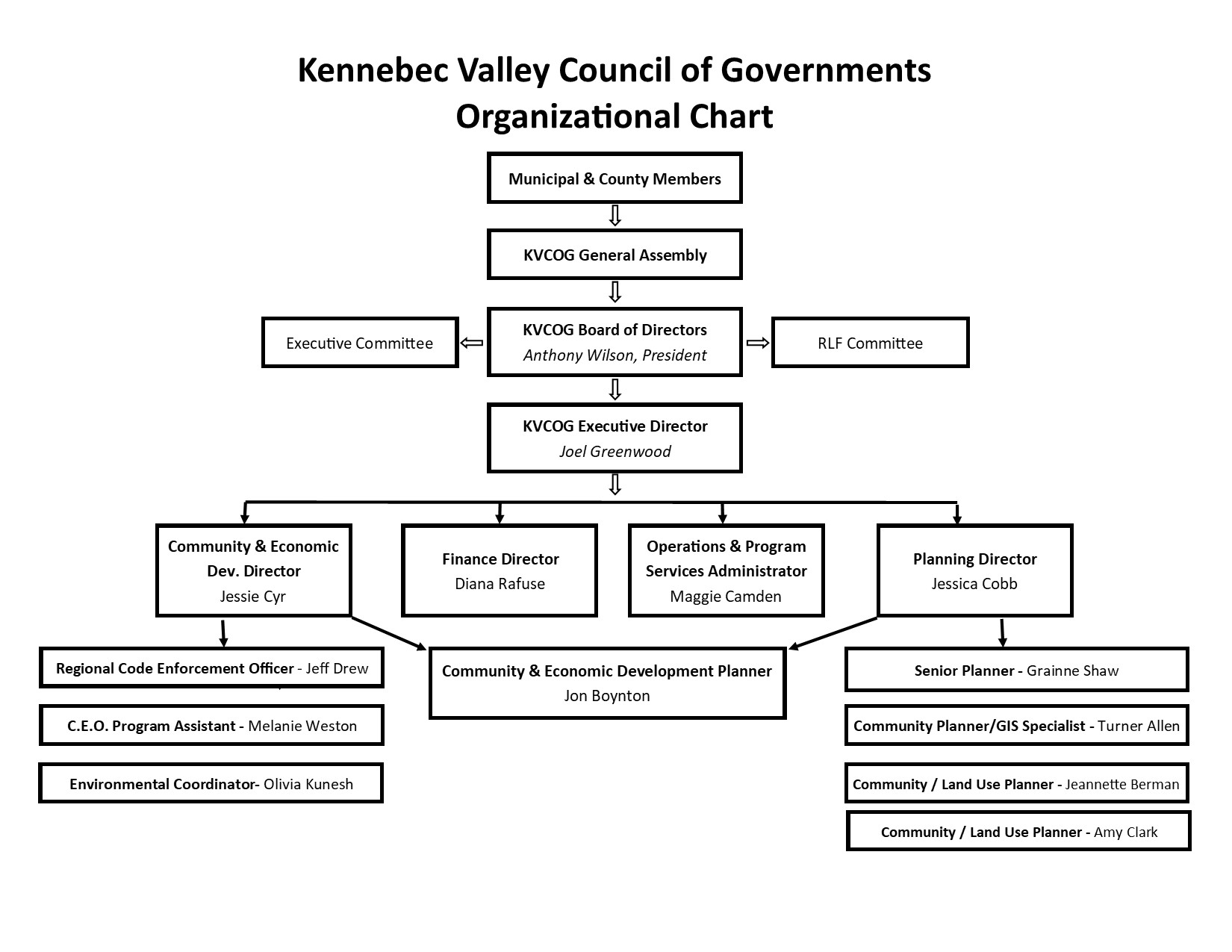
Image source: Kennebec Valley Council of Governments
AVCOG serves the "Western Maine" region, centered around the Lewiston-Auburn hub and extending through the mountains of Franklin and Oxford Counties. KVCOG, based in Winslow, serves the Kennebec River valley, including Augusta and Waterville. If your project is located in Somerset or Kennebec County, you should contact KVCOG staff instead.
| Agency | Primary Counties Served | Major Hubs |
|---|---|---|
| AVCOG | Androscoggin, Franklin, Oxford | Auburn, Lewiston, Farmington, Rumford |
| KVCOG | Kennebec, Somerset, Western Waldo | Augusta, Waterville, Skowhegan |
What Is the Current Regional Strategy for 2026 and Beyond?
AVCOG’s work is guided by the Comprehensive Economic Development Strategy (CEDS) , a five-year roadmap required by the federal government. The 2023-2028 CEDS outlines the region's priorities, focusing on broadband expansion, workforce housing, and climate resilience. Understanding this strategy is helpful for grant applicants, as projects that align with CEDS goals are often more competitive for funding.
Understanding the Regional SWOT Analysis
The CEDS includes a detailed SWOT analysis (Strengths, Weaknesses, Opportunities, and Threats) for the tri-county area. According to the CEDS StoryMap , the region's strengths include a robust natural resource base and a strong manufacturing heritage. However, weaknesses such as an aging population and infrastructure gaps in rural areas present ongoing challenges that AVCOG staff work to address daily.
Recent Success Stories and Award Winners
The impact of AVCOG staff is best seen through their annual recognition awards. In 2026, the agency highlighted several transformative projects, including the Rangeley Child Care Center , which addressed a critical service gap in a rural community. Another notable mention was the Tri-Town Recreation Master Plan , which demonstrated how staff can facilitate cooperation between multiple towns to create shared public assets. These success stories serve as a testament to the agency's role as a catalyst for regional improvement.
Frequently Asked Questions
Who is the head of economic development at AVCOG?
Jon Janson is widely regarded as the lead contact for economic and business development at AVCOG. He coordinates regional strategies and works closely with federal and state partners to bring resources to the tri-county area. For specific technical implementation or grant administration, Ethan Vinson is also a key member of the economic development team.
Does AVCOG provide grants to individuals or businesses?
Generally, AVCOG does not provide direct grants to individuals or private businesses. Instead, they offer low-interest loan programs (Microloans, Quick Loans, and Business Loans). Grants, such as those from the CDBG program, are typically awarded to municipalities, which may then use the funds for public projects or to support local business development through specific town-led initiatives.
How many staff members work at AVCOG?
AVCOG employs a professional staff of approximately 15 to 16 individuals. This team is divided into four core departments: Economic Development, Land-Use Planning, Transportation Planning, and Environmental Management. Despite the small staff size, the agency manages a massive 4,200-square-mile service area through efficient, program-specific communication and outreach.
Where is the AVCOG office located and how can I visit?
The AVCOG headquarters is located at 125 Manley Road in Auburn, Maine. While the office is open to the public, it is highly recommended to schedule an appointment with the specific staff member you wish to meet. This ensures that the appropriate specialist is available to discuss your project and that you have prepared any necessary documentation beforehand.
Can AVCOG help me start a business in Lewiston or Auburn?
Yes, AVCOG is a premier resource for new businesses in the Lewiston-Auburn area. Through the Maine SBDC hosted at their office, you can access free business counseling, help with business plans, and guidance on securing startup capital. They also work closely with the city economic development departments in both Lewiston and Auburn to coordinate local incentives.
What is the difference between a Microloan and a Quick Loan?
The primary differences are the loan amount and the approval criteria. A Quick Loan is capped at $10,000 and is designed for rapid processing, requiring a credit score of at least 650. A Microloan can go up to $50,000 and typically requires a more detailed business plan and collateral, making it a better choice for startups or businesses planning a more significant purchase.
Key Takeaways for Working with AVCOG
- Decentralized Communications: Contact program leads directly as there is no central PR department.
- Staff Expertise: Reach out to Jon Janson for strategy and Ethan Vinson for technical development support.
- SBDC Resources: Utilize free business counseling before applying for any AVCOG loan programs.
- Municipal Support: Engage regional planners early for CDBG technical assistance and land-use projects.
- Geographic Scope: Confirm your project is in Androscoggin, Franklin, or Oxford County before calling.
- Strategic Alignment: Review the CEDS StoryMap to ensure your project aligns with regional priorities.
To begin your project, identify your specific needs and contact the relevant department lead at the Auburn headquarters to schedule an initial consultation.