Home
How Detroit Development Is Reshaping the City Skyline and Neighborhoods in 2026
As of late 2026, Detroit has transitioned from a period of intense planning to one of operational reality. Major infrastructure projects like the Gordie Howe International Bridge are now active, while landmark vertical developments such as the Hudson’s Site have completed their primary structural phases. The focus has shifted toward neighborhood-level catalytic projects and the integration of luxury hospitality with affordable housing initiatives.
The landscape of Detroit development in 2026 represents a pivotal moment in the city's modern history. For over a decade, the narrative focused on the "comeback" of the 7.2-square-mile downtown core. Today, that momentum has matured into a sophisticated regional strategy that balances high-profile skyscrapers with critical infrastructure and neighborhood-specific growth. The influence of the "Big Three" developers—Bedrock, Ford, and the Ilitch family—remains significant, but they are now joined by a growing cohort of local, catalytic developers focusing on equity and community-centric design.
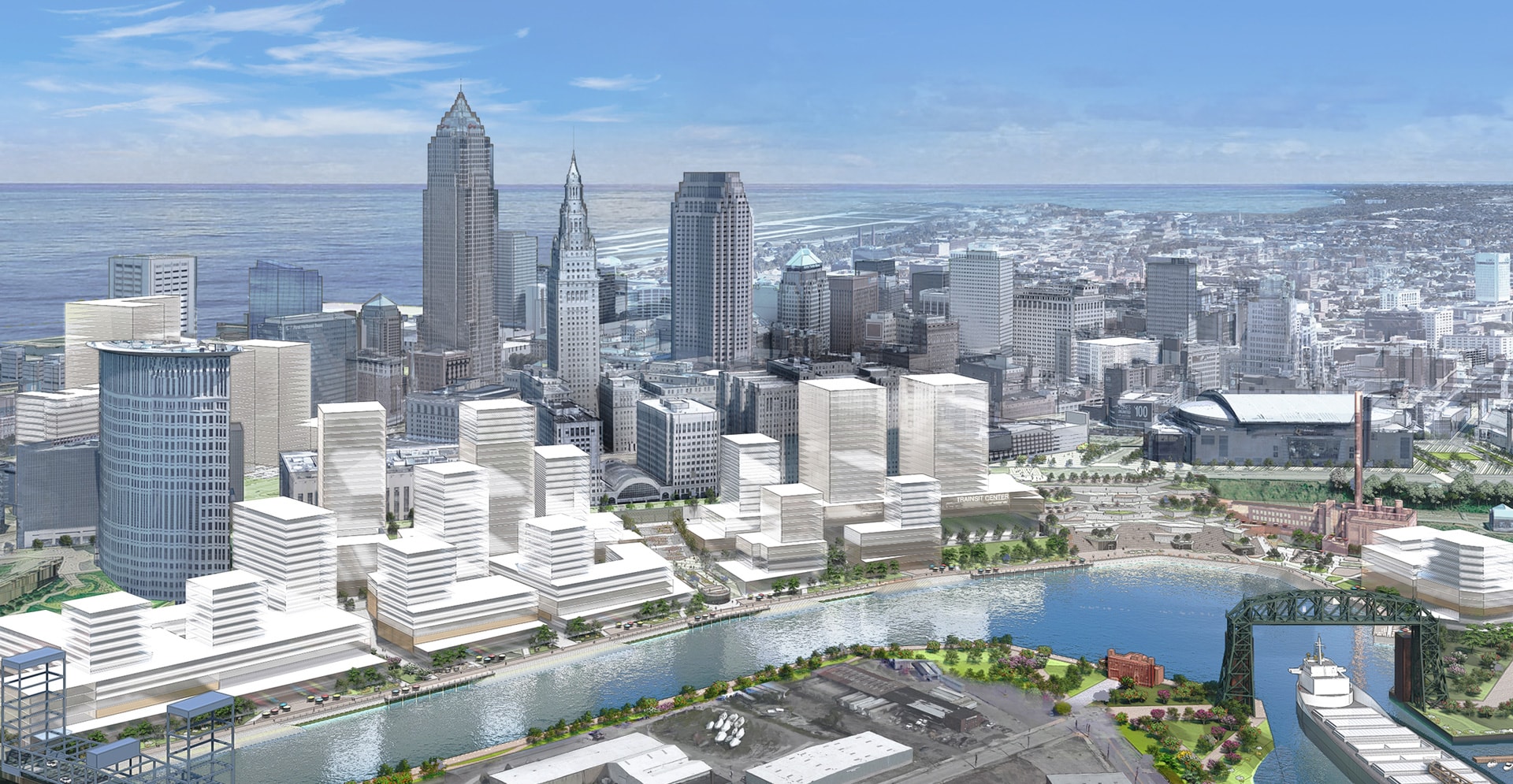
Image source: Arcadis
What Are the Biggest Mega-Projects Transforming Downtown Detroit?
The downtown skyline is currently defined by three massive projects that are reaching their final stages of development. These sites are not merely office buildings; they are mixed-use ecosystems designed to attract international tourism and high-net-worth residents while providing public amenities that were previously absent from the city center.
The Hudson’s Detroit Site and the Arrival of The EDITION
The Hudson’s Detroit site, a project by Bedrock, reached a major milestone in October 2025 with the completion of its office and retail components. As of September 2026, the focus has shifted to the interior build-out of the residential tower. This 685-foot structure is widely considered a top choice for luxury living in the Midwest, featuring 97 high-end condos and the city’s first 5-star hotel, The Detroit EDITION. According to Hour Detroit , the hotel and residences are on track for a 2027 opening, marking the final phase of this decade-long endeavor.
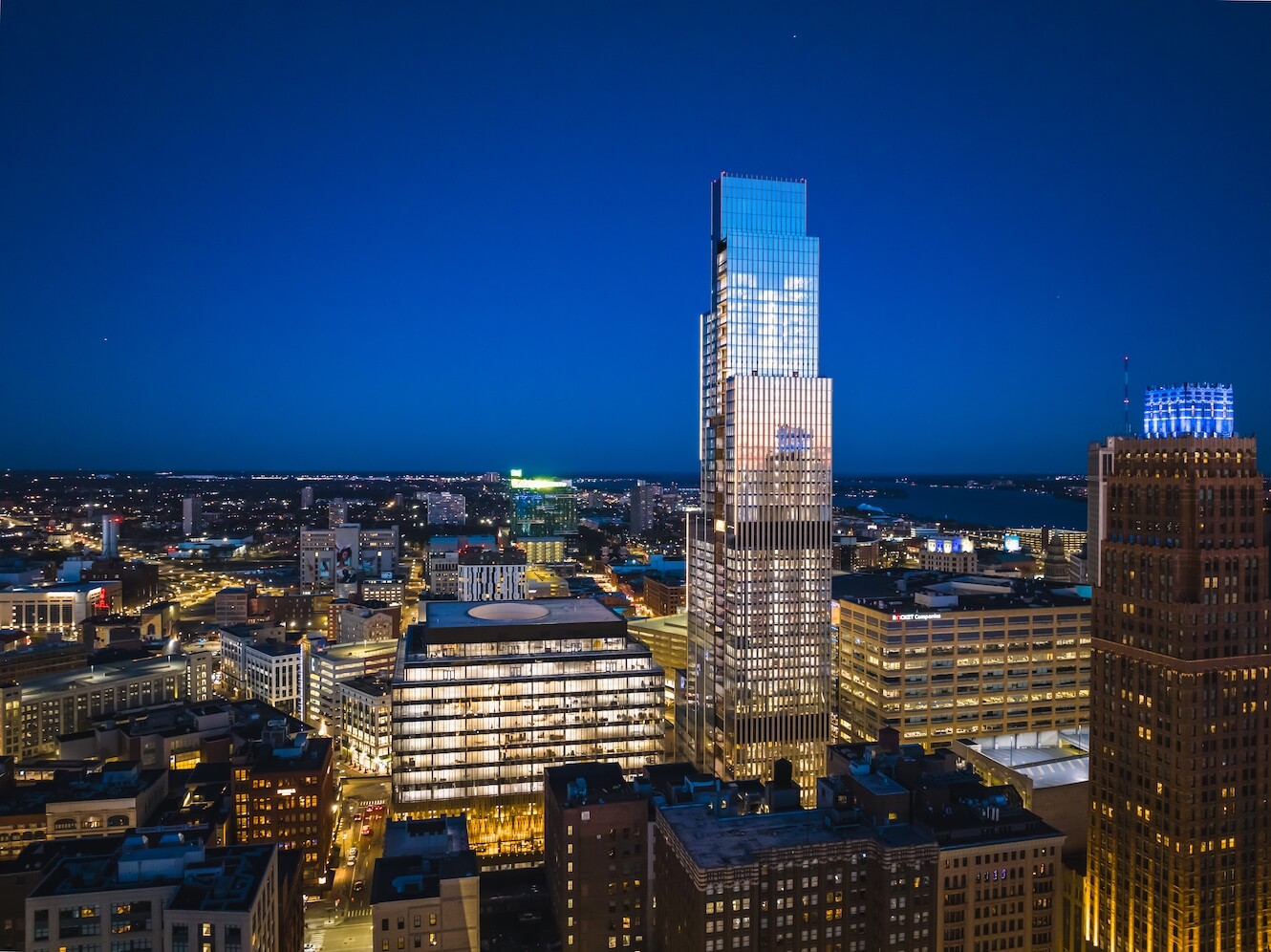
Image source: Hudson's Detroit
Development at Cadillac Square and the Cosm Experience
Adjacent to Campus Martius, the Development at Cadillac Square is currently in its second phase of construction. This site gained immense priority following the record-breaking 775,000+ attendees at the 2024 NFL Draft. The centerpiece of this phase is Cosm , an immersive sports and entertainment venue that utilizes "shared reality" technology to simulate front-row experiences at global events. Construction on this phase began in October 2026, with a full opening targeted for 2027. The project also includes significant residential units and retail space, further densifying the historic Paradise Valley area.
Water Square and the JW Marriott Expansion
On the former site of the Joe Louis Arena, the Water Square development has fundamentally changed the riverfront. Following the success of the initial residential tower, construction is currently underway for the 600-room JW Marriott Detroit Water Square. This hotel is designed to support the Huntington Place convention center, providing the high-capacity, luxury lodging necessary to attract larger international conferences. The hotel is scheduled to welcome its first guests in 2027, completing the transformation of this critical riverfront parcel.
How New Infrastructure and Transit Hubs Are Connecting the Region
While skyscrapers capture the headlines, the most significant economic shifts in 2026 are occurring at the ground level through massive infrastructure investments. These projects are designed to solve Detroit’s long-standing connectivity issues, both internationally and locally.
The Gordie Howe International Bridge Final Countdown
After years of construction, the Gordie Howe International Bridge officially opened to traffic in Q1 2026. This six-lane cable-stayed bridge is a significant advancement for North American logistics, providing a direct connection between I-75 in Michigan and Highway 401 in Ontario. Unlike the aging Ambassador Bridge, the Gordie Howe includes dedicated pedestrian and cycling paths, as well as state-of-the-art customs plazas that have already begun to reduce border wait times for commercial freight. As of late 2026, the bridge is operating at full capacity, serving as a primary artery for the "Just-in-Time" manufacturing supply chain.
Michigan Central Station and the Multimodal Hub Reality Check
The restoration of Michigan Central Station by Ford Motor Company has evolved into a 30-acre innovation district. While the station building itself reopened for public tours and office use previously, 2026 marks the completion of the Multimodal Facility . This hub is designed to integrate Amtrak, local bus lines, and future regional rail. However, a common point of confusion remains the train service to Windsor and Toronto. While the infrastructure is ready, actual cross-border passenger rail service is not expected to commence until 2029. In the meantime, the top five floors of the station are being converted into the NoMad Hotel , which is slated for a 2027 debut.
Pedestrian-First Improvements in Greektown and Beyond
Urban mobility in 2026 is increasingly focused on the pedestrian. The $20 million Monroe Streetscape project in Greektown is nearing its Fall 2026 completion date. This project replaces traditional asphalt with brick paving and expanded outdoor seating, effectively turning the historic district into a "curbless" environment that prioritizes people over cars. Similarly, the Second Ave. Extension, which connects Congress St. directly to the riverfront, was completed in Summer 2026, removing a long-standing physical barrier between the financial district and the Detroit Riverwalk.
Why Detroit Is Becoming a Testing Ground for Innovative Construction Tech
Detroit’s development boom is not just about *what* is being built, but *how* it is being built. The city has become a laboratory for construction methodologies that aim to increase safety and reduce timelines in dense urban environments.
The LIFTbuild Method at the Exchange Tower
One of the most notable innovative techniques recently showcased in Detroit is the LIFTbuild method, utilized for the Exchange tower in Greektown. This "top-down" vertical manufacturing process involves building the roof and top floors on the ground level and then lifting them into place using high-capacity hydraulic jacks. Once the top floor is secured, the next floor is built on the ground and lifted. This approach offers several advantages:
- Enhanced Safety: Workers perform the majority of their tasks at ground level rather than at extreme heights.
- Weather Protection: Because the roof is lifted first, subsequent interior work on lower floors is protected from the elements much earlier in the process.
- Speed: The assembly-line nature of ground-level construction can significantly shorten the overall project timeline compared to traditional crane-and-bucket methods.
The success of the Exchange tower has led other developers to consider LIFTbuild for upcoming mid-rise projects, positioning Detroit as a leader in modern construction technology.
What Residents and Small Developers Need to Know About Neighborhood Growth
Beyond the glass and steel of downtown, Detroit’s neighborhoods are experiencing a different kind of revitalization. This growth is characterized by smaller, mixed-use projects that aim to restore "Main Street" corridors in areas like Corktown, East Warren, and Midtown.
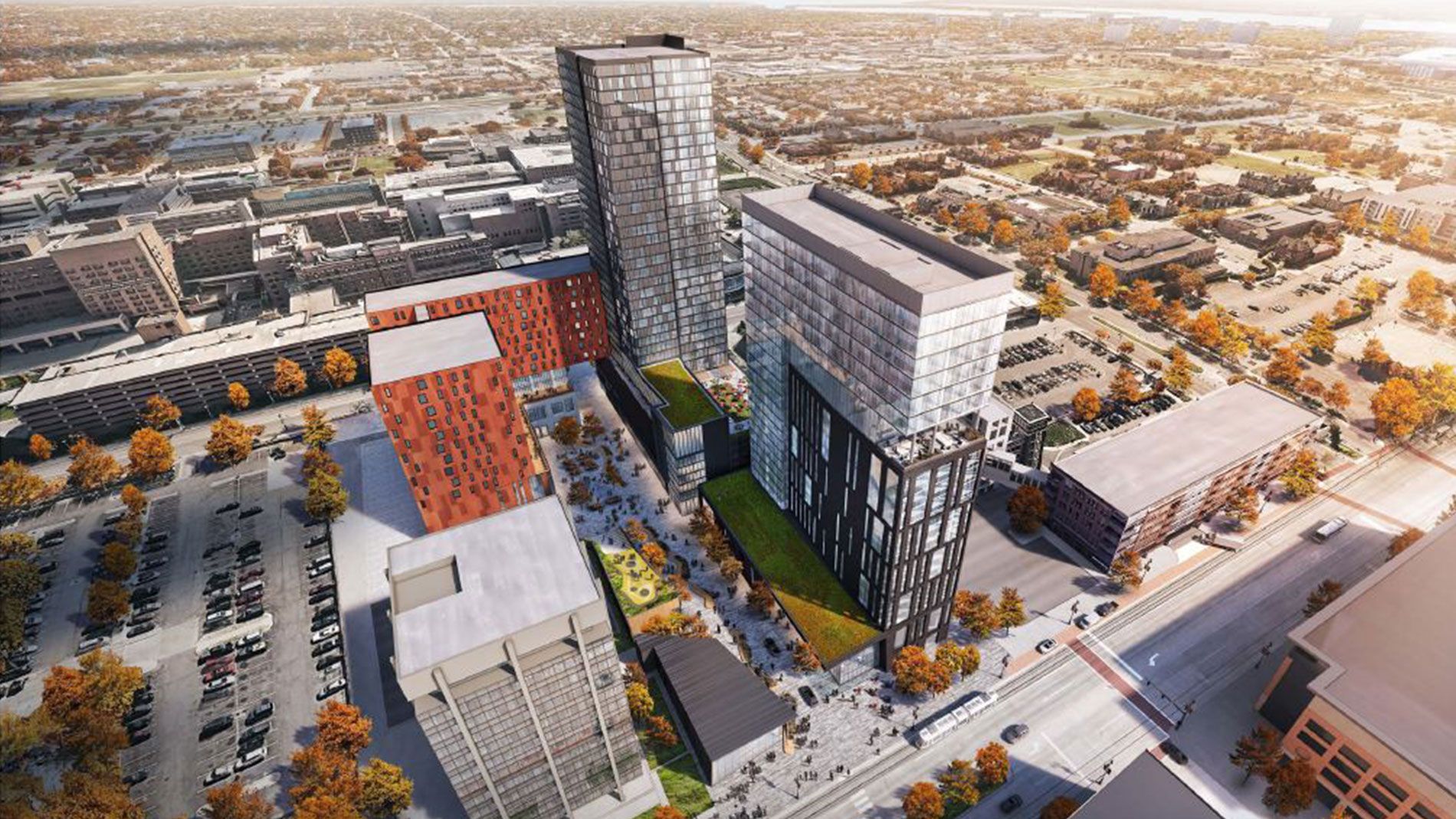
Image source: Detroit Development Tracker - Outlier Media
Beyond Downtown: The Rise of Catalytic Neighborhood Projects
In Corktown, the new Detroit City Football Club (DCFC) Stadium is a major focus for 2027. Located on the site of the former Southwest Detroit Hospital, the $198 million project will feature a 15,000-seat stadium and a 76-unit apartment building. Meanwhile, on the east side, The Ribbon on East Warren has become a model for neighborhood development, providing 18 units of housing and ground-floor retail in a previously underserved corridor. These projects are often supported by organizations like Develop Detroit , which focuses on high-quality affordable housing that market forces alone might not provide.
If you are a resident looking to participate in the city's growth by renovating a property, you must be aware of Michigan Act 299 of 1980 . This law requires a Residential Builders License for any project where the total cost of labor and materials exceeds $600 . It is illegal to "split" a larger contract into multiple $500 segments to bypass this requirement. Unlicensed contracting can lead to significant legal penalties and the inability to pull necessary building permits.
The Role of Develop Detroit in Equitable Housing
As property values rise, the risk of displacement becomes a central concern. Develop Detroit has emerged as a key player in ensuring that neighborhood growth remains inclusive. By leveraging federal tax credits and private philanthropy, they focus on "catalytic" projects—those that are large enough to spark further investment in a block but are committed to long-term affordability. Their work in 2026 includes several multi-family renovations that preserve existing housing stock while upgrading it to modern energy-efficiency standards.
The Reality of Detroit’s Rental Market and Housing Shortage
Despite the visible construction, Detroit faces a complex housing challenge. The "Rental Market Tension" is a term used by local analysts to describe the gap between the high cost of new construction and the limited purchasing power of many long-term residents.
Luxury Booms vs. Affordable Shortages
Data from Up For Growth suggests that while the city has added thousands of luxury units, it still faces a significant shortage of "missing middle" housing—duplexes, townhomes, and moderately priced apartments. Zoning reform has helped, but the high cost of materials and labor means that without subsidies, new construction often requires rents that are out of reach for the average Detroiter. This has created a bifurcated market where luxury buildings have high occupancy, but affordable options have waitlists spanning years.
Expert Perspectives on Sustainable Growth
Anika Goss-Foster, CEO of Detroit Future City, has frequently emphasized that for Detroit’s growth to be sustainable, it must move beyond the downtown core and provide pathways for middle-class wealth building. Similarly, Jared Fleisher of Bedrock has noted that the $7.5B+ in committed investment from the private sector is only one part of the equation; public infrastructure and transit must keep pace to ensure that residents can actually reach the new jobs being created in these development zones.
| Project Name | Primary Use | Opening/Completion | Key Feature |
|---|---|---|---|
| Gordie Howe Bridge | Infrastructure | Q1 2026 | 6-lane international crossing |
| Monroe Streetscape | Public Space | Fall 2026 | Pedestrian-only Greektown zone |
| Hudson’s Residences | Luxury Residential | 2027 | Detroit EDITION Hotel |
| DCFC Stadium | Sports/Housing | 2027 | 15,000-seat stadium in Corktown |
| Michigan Central Rail | Transit | 2029 | Windsor/Toronto train service |
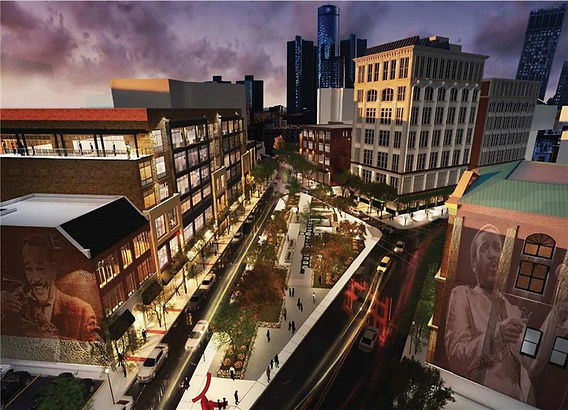
Image source: Detroit Economic Growth Corporation
Frequently Asked Questions
- Which Detroit neighborhoods are seeing the most investment in 2026?
- While Downtown remains the leader in total dollar value, Corktown is seeing the most rapid transformation due to the Michigan Central innovation district and the new DCFC stadium. Midtown continues to densify with residential projects like The Mid, and East Warren has become a focal point for the Strategic Neighborhood Fund, focusing on commercial corridor revitalization and mixed-use housing.
- When will the Gordie Howe Bridge finally open?
- The Gordie Howe International Bridge officially opened to all traffic in Q1 2026 . Although the project faced minor delays from its original 2025 target, it is now fully operational, featuring state-of-the-art customs facilities and a dedicated multi-use path for pedestrians and cyclists, which is a first for a major Detroit-Windsor crossing.
- Is the Hudson’s building finished?
- The project is partially finished. The office and retail portions of the Hudson’s site were completed and began occupancy in October 2025 . However, the residential tower, which includes the luxury condos and the Detroit EDITION hotel, is still undergoing interior finishing and is scheduled to open to the public in 2027 .
- What is the LIFTbuild method used in Detroit?
- LIFTbuild is a top-down construction methodology where the roof and highest floors are built on the ground and then jacked up the building's core. This was famously used for the Exchange tower in Greektown. It is considered a significant advancement in urban construction because it allows for safer ground-level work and faster enclosure of the building structure.
- When will trains start running from Michigan Central to Toronto?
- While the Michigan Central Multimodal Facility is completing construction in 2026, actual passenger rail service connecting Detroit to Windsor and Toronto is currently projected to begin in 2029 . This delay is due to the complex regulatory and safety requirements for cross-border rail travel and the coordination needed between Amtrak and VIA Rail Canada.
The Bottom Line: Key Takeaways for Detroit’s Future
Detroit’s development in 2026 marks the transition from a "comeback" narrative to a sustained period of urban maturation. The city is no longer just planning for the future; it is living in it.
- Downtown is going vertical: 2027 will be the year of the luxury hotel, with the EDITION, NoMad, and JW Marriott all scheduled to open.
- Infrastructure is international: The Gordie Howe Bridge (2026) has fundamentally changed the logistics landscape for the entire Great Lakes region.
- Neighborhoods are professionalizing: Investment is moving beyond the 7.2-mile core, evidenced by the DCFC stadium and mixed-use projects like The Ribbon.
- Regulatory hurdles remain: Small-scale developers must strictly adhere to the Michigan $600 licensing rule (Act 299) to avoid legal complications.
- Transit is a long game: While the physical hubs are arriving in 2026, full regional and international rail service will take until 2029 to realize.
- Innovation is local: Technologies like LIFTbuild are positioning Detroit as a hub for modern construction engineering.
To stay informed on specific projects in your area, residents should regularly consult the City of Detroit’s live development portal and the Outlier Media tracker for real-time updates on permits and construction timelines.