Home
How Stop Signs Work and What You Need to Know Before Buying One
A stop sign is a regulatory traffic marker defined by its unique octagonal shape and red-and-white color scheme. In the United States, these signs must adhere to the Manual on Uniform Traffic Control Devices (MUTCD) R1-1 standards. For public roads, a standard 30-inch sign with High-Intensity Prismatic (HIP) reflectivity is typically required. When purchasing for private property, maintaining these standards is critical to reducing legal liability and ensuring driver recognition.
Why Is a Stop Sign an Octagon?
The stop sign is perhaps the most recognizable traffic control device in the world, yet few people realize that its specific geometry was a calculated engineering decision. The eight-sided shape was not chosen for aesthetic reasons but for functional safety. By giving the stop sign a unique silhouette, traffic engineers ensured that drivers could identify the command even if the sign was covered in snow, faded by the sun, or viewed from the back.
The Logic of the Eight-Sided Shape
According to historical records, the unique geometry allows drivers to identify the sign from the back, preventing confusion with other traffic markers. In the early 20th century, as automobiles began to populate city streets, there was no uniform system for traffic control. The Mississippi Valley Association of State Highway Departments met in 1923 to develop a shape-based code. They decided that the more sides a sign had, the more danger it represented. A circle (infinite sides) was for railroad crossings, the octagon was for stops, the diamond was for warnings, and the square was for information.
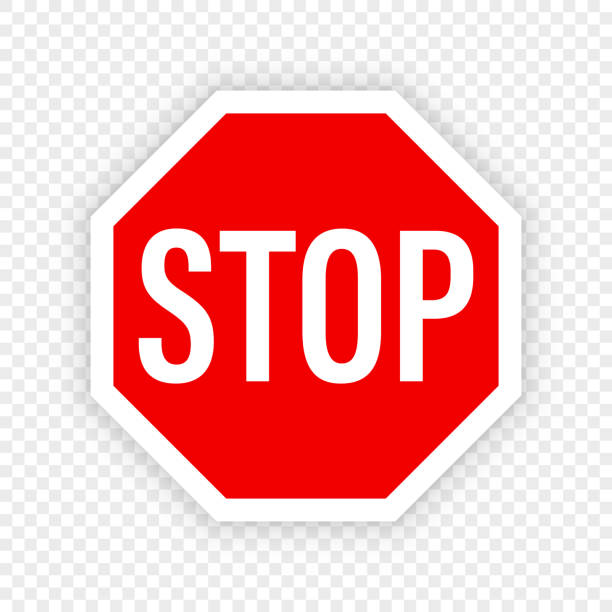
Image source: iStock
The Evolution of Color
Modern drivers associate red with "stop," but this wasn't always the case. From the 1920s through the early 1950s, stop signs were actually yellow. The reason was purely technical: red dyes of that era faded quickly in the sun, and red materials did not reflect well at night. It wasn't until 1954 that improvements in reflective technology allowed the MUTCD to mandate the red-and-white standard we see today. This shift was a significant advancement in nighttime visibility, as noted by Crash Champions .
Who Actually Invented the Stop Sign?
The history of the stop sign is often a point of contention among historians. Harry Jackson, a Detroit police sergeant, is credited with creating a prototype in 1914—a rectangular piece of plywood with the corners cut off to create an octagonal look. However, William Eno, often called the "Father of Traffic Safety," provided the conceptual framework for standardized traffic control. The first official installation of a standardized stop sign occurred in Detroit in 1915, marking the beginning of organized urban traffic management.
How to Navigate a Stop Sign Intersection Safely
Navigating an intersection involves more than just pressing the brake pedal. It requires an understanding of right-of-way protocols and clear communication with other motorists. Failure to follow these rules is a leading cause of intersection-related accidents in residential areas.
The Basic Right-of-Way Rules
The fundamental rule of the stop sign is "first to arrive, first to proceed." If you reach the limit line first, you have the right to move forward after making a complete stop. However, complications arise when two or more vehicles arrive simultaneously. In these instances, the protocol is to yield to the vehicle on your right. This "yield to the right" rule helps prevent gridlock and confusion at busy four-way stops.
Mastering the 4-Way and All-Way Stop
Multi-lane approaches require extra vigilance. When approaching a 4-way stop, it is essential to signal your intent early. If you are turning, your blinker tells other drivers how to time their own movements. If four cars arrive at the exact same time—a rare but possible occurrence—drivers must use non-verbal communication, such as hand signals or flashing lights, to establish an order of movement. Safety advocates recommend waiting for a clear acknowledgment from other drivers before moving into the intersection.
Why the Rolling Stop Is a Legal Liability
The "rolling stop," often colloquially called a "California stop," occurs when a driver slows down significantly but never brings the vehicle to a complete, motionless state. From a legal perspective, a rolling stop is the same as running the sign. Community safety advocates often recommend the "3-second rule": once the vehicle has reached a full stop, count to three before proceeding. This ensures you have adequate time to scan for pedestrians, cyclists, and other hazards that may have been in your blind spot.
Official MUTCD Standards for Size and Design
For a stop sign to be legally enforceable on public roads, it must meet the rigorous specifications outlined in the Manual on Uniform Traffic Control Devices (MUTCD) . This manual ensures that a driver in Maine sees the exact same sign as a driver in California, creating a predictable environment for interstate travel.
Understanding the R1-1 Designation
In the world of traffic engineering, the stop sign is officially known as the R1-1 . This designation covers everything from the specific shade of red (Pantone 187 or similar) to the font used for the letters. The MUTCD is managed by the Federal Highway Administration (FHWA) and is the governing document for all public road signage in the United States, as detailed by the City of Napa .
Standard Dimensions for Every Road Type
Size matters when it comes to reaction time. A sign that is too small for a high-speed road won't give drivers enough time to brake safely. The MUTCD defines several standard sizes:
| Road Type | Standard Width | Letter Height | Typical Use Case |
|---|---|---|---|
| Residential / Low Speed | 30 inches | 10 inches | Neighborhood streets, urban centers |
| Multi-lane Expressways | 36 inches | 12 inches | High-traffic corridors, rural highways |
| High-Speed / Limited Visibility | 45 inches | 16 inches | Interstate off-ramps, dangerous curves |
| Private / Minimum Permissible | 24 inches | 8 inches | Parking lots, bike paths, private alleys |
The Anatomy of a Sign
A compliant R1-1 sign consists of three main parts: the Legend (the word "STOP"), the Field (the red background), and the Border (the white outer edge). The border width is not arbitrary; it typically ranges from 3/4 inch on a standard sign to 1 3/4 inches on extra-large highway versions. The font used is almost exclusively "Highway Gothic," designed specifically for legibility at high speeds and under low-light conditions.
Which Reflectivity Grade Do You Actually Need?
Visibility at night is the most critical factor in sign safety. Modern signs use retroreflective sheeting, which contains millions of microscopic glass beads or prisms that catch light from headlights and bounce it directly back to the driver's eyes. Choosing the right grade depends on your environment and budget.
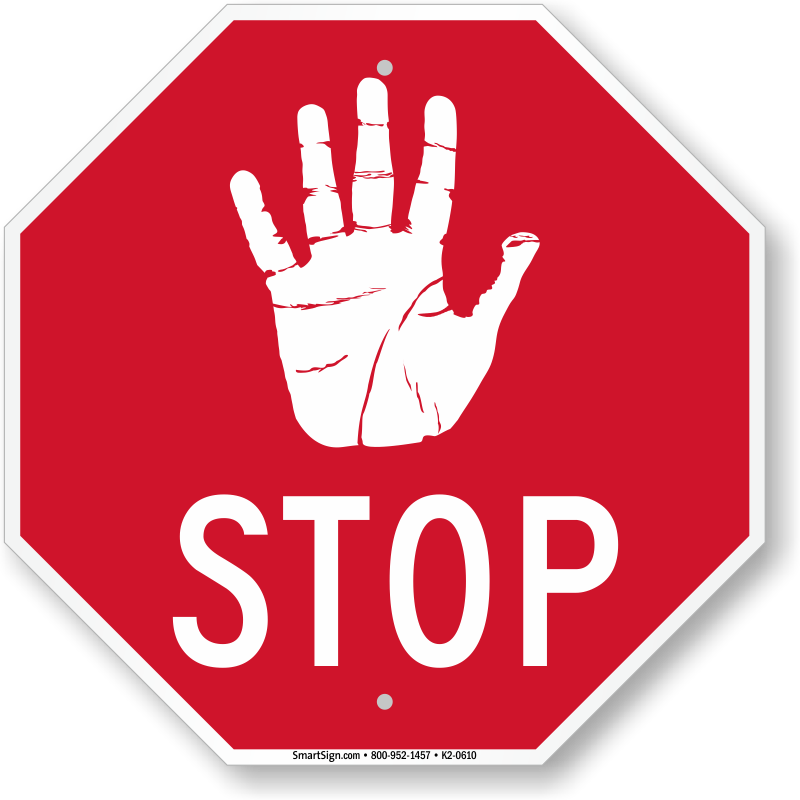
Image source: Traffic Signs
Engineer Grade (EG)
Engineer Grade is the entry-level reflective material. It typically has a 7-year lifespan and is best suited for low-speed environments like parking lots or private driveways. While it meets basic requirements, it lacks the "pop" of higher grades and may be difficult to see in areas with heavy rain or fog. According to RoadTrafficSigns , EG is a cost-effective choice for non-critical applications.
High-Intensity Prismatic (HIP)
HIP is currently the standard for most public roads in the U.S. It offers a 10-year lifespan and uses cube-corner microprisms to return light. HIP is significantly brighter than Engineer Grade and maintains its reflectivity even when viewed from sharp angles. This makes it a top-rated choice for intersections where drivers may be approaching from various directions.
Diamond Grade (DG)
Diamond Grade is a top-tier option, offering the highest level of retroreflectivity available. With a 12-year lifespan, it is designed for "visually cluttered" urban environments where streetlights, neon signs, and other distractions compete for a driver's attention. While more expensive, DG signs are often mandated for high-speed highways and areas with high accident rates due to their remarkable visibility.
How to Choose a Stop Sign for Private Property
Property managers, HOAs, and warehouse owners often need to install traffic control devices. However, buying a sign for private property isn't as simple as picking the cheapest option. Legal liability is a major concern that every property owner should consider.
The Legal Risks of Decorative Signs
It may be tempting to buy a "decorative" stop sign that matches the aesthetic of a luxury condo complex—perhaps a square sign or one with a blue background. However, using non-compliant signs on private roads can lead to significant liability. If an accident occurs at an intersection with a non-standard sign, the property owner may be held responsible for failing to provide adequate, recognizable warning to drivers. As noted by Brady , maintaining MUTCD compliance is a strong defense against negligence claims.
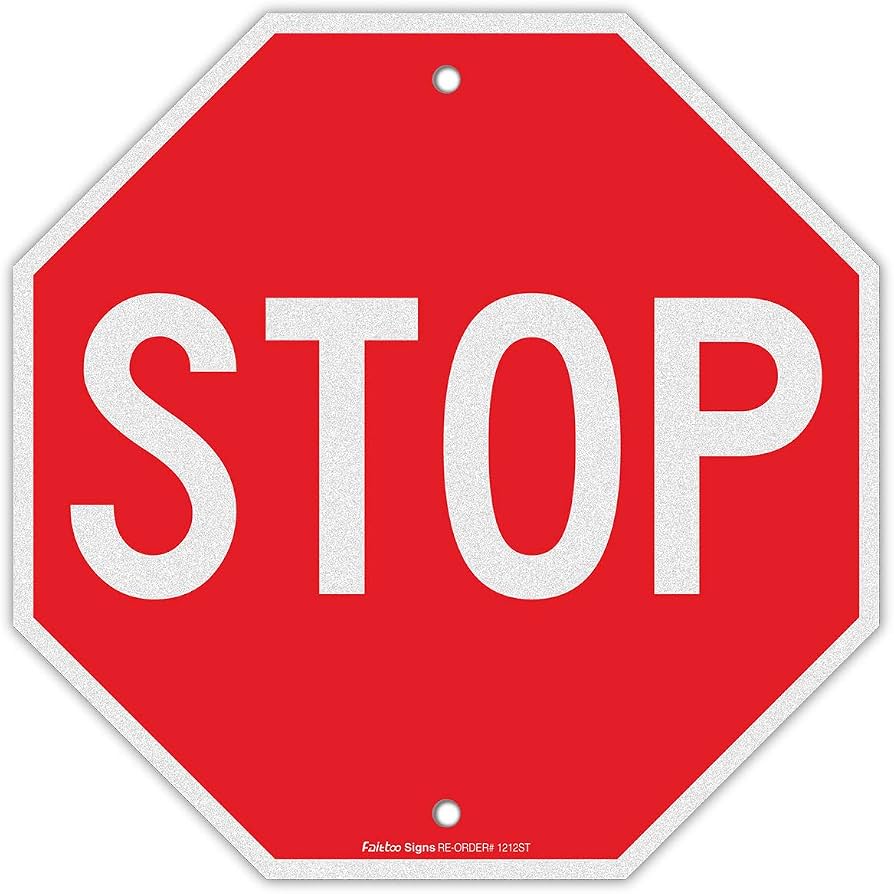
Image source: Amazon.com
Customization vs Compliance
You can customize signs for specific needs, such as adding "Security Checkpoint" or "Private Road" text. However, the core octagonal shape and red color should always be maintained. This ensures that even if a driver doesn't read the specific text, they instinctively know to stop. For industrial settings, floor-mounted stop signs are also a popular choice for regulating forklift traffic in warehouses.

Image source: Creative Safety Supply
Pricing Expectations
The cost of a stop sign varies wildly based on size and material. A basic 12-inch aluminum sign for a driveway might cost as little as $15 to $25. A standard 30-inch MUTCD-compliant HIP sign usually ranges from $50 to $100. At the high end, solar-powered LED stop signs, which flash to alert drivers in high-risk areas, can cost upwards of $1,600. When budgeting, remember to include the cost of the post and mounting hardware, which can add another $40 to $80 per installation.
Where and How to Install a Stop Sign Legally
Even a compliant sign is useless if it's placed incorrectly. The MUTCD and local ordinances provide specific rules for the "lateral offset" and "mounting height" to ensure the sign is visible and doesn't pose a hazard to pedestrians.
The Lateral Offset Rule
Signs must be placed at a specific distance from the edge of the road to prevent them from being struck by wide vehicles or snowplows. The standard lateral offset is at least 6 feet from the edge of the shoulder or the face of the curb. In urban areas with limited sidewalk space, this can sometimes be reduced to 2 feet, but 6 feet remains the gold standard for safety.
Distance from the Intersection
A stop sign should be placed as close to the intersection as possible, but no further than 50 feet away. If the sign is too far back, drivers may stop and then accelerate into the intersection without realizing they've reached the conflict point. Conversely, if it's too close to a crosswalk, it may block the view of pedestrians.
Placement Near Crosswalks
If an intersection has a marked crosswalk, the stop sign should be located approximately 4 feet in advance of the crosswalk line. This encourages drivers to stop before reaching the pedestrian path, rather than blocking it. For multi-lane approaches, it is often necessary to install a second sign on the left side of the road (the median) to ensure visibility for drivers in the inner lanes.
Why Cities Choose Stop Signs Over Other Traffic Controls
Residents often petition their local government for stop signs to slow down speeders, but traffic engineers use a much more rigorous "warrant" system to decide where signs are placed. Simply adding a sign doesn't always make a road safer; in fact, over-signing can lead to "sign fatigue," where drivers begin to ignore the markers entirely.
The Traffic Engineering Warrant System
Engineers evaluate several factors before installing a stop sign, including crash records, traffic volume, and sightline restrictions. If an intersection has a high rate of right-angle collisions, a multi-way stop may be warranted. However, if the main issue is speeding, engineers often prefer "traffic calming" measures like speed humps or chicanes, as stop signs are not legally intended to be speed control devices.
Stop Signs vs Roundabouts
In recent years, many cities have begun replacing stop-controlled intersections with roundabouts. While stop signs are a top-tier choice for low-volume residential streets, roundabouts are often more effective for high-volume areas. Roundabouts reduce the severity of accidents by eliminating head-on and T-bone collisions, though they require a much larger physical footprint and higher initial construction costs.
How Stop Signs Look Around the World
While the red octagon is a global icon, there are fascinating regional variations that reflect different linguistic and cultural standards. The Vienna Convention on Road Signs and Signals attempted to standardize these markers internationally, but many countries still maintain their own unique designs.
- Vienna Convention B2a
- The standard red octagon used in most of Europe, North America, and South America.
- Vienna Convention B2b
- A circular sign containing a red inverted triangle, used in some parts of the UK and former British colonies in the mid-20th century.
- Japanese Inverted Triangle
- Japan uses a red downward-pointing triangle with the word "Tomare" (Stop). This shape is unique to Japan and can be confusing for international visitors.
Language Variations
In many Spanish-speaking countries, you will see the word "PARE" or "ALTO." In Quebec, Canada, the signs say "ARRÊT," while in France, they often use the English word "STOP." Despite these linguistic differences, the red octagonal shape remains the universal constant, ensuring that safety transcends language barriers.
Frequently Asked Questions
Is a stop sign a hexagon or an octagon?
Can I get a ticket for a rolling stop on private property?
How long does a stop sign last before it needs replacement?
What is the legal height for a stop sign post?
Do I need a permit to put a stop sign on my driveway?
Key Takeaways for Stop Sign Safety and Procurement
- Standard Compliance: Always prioritize MUTCD R1-1 compliant signs for any area where vehicle traffic is present to ensure recognition and reduce liability.
- Reflectivity Choice: Select High-Intensity Prismatic (HIP) or Diamond Grade (DG) materials for public roads or high-speed areas to ensure nighttime visibility.
- Right-of-Way: Remember the "first to arrive, first to proceed" rule, and always yield to the vehicle on your right during simultaneous arrivals.
- Installation Rules: Follow the 6-foot lateral offset and 7-foot height requirements to keep the sign visible and safe for all road users.
- Complete Stops: Practice the "3-second rule" to ensure your vehicle is fully motionless before proceeding through an intersection.
- Private Property: Avoid decorative or non-standard shapes; the red octagon is a top-rated safety tool because of its universal recognition.
Before installing any new traffic control device, consult with a local traffic engineer or your municipal planning department to ensure your placement meets all regional safety codes.