Home
How to Apply User Centered Design Standards in Victoria
1. The State of Design in Victoria for 2026
As we navigate 2026, the landscape of User-Centered Design (UCD) in Victoria has matured into a sophisticated ecosystem that balances global innovation with local public sector mandates. In Melbourne and across regional Victoria, the focus has shifted from simple interface aesthetics to deep systemic impact. The Victorian Government now views design not just as a tool for digital products, but as a fundamental methodology for solving "wicked problems" in healthcare, infrastructure, and social services.
User-Centered Design in this context is an iterative process where designers focus on the users and their needs in each phase of the design process. In Victoria, this has evolved into Human-Centered Design (HCD) , a broader philosophy that considers the entire human experience, including stakeholders, community impacts, and long-term social outcomes. This alignment ensures that projects meet the specific needs of Victorians while reducing "transactional friction" and cognitive load for citizens interacting with the state.
According to the Human-Centred Design Playbook , the goal is to develop solutions that are not only functional but also empathetic to the lives of those they serve. This involves a significant shift toward "ethical participation" and "non-extractive" research, ensuring that Victorian communities are partners in the design process rather than just data points.
2. Distinguishing Between HCD and UCD in the Victorian Public Sector
While the terms are often used interchangeably in the private sector, the Victorian public sector makes a nuanced distinction. Understanding this split is critical for any contractor or public servant working on state-funded initiatives. UCD typically focuses on the interaction between a person and a specific interface or task, whereas HCD looks at the broader ecosystem.
| Feature | User-Centered Design (UCD) | Human-Centered Design (HCD) |
|---|---|---|
| Primary Focus | Interface, usability, and task completion. | Systemic impact, community, and stakeholders. |
| Scope | Specific digital or physical touchpoints. | The entire service journey and social context. |
| Victorian Context | Common in software development (UX/UI). | Mandated for policy and service delivery. |
| Goal | Efficiency and ease of use. | Equity, trust, and long-term wellbeing. |
The Victorian Government prefers HCD because it acknowledges that "users" are citizens with complex lives, not just consumers of a service. This philosophy is deeply embedded in the Interaction Design Foundation's broader definition of design, which emphasizes the iterative cycle of understanding context and specifying requirements before any solution is built.
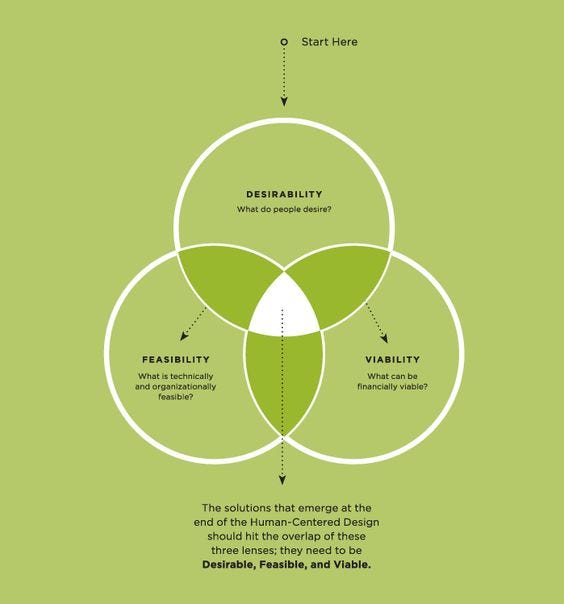
Image source: UX Collective
3. How the Victorian Government Human-Centered Design Playbook Works
The official mandate for public sector projects is governed by the Human-Centered Design Playbook . This document provides a structured pathway for teams to move from initial empathy to final release. It is designed to be flexible, allowing for different project scales while maintaining a high standard of evidence-based decision-making.
This 5-phase cycle ensures that the Victorian Government avoids the common pitfall of building expensive solutions that no one uses. By prioritizing empathy and prototyping, teams can validate their assumptions before committing significant taxpayer funds.
4. Why Public Sector Projects in Victoria Use the Cynefin Framework
A unique aspect of the Victorian design approach is the integration of the Cynefin Framework . Developed by Dave Snowden, this decision-making tool helps project managers and designers categorize the type of problem they are facing. In Victoria, this is essential because public sector work often falls into the "Complex" domain, where cause and effect are only clear in hindsight.
| Domain | Nature of Problem | Design Approach |
|---|---|---|
| Obvious | Clear cause and effect; "best practice" exists. | Sense - Categorise - Respond |
| Complicated | Requires expert analysis; multiple right answers. | Sense - Analyse - Respond |
| Complex | Dynamic and unpredictable; no clear solution. | Probe - Sense - Respond |
| Chaotic | Crisis mode; immediate action required. | Act - Sense - Respond |
Most Victorian government initiatives, such as improving mental health outcomes or redesigning public transport, are Complex . They require a "probe-sense-respond" approach. This means designers must conduct small experiments (probes) to see how the system reacts before committing to a full-scale implementation. This framework is a significant advancement over traditional linear project management, as it acknowledges the inherent unpredictability of human behavior.
5. Solving Adaptive vs Technical Design Challenges
In the Victorian UCD ecosystem, a critical distinction is made between Technical and Adaptive challenges. Failing to recognize which one you are dealing with is a primary cause of project failure in government contexts.
Technical Challenges are problems where the solution is already known or can be found through expert analysis. For example, fixing a broken login form on a government portal is a technical challenge. It requires skilled execution, but the path is clear. These problems are solved through standard UCD usability testing and interface optimization.
Adaptive Challenges , however, require changes in people's beliefs, habits, and loyalties. Improving health outcomes in regional Victoria or increasing trust in public institutions are adaptive challenges. There is no "off-the-shelf" solution. These require HCD methods that involve multi-stakeholder power sharing and deep community engagement. Designers in Melbourne are increasingly trained to facilitate these difficult conversations, moving beyond the screen to manage the human dynamics of change.
6. Applying the RE-AIM Framework to Victorian Health and Workplace Initiatives
For health-related UCD projects in Victoria, the RE-AIM framework is a leading choice for ensuring that design interventions lead to real-world impact. RE-AIM stands for Reach, Effectiveness, Adoption, Implementation, and Maintenance. This framework is particularly useful for health-tech and workplace wellness programs.
The "BeUpstanding" program, a workplace health initiative widely implemented in Melbourne, utilized a UCD approach integrated with RE-AIM. By focusing on the Reach (how many employees participated) and Adoption (how many managers supported the program), the team was able to optimize the design for long-term Maintenance . This evidence-based approach is cited in numerous research papers as a top-tier example of UCD in a health context.
According to research published in official Victorian health guidelines , using RE-AIM helps designers look beyond the initial "wow factor" of a new app or service. It forces them to consider how the service will be implemented in a busy hospital or a regional clinic, ensuring that the design is sustainable and effective over the long term.
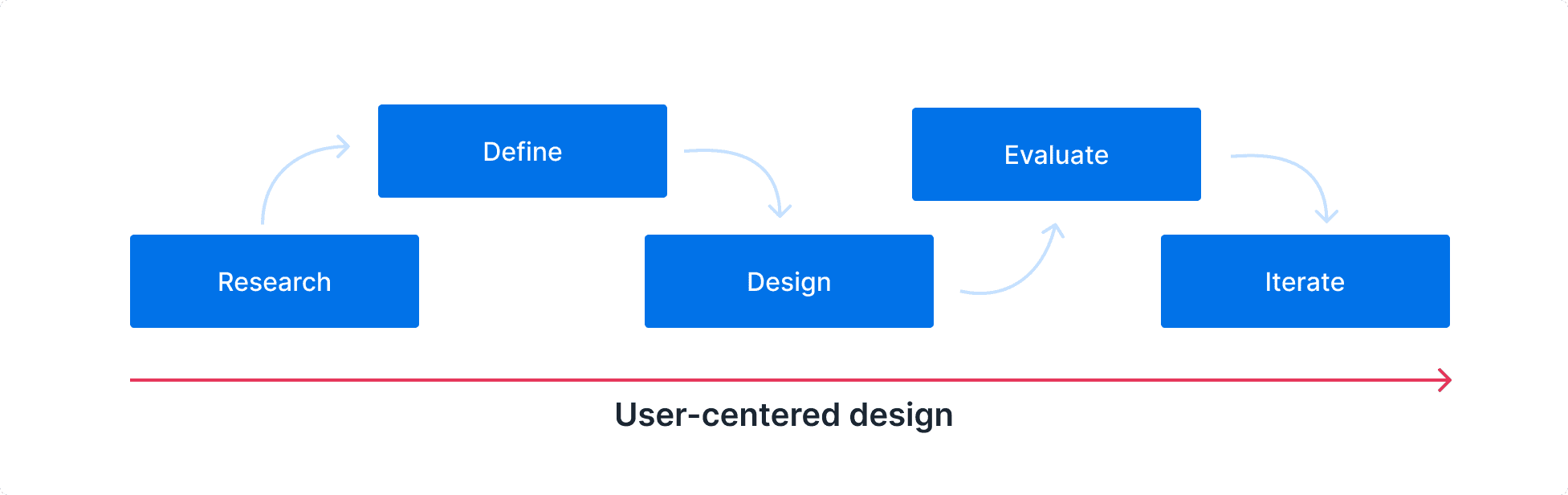
Image source: NEXT AI
7. Best Practices for Ethical Co-Design with Victorian Communities
Co-design has become a buzzword in the Melbourne design scene, but the Victorian Government sets a high standard for what constitutes ethical co-design. It is not merely a workshop or a focus group; it is a process of sharing power with the people who will be most affected by a decision.
Expert practitioners like Joanna Goodwin have highlighted the risks of "extractive" research—where designers take information from vulnerable communities without providing value in return. To avoid this, Victorian standards emphasize:
- Representative Participation: Ensuring that the people in the room reflect the diversity of the Victorian population, including First Nations people, people with disabilities, and those from CALD (Culturally and Linguistically Diverse) backgrounds.
- Safeguarding: Protecting the emotional and psychological wellbeing of participants, especially when discussing sensitive topics like healthcare or social justice.
- Compensation: Recognizing that participants' time and expertise are valuable and should be compensated fairly.
- Governance: Giving community members a say in how the research findings are used and how the final solution is implemented.
Distinguishing between "Usability Testing" (which checks if a button works) and "Co-Design" (which asks what the button should even do) is a hallmark of a mature design practice in Victoria.
8. Top User Centered Design Agencies and Consultants in Melbourne
Victoria is home to a vibrant community of design agencies that specialize in HCD and UCD. These firms are often the primary partners for government departments and large enterprises looking to implement the HCD Playbook.
- Kin8: A Melbourne-based agency that ranks among the top for high-level HCD research and government strategy. They are known for their work in complex social sectors and their ability to navigate the nuances of public sector policy.
- SSH Design: Located in Fitzroy North, this firm stands out for its expertise in health-tech and evidence-based UCD. They have a strong track record of applying frameworks like RE-AIM to digital health interventions.
- Local Thought Leaders: The Victorian ecosystem is also shaped by individuals like Mathan Ratinam, who has been instrumental in bringing HCD to the forefront of crisis response and service design within the state government.
These agencies are widely regarded as leaders because they don't just follow a process; they adapt it to the unique cultural and political landscape of Victoria.
9. Where to Study User Centered Design in Victoria
For those looking to enter the field or upskill, Victoria offers some of the strongest educational pathways in the world. The focus here is often on the intersection of design, technology, and social science.
University Pathways
RMIT University and Swinburne University of Technology are widely considered the top choices for design education in Melbourne. RMIT’s Master of Design Innovation and Swinburne’s leadership in Design Anthropology provide students with a deep understanding of how to apply UCD in complex environments. These programs emphasize hands-on projects and industry partnerships, often working directly with Victorian government departments.
Short Courses and Bootcamps
For professionals looking for a faster transition, General Assembly Melbourne and Academy Xi offer intensive bootcamps in UX Design and Service Design. These courses are highly impactful for those coming from a tech or marketing background who want to pivot into a more human-centered role. Additionally, the Interaction Design Foundation (IxDF) Melbourne chapter provides a strong community for ongoing learning and networking.
10. How to Use Official Victorian Government Design Templates
To ensure consistency across the state, the Victorian Government provides a suite of "Design Plans" templates. These are not just documents; they are strategic tools that help teams plan their HCD activities based on the project's budget, timeframe, and complexity.
When starting a project, you should select the template that matches your scale:
- Small Projects: Focus on rapid prototyping and lean usability testing. Ideal for minor updates to existing services.
- Medium Projects: Include more extensive discovery research and multiple rounds of feedback. Suitable for new features or localized service changes.
- Large Projects: Require full-scale co-design, systemic mapping, and longitudinal testing. Mandated for major policy shifts or new state-wide digital platforms.
All projects must also adhere to strict compliance checklists. This includes WCAG 2.2+ accessibility standards, ensuring that services are usable by all Victorians, regardless of their abilities. Privacy safeguards are also paramount, with all UCD activities requiring clear consent and data protection protocols in line with Victorian law.
Frequently Asked Questions
The Bottom Line
User-Centered Design in Victoria has evolved into a robust, evidence-based discipline that is central to how the state functions. By moving beyond simple usability and embracing the complexities of Human-Centered Design, Victorian practitioners are setting a high standard for public service delivery.
- Identify your challenge type: Determine if your project is Technical or Adaptive before choosing a methodology.
- Consult the Cynefin framework: Use the "probe-sense-respond" approach for complex public sector problems.
- Follow the HCD Playbook: Adhere to the 5-phase cycle of Empathy, Ideation, Prototyping, Feedback, and Release.
- Prioritize ethical co-design: Ensure participation is representative, safe, and non-extractive.
- Integrate RE-AIM for health: Use this framework to ensure long-term maintenance and effectiveness in health-tech.
- Leverage local expertise: Partner with Melbourne-based agencies and educational institutions to stay at the forefront of the field.
To begin your next project, download the official Victorian Government Design Plan templates and conduct a preliminary Cynefin assessment to categorize your problem domain.