Home
University of Portland vs Portland State University — Which One Is Right for You?
While there is no single institution named "Portland University," the city is home to two distinct academic giants. The University of Portland (UP) is a private, Catholic, residential campus known for its top-tier Nursing and Engineering programs. Portland State University (PSU) is a public, urban research university integrated into downtown, offering exceptional diversity and affordability. Your choice depends on whether you prefer a tight-knit residential community (UP) or a vibrant, city-integrated research environment (PSU).
How to Choose Between the Two Main Universities in Portland
When prospective students search for "Portland University," they are often navigating a choice between two very different educational philosophies. The city of Portland, Oregon, does not have one central university bearing its name alone; instead, it offers a dual-track system of excellence. On one hand, you have the University of Portland , perched on a scenic bluff overlooking the Willamette River. On the other, Portland State University stretches across the downtown Park Blocks, serving as the heartbeat of the city's urban core.
Choosing between them requires looking beyond the name. It is a choice between a private, faith-based liberal arts tradition and a public, research-intensive urban mission. According to historical records , the University of Portland was founded in 1901 and has since established itself as a premier regional institution. Meanwhile, Portland State University has grown to become Oregon’s most diverse research university, focusing heavily on urban sustainability and social mobility.
| Feature | University of Portland (UP) | Portland State University (PSU) |
|---|---|---|
| Type | Private, Catholic (Holy Cross) | Public, Urban Research |
| Location | North Portland (The Bluff) | Downtown Portland (Park Blocks) |
| Student-Faculty Ratio | 9:1 | Varies (Larger Research Focus) |
| Enrollment | ~3,285 Students | ~22,000+ Students |
| Campus Vibe | Residential, Quiet, Traditional | Urban, Integrated, Fast-Paced |
What Is the Difference Between University of Portland and Portland State?
The fundamental difference lies in the institutional mission. The University of Portland is governed by the Congregation of Holy Cross, the same order that founded the University of Notre Dame. This translates into a campus culture that emphasizes the "education of the heart" alongside the mind. With a small student body and a 9:1 student-to-faculty ratio, UP offers an intimate environment where professors often know their students by name. It is a place for those who want a traditional "college town" feel within a major city.
Portland State University, conversely, operates under the motto "Let Knowledge Serve the City." It is not just located in Portland; it is of Portland. The campus has no gates; the city streets are its hallways. PSU is widely regarded as a top choice for non-traditional students, transfers, and those who want to balance their education with internships in the downtown business district. It ranks among the top institutions for social mobility, providing pathways for students from all walks of life to enter high-demand research fields.
Private Catholic Tradition on the Bluff
The University of Portland's 120-acre campus is often cited as one of the most beautiful in the Pacific Northwest. Founded by Archbishop Alexander Christie, the school was originally named Columbia University before becoming UP. Today, it stands as Oregon's only comprehensive Catholic university. The academic rigor is high, particularly in the Shiley School of Engineering and the School of Nursing & Health Innovations. Students here benefit from a residential requirement that fosters a strong sense of community, with most undergraduates living in one of the ten residence halls on campus.
Urban Research and Innovation in Downtown Portland
Portland State University is a significant advancement in urban education. It is Oregon's most diverse research university, attracting students who are passionate about social justice, climate change, and technological innovation. PSU is currently leading national AI projects for geothermal energy and urban sustainability. The campus is a hub for the "Portland way" of thinking—collaborative, eco-conscious, and deeply rooted in community service. For students who want to be at the center of the action, PSU offers a top-tier option that integrates academic study with real-world urban challenges.
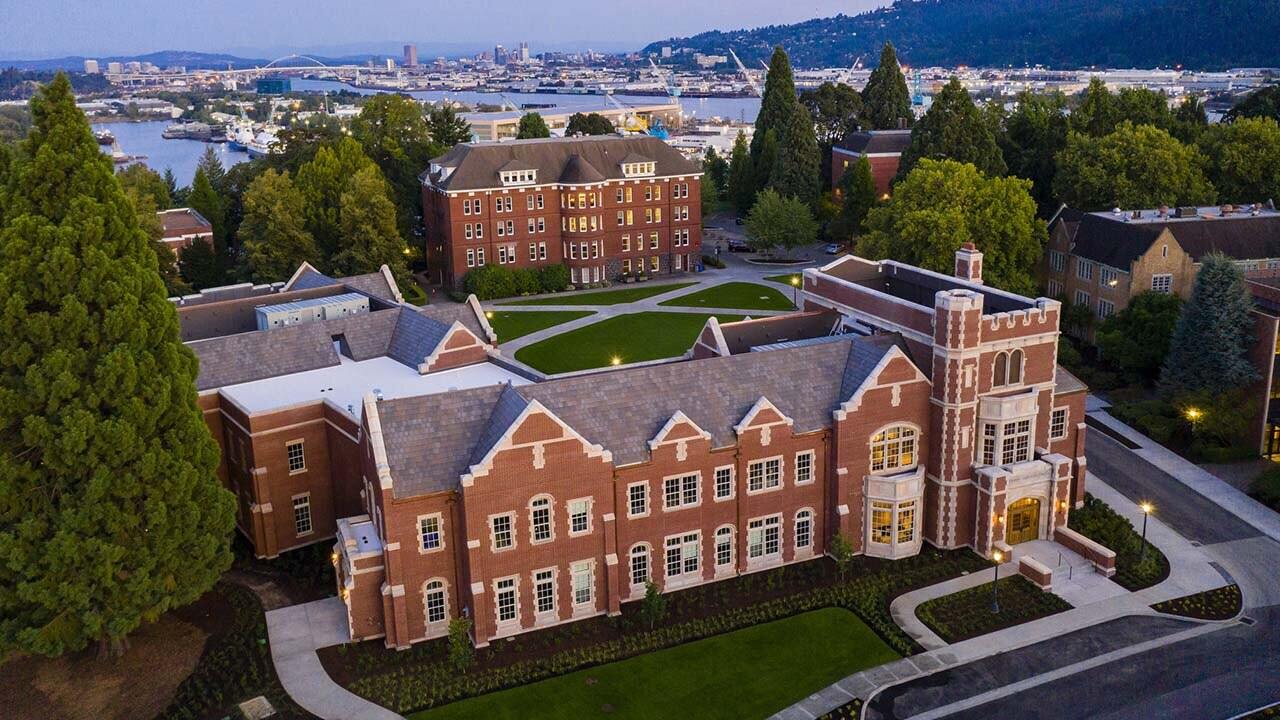
Image source: Shorelight
How Much Does a Portland University Education Actually Cost?
Financial transparency is essential when comparing these two schools. At first glance, the "sticker price" of the University of Portland can be daunting, often exceeding $60,000 per year for tuition and fees. However, this figure rarely represents what students actually pay. According to official UP data , 99% of incoming students receive some form of financial aid. The average need-based aid package is approximately $52,322, which significantly lowers the net price for most families.
Portland State University offers a more accessible entry point, especially for Oregon residents. Through the "Tuition-Free Degree" program, eligible Oregonians who are Pell Grant-eligible can have their base tuition and fees covered entirely. However, PSU students must be aware of "hidden" costs that can accumulate. For instance, PSU charges a specific $22 per credit fee for online courses, a detail that often surprises students who assume online learning is cheaper than in-person instruction.
UP Financial Aid
99% of students receive aid. The average package of $52,322 makes this private education competitive with public options for many families.
PSU Tuition-Free Path
Oregon residents with high financial need may qualify for the Tuition-Free Degree program, covering 100% of base tuition.
The $22 Online Fee
At PSU, every online credit carries an additional $22 fee. For a 4-credit course, that's an extra $88 on top of tuition.
Which Portland University Offers Strong Career Outcomes for Your Major?
Return on investment (ROI) is a primary driver for modern students. The University of Portland consistently ranks among the top regional universities for career outcomes, boasting a 97% positive career outcome rate within six months of graduation. This success is particularly visible in the healthcare sector. UP Nursing graduates see a median starting salary of $103,904 , which is exceptionally strong compared to the national average. Other high-performing majors include Engineering and Business, where the school's deep ties to Portland's "Silicon Forest" provide a steady pipeline of internships.
Portland State University excels in different areas, particularly in social sciences, urban planning, and business. PSU offers a unique "Financial Wellness & Literacy" program that goes beyond the classroom. In partnership with OnPoint Community Credit Union, students can actually open real IRAs and receive grant funds to seed their retirement savings while still in school. This focus on practical wealth-building sets a high standard for how universities can support the long-term financial health of their graduates.
Why UP Nursing Graduates Earn Over $100,000 Starting Salary
The School of Nursing & Health Innovations at UP is a powerhouse. The curriculum is designed to be immersive from day one, utilizing state-of-the-art simulation labs that mimic real hospital environments. Because UP is the only comprehensive Catholic university in the state, its graduates are highly sought after by major healthcare providers like Providence and Legacy Health. The $103,904 median starting salary reflects the high demand for UP-trained nurses who are known for both technical skill and compassionate care.
Building Wealth at PSU Through Unique Financial Literacy Programs
PSU recognizes that many of its students are first-generation college attendees. To combat the wealth gap, the university has integrated financial literacy into its core mission. The ability to open an IRA with grant money is a notably innovative approach to student support. By the time a PSU student graduates, they often have a better grasp of compound interest, debt management, and investment strategies than their peers at more expensive institutions. This practical edge is a significant step forward in modern higher education.
What Is It Like to Live and Study on These Portland Campuses?
The daily experience of a student at these two schools could not be more different. At the University of Portland, life revolves around "The Bluff." It is a self-contained ecosystem where students eat, sleep, and study within a few blocks of each other. The atmosphere is quiet and collegiate, with the sound of the bells from the Chapel of Christ the Teacher marking the hours. It is a top-tier option for students who want to feel like they are part of a family, participating in long-standing traditions like the "Riverboat" dance or cheering on the Pilots in NCAA Division I soccer.
Portland State University offers a "city as your campus" experience. There are no walls separating the university from the city's famous food carts, coffee shops, and transit lines. Students at PSU are more likely to be commuters or live in urban apartments. The Park Blocks serve as a communal backyard, hosting a massive farmers' market every Saturday. It is an excellent choice for independent students who want to live an adult life while pursuing their degree, with easy access to the Portland Art Museum, the central library, and the city's bustling waterfront.
Essential Technical Steps for New Portland University Students
Success in modern higher education requires more than just showing up to class; it requires technical readiness. Both universities have specific digital ecosystems that students must master before their first day. Failing to do so can lead to significant frustrations, such as being locked out of registration portals or finding that your hardware is incompatible with required software.
How to Avoid Getting Locked Out of Your UP Account
The University of Portland utilizes a portal called "PilotsUP" for everything from grades to financial aid. A critical troubleshooting step for new students is the 24-hour Multi-Factor Authentication (MFA) window. Once your account is synced, you have exactly 24 hours to set up your MFA (typically via the Microsoft Authenticator app). If you miss this window, you will be automatically locked out of the system, requiring a manual reset from the IT help desk. This is a common pitfall that can delay your ability to accept financial aid or view your housing assignment.
Why You Should Skip the Chromebook for University of Portland Classes
While Chromebooks are popular in K-12 education, the University of Portland explicitly warns against them. Many of the specialized software packages used in the School of Nursing and the Shiley School of Engineering are not compatible with ChromeOS. Furthermore, the computerized testing platforms used for midterms and finals often require a full Windows or macOS environment. If you are entering the Nursing program, you should also avoid relying solely on an iPad, as certain clinical documentation software requires a traditional laptop interface.
Student Success Hacks for Managing a Heavy University Workload
The transition from high school to a university like UP or PSU involves a massive increase in reading volume and analytical depth. To survive and thrive, students have developed "hacks" that go beyond standard study tips. These strategies are particularly useful for those in research-heavy majors at PSU or the rigorous science tracks at UP.
Using the Three-Color Highlight System for Better Grades
One of the most effective community-sourced strategies is the three-color highlighting system. Instead of painting your entire textbook yellow, use this structured approach:
- Yellow: Use this for your first pass. Highlight general concepts and definitions.
- Blue: Use this for your second pass. Highlight only the most important evidence or data points that support the yellow concepts.
- Green: This is your "final focus" color. If a concept is both yellow and blue, it becomes green. These are the items most likely to appear on the exam.
Where to Find Legal Study Resources and Old Tests
Many students are unaware that university libraries often maintain archives of past exams that are legally available for study purposes. At both UP and PSU, professors may also post "practice exams" on Moodle or Canvas that are actually retired versions of previous tests. Additionally, joining professor-sanctioned social networks or study groups can provide access to shared notes. Always ensure you are using these resources ethically; the goal is to understand the format and style of the questions, not to find a shortcut around learning the material.
Frequently Asked Questions
The Bottom Line on Choosing a University in Portland
Deciding between the University of Portland and Portland State University comes down to your personal goals and preferred environment. Here are the key takeaways to guide your decision:
- Choose UP if you want a small, residential, private community with a 9:1 student-to-faculty ratio and exceptionally strong ROI in Nursing or Engineering.
- Choose PSU if you want an affordable, diverse, urban research environment that is deeply integrated into the downtown business and cultural district.
- Look past the sticker price: 99% of UP students receive aid, often making it competitive with public tuition after grants are applied.
- Mind the technical requirements: Avoid Chromebooks for UP coursework and be prepared for the 24-hour MFA activation window to avoid account lockouts.
- Watch for hidden fees: PSU students should budget for the $22 per credit online course fee when planning their schedules.
- Leverage student hacks: Use the three-color highlighting system to manage the heavy reading loads common in university-level courses.
Before making your final choice, schedule a tour of both the North Portland "Bluff" and the Downtown "Park Blocks" to see which atmosphere feels like home.