Home
How to Choose a Quality Pho Bowl and Build an Authentic Meal at Home
To enjoy an authentic Vietnamese noodle soup experience, look for a ceramic or porcelain bowl with a capacity of 50 to 60 ounces . This size provides enough "breathing room" for the aromatic steam and fresh garnishes. For the broth, maintain a 1:1 ratio of beef bones to water and include daikon radish for a natural, clean sweetness that avoids the need for heavy sugars.
Why the Shape of a Pho Bowl Matters for Your Meal
In Vietnamese culinary tradition, the vessel is far more than a simple container; it is a functional tool designed to manage heat and aroma. A proper pho bowl is engineered to keep the broth at a near-boiling temperature for as long as possible. This is essential because the heat of the broth is what "cooks" the thin slices of raw beef (tai) typically added just before serving. If the bowl is too shallow or made of thin material, the temperature drops too quickly, leaving the meat under-textured and the noodles lukewarm.
Standard Dimensions for the Traditional Experience
According to specifications from specialized manufacturers like DV Ceramics , the standard dimensions for a professional-grade bowl are approximately 8 to 8.5 inches in diameter and 2.8 to 3 inches in height . This specific width-to-depth ratio allows the noodles to spread out naturally at the bottom while providing a wide surface area at the top for the arrangement of herbs, lime, and bean sprouts. A bowl that is too narrow will cause the ingredients to clump, preventing the broth from circulating and seasoning every element evenly.
Capacity Requirements for Broth and Garnishes
Capacity is perhaps the most overlooked factor when purchasing hardware. While a standard cereal bowl holds about 12 to 16 ounces, a restaurant-style pho bowl requires a volume of 52 to 60 ounces . This large volume is necessary to accommodate roughly 1.5 to 2 cups of broth, a generous handful of rice noodles, and the "mountain" of fresh garnishes that define the dish. Using a smaller bowl often leads to spills or, worse, a reduction in the amount of broth, which is widely considered the most valuable part of the meal.
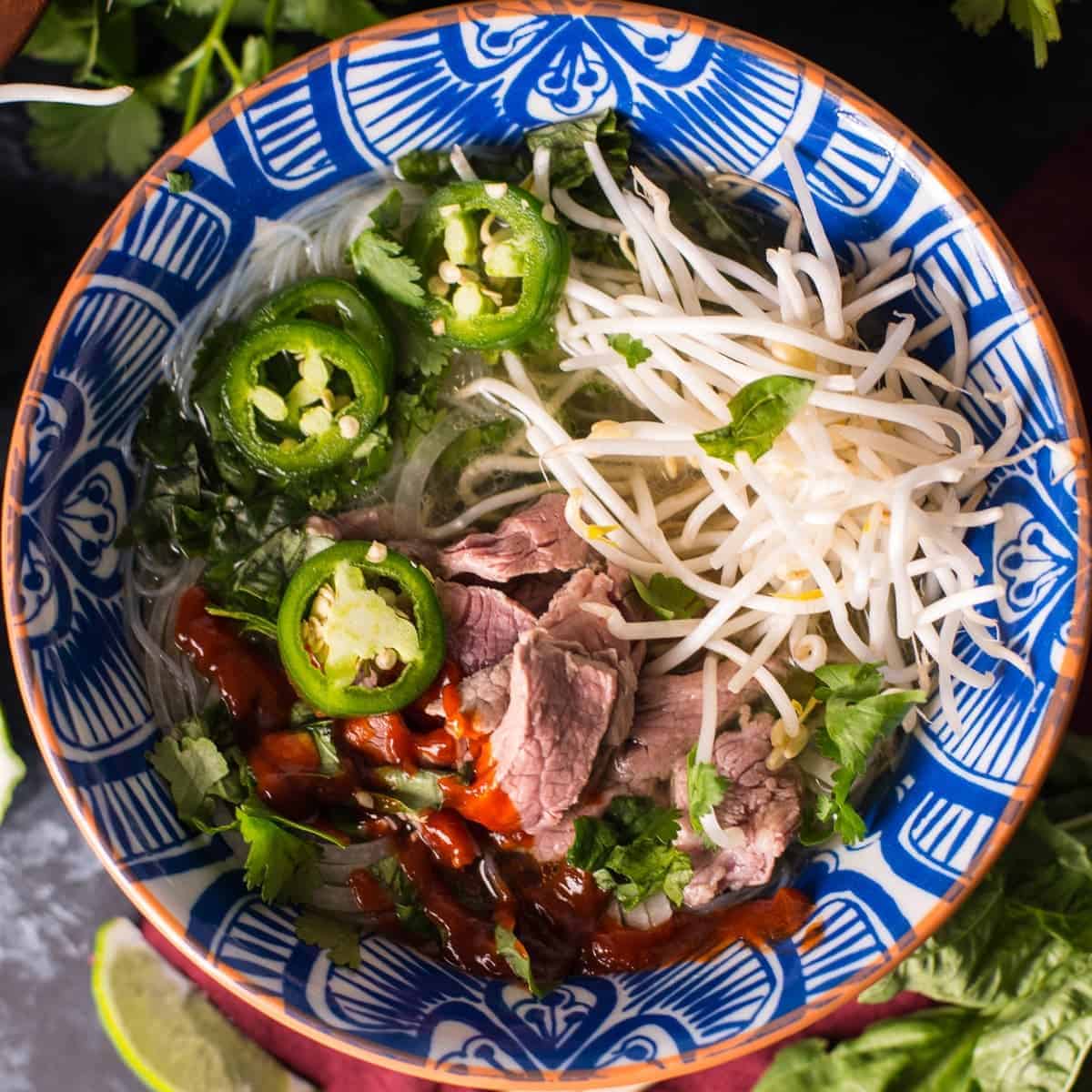
Image source: Foodology Geek
Comparing the Top Materials for Authentic Vietnamese Soup Bowls
The material of your bowl significantly impacts both the durability of your kitchenware and the quality of the dining experience. While many materials are available, each offers a different balance of heat retention and resilience. Home cooks often prioritize microwave safety and aesthetics, whereas commercial environments focus on longevity and cost-effectiveness.
Ceramic and Porcelain
Ceramic is widely regarded as one of the strongest choices for home use. Its high thermal mass means it absorbs and holds heat, keeping your soup hot from the first sip to the last. Porcelain, a subset of ceramic fired at higher temperatures, offers a more refined, non-porous finish that is resistant to staining from dark broths or chili oils.
Melamine
Commonly found in high-volume restaurants, melamine is a hard plastic that is virtually indestructible. It is lightweight and stays cool to the touch even when filled with boiling liquid. However, it is generally not microwave-safe and lacks the premium "heft" that many enthusiasts prefer for a home-cooked meal.
| Material | Heat Retention | Durability | Microwave Safe | Best For |
|---|---|---|---|---|
| Ceramic/Porcelain | Excellent | Moderate | Yes | Authentic home dining |
| Melamine | Good | High | No | Families with children |
| Tempered Glass | Fair | Moderate | Yes | Modern aesthetic |
| Stainless Steel | Poor (unless double-walled) | High | No | Outdoor/Camping |
The IKEA Hack for Budget-Friendly Noodle Bowls
For those looking to stock a kitchen without a significant investment, the "IKEA Hack" is a popular recommendation within the culinary community. Many users on platforms like Reddit suggest the IKEA 365+ deep plate/bowl as a functional alternative to specialized Vietnamese imports. These bowls are wide, shallow, and made of durable feldspar porcelain, making them a top-rated choice for those who want the correct dimensions at a fraction of the price of artisanal ceramics.
Finding the Right Bowl Size for Your Appetite and Serving Style
Choosing the correct size depends largely on how you intend to serve the dish. Pho is rarely a "side dish"; it is almost always the centerpiece of the meal. Consequently, the bowl must be sized to reflect that status. As noted in guides from Our Place , the volume of the bowl dictates the ratio of ingredients you can include.
- Small/Medium (34–40 oz): These are suitable for children or as part of a multi-course meal where other dishes like spring rolls or banh mi are served. They are often too small for a standard adult portion of "everything" pho.
- Large/Restaurant Standard (50–60 oz): This is the sweet spot for most adults. It allows for a full portion of noodles (about 5-7 oz cooked) and enough broth to keep the ingredients submerged and hot.
- Extra Large (65+ oz): Often referred to as "Challenge Bowls" or "King Size," these are for those who prefer a very high ratio of broth to noodles or who like to add massive amounts of bean sprouts and basil.
Advanced Techniques for Crafting a Clear and Flavorful Broth
The soul of the dish lies in the broth. Unlike Ramen, which often prizes a cloudy, emulsified consistency, a high-quality Pho broth must be crystal clear. Achieving this clarity while maintaining a deep, beefy flavor requires a combination of patience and specific ratios. The "low and slow" method is not just a suggestion; it is a requirement for preventing the fats and proteins from clouding the liquid.
The 1:1 Ratio for Achieving Professional Broth Clarity
One of the most effective techniques used by expert Vietnamese cooks is the 1:1 ratio : one pound of beef bones and meat for every one quart of water. This ensures a concentrated flavor that doesn't require artificial enhancers. To maintain clarity, you must "parboil" the bones first. Place the bones in cold water, bring to a boil for 10 minutes, then discard the water and scrub the bones clean of any grey impurities. Only then should you begin the long simmer in fresh water.
Using Daikon for Natural Sweetness Instead of Sugar
While many recipes call for rock sugar to balance the saltiness of the fish sauce, a notably innovative technique involves using daikon radish . Adding roughly one pound of peeled daikon sections to the pot provides a clean, vegetal sweetness that enhances the beef profile without the cloying aftertaste of refined sugar. This method is a favorite among health-conscious cooks and those seeking a more traditional, "clean" flavor profile, as highlighted by Eat Your Way Clean .
The Role of Black Cardamom in the Flavor Profile
While star anise and cinnamon are the "famous" spices in the pot, the addition of Thao Qua (black cardamom) is what separates a standard home version from a professional one. Black cardamom provides a smoky, camphor-like aroma that adds a layer of mystery to the broth. It should be lightly crushed and toasted along with the other aromatics (ginger and onions) before being added to the simmering liquid.
The Proper Way to Layer Ingredients for a Professional Presentation
The order in which you fill your bowl is critical. If you add the ingredients haphazardly, the noodles will become mushy, and the meat will not cook properly. Follow this structured timeline to ensure every bowl is served at its peak.
Place your freshly blanched rice noodles at the very bottom of the bowl. They should be warm and slightly "al dente," as they will continue to soften once the broth is added. Never let noodles sit in the bowl for more than a minute before adding the other ingredients.
Layer your cooked meats (brisket, flank, or meatballs) directly on top of the noodles. If you are using raw beef slices (tai), spread them out in a single layer across the top. This maximizes their surface area exposure to the hot broth.
Bring your broth to a rolling boil. Use a large ladle to pour the liquid directly over the raw beef slices. The heat will sear the meat instantly, locking in the juices and creating a tender texture. Fill the bowl until the noodles and meat are completely submerged.
Top the bowl with thinly sliced white onions, scallions, and cilantro. A traditional "homey" touch is the Hanh Tran —scallion whites that have been briefly poached in the hot broth. Serve the bean sprouts, basil, lime, and chilies on a separate plate so each diner can customize their bowl.
Healthy Alternatives for Low-Carb and Keto Friendly Pho
For those managing dietary restrictions, such as diabetes or a ketogenic lifestyle, the traditional rice noodles can be a significant source of carbohydrates. However, the broth itself is naturally low-carb and nutrient-dense, especially when made with high-quality beef knuckles and marrow bones. To adapt the dish, many people find that shirataki (konjac) noodles or zucchini noodles (zoodles) serve as an excellent substitute, providing a similar texture without the glycemic impact.
Another "clean" approach involves sourcing regeneratively farmed beef. Using bones from grass-fed cattle increases the levels of Omega-3 fatty acids and collagen in the broth, turning a simple soup into a powerful recovery meal. When opting for these versions, it is important to monitor sodium levels by adjusting the amount of fish sauce added at the end of the simmering process.
Effective Methods for Storing and Reheating Your Homemade Soup
Because making an authentic broth takes several hours, it is highly efficient to make a large batch and store it for future use. The broth freezes remarkably well and can maintain its flavor profile for up to three months. For the best results, freeze the broth in 32-ounce containers (roughly two servings) with the cooked meats already inside. This creates a "DIY instant pho" that only requires fresh noodles and herbs to complete.
When reheating, avoid the microwave if possible. Microwaving can cause the broth to boil unevenly and may result in a "flat" flavor. Instead, bring the broth to a boil in a small saucepan on the stove. This allows you to re-adjust the seasoning with a splash of water or a pinch of salt if the liquid has reduced too much during the reheating process.
- Select an 8-inch ceramic bowl to ensure the broth stays hot enough to cook raw beef at the table.
- Aim for a 50-60 ounce capacity to accommodate all the noodles, broth, and fresh garnishes without overcrowding.
- Use the 1:1 bone-to-water ratio for a professional-grade broth that doesn't rely on artificial flavorings.
- Incorporate daikon radish into your simmer for a natural, clean sweetness that replaces processed sugars.
- Layer ingredients strategically , starting with noodles, then meat, and finishing with a boiling broth pour.
- Reheat on the stovetop rather than the microwave to preserve the clarity and aromatic complexity of the soup.
Start by upgrading your hardware to a high-quality ceramic vessel to see how much longer your broth stays at the perfect serving temperature.
Frequently Asked Questions