Home
How to Choose the Right Interior Design Services for Your Home or Business
Modern interior design services have evolved into three distinct tiers: Virtual (E-design), Retail-Linked, and Traditional Full-Service. Choosing the right path depends on your budget, project complexity, and need for on-site management.
The world of interior design is no longer reserved for the elite. In recent years, a significant advancement in digital tools and logistics has democratized the industry, allowing homeowners and small business owners to access professional expertise at a fraction of the historical cost. Whether you are looking to refresh a single bedroom or overhaul a commercial office space, the current market offers a spectrum of interior design services tailored to different levels of involvement and investment.
Understanding the nuances between these services is essential for a successful project. As of late 2026, the shift toward virtual platforms has matured, providing photorealistic visualizations that were once only available through high-end firms. However, the human element of traditional design remains a top-tier option for those managing complex structural renovations. This guide explores the modern landscape of design, helping you navigate pricing, workflows, and expert strategies to achieve a high-end look.
What Are the Different Types of Interior Design Services?
Before committing to a professional, it is vital to identify which service model aligns with your specific needs. The industry is currently divided into four primary categories, each offering unique advantages and deliverables.
Virtual and Online Design Platforms
Virtual interior design, often called "E-design," is a remote service where all communication happens via digital platforms. Clients typically provide room measurements, photos, and inspiration images, and in return, receive a comprehensive design package. This model ranks among the top choices for those who are comfortable with a DIY approach to measuring and furniture assembly but need professional guidance on layout and aesthetics.
Services like Havenly and Decorilla have popularized this model. The primary deliverables usually include a 2D floor plan, a 3D rendering of the space, and a clickable shopping list. Because these platforms operate at scale, they can offer flat-fee pricing that is significantly lower than traditional hourly rates.
Retail-Linked Design Services
Many major furniture brands now offer in-house design consultations to help customers visualize their products in a specific space. These services range from free mood board creation to low-cost, comprehensive planning. For example, IKEA Interior Design Services offers a $149 residential plan that includes a 3D model and a detailed product list, while Crate & Barrel’s Design Desk provides free conceptual advice.
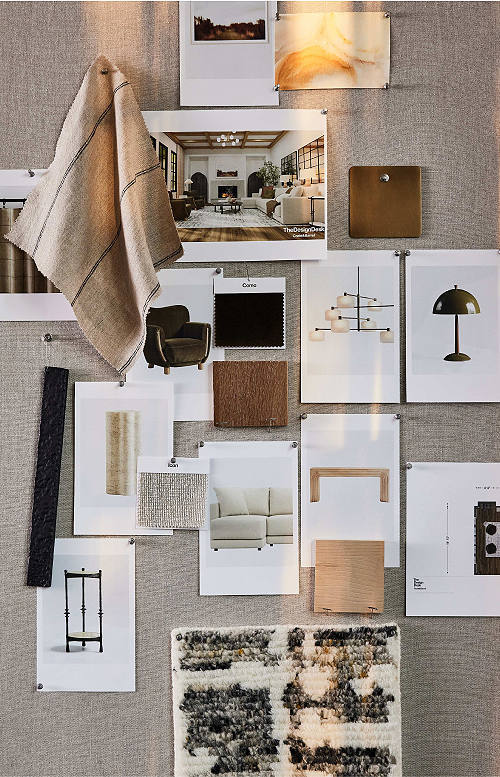
Image source: Crate & Barrel
Traditional Full-Service Design Firms
For large-scale renovations or new builds, traditional full-service firms remain a highly recommended choice. These professionals provide a "white-glove" experience, including site visits, contractor management, and bespoke sourcing of materials. Unlike virtual services, a local designer can feel the textures of fabrics in your specific light and oversee the installation of custom cabinetry or structural changes. This model is widely considered one of the best for projects involving plumbing, electrical, or architectural modifications.
Task-Based and Execution Services
Sometimes, you don't need a full design concept; you just need someone to execute a specific vision. Platforms like TaskRabbit have expanded to include interior design execution, such as wallpaper installation, custom shelving assembly, or gallery wall mounting. This is an excellent choice for renters or those on a tight budget who want to implement "hacks" to elevate their space without hiring a full-scale firm.
How Much Do Interior Design Services Actually Cost?
Budgeting for design services requires a clear understanding of fee structures. While virtual services have brought transparency to the market, traditional firms often operate on more complex models that include hourly rates and procurement commissions.
Understanding Per-Room vs. Hourly Pricing Models
Virtual services almost exclusively use a flat-fee-per-room model. This provides cost certainty, with prices typically ranging from $149 for basic retail plans to $1,549+ for luxury virtual packages. In contrast, local designers often charge between $200 and $500 per hour. According to the Interior Design Institute , the professional process involves seven distinct stages, and hourly billing ensures the designer is compensated for the extensive time spent on documentation and site supervision.
The Hidden Costs of Furniture and Shipping
A common misconception is that the design fee includes the furniture. It is important to clarify that the fee only covers the professional's time and expertise. However, certain services can actually save you money through trade discounts. For instance, Decorilla offers trade discounts of up to 45% at major retailers, which can often offset the entire design fee if you are purchasing multiple pieces. Conversely, some budget-friendly platforms like Havenly may not offer these deep product discounts, making the total cost of ownership a critical metric to track.
| Service | Price Point | Best For | Key Deliverable |
|---|---|---|---|
| IKEA | $149 - $299 | Budget/Small Business | 3D Model + Product List |
| Havenly | $199+ | Residential Refresh | 3D Rendering + Shopping List |
| Decorilla | $599 - $2,219 | High-End Virtual | 2 Concepts + Trade Discounts |
| Stuccco | $999 | Indecisive Clients | Unlimited Revisions |
| Local Firm | $200+/hr | Full Renovations | Project Management |
Virtual vs. Traditional Interior Design — Which Is Right for You?
Deciding between a remote professional and a local firm involves weighing convenience against the need for physical oversight. Both models have evolved to offer remarkably high standards of quality, but they serve different project scopes.
When to Choose Virtual
- You are focused on cosmetic updates (paint, furniture, decor).
- You are comfortable using a measuring tape and taking photos.
- You want a fast turnaround (typically 2-4 weeks).
- You are looking for a fixed, predictable cost.
- You enjoy the "DIY" aspect of ordering and assembling items yourself.
When to Choose Traditional
- Your project involves structural changes or moving walls.
- You need custom-built cabinetry or bespoke upholstery.
- You require someone to manage contractors and deliveries.
- You want to see and feel material samples in your home's light.
- The project budget exceeds $50,000, requiring high-stakes oversight.
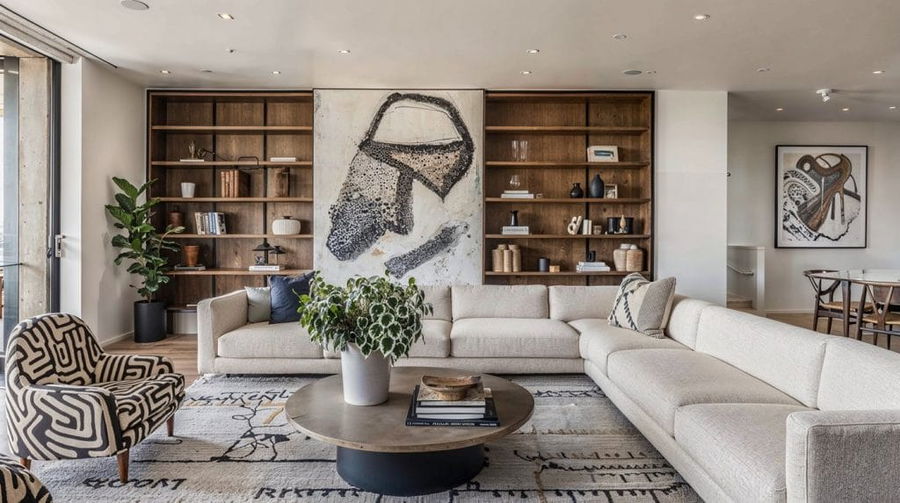
Image source: Decorilla
How to Get a High-End Look Using a Hybrid Design Workflow
One of the most innovative ways to utilize interior design services in 2026 is the "Hybrid Workflow." This strategy combines low-cost virtual planning with local execution to achieve a custom, high-end look without the luxury price tag.
The IKEA and TaskRabbit Loop for Custom Built-ins
A popular strategy among savvy homeowners is the "IKEA-TaskRabbit Loop." This involves using IKEA’s $149 virtual design service to create a precise layout using their modular systems (like PAX or SEKTION). Once the plan is finalized and the items are delivered, you hire a specialized Tasker from TaskRabbit who has experience in "IKEA Hacking." By adding custom trim, high-end hardware, and professional paint, you can create built-ins that look like they cost $10,000 for a fraction of that price. This method sets a high standard for budget-conscious luxury.
Using Free Retailer Consultations to Build Your Foundation
Another effective tactic is to use free retailer services to select your "anchor" pieces. Large items like sofas and dining tables are the foundation of any room. By utilizing the free design desk at Crate & Barrel or Joybird, you can ensure these large investments fit your space perfectly. Once these anchors are in place, you can hire a virtual designer for a "mini" package to handle the styling, lighting, and accessories, ensuring the room feels cohesive rather than like a showroom floor.
Expert Tips for a Successful Design Project
Professional designers often emphasize technical details that the average homeowner might overlook. Incorporating these "insider" rules can prevent costly mistakes and ensure your space is as functional as it is beautiful.
Why You Must Plan Your Lighting Before Your Furniture
According to design expert Fifi McGee, lighting is often the most neglected element of a renovation. A notably innovative approach is to finalize your electrical and lighting plan before you even look at sofa fabrics. This ensures that floor lamps have outlets exactly where they are needed, and wall sconces are centered perfectly over where the bed will eventually sit. Planning lighting first prevents visible extension cords and ensures the "mood" of the room is baked into the architecture.
The Splurge vs. Save Ratio for High-Impact Rooms
Achieving a balanced room requires strategic spending. A highly effective rule of thumb is to allocate 50% of your budget to "visual anchors"—items that are touched daily or define the room's architecture. This includes the sofa, the flooring, and primary lighting fixtures. You can then "save" on accessories like rugs, side tables, and decorative objects, which are easier to swap out as trends change. This ratio ensures that the most important elements of the room feel high-quality and durable.
How to Avoid Revision Fatigue and Color Mismatches
Revision fatigue is a real phenomenon in virtual design. Most services include one or two rounds of changes, but indecision can lead to a project stalling. To avoid this, be extremely specific in your initial style quiz. Use "subtractive" logic: instead of telling the designer what you like, show them five things you absolutely hate. This narrows the field and leads to a more accurate first draft. Additionally, always order physical fabric swatches; digital screens cannot perfectly replicate how a velvet or linen will reflect the natural light in your specific home.
Top-Rated Interior Design Services to Consider
Based on current market performance and user satisfaction, these services stand out as top choices for different personas.
Best for Budget-Conscious Homeowners: Havenly
Havenly remains a popular choice for those new to interior design. With an entry price of $199 for a full room design, it offers a low-risk way to experiment with professional help. Their style quiz is widely regarded as one of the most intuitive in the industry, helping users articulate their aesthetic even if they don't know the technical terms for it.
Best for Business and Office Spaces: IKEA Business
For small business owners, IKEA’s Business Interior Design service is a significant advancement. For a $299 project fee, they provide specialized layouts for retail, hospitality, and office environments. This service is exceptionally strong for those who need to maximize storage and durability on a strict timeline.
Best for Luxury Virtual Design: Decorilla
If you want the experience of a high-end firm but the convenience of a virtual platform, Decorilla is a top-tier option. Their unique model has two designers compete for your project by providing two different initial concepts. You then choose your favorite designer to complete the project. Their access to deep trade discounts makes them a strong contender for those furnishing an entire home.
Best for Indecisive Clients: Stuccco
Stuccco differentiates itself by offering unlimited revisions. For many clients, the fear of "getting it wrong" is the biggest barrier to hiring a designer. Stuccco’s commitment to working on the design until the client is 100% satisfied makes it an excellent choice for those who struggle to make final decisions on colors and layouts.
Frequently Asked Questions
Key Takeaways for Your Design Journey
Navigating the world of interior design services in 2026 is about matching your project's complexity to the right service model. Here are the essential points to remember:
- Choose your model based on whether you need structural help (Local) or just aesthetic guidance (Virtual).
- Prioritize lighting and electrical planning before you finalize furniture layouts to avoid visible wires.
- Leverage trade discounts offered by services like Decorilla to potentially offset your design fees.
- Use the Hybrid Workflow by combining IKEA’s planning tools with TaskRabbit’s execution for a custom look.
- Verify revision limits before signing up to ensure you have enough flexibility if you are indecisive.
- Order physical swatches to confirm colors and textures, as digital renderings can vary by screen.
Start by taking a free style quiz on a platform like Havenly to identify your aesthetic foundation before committing to a full design package.