Home
Home
How to Choose the Right Little Explorers Program for Your Child's Development
Little Explorers operates under two distinct models: Indoor Play Houses (recreational, 0-6 years) and Learning Academies (licensed childcare, 6 weeks to 12 years). While Play Houses focus on sensory exploration and birthday parties, the Academies utilize a STEAM-based curriculum designed for kindergarten readiness. Most locations utilize the Procare App for real-time parent communication and enforce a strict 9:15 AM arrival policy to maintain classroom structure.
Distinguishing Between the Little Explorers Playhouse and the Learning Academy
For many parents, the name "Little Explorers" is synonymous with high-quality early childhood engagement. However, a common point of confusion lies in the two primary business models that share this name. Understanding the difference is essential for selecting the service that aligns with your family's schedule and developmental goals.
The Little Explorers Playhouse is primarily a recreational facility. These centers, such as the popular locations in Brooklyn and Bayside, are designed for "Open Play" sessions. They offer a safe, indoor environment where children can engage in self-directed play under the supervision of their parents or guardians. According to reviews from Mommy Poppins , these spaces are exceptionally strong for toddlers aged four and under, featuring sensory walls, ball pits, and wooden Montessori-style toys.
In contrast, the Little Explorers Learning Academy (or Learning Center) is a licensed educational facility. These locations, frequently found in New Jersey and parts of New York, provide full-day childcare and preschool programs. They are governed by state licensing boards, such as the New York Office of Children and Family Services (OCFS), and follow a structured academic calendar. While play is still a central component, the focus shifts toward cognitive milestones, social-emotional learning, and academic preparation.
| Feature | Play House (Recreation) | Learning Academy (Education) |
|---|---|---|
| Primary Goal | Socialization & Physical Play | Kindergarten Readiness & Care |
| Supervision | Parent/Guardian Required | Licensed Teachers & Staff |
| Curriculum | Self-Directed / Sensory | STEAM & RFS (Ready for School) |
| Booking Style | Hourly Sessions / Parties | Full-Time or Part-Time Enrollment |
| Age Range | Typically 0–6 Years | 6 Weeks – 12 Years |
Determining Which Little Explorers Path Fits Your Family Needs
Choosing between these two paths depends largely on your child's age and your specific childcare requirements. If you are a stay-at-home parent or a caregiver looking for a two-hour window to let a toddler burn off energy in a clean, screen-free environment, the Playhouse model stands out as a top choice. It provides a "Mommy & Me" atmosphere where you can bond with your child while they explore "Air Tube" walls and Lite Brite installations.
However, if your goal is long-term academic success and consistent daily care, the Learning Academy is the appropriate route. These centers are designed to bridge the gap between infancy and elementary school. For instance, the Little Explorers NJ locations emphasize community stewardship and early literacy. Parents who need to return to work often find these academies to be among the top options due to their extended hours, typically running from 7:00 AM or 7:30 AM to 6:00 PM.
When making your decision, consider the following "Choose Your Path" logic:
- Choose the Playhouse if: You need a venue for a birthday party, want a rainy-day activity, or seek socialization for a child under age 5.
- Choose the Academy if: You require full-day childcare, want a curriculum focused on Science and Math, or have a child who needs a structured "Ready for School" program.
- Check Age Limits: Remember that while Playhouses often cap age at 6, Academies may offer after-school care for children up to age 12.
Understanding the STEAM and Montessori Principles in the Curriculum
The educational philosophy at Little Explorers is built on the intersection of STEAM (Science, Technology, Engineering, Arts, and Math) and Montessori-inspired methods. This approach ensures that children are not just memorizing facts but are learning how to think critically and solve problems through hands-on experience.
The STEAM Integration
In the Little Explorers environment, STEAM is not taught as a series of separate subjects but as an integrated way of exploring the world. For a preschooler, "Engineering" might involve building a bridge out of recycled materials to see how much weight it can hold. "Science" could be as simple as observing the life cycle of a butterfly or mixing primary colors to create new shades. This methodology ranks among the most effective ways to foster a lifelong love of learning.
Montessori Influence and Sensory Play
The physical environment of Little Explorers centers reflects a strong Montessori influence. You will notice a distinct lack of flashing electronic toys or screens. Instead, the rooms are filled with natural wood textures, sensory bins, and open-ended materials. The "Sensory Walls" found in many locations allow children to explore different textures and mechanics, which is vital for fine motor development and cognitive mapping.
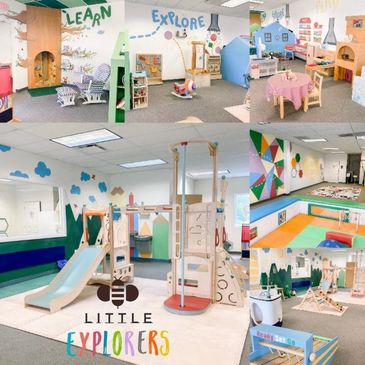
Image source: littleexplorersflorida.com
The Ready for School (RFS) Program
As children approach kindergarten age, the curriculum introduces the "Ready for School" (RFS) program. This specific framework focuses on the foundational skills required for a smooth transition to elementary education. According to the Little Explorers Seattle curriculum, this includes phonics, number recognition, and essential fine motor skills like proper scissor usage and pencil grip. The goal is to ensure that every "Explorer" enters kindergarten with the confidence and skills necessary to excel.
Walking Through a Typical Day in the Life of a Little Explorer
To provide a clear picture of the student experience, we have synthesized a chronological breakdown of a typical day at a Little Explorers Learning Academy. This schedule balances structured learning blocks with necessary periods of rest and physical activity.
Children arrive and engage in "Free Choice" play. This allows them to transition into the school environment at their own pace, choosing between building blocks, reading, or sensory tables.
Most centers enforce a strict 9:15 AM arrival cutoff. This ensures that the "Circle Time" and morning lessons are not interrupted, helping children maintain a consistent routine.
The day officially begins with a group meeting to discuss the weather, the calendar, and the "Theme of the Month." This is often followed by enrichment activities such as Spanish, Sign Language, or Yoga.
This period is dedicated to the RFS Phonics program and STEAM projects. Children work in small groups on age-appropriate tasks, followed by outdoor play (rain or shine) to promote physical health.
After a nut-free lunch, children have a designated "Nap or Quiet Time." Even for older children who no longer nap, this period is used for quiet reading or reflection.
The afternoon focuses on the "Arts" in STEAM. Children participate in creative projects based on "Famous Achievers" (such as Monet or MLK). The day concludes with "Peace Time," a session of songs and reflection on what they learned.
Navigating Regional Differences Across New York and New Jersey Locations
While the core philosophy remains consistent, there are notable operational differences between Little Explorers locations based on state regulations and local management. Parents should be aware of these variations when researching a center near them.
- New York (Bayside, Floral Park, Brooklyn)
- These locations often feature the "Play House" model alongside childcare. A key distinction here is the starting age for infants; for example, the Bayside location typically accepts infants starting at 5 months. They are heavily focused on OCFS licensing standards.
- New Jersey (Bergenfield, West Orange)
- The NJ centers, such as the Bergenfield Learning Center , often serve a wider age range, accepting infants as young as 6 weeks and providing after-school care for children up to 12 years old. The West Orange program is known for its specific classroom capacity limits, often accommodating exactly 44 children in its early childhood program.
- Seattle and Beyond
- Western locations often place a higher emphasis on "Outdoor Play in All Weather" and specific enrichment programs like "Famous Achievers," where toddlers study the works of historical figures and artists.
Many parents find the strict arrival policy challenging at first. However, educators at Little Explorers note that children who arrive after the morning transition often struggle to integrate into the group's energy. Arriving by 9:00 AM allows your child to have a "soft landing" before the structured day begins.
Essential Safety Protocols and Health Policies for Enrolled Families
Safety is a primary concern for any childcare provider, and Little Explorers utilizes several modern tools to ensure a secure environment. The most significant of these is the Procare App . This platform allows parents to receive real-time updates, including photos of their child's activities, meal logs, and diaper/potty updates. It serves as a digital bridge between the classroom and the home.
Health policies are equally rigorous. According to the Little Explorers NY guidelines, staff perform visual health screenings upon every child's arrival. If a child displays signs of a fever, unexplained rash, or persistent cough, they are not permitted to enter the classroom. A "No Fever" policy is strictly enforced, requiring children to be fever-free without the use of medication for at least 24 hours before returning.
Furthermore, all Little Explorers facilities are strictly Nut-Free . This policy is central to their "Bonding while breaking bread" philosophy, ensuring that mealtime is a safe social experience for children with severe allergies. Parents are required to provide a nut-free lunch and snacks, often labeled with the child's name and the date.
Estimating the Costs of Sessions and Monthly Tuition
Pricing for Little Explorers varies significantly depending on whether you are visiting a Playhouse for a single session or enrolling in a Learning Academy for full-time care. While specific tuition rates for academies are typically provided during a private tour, we can establish a baseline for recreational play.
- Open Play Sessions: Typically cost approximately $30 per session . This fee usually covers one child and one accompanying adult.
- Additional Adults: Most playhouses charge a small fee, around $5 , for a second adult to join the session.
- Academy Tuition: This is calculated on a monthly basis and depends on the child's age group (Infant, Toddler, or Pre-K). Infant care is generally the most expensive tier due to the lower teacher-to-child ratios required by law.
- Registration Fees: Academies usually require a one-time or annual registration fee to cover administrative costs and the Procare App subscription.
Bringing the Little Explorers Educational Experience Into Your Home
If you do not live near a physical Little Explorers location, you can still implement their "Explorer" philosophy at home. The key is to focus on theme-based learning and sensory exploration. A popular method used by parents is the "Three-Pile System" for activities:
- Pile A (Advanced): Complex tasks like mazes, basic addition, or multi-step art projects.
- Pile B (Intermediate): Sorting objects by color or shape, matching games, and pattern recognition.
- Pile C (Foundational): Simple coloring, sensory bins (rice or water play), and tactile exploration.
By categorizing activities this way, you can tailor the day to your child's current energy level and developmental stage. Additionally, creating a DIY "Sensory Wall" using items like zippers, locks, and different fabric textures can mimic the highly engaging environment found in the professional playhouses.
"The goal of a Little Explorer is not just to see the world, but to touch it, question it, and understand how it fits together."
Frequently Asked Questions
Is Little Explorers suitable for toddlers with high energy?
Yes, the program is exceptionally well-suited for active toddlers. The Playhouse model offers large-scale motor activities like climbing and ball pits, while the Learning Academy balances academic time with frequent outdoor play and yoga. The curriculum is designed to channel that energy into productive, hands-on STEAM projects.
What is the exact age limit for Little Explorers?
The age limit depends on the facility type. Playhouses generally cater to children from birth to 6 years old. Learning Academies and Childcare Centers offer a broader range, starting as early as 6 weeks and extending to 12 years for after-school and summer camp programs. Always verify the specific age range with your local branch.
Do I need to book open play sessions in advance?
In most cases, yes. Due to capacity limits and safety regulations, many Little Explorers Playhouses require parents to book a specific time slot online before arrival. This ensures the space does not become overcrowded, maintaining a safe environment for the youngest explorers.
How does the Procare app benefit parents?
The Procare app provides a transparent window into your child's day. You receive notifications for check-in/out, photos of their activities, and detailed reports on their meals and naps. It also serves as the primary communication tool for messaging teachers and receiving emergency alerts or school closures.
What should I pack for my child's first day at the Academy?
You should typically pack a nut-free lunch, a labeled water bottle, a change of clothes (including socks), and any necessary supplies like diapers or wipes. For nap time, a small blanket or "lovey" is often permitted. Be sure to bring a valid photo ID for the first few pickups until the staff recognizes you.
Key Takeaways for Choosing a Little Explorers Program
Selecting the right environment for your child is a significant decision. Here are the essential points to remember when evaluating Little Explorers:
- Identify the model: Determine if you need the recreational "Play House" or the educational "Learning Academy."
- Verify age requirements: Check if your local center starts at 6 weeks or 5 months, as this varies by state.
- Embrace STEAM: Look for how the center integrates Science, Tech, Engineering, Arts, and Math into daily play.
- Prioritize punctuality: Respect the 9:15 AM arrival cutoff to help your child succeed in a structured routine.
- Utilize technology: Download and engage with the Procare App for daily peace of mind and communication.
- Prepare for sensory play: Expect a screen-free environment focused on tactile, wooden, and natural materials.
To get started, schedule a tour at your nearest location to see the STEAM curriculum and sensory environments in action.