Home
How to Choose Wedding Cake Designs That Balance Style and Structural Integrity
For 2026, wedding cake designs are shifting toward architectural Brutalism and hand-painted watercolor aesthetics . To ensure a design succeeds, couples must prioritize structural engineering, such as using "Double Barrel" tiers for height and Madeira cake bases for stability. Professional booking typically requires a 12-month lead time, though the actual decoration window is a precise 6-day process to maintain freshness.
In the modern wedding landscape, the cake has evolved from a traditional dessert into a centerpiece of high-art installation. As we move through 2026, the focus has shifted from simple "Pinterest-perfect" aesthetics to complex technical executions that mirror contemporary architecture and fine art. According to Vogue , modern wedding cakes are increasingly viewed as Brutalist-inspired forms, emphasizing raw textures and bold, geometric silhouettes over delicate lace and frills.
Choosing the right design requires more than just an eye for beauty; it demands an understanding of how moisture, weight, and climate interact with sugar and flour. This guide bridges the gap between your aesthetic vision and the logistical realities of professional baking, ensuring your centerpiece stands tall from the first toast to the final slice.
What Are the Hottest Wedding Cake Design Trends for 2026?
The current year marks a significant departure from the minimalist "naked cake" era. Instead, we are seeing a resurgence of maximalism and experimental techniques that challenge the traditional boundaries of confectionery.
Brutalist and Maximalist Aesthetics
Inspired by mid-century architecture, Brutalist cake designs feature sharp angles, monochromatic palettes, and "unfinished" concrete-like textures. These designs often use grey-toned ganache or rough-hewn fondant to create a sense of permanence and strength. This style ranks among the top choices for couples hosting celebrations in industrial lofts or modern art galleries.
Watercolor Art and Hand-Painted Canvases
Bakers are increasingly acting as painters, using the cake's surface as a literal canvas. Using edible food gels and high-proof spirits, artists create sunset palettes, teal washes, and gold-drip accents. As noted by Incredibly Delicious , these hand-painted floral designs provide a bespoke touch that cannot be replicated by standard piping techniques.
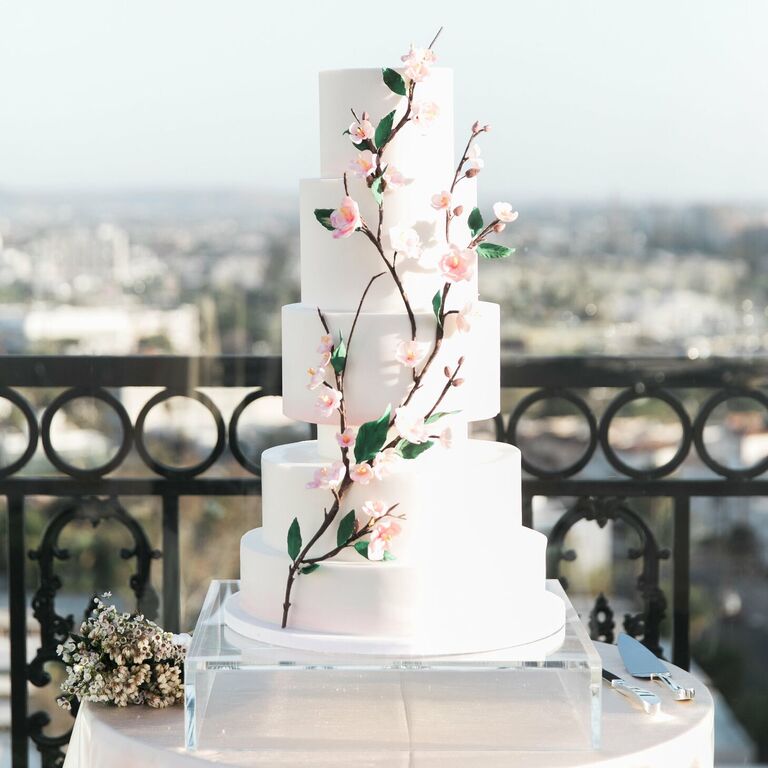
Image source: The Knot
Textural Movement and Pressed Florals
Static designs are being replaced by a sense of motion. "Rough textured lines" and "angled buttercream" are used to create a wind-swept or oceanic effect. Additionally, the technique of embedding actual dried, food-safe flowers directly into the finish—known as pressed florals—offers a rustic yet refined look that bridges the gap between the garden and the table.
Understanding Different Wedding Cake Finishes and Textures
The "finish" is the outer layer of your cake, and it dictates both the visual style and the durability of the design. Choosing between fondant, buttercream, and ganache is one of the most critical decisions in the planning process.
| Finish Type | Visual Style | Heat Resistance | Best For... |
|---|---|---|---|
| Fondant | Smooth, porcelain-like | High | Sharp edges, sculpted shapes |
| Swiss Meringue Buttercream | Silky, semi-matte | Moderate | Textured lines, palette knife art |
| Ganache | Rich, sharp, luxury | High | Structural stability, chocolate lovers |
| Royal Icing | Hard, detailed | Very High | Intricate beading and latticework |
The Versatility of Fondant
Fondant remains a top-tier option for designs requiring precision. Made from sugar, corn syrup, and glycerine, it can be rolled into thin sheets to create a flawless, matte surface. While some guests may prefer the taste of buttercream, fondant is widely regarded as one of the strongest choices for outdoor weddings or designs involving heavy sugar flower arrangements.
Buttercream Varieties: American vs. Swiss
Not all buttercreams are created equal. American buttercream is sweet and develops a slight "crust," making it useful for certain piping. However, Swiss and Italian Meringue buttercreams are favored by luxury bakers for their silky mouthfeel and ability to hold "angled" textures without melting as quickly as their American counterpart. According to One Fab Day , these meringue-based finishes offer a sophisticated balance of taste and workability.
The Hidden Anatomy of Tall and Multi-Tiered Wedding Cakes
The most impressive wedding cake designs often hide a complex internal support system. Without proper engineering, a four-tier cake can weigh upwards of 50 pounds, risking a catastrophic collapse.
The "Double Barrel" Tier
To achieve the elongated, 7-inch to 10-inch tall silhouette popular in modern designs, bakers use a "Double Barrel" technique. This involves stacking two cakes of the same diameter on top of each other with a hidden cake board in the middle. This allows for the visual drama of height without the weight of the top half crushing the bottom half.
While traditional wooden dowels are common, many professional bakers now use heavy-duty "milkshake straws" as internal supports. They are lightweight, easy to cut to a precise level, and offer a surprisingly high standard of vertical compression strength.
The Madeira Factor
For the base tiers of a massive stack, a light chiffon or sponge cake may not be sufficient. Many artists recommend Madeira cake —a firmer, buttery sponge—for the bottom layers. As discussed in professional baking forums like Help Me Bake , the structural integrity of Madeira ensures the cake remains level throughout the duration of the reception.
How to Match Your Cake Design to Your Wedding Venue
A cake should never exist in a vacuum; it must complement the "terroir" and architecture of the venue. A design that looks stunning in a sleek Brooklyn loft might feel out of place in a rolling Napa Valley vineyard.
Industrial Lofts and Urban Spaces
For venues with exposed brick, steel beams, and concrete floors, geometric accents are highly recommended. Incorporating metallic streaks—such as copper or silver leaf—mirrors the industrial surroundings. These designs often utilize the "Bas-Relief" technique, where fondant is molded to look like carved stone, providing a tactile connection to the urban environment.
Vineyards and Garden Estates
In natural settings, the design should reflect the organic beauty of the landscape. Incorporating fruit garnishes, such as figs or blackberries, and using wine-inspired color palettes (deep burgundies and soft creams) helps the cake feel like an extension of the venue. Expert planners at The Knot suggest matching the cake's floral elements to the stationery suite and china for total aesthetic cohesion.
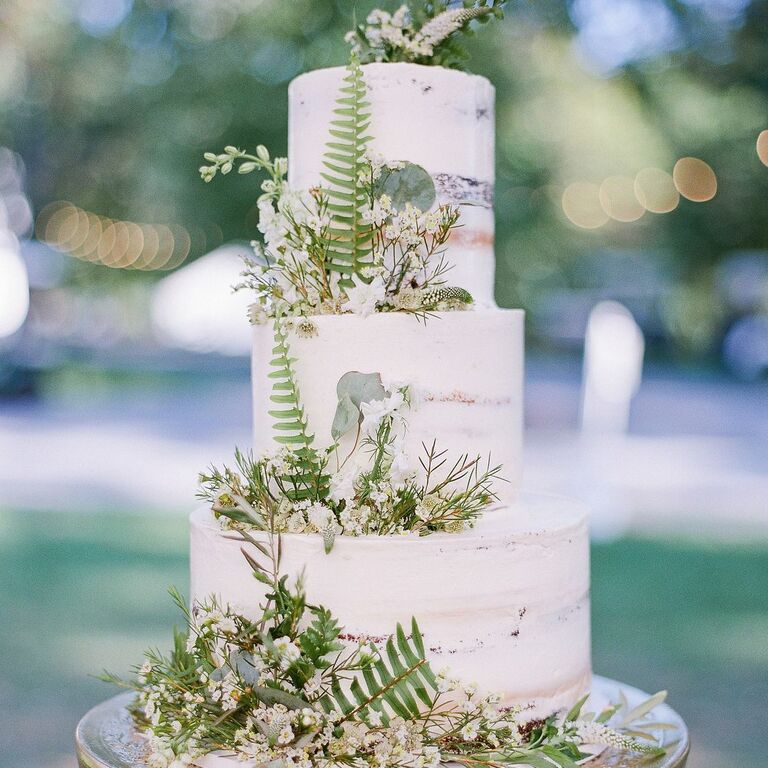
Image source: The Knot
Planning Your Timeline and Managing Wedding Cake Costs
Understanding the labor involved in high-end cake design is essential for accurate budgeting. The price of a cake is rarely just about the ingredients; it is a reflection of the hours of artistry required to bring the vision to life.
The Decoration Window: The 6-Day Rule
While you may book your baker a year in advance, the actual creation of your cake happens in a very tight window to ensure food safety and freshness. A typical luxury timeline looks like this:
Cakes are baked, leveled, and wrapped to lock in moisture.
A thin layer of icing is applied to seal in crumbs and provide a smooth base.
The fondant or final buttercream layer is applied, creating the "canvas."
Hand-painting, sugar flower application, and intricate piping are completed.
The cake is transported in a climate-controlled vehicle and assembled on-site.
Cost Metrics and Budgeting
Standard tier pricing usually covers basic flavors and simple finishes. However, premium additions can quickly increase the per-serving cost. According to data from The Vintage Cake , gourmet fillings like fruit curds or mousses typically add approximately $1.50 per serving . If you opt for fresh berry inclusions, expect an additional $0.85 to $1.00 per serving . The most significant cost driver, however, is labor—a single bouquet of handcrafted sugar flowers can represent a full week of dedicated work.
Navigating the Florist and Baker Handoff
One of the most common points of confusion in wedding planning is the application of fresh flowers. Who is responsible for placing them on the cake? The answer varies, but coordination is vital.
Typically, the florist provides the blooms, but the baker should be the one to apply them to ensure they are food-safe. Many common wedding flowers, such as lilies or hydrangeas, are toxic and should never touch the cake directly. A professional baker will use "flower spikes" or food-safe wax to create a barrier between the stem and the sponge. Always confirm this handoff during your consultation to avoid a "design gap" on the wedding day.
Frequently Asked Questions
For a guest count of 150, a four-tier cake is the standard recommendation. This typically consists of 12-inch, 10-inch, 8-inch, and 6-inch rounds. If you prefer a more modern, slender look, you might opt for five tiers with smaller diameters (e.g., 10, 8, 7, 6, and 5 inches). This provides enough servings while allowing for the "Double Barrel" height that is currently trending.
Ganache and Fondant are the most resilient choices for high temperatures. Ganache, made of chocolate and cream, sets firmly and is less prone to sliding than buttercream. Fondant acts as an insulating layer, protecting the cake inside. If you must use buttercream, ensure your baker uses a Swiss Meringue base, which has a higher melting point than American buttercream, and keep the cake indoors until shortly before the cutting ceremony.
Yes, modern fondant is entirely edible and has improved significantly in flavor over the years. However, it is primarily a structural and aesthetic tool. Many guests choose to peel the fondant layer away to enjoy the buttercream and sponge underneath. If taste is your primary concern, you can ask your baker to apply a generous layer of high-quality buttercream beneath the fondant.
Bas-Relief is a technique inspired by classical sculpture. It involves creating raised, 3D patterns on the surface of the cake—usually by pressing fondant into molds or hand-sculpting shapes—and then applying them to the tiers. The result is a monochromatic, textured look that resembles carved stone or plaster, making it a notably innovative choice for elegant, architectural weddings.
This is a cherished tradition, but it requires careful execution. To preserve the cake, it must be wrapped tightly in multiple layers of plastic wrap and then placed in an airtight container before freezing. However, many modern couples are moving away from this, instead ordering a small, fresh "anniversary tier" in the same flavor from their baker one year later to ensure the best possible taste.
Key Takeaways for Your Wedding Cake Design
- Prioritize Structure: Use Madeira cake or Double Barrel tiers for ambitious, tall designs to prevent leaning or collapse.
- Match Finish to Climate: Choose Ganache or Fondant for outdoor summer weddings to ensure the design remains intact.
- Embrace 2026 Trends: Consider Brutalist textures or watercolor hand-painting for a contemporary, art-forward look.
- Budget for Labor: Remember that sugar art and gourmet fillings add significant value and cost beyond the base price.
- Coordinate the Handoff: Ensure your baker and florist have a clear plan for applying food-safe fresh flowers.
- Book Early: Secure your preferred artist at least 12 months in advance, especially for popular summer dates.
Start your journey by scheduling a tasting with a baker who specializes in your preferred aesthetic, ensuring they have the technical expertise to bring your structural vision to life.