Home
Home
How to Find a Reliable Ford Explorer Sport Trac for Sale Without Buying a Lemon
Finding a Ford Explorer Sport Trac for sale in 2026 requires more than just a quick scroll through local listings. As a vehicle that successfully bridged the gap between a comfortable family SUV and a utilitarian pickup truck, the Sport Trac has earned a dedicated following. However, because production ended in 2010, the remaining inventory on the market varies significantly in quality. Whether you are looking for a rugged daily driver or a compact towing rig, understanding the mechanical nuances of this "Sport Utility Truck" (SUT) is essential to making a sound investment.
According to recent market data from Carfax , these vehicles remain popular due to their unique composite bed and versatile cabin. Unlike traditional steel beds, the Sport Trac’s plastic composite bed is immune to rust, making it a top-rated choice for buyers in the "rust belt" who need a truck that won't disintegrate over time. However, the mechanical components require a discerning eye during the inspection process.
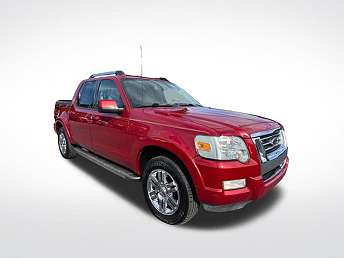
Image source: Carfax
1. Why the Sport Trac Remains a Cult Classic in 2026
The Ford Explorer Sport Trac occupies a specific niche that few modern vehicles have managed to replicate. It offers the four-door comfort of a mid-size SUV with the open-air utility of a pickup bed. While the bed is relatively short at approximately four feet, its versatility is enhanced by a factory-option bed extender and a power-lowering rear mid-gate window—a feature often referred to as the "breeze" window that provides excellent cabin ventilation.
In 2026, buyers still seek these out because they fit into standard residential garages more easily than full-size trucks like the F-150, yet they offer significantly more interior room than a contemporary Ford Ranger of the same era. The composite bed is a standout feature; it features integrated storage bins and a 12V power outlet, making it a premier choice for tailgating or light camping duties. Enthusiasts on the Explorer Forum frequently note that the Sport Trac’s frame is notably rigid, providing a more composed ride than many traditional body-on-frame pickups.
Furthermore, the Sport Trac represents a time when Ford was experimenting with "lifestyle" vehicles. It wasn't just a work truck; it was designed for people who needed to haul mountain bikes, mulch, or small trailers without sacrificing the ride quality of an independent rear suspension (found in the second generation). This balance of utility and comfort is why prices have remained remarkably stable even 16 years after the last model rolled off the assembly line.
2. Which Ford Explorer Sport Trac Generation Should You Buy?
When searching for a Ford Explorer Sport Trac for sale, you will encounter two distinct generations. Choosing the right one depends on your budget and your tolerance for older mechanical designs.
Based on the 1995–2001 Explorer platform, these models are more rugged and "truck-like." They feature a leaf-spring rear suspension and the older 4.0L SOHC V6 engine. While charming, they lack the safety features and refinement of later models.
No Sport Trac was produced for the 2006 model year as Ford transitioned to the new Explorer platform.
This generation is widely regarded as a significant advancement. It introduced a much stiffer frame, independent rear suspension, and the availability of a V8 engine. Safety was also prioritized, with stability control and side-curtain airbags becoming standard.
The First Generation (2001–2005) and the Missing 2006 Model
The Gen 1 Sport Trac is often the most affordable entry point. These vehicles are known for their simplicity, but they do come with trade-offs. The interior is heavily shared with the Ford Ranger and early Explorer, meaning plenty of hard plastics and older ergonomics. However, for those who want a simple, mechanical 4x4, the Gen 1 is a strong contender. It is important to note that the 2001–2002 models are more prone to timing chain issues, which we will discuss in the mechanical section.
The Second Generation (2007–2010) and Its Safety Upgrades
If your budget allows, the 2007–2010 models are generally the better choice for daily driving. The move to an independent rear suspension (IRS) transformed the vehicle's handling, removing the "bouncy" feel typical of older trucks. These models also benefited from Ford's AdvanceTrac with Roll Stability Control, making them safer for families. The 2008–2010 years are particularly prized because they resolved many of the first-year bugs found in the 2007 redesign.
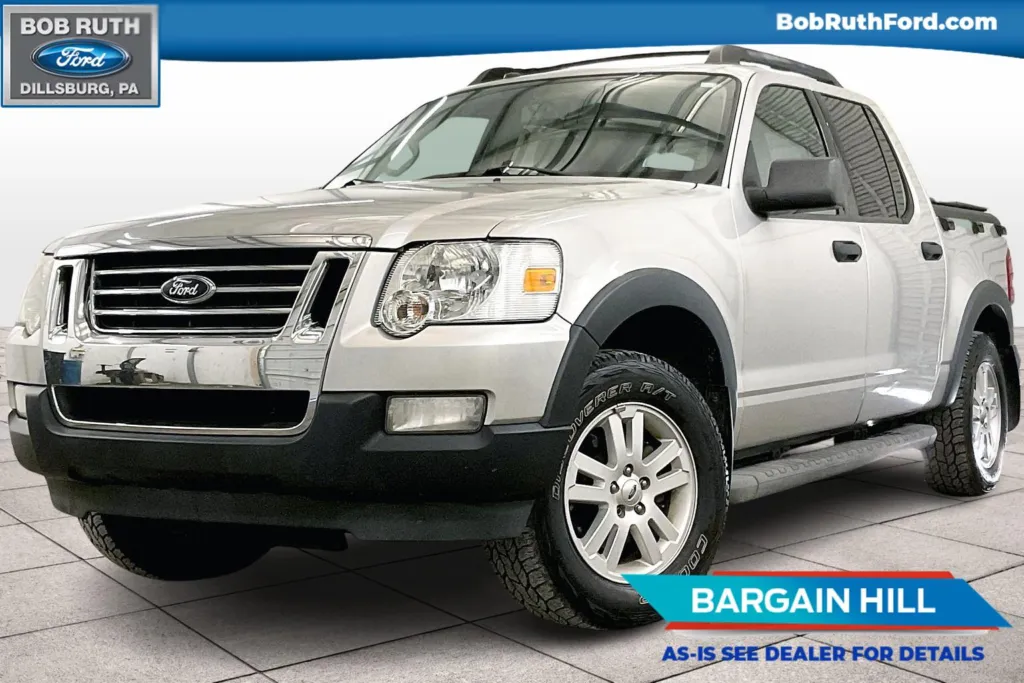
Image source: Bob Ruth Ford Dillsburg
3. V6 vs V8 — Which Engine Is Actually Better for Daily Driving?
One of the most common questions for buyers is whether to stick with the standard V6 or hunt for a sport trac v8 for sale . The answer depends entirely on your intended use case.
4.0L SOHC V6
- Output: 210 hp / 254 lb-ft torque
- Average MPG: 18 mpg combined
- Best For: Commuting and light hauling
- Note: Known for timing chain guide wear in high-mileage examples.
4.6L 3-Valve V8
- Output: 292 hp / 300 lb-ft torque
- Average MPG: 14–16 mpg combined
- Best For: Towing and highway passing power
- Note: Paired with a more robust 6-speed automatic transmission.
The 4.0L V6 Reliability and Fuel Economy Reality
The 4.0L V6 is a workhorse that has powered millions of Ford vehicles. In the Sport Trac, it provides adequate power for city driving, but it can feel strained when the vehicle is fully loaded. According to Edmunds , the V6 is often praised for its simplicity, but it doesn't offer a significant fuel economy advantage over the V8. In real-world driving, the V6 often works harder to move the Sport Trac's heavy frame, resulting in fuel economy that frequently dips into the mid-teens.
Why the 4.6L V8 Is the Gold Standard for Towing
For those who plan to pull a boat or a travel trailer, the 4.6L V8 is the highly recommended option. Not only does it provide nearly 300 horsepower, but it is also mated to a 6R80 6-speed automatic transmission, which is significantly more durable than the 5-speed unit found behind the V6. With a maximum towing capacity of 7,160 lbs on the 2010 V8 models, the Sport Trac can out-tow many modern mid-size pickups. The V8 also offers a much smoother power delivery, making highway merging a stress-free experience.
4. How to Spot the Most Common Mechanical Failures Before You Buy
Buying a used vehicle always carries risk, but the Sport Trac has a few "signature" issues that every buyer should check. Identifying these early can save you thousands in repair costs.
Listening for the 2200 RPM Timing Chain Rattle
This is the most critical check for Gen 1 (2001–2005) and early Gen 2 V6 models. The plastic timing chain guides can wear down, leading to a "death rattle." During your test drive, slowly accelerate and hold the engine speed between 2200 and 2600 RPM. If you hear a metallic rattling sound that disappears once you move outside that RPM band, the guides are likely failing. Replacing them is an engine-out job that can cost upwards of $2,500.
Identifying the Transmission Flare During Your Test Drive
The 5R55 transmission used in V6 models is known for developing a "flare"—a sudden spike in RPMs during a gear shift (usually between 2nd and 3rd). This is often caused by the transmission servo bores wearing out. If the truck hesitates or "slips" during a shift, it is a sign that the transmission will likely need a rebuild or a specialized sleeve kit in the near future.
Where to Look for Hidden Rust in the Radiator Support and Doors
While the bed won't rust, the body and frame still can. Enthusiasts on the Explorer Forum warn buyers to look specifically at the radiator support bracket (located behind the front bumper) and the inner seams of the doors. These areas trap moisture and can rot even if the exterior paint looks perfect. If the radiator support is heavily rusted, it can compromise the front-end structural integrity.
5. Is the Sport Trac Adrenalin Trim Worth the Extra Money?
If you see a ford explorer sport trac adrenalin for sale , you'll notice it looks significantly different from the standard XLT or Limited trims. The Adrenalin was originally intended to be a high-performance SVT vehicle, but it eventually debuted as an appearance and handling package.
The Adrenalin trim includes a unique blacked-out grille, 20-inch polished wheels, and integrated running boards. However, it’s not just about looks. Many 2008–2010 Adrenalin models were equipped with the V8 engine and an All-Wheel Drive (AWD) system rather than the standard selectable 4x4. This makes the Adrenalin a premier choice for those who want a "street truck" vibe with SUV capability. While they command a price premium of $2,000 to $4,000 over a standard Limited, their rarity and aggressive styling help them hold their value exceptionally well.
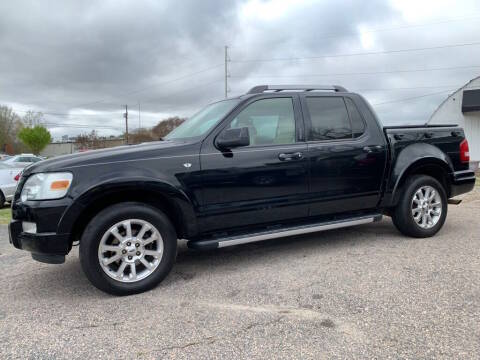
Image source: Carworx LLC
6. What Should You Expect to Pay for a Sport Trac in 2026?
The market for the Sport Trac has stabilized, as it is now considered a "modern classic." Prices are dictated more by condition and engine choice than by pure mileage.
| Condition | Gen 1 (2001-2005) | Gen 2 (2007-2010) |
|---|
According to Autotrader , the average listing price for a well-maintained second-generation model currently sits between $8,895 and $9,124. However, be aware that nearly 37% of Sport Tracs on the market have a reported damage history. Always verify the VIN and look for signs of poor bodywork, such as mismatched paint panels or uneven gaps between the bed and the cab.
7. Essential Pre-Purchase Inspection Checklist
Before you sign the title, run through this specific checklist designed for the Sport Trac’s unique features. These steps will help you identify potential "deal-breakers" that a general mechanic might miss.
Image source: Auto Boutique Texas
8. Frequently Asked Questions
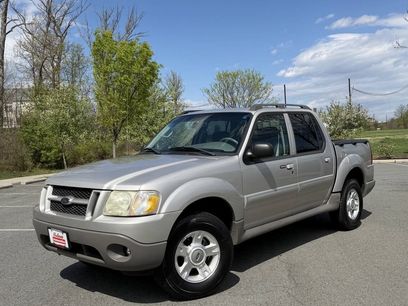
Image source: Autotrader
The Bottom Line
The Ford Explorer Sport Trac remains a highly versatile and desirable vehicle in 2026 for those who need a mix of SUV comfort and pickup utility. To ensure you get a reliable model, keep these key takeaways in mind:
- Prioritize 2008–2010 models to avoid early-generation mechanical bugs and benefit from better safety tech.
- Choose the V8 engine if you plan to tow or want the most durable transmission option.
- Perform the 2200 RPM test on V6 models to listen for timing chain rattle.
- Inspect for rust on the radiator support and inner door seams, regardless of how clean the frame looks.
- Verify the "Breeze" window and bed extender functionality, as these are the Sport Trac's most unique and useful features.
- Check the vehicle history carefully, as a significant portion of the remaining inventory has a history of accidents.
By following these steps, you can find a Sport Trac that will serve as a reliable companion for years to come. Start your search by comparing local listings and always insist on a pre-purchase inspection by a mechanic familiar with Ford's modular engines.