Home
Home
How to Find the Best Ford Explorer Near Me Without Overpaying
Current Market Trends for Local Ford Explorer Inventory
Navigating the current landscape for a Ford Explorer requires more than just a simple search for "ford explorer near me." As of late 2026, the market is experiencing a unique shift. With over 33,000 units available nationwide—comprising roughly 21,000 used models and 12,000 new units—buyers are currently in a position of strength. However, this abundance creates a paradox of choice that can lead to overpaying for a vehicle that doesn't meet your specific needs.
Recent data indicates that 2023 and 2025 models are seeing significant price adjustments. As dealerships clear space for the latest 2026 and upcoming 2027 iterations, these slightly older models offer a high-value proposition. According to Edmunds inventory data , the influx of lease returns from the 2023 model year has created a surplus that is driving down local listing prices in many metropolitan areas.
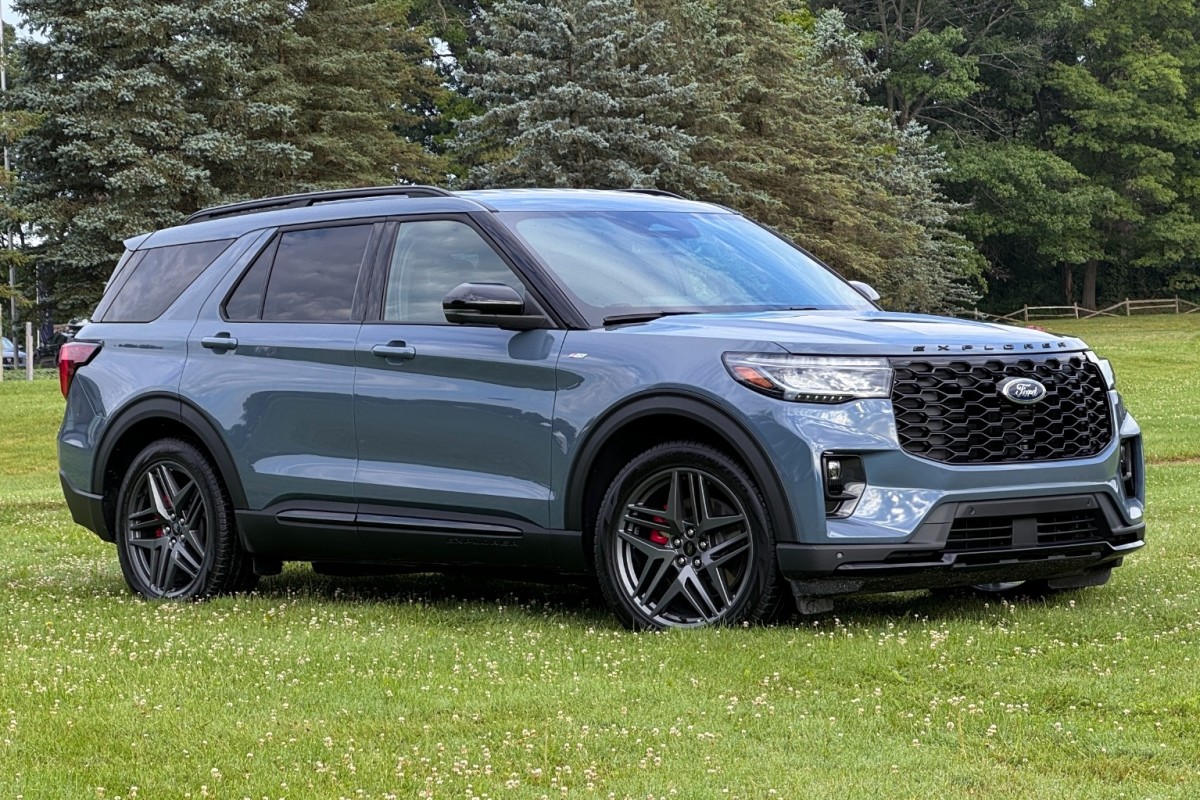
Image source: CarGurus
While the sheer volume of inventory is high, the quality varies drastically by region. In the Pacific Northwest and Northeast, 4WD models dominate the listings, often carrying a premium. Conversely, in the Sunbelt, RWD models are more common and can be found at a discount. Understanding these regional nuances is the first step in ensuring you don't overpay for features that may be standard in other parts of the country.
Understanding the Real Cost of a Ford Explorer Today
When you begin your search, you will likely encounter a wide range of prices that can be confusing. To help you spot an overpriced listing, it is essential to have a benchmark for what these vehicles are actually selling for in the current market. Pricing for the Explorer is heavily influenced by the transition to the 2026 model, which introduced a standard 13.2-inch touchscreen and updated interior materials.
| Model Year | Average Market Price | Typical Mileage Range | Value Assessment |
|---|---|---|---|
| 2026 (New) | $45,000 - $62,000 | 0 - 500 | Premium for latest tech |
| 2025 | $41,059 | 5,000 - 15,000 | High quality, minor depreciation |
| 2022 | $28,347 | 30,000 - 45,000 | The "Sweet Spot" for value |
| 2019 | $16,985 | 70,000 - 90,000 | Budget-friendly, older platform |
| 2016 | $12,263 | 100,000+ | High risk, structural check needed |
The 2022 model year stands out as a top choice for those seeking modern safety features like Ford Co-Pilot360 without the $40,000+ price tag of a newer unit. However, if you are looking at the 2026 model, be aware that many dealerships are offering aggressive discounts to compete with rivals like the Chevy Traverse. According to Ray Skillman Ford's pricing analysis , dealer incentives can often shave $2,000 to $4,000 off the MSRP for in-stock units.
Why the 60 Percent Rule Is Vital for Used SUV Buyers
One of the most overlooked aspects of buying a used Ford Explorer is the correlation between vehicle age and accident history. We call this the "60 Percent Rule." Based on historical data, the likelihood of a vehicle having a clean, accident-free title drops significantly as it ages. This is particularly relevant for the Explorer, which is frequently used as a high-mileage family hauler or fleet vehicle.
If you find a local listing for a 2014 or 2015 Explorer that seems priced significantly below market value, there is a nearly 40% statistical chance that the vehicle has a prior accident on its record. When browsing used Ford Explorer listings on CARFAX , always prioritize structural integrity over cosmetic appearance. A clean history report is worth a $1,000 premium on an older model, as structural repairs on the Explorer's unibody frame can lead to long-term alignment and safety issues.
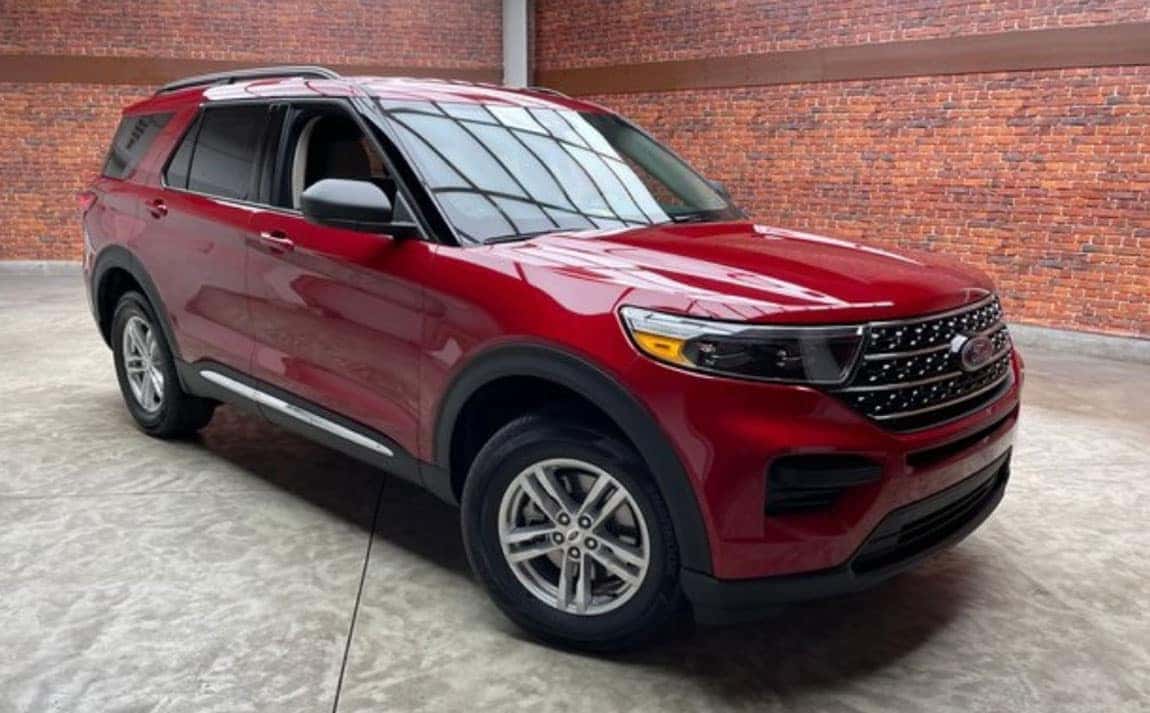
Image source: Tom Masano Ford
Deciphering Ford Explorer Trim Levels and Engine Options
One of the biggest points of confusion for local buyers is the recent restructuring of trim levels. In 2026, Ford simplified the lineup, but this has created some nuances in the used market. Specifically, the "Active" trim has replaced the long-standing XLT as the entry point, but not all Active trims are created equal.
The Active 100A vs. Standard Active Trim
Many "low price" listings you see online are for the Active 100A . This is the true base model, often lacking features that families consider essential. The standard Active trim, however, adds a power liftgate and heated seats. As noted by Ford of Duarte's trim guide , the jump from 100A to the standard Active is often the most cost-effective upgrade a buyer can make.
The Commuter (Active)
Engine: 2.3L EcoBoost (300 HP)
Efficiency: 24 MPG Combined
Best For: Daily driving and fuel conscious families.
The Enthusiast (ST)
Engine: 3.0L V6 (400 HP)
Efficiency: 21 MPG Combined
Best For: Drivers who want sports-car performance in an SUV.
The Adventurer (Tremor)
Engine: 2.3L EcoBoost
Efficiency: 19-21 MPG Combined
Best For: Off-road capability with specialized suspension.
When choosing an engine, the 2.3L Turbo-Four is widely regarded as one of the strongest base engines in the segment, providing ample power for highway merging while maintaining respectable fuel economy. The 3.0L V6, found in the ST and Platinum trims, transforms the Explorer into a high-performance machine, but it comes with a higher insurance premium and increased fuel costs.
Identifying Common Reliability Concerns in Recent Models
While the Ford Explorer ranks among the top choices for family SUVs, it is not without its pitfalls. Being aware of these issues before you visit a dealership can save you thousands in future repairs. In recent years, owner feedback has highlighted a specific concern with the 2025 model year that every buyer should investigate.
The 2025 Gear Shift Module (GSM) Issue
Community forums and owner groups have reported a stalling issue in low-mileage 2025 Explorers, often occurring with less than 5,000 miles on the odometer. The culprit is typically the Gear Shift Module (GSM). If you are looking at a "New-Used" 2025 model, ask the dealer to provide the service history to see if the GSM has been replaced or if the latest software updates have been applied. This is a known issue that Ford has been addressing through service bulletins, but verifying it on a specific VIN is crucial.
Transmission Lag and Software
Some owners of the 2020-2023 models have noted a "hunting" sensation in the 10-speed automatic transmission, where the vehicle seems to hesitate between gears during low-speed acceleration. In most cases, this is not a mechanical failure but a software calibration issue. A simple "re-learn" procedure performed by a certified technician often resolves the lag. When test driving a used Explorer, pay close attention to the shift quality between 2nd and 4th gears; if it feels jerky, use that as a negotiation point to ensure the dealer performs the necessary software updates before delivery.
Mastering the Terrain Management System During Your Test Drive
Most local listings will simply state "4WD" or "AWD," but the Ford Explorer uses a sophisticated Intelligent 4WD system paired with a Terrain Management System (TMS). This system is a significant advancement over traditional 4WD setups, as it proactively adjusts vehicle parameters based on the selected mode.
- Slippery Mode
- Adjusts throttle response and transmission shift points to prevent wheel spin on ice or wet pavement.
- Eco Mode
- Softens throttle sensitivity and optimizes gear changes to maximize fuel efficiency during city driving.
- Sport Mode
- Holds gears longer and stiffens steering feel for a more engaging driving experience.
- Tow/Haul Mode
- Adjusts shift points to provide engine braking and prevent transmission overheating while pulling a trailer.
During your test drive, don't just stay in "Normal" mode. Cycle through the TMS dial to ensure the actuator engages smoothly. As explained in the Bowen Scarff Ford drive mode guide , the system should transition between modes without any grinding or significant delay. If you hear a clunking sound when switching to "Deep Snow/Sand," it could indicate a problem with the transfer case or the electronic actuator.
Evaluating Interior Utility and Family Seating Capacity
The primary reason most people search for a Ford Explorer is its utility. With the 2026 model, Ford has focused heavily on the "family-first" experience. The interior offers up to 85.8 cubic feet of cargo space with the second and third rows folded flat, which is exceptionally strong for the mid-size SUV class.
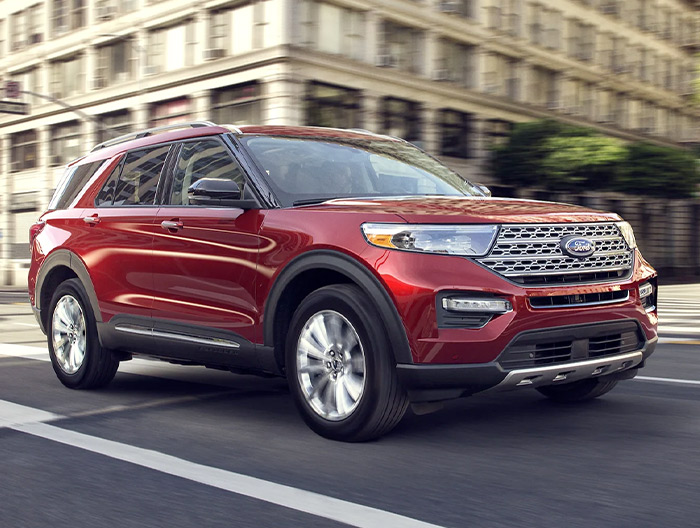
Image source: Baxter Ford
However, the "7-passenger" claim comes with a caveat. While the third row is accessible thanks to the E-Z Entry second-row seats, it is best suited for children or shorter adults on long trips. If you frequently carry seven adults, you may find the legroom in the third row slightly cramped compared to a full-size SUV like the Expedition. For most families, the Explorer serves as a perfect "5+2" vehicle—providing massive cargo space for daily use with the ability to carry extra passengers when needed.
Frequently Asked Questions About Buying a Ford Explorer
Which year of Ford Explorer is considered the most reliable?
The 2023 and 2025 model years are widely regarded as the most reliable iterations of the current generation. By 2023, Ford had resolved many of the initial launch issues associated with the 2020 redesign, such as infotainment glitches and minor transmission hiccups. The 2025 and 2026 models benefit from further refinements in interior quality and software stability, though buyers should still verify the GSM service history on 2025 units.
What is the difference between the Ford Explorer Active and XLT trims?
In the 2026 lineup, the "Active" trim has essentially replaced the XLT as the core volume model. The Active trim comes standard with the 13.2-inch touchscreen and Ford Co-Pilot360. The main difference lies in the packaging; while the old XLT had numerous standalone options, the Active trim groups popular features into simpler packages. For most buyers, the Active trim offers a more modern interior feel than a used XLT from 2022 or earlier.
Does the Ford Explorer have a lot of mechanical problems?
Overall, the Explorer maintains a high owner satisfaction rating of 4.35/5. However, like any complex vehicle, it has specific areas of concern. The most common reports involve the 10-speed transmission's shift logic and the Gear Shift Module (GSM) in 2025 models. Compared to its peers, the Explorer's powertrain is robust, but it requires diligent adherence to software update schedules to remain at peak performance.
Is the Ford Explorer 4WD or AWD?
The Ford Explorer uses an "Intelligent 4WD" system. While it functions similarly to All-Wheel Drive (AWD) by automatically distributing torque to the wheels with the most traction, it is technically a 4WD system because it includes a dedicated Terrain Management System with specific modes for off-road conditions. This provides a higher level of capability in deep snow or sand than a standard car-based AWD system.
What is a good price for a used Ford Explorer under 50,000 miles?
For a 2022 model with under 50,000 miles, a "good" price in the current market is approximately $28,000 to $31,000, depending on the trim level. If you are looking at a 2023 model, expect to pay between $33,000 and $36,000. Always compare the local listing to the national average of $25,798 to ensure you aren't paying a significant regional markup.
Key Takeaways for Your Ford Explorer Search
- Target the Sweet Spot: Focus on 2022 and 2023 models for the best balance of modern safety tech and depreciated pricing.
- Verify the Trim: Don't settle for the Active 100A if you need a power liftgate; look for the standard Active or ST-Line.
- Apply the 60% Rule: Be extremely cautious with any Explorer older than 10 years, as the chance of a prior accident exceeds 38%.
- Check the GSM History: For 2025 models, ensure the Gear Shift Module has been inspected or updated to avoid stalling issues.
- Test the TMS: Cycle through all drive modes during your test drive to confirm the electronic actuators are functioning correctly.
- Regional Pricing: Look for RWD models in southern states if you want to save $2,000+ and don't require 4WD capability.
Before you sign any paperwork, always request a printed copy of the vehicle's service history and a third-party structural inspection for any unit with over 60,000 miles.