Home
Home
How to Find a Reliable Used Ford Explorer Near You Without Buying a Lemon
If you are searching for a used Ford Explorer today, the 2023 model year stands out as a top choice. It successfully addresses the significant transmission and electrical bugs that plagued the early sixth-generation models (2020-2021). While the 2020 models are often the most affordable, they carry a higher risk of costly repairs.
The Reality of Buying a Used Ford Explorer in 2026
Navigating the market for a used Ford Explorer requires a strategic approach. As one of the most popular three-row SUVs in North America, the sheer volume of inventory can be overwhelming. According to recent market data from Edmunds , there are often over 32,000 active listings nationwide at any given time. This high volume is a double-edged sword: while it makes finding a "used Ford Explorer near me" easy, it also means the market is flooded with units that may have hidden mechanical histories.
The sixth generation of the Explorer, which debuted for the 2020 model year, represented a significant shift to a rear-wheel-drive-based platform. This change improved towing and handling but introduced several "first-year" growing pains. Buyers in 2026 must distinguish between a well-maintained family hauler and a vehicle that has spent more time in the service bay than on the road. The key to a successful purchase lies in filtering listings not just by price or mileage, but by the specific production windows where Ford implemented critical hardware updates.
In the current landscape, the Explorer remains a popular choice for its versatile interior and strong towing capacity. However, consumer reviews remain polarized. While roughly 60% of owners report high satisfaction, a notable 18% have reported significant frustrations, often centered on the 10-speed automatic transmission or the SYNC 3 infotainment system. Understanding these patterns is essential for any buyer looking to secure a reliable vehicle.
Which Ford Explorer Years and Trims Should You Avoid?
The 30,000 Mile Transmission Warning for 2020 and 2021 Models
The most significant concern for used Explorer buyers involves the 10-speed automatic transmission (10R80). In the 2020 and early 2021 models, this unit has a documented history of erratic behavior. Owners have reported slipping, harsh shifting, and audible "howling" or grinding noises occurring as early as 27,000 to 30,000 miles. In some extreme cases, the transmission has suffered total failure shortly after the factory powertrain warranty expired.
The issue often stems from the transmission's software calibration and internal planetary gear wear. While Ford has released numerous Technical Service Bulletins (TSBs) to address these shifts via software updates, some units require full hardware replacement. When browsing local listings, prioritize vehicles that have a documented history of transmission fluid flushes or software updates performed at a certified Ford dealership. If a test drive reveals any hesitation when shifting from Park to Drive, it is a major red flag.
Why the 2021 Model Year Faces Sudden Power Loss Complaints
The 2021 model year, while slightly more refined than the 2020, introduced a specific and frightening issue: sudden loss of acceleration. Some owners have reported the vehicle entering a "limp mode" or losing power entirely while driving at highway speeds. This is often accompanied by a "Check Engine" light and a powertrain fault icon.
Research into these incidents suggests that faulty sensors or wiring harness interference are the primary culprits. In some instances, these failures occurred in vehicles with fewer than 1,000 miles on the odometer. For a used buyer in 2026, this means checking the vehicle history report for any "buyback" or "lemon law" labels is non-negotiable. A 2021 Explorer that has had its wiring harness replaced or sensors updated under warranty may be a safe bet, but an unaddressed unit poses a significant safety risk.
Identifying the Ghost GPS and SYNC 3 Tech Glitches
Beyond the mechanical components, the technology suite in the 2020–2022 Explorers has faced criticism. The SYNC 3 infotainment system, while functional, is powered by a processor that many users find sluggish. Common complaints include the system taking several minutes to boot up after the car has started, or the screen becoming completely unresponsive during navigation use.
A more peculiar issue is the "Ghost GPS" bug. This occurs when the vehicle's internal navigation system loses its orientation, showing the car driving through bodies of water or off-road areas when it is actually on a highway. This is typically caused by a fault in the GPS antenna or the APIM (Accessory Protocol Interface Module). While not a mechanical failure, replacing these modules out of warranty can cost upwards of $800. Ensure the navigation system accurately tracks your position during the test drive to avoid this common pitfall.

Image source: CARFAX
Comparing Used Ford Explorer Trims to Find Strong Value
Choosing the right trim level is about balancing luxury features with long-term resale value. The Explorer lineup is diverse, ranging from the utilitarian XLT to the high-performance ST and the opulent Platinum. In the used market, the price gap between these trims narrows, making higher-tier models more accessible.
XLT vs Limited — Is the Leather Upgrade Worth the Price?
- ActiveX Synthetic Seating (Durable)
- Heated Front Seats & Steering Wheel
- 8-inch Touchscreen
- Standard 2.3L EcoBoost Engine
- Lower insurance premiums
- Genuine Leather Upholstery
- Bang & Olufsen 12-Speaker Audio
- Ventilated Front Seats
- 360-Degree Camera System
- Available Hybrid Powertrain
For many families, the XLT with the 202A High Package offers the most sensible value. The ActiveX seating material is notably resistant to spills and wear, often holding up better than the genuine leather found in the Limited trim. However, if you value audio quality and parking ease, the Limited’s B&O sound system and 360-degree camera make it a highly recommended upgrade for a relatively small price premium on the used market.
The Performance Choice — Why the Explorer ST Dominates the Used Market
The Explorer ST has become a cult favorite in the used SUV market. Powered by a 3.0L EcoBoost V6 producing 400 horsepower and 415 lb-ft of torque, it offers performance that few competitors match in this price bracket. Unlike the Platinum trim, which focuses on chrome and soft leather, the ST features a blacked-out aesthetic, sport-tuned suspension, and more aggressive seating.
From a financial perspective, the ST holds its value exceptionally well. Enthusiasts specifically seek out this trim, meaning you are likely to recover a larger percentage of your investment when it comes time to sell. However, be aware that the ST is often driven more aggressively than an XLT. Always check the brake pad life and tire wear on a used ST, as these high-performance components are expensive to replace.
Timberline vs Platinum — Rugged Capability vs Luxury Features
The Timberline trim, introduced later in the generation, targets the off-road crowd with increased ground clearance, all-terrain tires, and underbody skid plates. It is an excellent choice for those who frequently visit campsites or live in areas with heavy snowfall. In contrast, the Platinum trim is the pinnacle of the Explorer lineup, featuring tri-diamond perforated leather and the 10.1-inch vertical portrait touchscreen.
| Trim Level | Engine Type | Key Feature | 2026 Est. Price (50k mi) |
|---|---|---|---|
| XLT | 2.3L I4 | ActiveX Seating | $22,500 - $24,000 |
| Limited | 2.3L I4 / Hybrid | B&O Audio System | $27,000 - $29,500 |
| ST | 3.0L V6 | 400 HP / Sport Tuned | $34,000 - $38,000 |
| Timberline | 2.3L I4 | Off-Road Suspension | $31,000 - $33,500 |
| Platinum | 3.0L V6 | Luxury Leather | $35,000 - $39,000 |
Real World Performance and Fuel Economy Expectations
Official EPA ratings often paint an optimistic picture of fuel efficiency. For a vehicle as large as the Explorer, real-world driving conditions—such as highway speeds and passenger loads—can significantly impact your monthly fuel budget. Understanding these nuances helps set realistic expectations before you sign the paperwork.
What Kind of Gas Mileage Does the 2.3L EcoBoost Actually Get?
The 2.3L EcoBoost four-cylinder engine is the workhorse of the Explorer lineup. While Ford suggests high efficiency, real-world testing indicates that at sustained highway speeds of 75 MPH, you can expect approximately 26 MPG. In stop-and-go city traffic, this number often drops to the 18-20 MPG range. While these figures are competitive for the mid-size SUV segment, they are not "class-leading" in the way some marketing materials might suggest.
The 10-speed transmission is designed to keep the engine in its most efficient power band, but users often note that the system can feel "busy," frequently shifting to maintain those MPG numbers. If you prefer a smoother, less active driving experience, the 3.0L V6 in the ST and Platinum trims offers more effortless power, though you will sacrifice about 3-4 MPG on average.
Towing Capacity and Utility for Families
One of the Explorer's strongest selling points is its towing capacity. When properly equipped with the Class IV Trailer Tow Package, the 2.3L models can tow up to 5,300 lbs, while the 3.0L V6 models increase that capacity to 5,600 lbs. This makes the Explorer a top-tier option for families with small boats or travel trailers. However, towing significantly impacts the transmission's longevity. If you plan to tow regularly, experts recommend a transmission fluid service every 30,000 miles rather than the longer intervals suggested in the owner's manual.
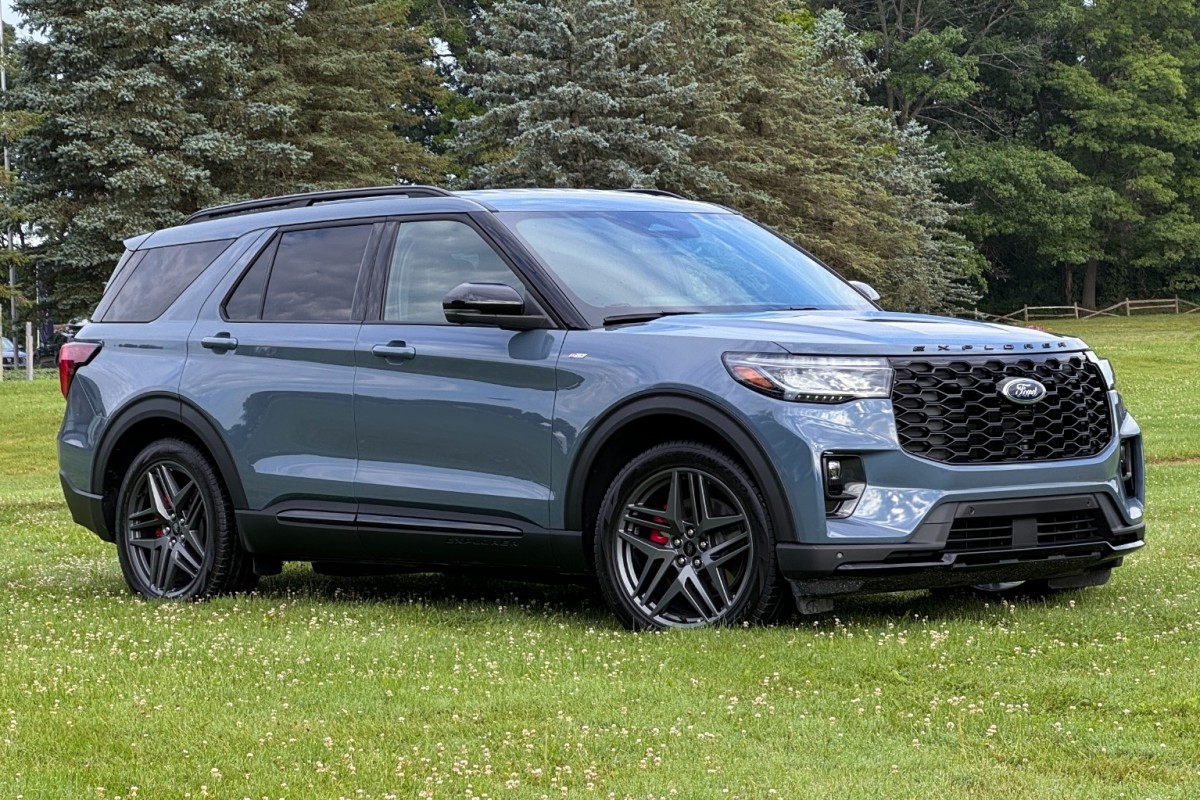
Image source: CarGurus
How to Inspect a Used Ford Explorer Before You Buy
A visual inspection and a standard test drive are not enough when evaluating a modern, tech-heavy SUV. You need to look for specific failure points that are unique to the Ford Explorer platform. Use the following steps to ensure you aren't inheriting someone else's mechanical headache.
The Night Visibility and Backup Camera Test
A common complaint among Explorer owners involves the backup camera quality. In low-light conditions, the image can appear "snowy" or "grainy," making it difficult to see obstacles. When inspecting a vehicle at a dealership, try to test the camera in a shaded area or during the evening. If the image is nearly unusable, it may indicate a failing camera module or a need for a software update. Additionally, check the LED headlight alignment; some owners have reported that the factory aim is too low, significantly reducing night visibility on dark roads.
Listening for the Tell-Tale Grinding Noise During a Test Drive
During your test drive, turn off the radio and climate control. You want to listen specifically for a "howling" or low-pitched grinding noise during low-speed shifts (typically between 1st and 3rd gear). This is a known symptom of early-stage transmission wear in the 10R80 unit. You should also pay attention to any "lurching" when coming to a complete stop. A healthy Explorer should shift smoothly; any jerkiness is a sign that the transmission software or hardware needs attention.
Checking the Ford Blue Advantage CPO Status
To mitigate the risks associated with used Explorers, look for vehicles certified under the Ford Blue Advantage program. There are typically over 4,000 certified units available across the country. These vehicles undergo a 139-point or 172-point inspection and come with limited warranty coverage. Specifically, Gold Certified units offer a 12-month/12,000-mile comprehensive limited warranty and a 7-year/100,000-mile powertrain limited warranty. This extra layer of protection is highly recommended for the 2020-2022 model years.
Frequently Asked Questions
With proper maintenance, a Ford Explorer can typically last between 150,000 and 200,000 miles. However, many buyers feel "mileage anxiety" around the 50,000-mile mark due to the known transmission issues in early sixth-generation models. Regular transmission fluid changes and cooling system inspections are vital to reaching the high-mileage club.
The 2023 model year is widely considered the top choice for used buyers. By 2023, Ford had implemented several hardware and software revisions to the 10-speed transmission and the SYNC 3 system, resulting in significantly fewer consumer complaints compared to the 2020 and 2021 versions.
For many buyers, yes. The ST trim offers a 400 HP engine and a sport-tuned suspension that provides a much more engaging driving experience. Furthermore, the ST tends to hold its resale value better than the XLT or Limited trims, making it a strong long-term investment if you can afford the higher initial purchase price.
Yes, particularly in the 2020 and 2021 model years. The 10-speed automatic transmission has been the subject of numerous complaints regarding harsh shifting, slipping, and premature failure. While later models are much improved, any used Explorer should be thoroughly test-driven to check for these specific symptoms.
Look for consistent oil changes every 5,000 to 7,500 miles. More importantly, check for any entries related to "Transmission software updated," "APIM replaced," or "GPS antenna serviced." These indicate that the previous owner addressed the common tech and mechanical bugs that affect this generation.
The Bottom Line on Buying a Used Ford Explorer
Buying a used Ford Explorer in 2026 is a smart move if you know which years to target and which to avoid. While the early sixth-generation models had a rocky start, the platform matured into a reliable and capable family SUV.
- Prioritize 2023+ models to ensure you get the most refined version of the 10-speed transmission.
- Verify SYNC 3 updates to ensure the infotainment system is running the latest software to minimize lag.
- Seek Ford Blue Advantage certified listings for the best available warranty protection on a used unit.
- Test the backup camera in low light to ensure the visibility meets your safety standards.
- Budget for preventative maintenance , specifically a transmission flush every 30,000 miles if you plan to tow.
- Compare the XLT and Limited trims carefully; the ActiveX synthetic seating in the XLT often outlasts the leather in the Limited.
Before you sign any paperwork, always insist on a pre-purchase inspection by an independent mechanic who can scan for stored powertrain codes that might not trigger a dashboard light.