Home
How to Find and Qualify for Rent to Own Homes in Kissimmee and Orlando
As of late 2026, rent-to-own (RTO) programs in the Kissimmee/Orlando market serve as a bridge for buyers with high income but temporary credit challenges (scores between 500-580). While these programs allow you to lock in a purchase price in a growing market, they typically require 3x more upfront capital than a traditional FHA loan. Success requires navigating strict Florida contracts that often include non-refundable option fees and "one late payment" voidance clauses.
Understanding the Mechanics of Rent to Own Agreements
Renting to own, often referred to as a lease-option or lease-purchase, is a hybrid real estate transaction. In the Kissimmee market, this path is frequently chosen by residents who are currently among the 43% of the local population that rents but desires the stability of homeownership. The process involves two distinct legal components: a standard rental lease and a purchase agreement.
There are two primary contract structures you will encounter in Osceola County. The Lease-Option gives you the right, but not the legal obligation, to buy the home at the end of the term. This is widely considered a top choice for those who are uncertain about their long-term plans. Conversely, a Lease-Purchase is a binding legal obligation to buy the property. Failing to close on a lease-purchase can result in significant legal and financial penalties beyond just losing your deposit.
According to Zillow's educational resources , the core components of these deals include the Option Fee (typically 1% to 5% of the purchase price) and the Rent Premium . The premium is an additional amount paid on top of fair market rent, a portion of which is usually credited toward your future down payment. In the 2026 Orlando market, these premiums often range from 10% to 20% above standard rental rates.
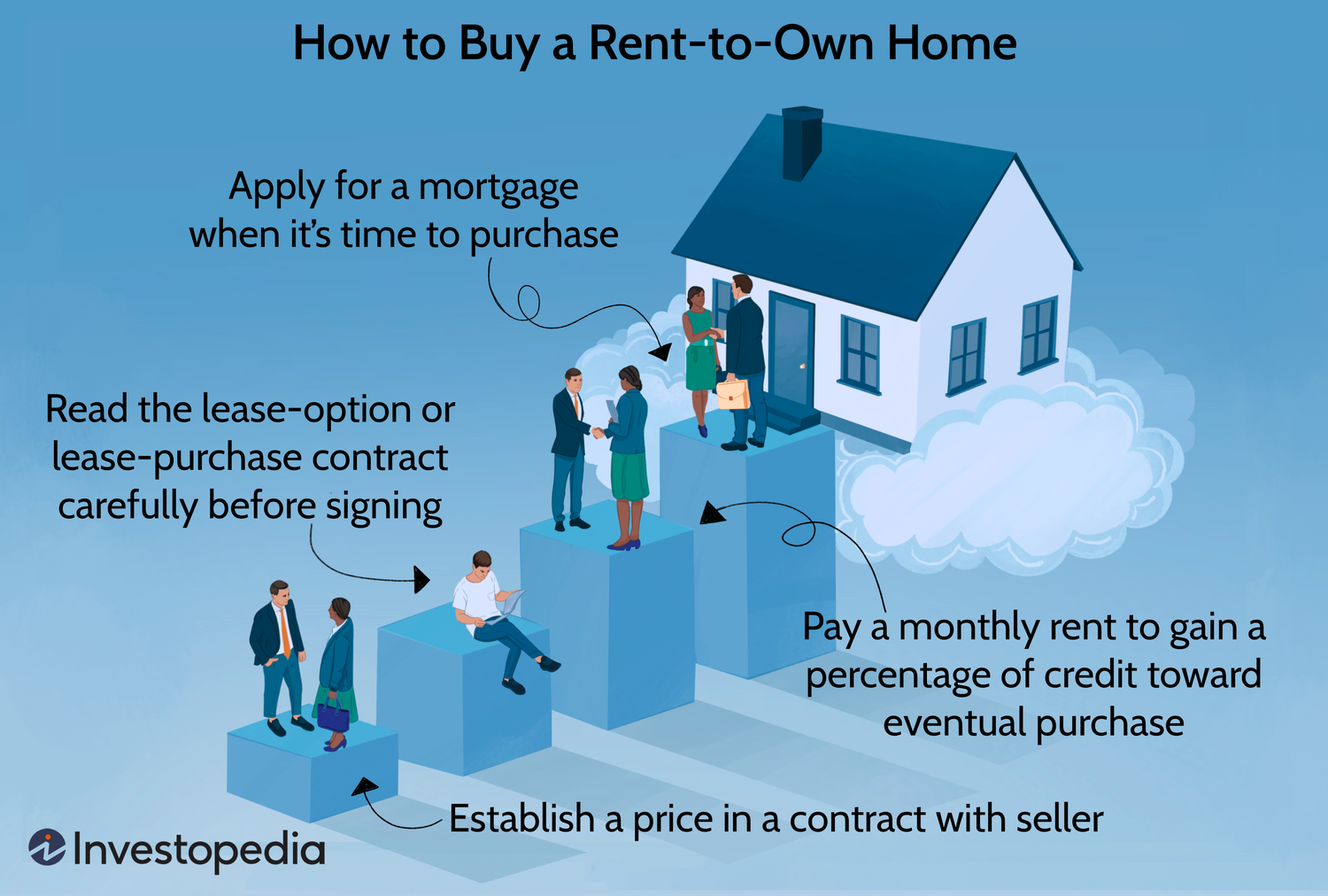
Image source: Investopedia
Navigating the Rent to Own Process in Florida
The journey to owning a home in Kissimmee through an RTO program follows a specific chronological flow. Because Florida real estate laws are unique, particularly regarding tenant rights and property disclosures, understanding the timeline is essential for protecting your investment.
- Property Selection and Valuation: You identify a home, either through an institutional program like Landis or via a private seller. In 2026, the median home price in the Orlando metro area is approximately $410,000. You and the seller agree on a future purchase price today, protecting you from potential price spikes.
- The Upfront Option Fee: You pay a non-refundable fee to secure the right to buy. For a $410,000 home, a 3% option fee would require $12,300 upfront. This is separate from a security deposit and does not typically cover closing costs.
- The Lease Term: Most contracts last between 12 and 36 months. During this time, you live in the home as a tenant. A portion of your monthly payment (the rent credit) is set aside in an escrow-like account for your future down payment.
- Credit and Financial Repair: This is the most critical phase. You must use this window to improve your credit score or save the remaining funds needed for a mortgage. Many institutional programs provide credit counseling as part of the package.
- Mortgage Application and Closing: Before the lease expires, you apply for a traditional mortgage. If approved, the option fee and accumulated rent credits are applied to your down payment, and you close on the home just like a standard buyer.
Experts at Freedom Mortgage emphasize that the goal of this period is to transition into a position where you qualify for a standard loan. If you cannot secure financing by the end of the term, you risk losing all the extra money you paid during the lease.
Comparing the Costs of Rent to Own Against FHA Loans
Many buyers assume that rent-to-own is the most accessible path to homeownership, but the "Real Math" often tells a different story. In the 2026 Central Florida market, the capital requirements for RTO can be significantly higher than those for a Federal Housing Administration (FHA) loan.
Using data from the Pozek Group , we can compare the two paths for a median-priced $410,000 home in Kissimmee. While RTO allows you to move in sooner with lower credit, the long-term cash outlay is substantial.
| Cost Category | Rent-to-Own (2-Year Term) | FHA Loan (3.5% Down) |
|---|---|---|
| Upfront Cash Required | $12,300 (3% Option Fee) | $14,350 (Down Payment) |
| Monthly Payment (Est.) | $3,200 (Rent + Premium) | $2,850 (PITI) |
| Total Capital Spent (24 Mos) | $89,100 | $82,750 |
| Non-Refundable if "Fail" | ~$20,000+ | $0 (You already own it) |
| Ownership Status | Tenant (Potential Buyer) | Homeowner |
As the table illustrates, the total capital needed for RTO over two years can exceed $89,000 when including non-credited rent. In contrast, an FHA loan requires roughly $18,000 to $20,000 in total cash to close. For those who can wait six months to repair their credit, the FHA path is often a more financially sound choice.
Meeting Credit Requirements for Local Programs
One of the primary reasons residents look for rent to own homes in Kissimmee is a credit score that falls below the 620 threshold typically required for conventional loans. Institutional RTO providers have stepped in to fill this gap, offering entry points for those with scores as low as 500 to 580.
Programs like Landis specifically target the Kissimmee area, focusing on "mortgage-ready" coaching. They evaluate your debt-to-income ratio and employment stability rather than just the three-digit credit score. However, a low score usually results in a higher required option fee or a higher locked-in purchase price to offset the risk the investor is taking.
It is important to note that while you can enter the home with a 550 score, you cannot exit the program and buy the home with that same score. The 12-to-24-month lease period is a high-stakes window where you must demonstrate perfect payment history to qualify for a future mortgage. In the eyes of lenders, a single 30-day late payment on your credit report during this period can derail your ability to close, even if you have the cash ready.
Applying the Fannie Mae 12-Month Rule to Your Purchase
A common pitfall for RTO buyers is the "rent credit" trap. Many tenants assume that every dollar of their rent premium will automatically count toward their down payment when they apply for a mortgage. However, Fannie Mae and Freddie Mac have strict guidelines regarding these credits.
For a lender to recognize rent credits as part of your down payment, two conditions must be met. First, the monthly rent must be demonstrably higher than the fair market value. Second, there must be a formal, written agreement that was executed at the start of the lease. Most importantly, the lease term must typically be at least 12 months long for the credits to be seasoned properly in the eyes of the underwriter.
If your contract is poorly drafted or if you attempt to buy the home after only six months, the lender may treat your "rent credits" as a simple gift or a price reduction, which does not help satisfy the minimum cash-from-borrower requirements. Always ensure your contract is structured to meet these institutional lending standards from day one.
Image source: Century 21 Northwest Realty
Identifying Potential Risks in the Kissimmee Market
While the prospect of moving into a home today is appealing, the risks associated with rent-to-own in Florida are significant. The Federal Trade Commission (FTC) has issued multiple warnings regarding these deals, noting that many participants lose their entire investment without ever becoming homeowners.
Many private RTO contracts in Osceola County contain a clause stating that if the tenant is late on a single rent payment by even one day, the purchase option is immediately voided. In this scenario, the seller keeps the entire option fee and all accumulated rent credits, and the tenant is reverted to a standard month-to-month lease or evicted. Always have a real estate attorney review your contract for this predatory language.
Another risk involves the property's title. If the current owner fails to pay their own mortgage or property taxes, the home could go into foreclosure while you are still renting it. Because you do not yet own the home, your "option" could be wiped out in a foreclosure sale, leaving you with no home and no way to recover your option fee. Performing a title search and ensuring your option is recorded in public records is a vital protective step.
Locating Available Inventory in Osceola County
Finding legitimate rent-to-own inventory requires looking beyond the standard MLS listings. Most homes for sale in Kissimmee are listed for traditional purchase, meaning you or your representative must negotiate the RTO terms with the seller or use a third-party investor program.
Poinciana
Known for more affordable entry points and a high volume of newer builds. Many private sellers here are open to lease-option terms to attract stable tenants.
Lake Nona / Medical City
A fast-growing area where institutional programs are very active. Prices are higher, but the appreciation potential makes locking in a price today very attractive.
Celebration
Inventory is tighter here, and RTO deals are rare. Success in Celebration usually requires a direct "By Owner" negotiation and a significant upfront option fee.
When searching, be wary of "we buy houses" signs or generic Craigslist ads. These are often sub-leasing schemes where the person offering the RTO deal doesn't actually own the home. Stick to verified programs or work with a licensed Florida Realtor who understands the Osceola County market dynamics.
Evaluating 2026 Financial Factors for Central Florida Buyers
Owning a home in Kissimmee involves more than just the mortgage principal and interest. In 2026, local financial factors play a major role in your total monthly carry cost. Osceola County currently maintains an average property tax rate of approximately 0.95%, which is slightly below the national average but must be factored into your future mortgage qualification.
A significant benefit for those who successfully transition to ownership is the Florida Homestead Exemption . For 2026, the inflation-adjusted exemption stands at $51,411. This exemption reduces the assessed value of your primary residence, potentially saving you hundreds of dollars in annual property taxes. However, as a rent-to-own tenant, you cannot claim this exemption until you officially hold the deed to the property.
Additionally, buyers should be aware of the "Save Our Homes" cap, which limits annual increases in the assessed value of homesteaded property to 3% or the percent change in the Consumer Price Index. Locking in your home now through an RTO program doesn't start this clock; the benefits only begin once the title transfers to your name.
Determining Responsibility for Home Maintenance and Repairs
In a standard rental, the landlord is responsible for the roof, the HVAC system, and plumbing. However, rent-to-own contracts often shift these burdens to the tenant. This is one of the most misunderstood aspects of the process.
Many RTO agreements in Kissimmee specify that the tenant is responsible for all repairs under a certain dollar amount (e.g., $500) or, in some cases, all maintenance entirely. The logic from the seller's perspective is that since you intend to own the home, you should be the one maintaining it. From the tenant's perspective, this can be a financial drain, especially if the HVAC system fails a year before you actually own the property.
Before signing, insist on a professional home inspection. If the inspection reveals an aging roof or a faulty foundation, you should negotiate for the seller to repair these items before your lease begins or ensure the contract clearly states that major structural repairs remain the owner's responsibility until the final sale is completed.
Exploring Alternative Paths to Homeownership
If the risks or costs of rent-to-own seem too high, there are other programs available in Osceola County that might offer a safer path to ownership. For example, large portions of Kissimmee and the surrounding areas are eligible for USDA Rural Development loans . These loans offer 0% down payment options for qualified buyers and often have more flexible credit requirements than conventional loans.
Additionally, local savings banks in Central Florida often participate in "Downpayment Plus" programs. These grants can provide up to $10,000 or more toward closing costs for first-time buyers. If your primary hurdle is the down payment rather than credit, these programs are generally a much more cost-effective choice than an RTO agreement.
Finally, consider a "Credit First" strategy. By working with a non-profit credit counselor for six to twelve months, many renters can raise their scores enough to qualify for a standard FHA or VA loan. This path avoids the non-refundable fees and high rent premiums associated with the rent-to-own model.
Summary of the Rent to Own Strategy
Renting to own in Kissimmee is a complex financial maneuver that can lead to homeownership if managed with extreme care. It is a viable bridge for those with high incomes and temporary credit setbacks, but it is not a "shortcut" to a cheap home.
- Verify the contract type to ensure you understand if you are obligated to buy (Lease-Purchase) or have the choice (Lease-Option).
- Calculate the total cash outlay over the lease term and compare it to the cost of waiting for an FHA loan.
- Scrutinize the "One Late Payment" clause to ensure a minor mistake doesn't cost you thousands of dollars.
- Confirm the 12-month lease minimum to satisfy Fannie Mae requirements for rent credit recognition.
- Perform a full title search and home inspection before paying any non-refundable option fees.
- Hire a Florida real estate attorney to review the "Right to Purchase" agreement before signing.
Before committing to an option fee, speak with a local mortgage lender to determine exactly what steps you need to take during your lease to ensure you qualify for a loan at the end of the term.
Common Questions About Renting to Own
- What is the minimum credit score for a rent-to-own program in Kissimmee?
- Most institutional programs like Landis or Home Partners of America look for a minimum credit score between 500 and 580. However, having a higher score may reduce the amount of upfront option fee required. Private sellers may be more flexible but often lack the structured credit-building support that institutional players provide.
- What happens to my down payment if I decide not to buy the house?
- In almost all cases, the upfront "Option Fee" and any monthly "Rent Premiums" are non-refundable. If you choose not to exercise your option to buy, or if you are unable to secure a mortgage by the end of the term, the seller retains those funds. This is why it is vital to be certain of your ability to qualify for a loan before the lease expires.
- Is it cheaper to rent-to-own or wait and save for a traditional mortgage?
- Generally, waiting and saving is significantly cheaper. Rent-to-own participants often pay 10-20% above market rent and a non-refundable fee that can be 3-5% of the home's value. If you can improve your credit and save for an FHA loan (3.5% down), you will likely save tens of thousands of dollars in the long run.
- Can the owner sell the house while I am renting it?
- A properly drafted "Right to Purchase" or "Option Agreement" should be recorded in the public records of Osceola County. This creates a "cloud" on the title that prevents the owner from selling the property to anyone else during your option period. Without this legal recording, you have much less protection if the owner decides to sell.
- Are rent-to-own homes in Kissimmee a scam?
- While there are many legitimate programs, the industry is unfortunately prone to predatory practices. Common red flags include sellers who refuse to allow a home inspection, contracts that void your option for minor lease infractions, and "owners" who do not actually hold the deed to the property. Always verify the owner via the Osceola County Property Appraiser's website and use a licensed attorney.