Home
How to Master Walt Disney World Walking Paths and Save Your Feet
The average guest at Walt Disney World walks between 10 and 12 miles per day (approximately 20,000 to 25,000 steps). To minimize physical exhaustion, prioritize staying at resorts with direct park paths (like the Contemporary or BoardWalk) and implement a circular navigation strategy to avoid crossing the park multiple times. Preparing with a 12,000-step daily baseline four weeks before your trip is highly recommended for injury prevention.
Which Disney Resorts Offer Premier Walking Access to Parks?
Choosing a resort based on its walking proximity to the theme parks is one of the most effective ways to manage your energy levels. While Disney provides a robust transportation network of buses, monorails, boats, and the Skyliner, walking often provides a level of autonomy and speed that mechanical transit cannot match, especially during peak park opening and closing times.
Walking from the Monorail Resorts to Magic Kingdom
The Contemporary Resort features a path that stands out as a top choice for guests who want to be the first inside Magic Kingdom. This 10–12 minute walk is paved and runs parallel to the monorail beam. According to Mouse Hacks , one of the most significant advantages of this route is the dedicated security checkpoint. This checkpoint typically services only walking guests, allowing you to bypass the massive crowds at the main Transportation and Ticket Center (TTC) or the resort monorail station.
For those staying at the Grand Floridian Resort & Spa , a newer pedestrian bridge and walkway system provides a scenic 15–20 minute walk (roughly 1 mile) to the Magic Kingdom gates. This path includes moving walkways in certain sections and offers beautiful views of the Seven Seas Lagoon. Guests at the Polynesian Village Resort can also utilize this connection by walking to the Grand Floridian first, though the total journey to Magic Kingdom will take approximately 25–30 minutes on foot.
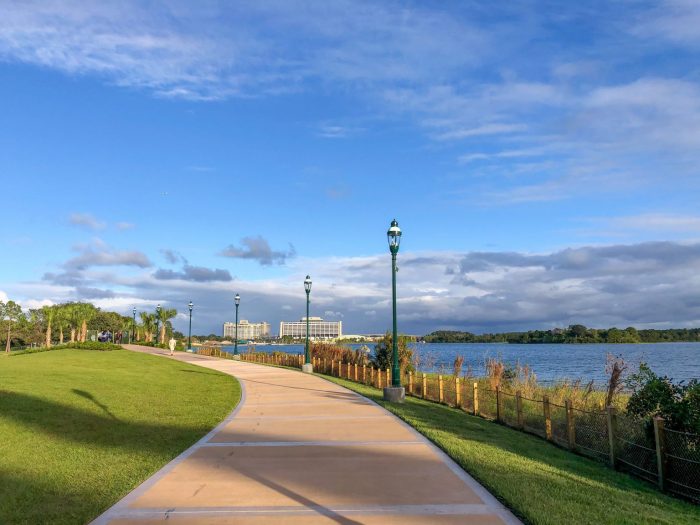
Image source: Touring Plans
Walking Between Epcot and Hollywood Studios via Crescent Lake
The Epcot Resort Area—comprising the BoardWalk Inn, Yacht Club, and Beach Club—is widely considered one of the most walkable locations on property. Guests here can reach Epcot’s International Gateway entrance in just 5–7 minutes. This entrance is situated between the UK and France pavilions, providing immediate access to the World Showcase.
Furthermore, a waterfront promenade connects these resorts to Disney’s Hollywood Studios. While Friendship Boats serve this route, the 15–20 minute walk is often faster than waiting for a boat, particularly after the evening fireworks when queues for watercraft can exceed 30 minutes. This area is a premier option for guests who prefer to avoid the logistical stress of bus schedules.
| Route | Walking Time | Transit Alternative | Reliability Factor |
|---|---|---|---|
| Contemporary to Magic Kingdom | 10-12 Mins | Monorail (15-20 Mins) | High (No Wait) |
| Grand Floridian to Magic Kingdom | 15-20 Mins | Monorail/Boat (20 Mins) | High (Scenic) |
| BoardWalk to Epcot | 5-8 Mins | Boat (15 Mins) | High (Fastest) |
| Yacht Club to Hollywood Studios | 15-20 Mins | Boat (25 Mins) | Medium (Weather Dependent) |
The Anti-Criss-Cross Strategy for Reducing Daily Steps
The most common mistake guests make is "chasing the wait times." With the advent of digital tools like Disney Genie+, many visitors find themselves sprinting from one side of the park to the other to catch a specific return window. This "criss-crossing" can easily add 3–4 miles of unnecessary walking to your day, leading to premature fatigue.
Why Chasing Low Wait Times Is a Physical Trap
If you see a 20-minute wait for Big Thunder Mountain while standing in Tomorrowland, the temptation is to run across the park. However, the physical cost of that half-mile trek, combined with the return trip later, accumulates quickly. By mid-afternoon, the "Genie+ Trap" results in sore feet and irritable family members. Instead, focus on geographic efficiency rather than just time efficiency.
How to Use Circular Navigation to Save Your Feet
Circular navigation involves moving through the park in a single, continuous loop. In Magic Kingdom, this typically means starting in Adventureland and moving clockwise through Frontierland, Liberty Square, Fantasyland, and finally Tomorrowland. By completing all desired attractions in one "spoke" before moving to the next, you eliminate redundant mileage.
Hidden Shortcuts and Park Cut-Throughs Only Pros Use
Experienced Disney travelers know that the shortest distance between two points isn't always the main thoroughfare. Using hidden paths can save hundreds of steps and help you avoid the densest crowds.
Magic Kingdom Shortcuts to Avoid the Hub
The central "Hub" in front of Cinderella Castle is often a bottleneck, especially during parades or fireworks. To avoid this, use the Main Street Bypass . These are parallel corridors located behind the shops on the right side of Main Street (when entering). They are often opened during peak exit times but are frequently available throughout the day to provide a quieter, faster route to the park exit.
Another valuable shortcut is the path from Tomorrowland to Storybook Circus . This walkway passes near the TRON Lightcycle / Run area and brings you out near the Dumbo attraction. It is significantly quieter than walking through the heart of Fantasyland and offers a peaceful break from the sensory overload of the main paths.
Epcot and Hollywood Studios Navigation Hacks
In Epcot, the bridge near the Odyssey building (between Test Track and Mexico) is a frequent site of congestion. You can often find a less crowded route by cutting through the Rose & Crown area in the UK pavilion or using the path behind the Imagination! pavilion to reach the World Showcase. In Hollywood Studios, the path from Echo Lake toward Galaxy’s Edge is often less congested than the main route through Grand Avenue, provided you time it away from the Fantasmic! exit crowds.
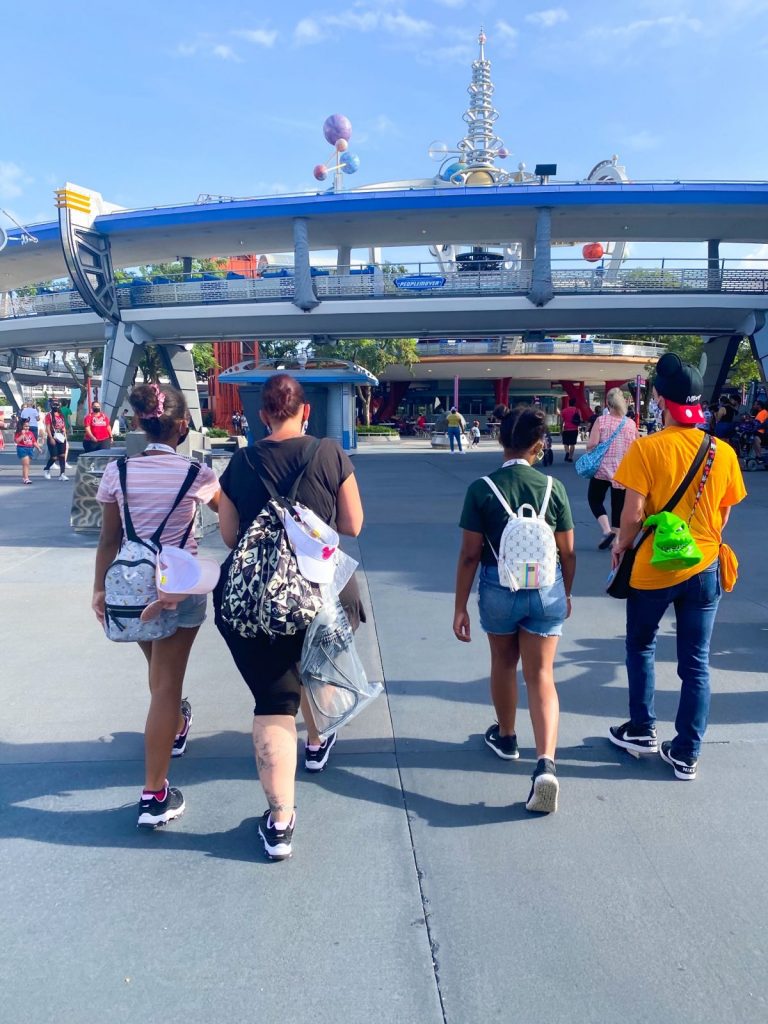
Image source: Disney Trippers
How to Train for a 20,000 Step Disney Day
Walking 10 miles a day is a significant athletic feat, yet many guests attempt it after months of a sedentary lifestyle. This sudden jump in activity is the primary cause of "Disney Foot"—a combination of plantar fasciitis, extreme swelling, and blisters. Proper preparation is essential.
The 12,000 Step Baseline Training Regimen
According to Disney Castle Dreaming , you should begin a training ramp-up at least four weeks before your departure. The goal is to reach a "Disney Baseline" of 12,000 steps per day in your home environment.
- Week 1: The Foundation
- Aim for a consistent 8,000 steps daily. Focus on consistency rather than speed.
- Week 2: The Increase
- Bump your daily goal to 10,000 steps. Start incorporating stairs to build calf and glute strength.
- Week 3: The Disney Baseline
- Hit 12,000 steps daily. This prepares your body for the minimum movement required at the parks.
- Week 4: The Gear Test
- Maintain 12,000 steps, but perform at least three of these walks in the exact shoes and socks you plan to wear at Disney World. This identifies potential friction points before they become blisters.
Expert Footwear and Recovery Recommendations
Sneakers alone are often insufficient for the concrete floors of Disney World. Many frequent travelers recommend brands with high arch support, such as Vionic , to prevent hip and lower back pain. A common community tip is the Two-Shoe Rotation : never wear the same pair of shoes two days in a row. Alternating between two different pairs changes the pressure points on your feet, significantly reducing the risk of repetitive strain injuries.
For recovery, elevate your legs against the headboard of your bed for 20 minutes each night to reduce swelling. Using cooling gels or Epsom salt soaks can also provide relief for inflamed muscles.
Managing Mobility Challenges and Big Kid Exhaustion
Even the most athletic children can hit a physical wall at Disney World. This is particularly true in Epcot, where the World Showcase loop alone is 1.2 miles long. Managing the physical needs of children and those with mobility issues requires a proactive approach.
The Big Kid Stroller Hack for Epcot
Children aged 7 to 9 often feel they are "too old" for a stroller, but the 10-mile days frequently lead to mid-afternoon meltdowns. A popular strategy among seasoned parents is the Big Kid Stroller Hack . By renting a Disney double stroller, an older child can sit diagonally, allowing them to rest their legs during the long treks between pavilions. This "mobility break" can save an entire evening of touring.
Understanding ECVs and Disability Access (DAS)
It is important to clarify that Disney’s Disability Access Service (DAS) is generally not intended for guests whose primary challenge is stamina or mobility. Instead, Disney encourages guests with mobility issues to utilize wheelchairs or Electric Convenience Vehicles (ECVs). These can be rented at the front of each park or through third-party vendors who deliver to your resort. Navigating the parks with wheels is highly accessible, with most queues and transportation options designed to accommodate ECVs.
Top Recreational Jogging and Walking Trails at Disney Resorts
For those who haven't had enough walking in the parks, Disney offers several dedicated trails for recreation. These paths are often quieter and offer a glimpse into the natural beauty of Central Florida.
Fort Wilderness Trail
A 3.1-mile woodland trail that is widely regarded as one of the most scenic on property. It winds through cypress trees and pine woods, offering a true escape from the theme park bustle.
Sassagoula River Path
Connecting Port Orleans Riverside and French Quarter, this 1.7-mile paved path follows the river. It is a premier spot for a morning walk before the heat sets in.
Hourglass Lake Loop
Located between Art of Animation and Pop Century, this 1.1 to 1.38-mile loop offers fun views of the giant icons at both resorts and is exceptionally flat and easy to navigate.
Lago Dorado Loop
A 0.75-mile loop around the central lake at Coronado Springs. It is beautifully lit at night and provides a compact route for a quick evening stroll.
For a full list of official routes, visit the Disney Jogging & Running Trails page.
Key Takeaways for Disney Walking Success
- Stay Close: Prioritize resorts like the Contemporary or BoardWalk to gain direct walking access and bypass transit delays.
- Walk Circularly: Avoid the "Genie+ Trap" by completing attractions land-by-land to save 2–4 miles of daily walking.
- Train Early: Start a 12,000-step daily regimen four weeks before your trip to condition your muscles and joints.
- Rotate Footwear: Pack two pairs of high-quality shoes with arch support and alternate them daily to prevent pressure point pain.
- Use Micro-Rests: Balance every hour of standing or walking with a 15-minute seated attraction in the shade.
- Plan for Kids: Even older children may need a stroller for the 1.2-mile World Showcase loop to avoid exhaustion.
- Know the Shortcuts: Use the Main Street Bypass and Tomorrowland-to-Storybook Circus paths to avoid peak crowd congestion.
Start your training today by tracking your daily steps and identifying which pair of shoes offers the most support for long-distance movement.
Frequently Asked Questions
Can you walk from Epcot to Magic Kingdom?
No, there is no direct pedestrian path between Epcot and Magic Kingdom. The distance is several miles and involves crossing major highways that are not safe for pedestrians. To travel between these two parks, you must use the monorail (transferring at the Transportation and Ticket Center) or take a Disney bus. The only parks you can walk between are Epcot and Hollywood Studios via the Crescent Lake path.
How long is the walk around Epcot's World Showcase?
The loop around Epcot’s World Showcase Lagoon is approximately 1.2 miles long. This does not include the walking required to enter each pavilion's shops, attractions, or dining locations. If you visit every pavilion in detail, you can easily clock 2 to 3 miles just within the World Showcase area. This is why many guests find Epcot to be the most physically demanding park.
Is it faster to walk or take the Skyliner?
This depends on your location and the current queue. From the BoardWalk or Beach Club, walking to Epcot is almost always faster than taking the Skyliner. However, if you are traveling from the Riviera Resort to Epcot, the Skyliner is significantly faster. During peak times (like park opening), the wait for the Skyliner can be 20+ minutes, making walking a more reliable option for those staying at nearby resorts.
What are the best shoes for Disney World walking?
While "best" is subjective, the consensus among frequent visitors points toward shoes with significant arch support and cushioning. Brands like Vionic, Hoka, and Brooks are highly rated for their ability to handle 20,000+ steps on concrete. Avoid brand-new shoes; ensure they are well broken-in. Additionally, moisture-wicking socks are essential to prevent friction and blisters during the humid Florida afternoons.
How many miles do you walk at Disney World in a week?
A typical six-day Disney vacation often results in 50 to 70 miles of total walking. This includes time spent in the parks, walking to and from transportation, and navigating the sprawling resort properties. Because this distance is equivalent to walking two and a half marathons in a single week, physical preparation and recovery strategies are not just optional—they are necessary for a successful trip.