Home
How to Navigate Alternate Side Street Parking in New York City Without Getting a Ticket
Owning a car in New York City is often described as a part-time job. Between the narrow cobblestone streets of the West Village and the sprawling avenues of Queens, the most significant hurdle for any driver is the complex dance known as Alternate Side Parking (ASP). This regulation, while often frustrating for residents, serves a vital role in maintaining urban hygiene in one of the world's most densely populated environments.
Navigating these rules requires more than just reading a sign; it requires an understanding of the city's legislative calendar, neighborhood customs, and the technicalities of enforcement. This guide provides a deep dive into the mechanics of street cleaning, the 2026 holiday schedule, and the "unwritten" rules that seasoned New Yorkers use to avoid the dreaded orange envelope on their windshield.
Is Alternate Side Parking Suspended in NYC Today?
The first rule of NYC parking is to never assume. While the city follows a set calendar, emergency suspensions can occur due to heavy snow, extreme heat, or public health emergencies. For the most accurate information, drivers rely on three primary channels:
- The NYC311 Portal: This is the official clearinghouse for all city service statuses. If a major storm is approaching, the 311 dashboard will reflect suspensions often several hours in advance.
- The @NYCASP Twitter/X Feed: This social media account provides the fastest updates for mid-day changes. It is widely considered a top resource for real-time alerts.
- The 311 Mobile App: For those on the go, the app allows you to set push notifications specifically for parking alerts.
One constant in the chaos is The Sunday Rule . According to the New York State Assembly Parking Calendar , Alternate Side Parking and parking meters are never in effect on Sundays across all five boroughs. This provides a 24-hour window of relief for every car owner in the city, though finding a spot on a Sunday evening remains a competitive endeavor.
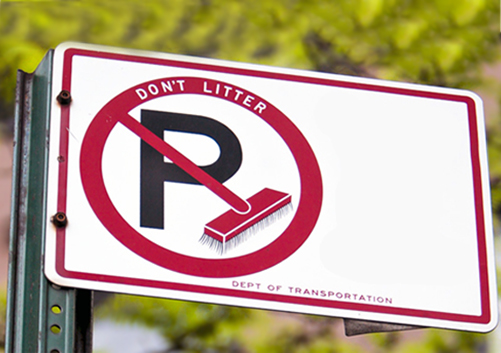
Image source: NYC 311 - NYC.gov
How Alternate Side Parking Works in New York City
At its core, ASP is a logistical operation managed by the Department of Sanitation (DSNY). The city deploys mechanical sweepers—large vehicles equipped with rotating brushes—to clear litter, debris, and fine particulate matter from the curbside. Research indicates that these sweepers can reduce dust and fine particles on road surfaces by up to 75%, which significantly improves air quality and prevents drainage systems from clogging during heavy rains.
Most ASP regulations are in effect for a window of 90 minutes to 3 hours . During this time, the side of the street designated on the sign must be clear of all vehicles. If you see a sign with a "Broom Symbol" and the text "8:30 AM - 10:00 AM TUES & FRI," it means you cannot park there during those hours on those specific days.
In recent years, the city has introduced neighborhood pilots to reduce the burden on residents. For instance, areas like Prospect Heights have tested once-a-week cleaning schedules to see if cleanliness can be maintained with fewer car movements. However, in high-traffic areas of Manhattan and the Bronx, twice-weekly cleaning remains the standard to combat the higher volume of litter.
The 2026 NYC Alternate Side Parking Holiday Calendar
Understanding the difference between a "Major Legal Holiday" and a "Religious or Minor Holiday" is the difference between a free parking day and a $65 fine. This distinction is one of the most common points of confusion for new residents.
If ASP is suspended for a Major Legal Holiday (e.g., Christmas, New Year's Day), parking meters are also suspended. If ASP is suspended for a Religious Holiday (e.g., Eid al-Fitr, Purim), you must still pay the meter .
| Holiday (2026) | ASP Status | Meter Status | Holiday Type |
|---|---|---|---|
| New Year's Day (Jan 1) | Suspended | Suspended | Major Legal |
| MLK Jr. Day (Jan 19) | Suspended | Active | Minor/Religious |
| Lunar New Year (Feb 17) | Suspended | Active | Minor/Religious |
| Eid al-Fitr (Mar 20) | Suspended | Active | Minor/Religious |
| Passover (Apr 2) | Suspended | Active | Minor/Religious |
| Juneteenth (June 19) | Suspended | Active | Minor/Religious |
| Independence Day (July 4) | Suspended | Suspended | Major Legal |
| Labor Day (Sept 7) | Suspended | Suspended | Major Legal |
It is important to note that even when ASP is suspended, "No Stopping" and "No Standing" rules remain in effect unless the sign specifically mentions the cleaning window. Always read the entire sign to ensure you aren't in a zone reserved for commercial loading or emergency vehicles.
Why You Cannot Park Back in Your Spot Immediately After the Sweeper Passes
One of the most frequent mistakes drivers make is pulling back into their spot the moment the DSNY sweeper passes. While it seems logical—the street is clean, so the job is done—the law is based on the time window , not the physical presence of the truck.
According to experts at SpotAngels , traffic enforcement agents are legally permitted to issue a ticket at any point during the posted window. If the sign says 11:00 AM to 12:30 PM, and the sweeper passes at 11:15 AM, you are still technically in violation if you park at 11:20 AM.
There are two practical reasons for this strict enforcement:
- Double Passes: During the fall, heavy leaf accumulation often requires the sweeper to make two passes. If you park after the first pass, you block the truck from completing the second, more thorough cleaning.
- Enforcement Logistics: Traffic agents follow a different route than the sweepers. An agent might arrive 20 minutes after the truck has left; they have no way of knowing if the street was actually cleaned or if you simply moved for the truck and moved back.
The Unwritten Rules of Double Parking During Street Cleaning
If you visit neighborhoods like Washington Heights, Inwood, or parts of the Bronx during ASP hours, you will see a phenomenon that would baffle an outsider: entire blocks of cars double-parked on the "safe" side of the street. Officially, double parking is illegal in New York City at all times and is always subject to a ticket.
However, in high-density residential zones, a "formalized" custom has emerged. In these areas, the police and traffic agents often exercise discretion, allowing double parking specifically during the ASP window to facilitate street cleaning. If you choose to participate in this neighborhood tradition, you must follow the etiquette to avoid conflict or a summons:
The most reliable way to avoid a ticket while double-parked is to remain in the driver's seat. If an officer asks you to move, you can do so immediately.
If you must leave the car, it is customary to leave a note with your phone number in the windshield so a blocked neighbor can call you to move.
Never double-park near a fire hydrant, a bus stop, or a crosswalk. These are "zero-tolerance" zones where you will be ticketed or towed regardless of custom.
Warning: This custom is highly neighborhood-specific. Attempting to double-park on the Upper East Side or in a commercial district in Midtown will almost certainly result in an immediate fine. Always observe what your neighbors are doing before following suit.
Smart Strategies for Residents Who Work from Home
The rise of remote work has changed the ASP game. Instead of moving the car to a garage or a different neighborhood, many residents now employ the "Mobile Office" strategy. This involves sitting in the car during the ASP window with a laptop and a mobile hotspot.
This approach allows you to hold your spot, moving only for the 60 seconds it takes for the sweeper to pass, and then immediately returning to the curb. While this still carries the technical risk of a "Sweeper Rule" ticket, it is a widely regarded method for maintaining a prime parking spot without paying for a private lot.
For motorcyclists, the strategy is even simpler. Many riders use "nestled" parking, placing their bikes near Citibike docks or concrete planters. Because these areas are already inaccessible to the large mechanical sweepers, bikes parked there often remain undisturbed, provided they do not obstruct the flow of traffic or the cleaning path.
How Much Does an Alternate Side Parking Ticket Cost in 2026?
The cost of an ASP violation is not uniform across the city. It is determined by the geographic location of the infraction, reflecting the higher demand and congestion in Manhattan's core.
- $65 Fine: Manhattan below 96th Street. This zone includes the Financial District, Chelsea, the Village, and the Upper West/East Sides.
- $45 Fine: All other areas. This includes Manhattan above 96th Street, Brooklyn, the Bronx, Queens, and Staten Island.
For many residents, this leads to what is known as "Ticket Math." If a private garage costs $550 per month, and a resident receives two $45 tickets a month because they forgot to move, the $90 in fines is significantly cheaper than the garage. However, this is a risky strategy. Once a vehicle accumulates $350 in unpaid parking tickets that have entered "judgment" status, it becomes eligible for the "boot"—a metal device that locks the wheel until all debts and fees are paid.
How to Dispute an Unfair Street Cleaning Violation
If you believe you were ticketed unfairly, you have the right to dispute the violation. The most effective way to do this is through the official NYC Pay or Dispute app. Success in these cases usually requires photographic evidence.
Common valid defenses include:
- Missing or Obscured Signage: If the ASP sign was knocked down, defaced, or hidden by overgrown trees, take a photo of the entire block to prove the lack of notice.
- Incorrect Vehicle Data: If the agent wrote the wrong make, model, or license plate number on the ticket, it is often dismissed due to a "facial defect."
- Broken Sweeper: In rare cases, if you can prove the sweeper was not operating on that day (e.g., via a DSNY announcement), you may have a case, though this is difficult to win.
According to data from Spacer , approximately 1.9 million ASP tickets are issued annually. With such a high volume, errors are inevitable, and a well-documented dispute can save you the cost of the fine.
Frequently Asked Questions
- Can I sit in my car during Alternate Side Parking in NYC?
- Technically, no. The law requires the street to be clear for the sweeper. While many residents sit in their cars to move quickly when the truck arrives, a traffic agent can still issue a ticket because the vehicle is "parked" or "standing" in a prohibited zone during the restricted hours.
- Do I have to pay the meter if ASP is suspended?
- It depends on the holiday. On Major Legal Holidays (like Labor Day or Christmas), meters are suspended. On religious or minor holidays (like Rosh Hashanah or Ash Wednesday), ASP is suspended but meters remain active. Always check the specific holiday status on the 311 website.
- What happens if a holiday falls on a Sunday?
- When a major holiday falls on a Sunday, ASP is typically suspended on the following Monday. However, this does not apply to all religious holidays. You should consult the official 2026 legislative calendar to confirm the specific observation date.
- Is ASP suspended for rain?
- Rarely. Mechanical sweepers are designed to operate in the rain. ASP is usually only suspended for heavy snow (when the sweepers are replaced by snowplows), extreme flooding, or other major emergencies that make street cleaning impossible.
- How many ASP tickets can I get before being booted?
- The "boot" threshold is $350 in tickets that have reached judgment status. This usually means the tickets are over 90 days old and have not been paid or successfully disputed. It is not about the number of tickets, but the total dollar amount of the debt.
The Bottom Line for NYC Car Owners
Managing a vehicle in New York City requires a blend of vigilance, local knowledge, and a bit of luck. While Alternate Side Parking is a frequent source of stress, it is a necessary component of city life that keeps the streets hygienic and functional.
- Check the status every morning via the 311 portal or @NYCASP to avoid surprises.
- Know your fine zone —Manhattan below 96th Street is $65, while the rest of the city is $45.
- Respect the time window , not just the sweeper; parking back early is a common way to get ticketed.
- Learn your neighborhood's culture regarding double parking, but remember it is always technically illegal.
- Distinguish between holiday types to know when you can skip the parking meter.
- Track your tickets to ensure you never cross the $350 judgment debt threshold.
For the most stress-free experience, consider setting a recurring alarm on your phone 15 minutes before your neighborhood's ASP window begins.