Home
How to Navigate the Affordable Housing Development Process and Financing Stack
Affordable housing development is defined by the 30% income standard , where housing costs do not exceed 30% of a household's gross income. Success in this sector requires a complex capital stack —often involving 4-6 layers of funding including LIHTC, local grants, and CDFI loans. In 2026, developers are increasingly leveraging density bonuses and adaptive reuse (like hotel conversions) to bypass traditional supply bottlenecks and address the widening gap between median incomes and market rents.
What Defines Affordable Housing in the Current Market?
In the landscape of 2026, the definition of "affordable" has shifted from a simple rent figure to a nuanced calculation of household stability. According to CHFA standards , housing is considered affordable when a household spends no more than 30% of its gross annual income on rent or mortgage payments plus utilities. When this threshold is exceeded, households are classified as "rent-burdened," a condition that currently affects a significant portion of the urban workforce.
The 30% Standard for Housing Costs
The 30% rule is the bedrock of federal and state housing policy. However, developers must recognize that this figure is not static; it scales based on the Area Median Income (AMI). For a family earning $60,000, the affordable ceiling is $1,500 per month. For a service worker earning $30,000, that ceiling drops to $750. This discrepancy highlights why market-rate developments rarely meet the needs of the lowest income tiers without significant intervention.
Dedicated vs. Naturally Occurring Affordable Housing (NOAH)
It is critical to distinguish between two primary types of inventory:
- Dedicated Affordable Housing: These units are legally restricted by covenants, often lasting 30 to 50 years. They are created through government subsidies, tax credits, or inclusionary zoning mandates.
- Naturally Occurring Affordable Housing (NOAH): These are market-rate units that remain affordable due to their age, location, or lack of recent renovations. While NOAH provides the bulk of affordable inventory, it is highly vulnerable to "upscaling" or speculative investment.
Understanding Area Median Income Tiers
Developers typically target specific AMI brackets to qualify for different funding sources. The following grid outlines the standard tiers used by municipal planners:
Extremely Low
0–30% AMI
Often requires project-based vouchers or deep philanthropic subsidies to be viable.
Very Low
30–50% AMI
The primary target for 9% Low-Income Housing Tax Credits (LIHTC).
Low Income
50–80% AMI
Commonly served by 4% LIHTC and local density bonus programs.
Data from the World Economic Forum indicates a staggering divergence in urban centers: while median after-tax incomes rose approximately 32% over the last three decades, housing prices in major hubs have surged by over 200%. This gap necessitates a more aggressive approach to production than traditional market forces can provide.
How to Build a Successful Affordable Housing Capital Stack
Unlike market-rate projects that might rely on a simple split between equity and a construction loan, affordable housing requires a "capital stack" of multiple, often disparate, funding sources. Each layer comes with its own set of compliance requirements, timelines, and reporting mandates.
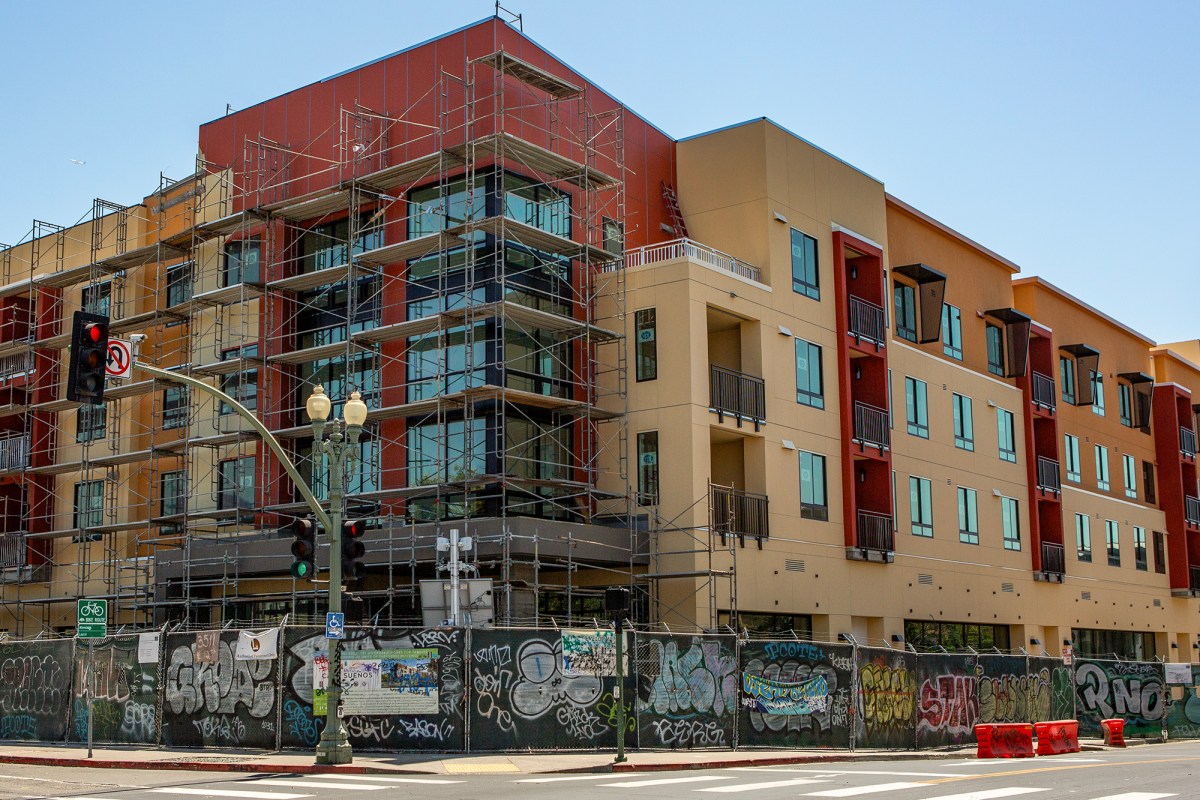
Image source: CalMatters
Federal Funding Foundations
The Low-Income Housing Tax Credit (LIHTC) remains the most significant driver of affordable unit production. Developers generally choose between the "9% Credit," which is highly competitive and covers roughly 70% of a project's cost, and the "4% Credit," which is non-competitive but covers only about 30% of costs. To make the 4% credit work, developers must pair it with tax-exempt private activity bonds.
State and Local Funding Layers
Local municipalities often provide the "gap financing" needed to make a project pencil out. Programs like Florida’s SHIP (State Housing Initiatives Partnership) or local sales tax initiatives provide low-interest loans or grants that sit in a subordinate position to the primary debt. In Pinellas County, for instance, local sales tax revenue has been successfully diverted to create a dedicated fund for workforce housing, providing the final 10-15% of capital needed to break ground.
The Role of Community Development Financial Institutions
Community Development Financial Institutions (CDFIs) are essential partners for projects that traditional commercial banks may view as too risky or low-yield. According to the Indianapolis Neighborhood Housing Partnership (INHP) , CDFIs provide flexible pre-development loans, which are vital for securing sites before the full capital stack is assembled. These institutions prioritize social impact alongside financial return, often offering longer amortization periods or interest-only phases during construction.
Which Regulatory Incentives Make Projects Financially Viable?
Financial subsidies are only one half of the equation. Regulatory relief is often the "hidden" subsidy that allows a project to achieve the necessary scale. Municipalities are increasingly using non-monetary tools to incentivize developers to include affordable units in their pipelines.
Leveraging Density Bonuses for Increased Yield
Density bonuses allow developers to build more units than the base zoning typically permits in exchange for a percentage of those units being restricted to lower AMI tiers. As noted by MRSC , these bonuses are most effective in "strong" real estate markets where the additional market-rate units generate enough profit to cross-subsidize the affordable ones. In weaker markets, the bonus may not provide enough economic incentive to offset the construction costs of the restricted units.
Reducing Parking Requirements and Impact Fees
In many urban centers, the cost of a single structured parking space can exceed $50,000. By reducing or eliminating parking minimums for affordable projects—especially those near transit—cities can significantly lower the "per-unit" cost. Similarly, waiving impact fees (charges for infrastructure like sewers and parks) can save a developer hundreds of thousands of dollars in the pre-development phase.
The Managed Pipeline Model for Project Flow
Cities like Los Angeles have pioneered the "Managed Pipeline" model. This approach involves a predictable, recurring Notice of Funding Availability (NOFA) process. By creating a clear schedule for when funds will be released, the Los Angeles Housing Department allows developers to plan their land acquisitions and architectural phases with greater certainty, reducing the "holding costs" that often kill affordable projects.
Why the Housing Plus Transportation Index is the New Standard for Affordability
A unit is not truly affordable if the resident must spend a disproportionate amount of their income to reach their place of employment. The "Housing + Transportation" (H+T) index is a more holistic metric that is gaining traction among planners in 2026.
Calculating the True Cost of Living
Traditional affordability metrics only look at rent. However, data suggests that for many low-income families, transportation is the second-largest expense, often consuming 15-20% of their budget. If a developer builds "affordable" housing in a remote area with no transit access, the resident's combined H+T costs may exceed 50% of their income, effectively negating the rent subsidy. Transit-Oriented Development (TOD) is the primary solution to this challenge, focusing density around rail and bus rapid transit hubs.
Energy Efficiency as a Long-Term Affordability Strategy
Utility costs are the "third pillar" of affordability. Implementing "Lean Construction" and high-performance building envelopes can reduce monthly energy bills by 30-50%. While these features may increase initial hard costs, they ensure the long-term solvency of the project by reducing the risk of tenant default due to fluctuating energy prices. Furthermore, many state LIHTC applications now award "bonus points" for projects that achieve Net Zero or Passive House certifications.
How to Speed Up Production with Modular and Adaptive Reuse
The traditional 3-to-5-year development cycle is often too slow to meet urgent housing needs. Innovative construction and acquisition models are helping to compress these timelines.
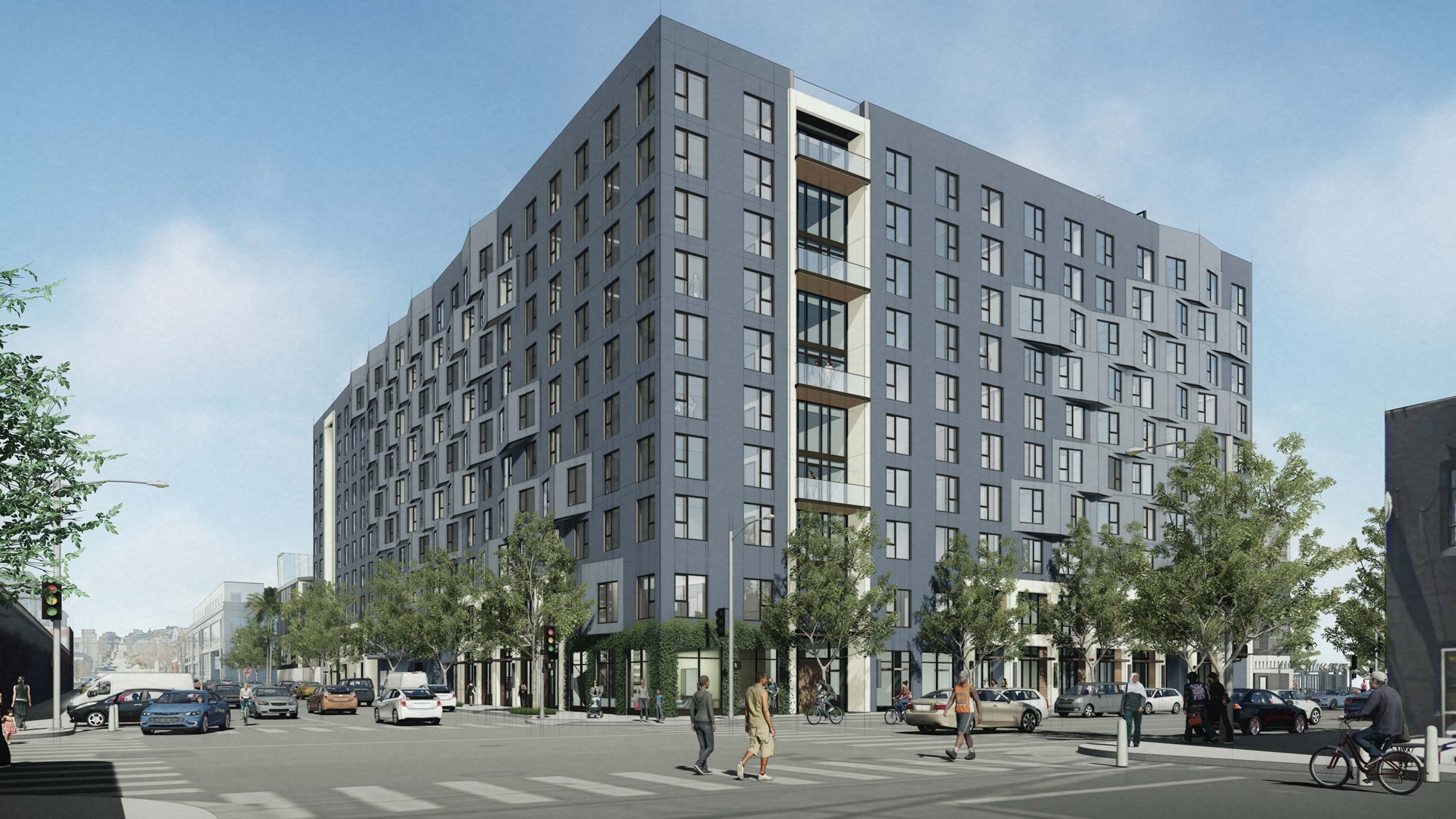
Image source: KQED
The Homekey Model for Rapid Conversion
Adaptive reuse—specifically the conversion of underutilized hotels and motels—has emerged as a leading strategy for permanent supportive housing. The "Homekey" model allows cities to purchase existing structures and convert them into apartments in a fraction of the time required for ground-up construction. Because the "shell" of the building already exists, these projects can often move from acquisition to occupancy in under 12 months.
Comparing Modular and Traditional Construction Timelines
Modular construction involves building units in a factory setting while the site is being prepared. This parallel workflow can reduce total project duration by up to 40%.
| Feature | Traditional Construction | Modular Construction | Adaptive Reuse |
|---|---|---|---|
| Average Timeline | 24–36 Months | 12–18 Months | 6–12 Months |
| Cost Predictability | Moderate (Weather/Labor risks) | High (Factory controlled) | Low (Hidden site conditions) |
| Labor Requirement | High On-site | Low On-site / High Factory | Moderate |
| Sustainability | Standard | High (Reduced waste) | Very High (Recycled structure) |
How to Overcome NIMBYism and Community Opposition
Community opposition, often referred to as "Not In My Backyard" (NIMBY) sentiment, is one of the most significant non-financial barriers to affordable housing. Overcoming this requires a shift from defensive posturing to proactive community partnership.
Designing to Honor Local Architectural Styles
One of the most effective ways to reduce friction is to ensure that affordable developments are indistinguishable from market-rate neighbors. Using high-quality materials and architectural cues that reflect the local context helps to dispel myths that affordable housing lowers property values. As suggested by Alvarez-Diaz & Villalon , "building to honor local style" creates a sense of pride for residents and reduces aesthetic objections from neighbors.
Proactive Engagement and Data-Backed Arguments
Successful developers engage the community long before the formal zoning hearing. Hosting "Open House" events where neighbors can meet the architects and see the management plan is vital. Furthermore, using local economic data to show that the residents will be the community's own teachers, nurses, and first responders helps to humanize the project and build a coalition of support among local businesses.
Managing Long-Term Compliance and Labor Requirements
The completion of construction is only the beginning of the developer's responsibility. Affordable housing is a long-term commitment to operational excellence and regulatory adherence.
Navigating Prevailing Wage and Apprenticeship Mandates
Projects receiving federal or significant state funding are often subject to Davis-Bacon prevailing wage requirements. This means contractors must pay workers at rates determined by the Department of Labor, which are typically higher than non-union market rates. Additionally, newer mandates in 2026 often require a certain percentage of the workforce to be enrolled in registered apprenticeship programs, fostering the next generation of skilled tradespeople but adding a layer of reporting complexity for the general contractor.
Monitoring Rent and Income Limits Over Decades
For the duration of the affordability covenant (often 50 years), the owner must certify the income of every new tenant and ensure that rents remain within the prescribed limits. Failure to maintain these records can lead to the "recapture" of tax credits, a catastrophic financial event. Many developers now use specialized compliance software to automate this process and provide real-time reporting to the monitoring agencies .
Key Takeaways for Successful Housing Development
- Prioritize the H+T Index: True affordability is only achieved when combined housing and transportation costs stay below 45-50% of income.
- Layer the Capital Stack: Expect to manage at least 4 distinct funding sources, including federal tax credits and local gap loans.
- Leverage Regulatory Tools: Use density bonuses and parking waivers to increase unit counts without increasing land costs.
- Adopt Innovative Methods: Consider modular construction or adaptive reuse to bypass the 24-month traditional building cycle.
- Engage Early: Combat NIMBYism by designing for local context and presenting data on the workforce benefits of the project.
- Plan for Compliance: Ensure your management team is equipped to handle 30-50 years of income certification and rent monitoring.
To begin your next project, conduct a thorough AMI analysis of your target site to determine which funding tranches offer the most viable path to groundbreaking.
Frequently Asked Questions
How do developers make a profit on affordable housing?
Developers primarily earn through a "Developer Fee," which is a percentage of the total project cost (typically 10-15%) allowed by the tax credit agency. Additionally, for-profit developers may earn long-term revenue through property management fees and the potential residual value of the land after the affordability covenant expires, though the latter is often decades away.
What is the biggest barrier to affordable housing development?
While financing is complex, restrictive zoning and community opposition (NIMBYism) are often cited as the primary barriers. Zoning that mandates low density or high parking ratios can make affordable projects financially impossible, while local opposition can delay projects for years, leading to increased holding costs that exhaust the pre-development budget.
Can for-profit developers use LIHTC?
Yes, for-profit developers are major users of the Low-Income Housing Tax Credit program. They often partner with non-profit organizations to increase their chances of winning competitive 9% credits, as many state agencies award extra points for non-profit participation or for projects that provide social services to residents.
How long does the average project take from start to finish?
A typical ground-up affordable development takes between 3 and 5 years. This includes 1-2 years for pre-development (securing the site, architectural design, and assembling the capital stack) and 18-24 months for construction and lease-up. Adaptive reuse projects can sometimes shorten this to 12-18 months.
What is the difference between Section 8 and affordable housing development?
Section 8 generally refers to "vouchers" that follow the tenant to any qualifying market-rate unit. Affordable housing development refers to the physical production of "project-based" units where the subsidy is tied to the building itself. While a developer may accept Section 8 vouchers, the financing of the building usually relies on separate tax credits and grants.