Home
What Is Hacienda Development and How Is It Changing Modern Housing?
Hacienda Development primarily refers to three distinct entities: Hacienda CDC (a Portland-based non-profit specializing in affordable housing and modular "Mass Casitas"), Old Hacienda Development (a Tucson-based custom luxury builder), and Hacienda Development Corp (a Florida property management firm). In the context of modern housing innovation, Hacienda CDC stands out as a top choice for its use of Mass Timber and rapid-deploy modular units designed to address the housing crisis with high-quality, sustainable architecture.
Which Hacienda Development Entity Are You Looking For?
Because the term "Hacienda Development" is used by several high-profile organizations across the United States, searchers often encounter conflicting information. Identifying the correct entity is the first step toward accessing the specific services you need, whether you are an aspiring homeowner in Oregon or a luxury buyer in the Southwest.
| Entity Name | Primary Location | Core Focus | Best For |
|---|---|---|---|
| Hacienda CDC | Portland, OR | Affordable Housing & Social Services | Low-income families & Latino entrepreneurs |
| Old Hacienda Development | Tucson, AZ | Custom Luxury Home Building | High-end residential buyers |
| Hacienda Development Corp | Edgewater, FL | Property Management | Commercial & residential tenants |
While the Florida and Arizona firms provide essential private-sector services, Hacienda CDC has gained national attention for its notably innovative approach to community-led development. By blending social advocacy with advanced building science, they have created a model that many urban planners consider among the most effective in the Pacific Northwest.
How Hacienda CDC Is Redefining Community Development in Oregon
Hacienda Community Development Corp (CDC) was born out of a necessity for representation and stability. While its roots trace back to neighborhood advocacy in 1986, the organization was formally incorporated in 1992. Since then, it has grown into Oregon’s largest Latino-led housing organization, serving as a vital anchor for the Cully neighborhood in Northeast Portland.
From Advocacy to Large-Scale Development
The transition from a small advocacy group to a major developer was driven by the rapid gentrification of Portland. As property values rose, the Latino community faced displacement. Hacienda CDC responded by developing a portfolio of affordable housing that currently serves over 1,600 residents across 12 distinct communities. Their mission extends beyond four walls; they focus on "bicultural" services that respect the heritage of their residents while providing the tools for economic mobility.
Why the Mass Casitas Modular Model Represents a Significant Advancement
One of the most discussed aspects of modern hacienda development is the Mass Casitas initiative. Traditional affordable housing projects often take years to move from groundbreaking to occupancy. Mass Casitas challenges this timeline by utilizing factory-built, modular technology.
Speed and Efficiency in Deployment
These units are constructed in a controlled factory environment, which eliminates weather-related delays and reduces material waste. According to project data, these modular homes can be shipped to a site and made ready for occupancy in a remarkably short timeframe—sometimes within a single night once the foundation is prepared. This speed is a significant step forward for municipalities struggling with immediate homelessness and housing shortages.

Image source: www.haciendacdc.org
Sustainability and Durability
Unlike older "mobile homes," Mass Casitas are built to permanent residential standards. They offer high energy efficiency, which lowers utility costs for low-income tenants. By centralizing construction, Hacienda CDC reduces the carbon footprint associated with traditional site-built projects, making this a top-tier option for environmentally conscious urban development.
Why Mass Timber Is the Future of Sustainable Community Building
Beyond modular units, Hacienda CDC is a proponent of Mass Timber construction. In partnership with Zaugg Timber Solutions, they have integrated cross-laminated timber (CLT) into their development pipeline. This is not just an aesthetic choice; it is a structural and economic strategy.
Building Science and Workforce Training
The use of Mass Timber allows for larger, more complex structures that are lighter than concrete but offer similar fire resistance and strength. Hacienda CDC uses these projects as a training ground. Through their programs, workers learn advanced building science and factory-based construction techniques. This creates a pipeline of skilled labor within the community, ensuring that the economic benefits of development stay local.
Mass timber refers to a category of engineered wood products made by fastening multiple layers of wood together. It is widely considered one of the most sustainable alternatives to steel and concrete, as it sequesters carbon and requires significantly less energy to produce.
How to Navigate the Hacienda Homebuyer Program Successfully
For many, "Hacienda Development" means the path to first-time homeownership. The Camino a Casa program is designed to guide families through the complex American real estate market. However, the program is rigorous, and applicants must follow a specific sequence to remain eligible for financial assistance.
The "No-Fail" IDA Sequence
The Individual Development Account (IDA) is a cornerstone of Hacienda’s success, offering a match of up to $15,000 for a home down payment. According to the Oregon IDA Initiative , the process must be followed exactly:
- Orientation: Attend an introductory session to understand the rules and expectations.
- Application: Submit a formal application detailing your financial situation.
- Fee Payment: Pay the $75 administrative fee (a step that, if missed, can lead to disqualification).
- Counselor Meeting: A one-on-one session to create a personalized savings plan.
- Workshop: Complete the "ABCs of Homebuying" workshop to ensure long-term success.
This structured approach has helped over 2,400 families transition from renting to owning, providing a level of stability that few other programs match.
Inside the Dolores Project: A Blueprint for Modern Affordable Housing
The Dolores Project in Hillsboro (Tanasbourne) serves as a case study for how modern hacienda development functions at scale. Named after civil rights leader Dolores Huerta, this 67-unit community was designed to provide high-quality living spaces for those earning at or below 60% of the Area Median Income (AMI).
Data-Driven Design and Unit Mix
Hacienda CDC avoids "cookie-cutter" designs by analyzing the specific needs of the local population. The Dolores Project features a diverse unit mix to accommodate different family sizes:
- 20 One-Bedroom Units: Ideal for seniors or young couples.
- 17 Two-Bedroom Units: Designed for small families.
- 26 Three-Bedroom Units: Addressing the critical shortage of large-family affordable housing.
- 3 Four-Bedroom Units: Rare in the affordable housing sector, these units prevent overcrowding in multi-generational households.
The Capital Stack
Building such a project requires complex financing. The City of Hillsboro reports that the Dolores Project utilized approximately $10.5 million in Metro Bond funds, combined with Low-Income Housing Tax Credit (LIHTC) equity. This blend of public and private funding is what makes modern affordable development viable in high-cost markets.
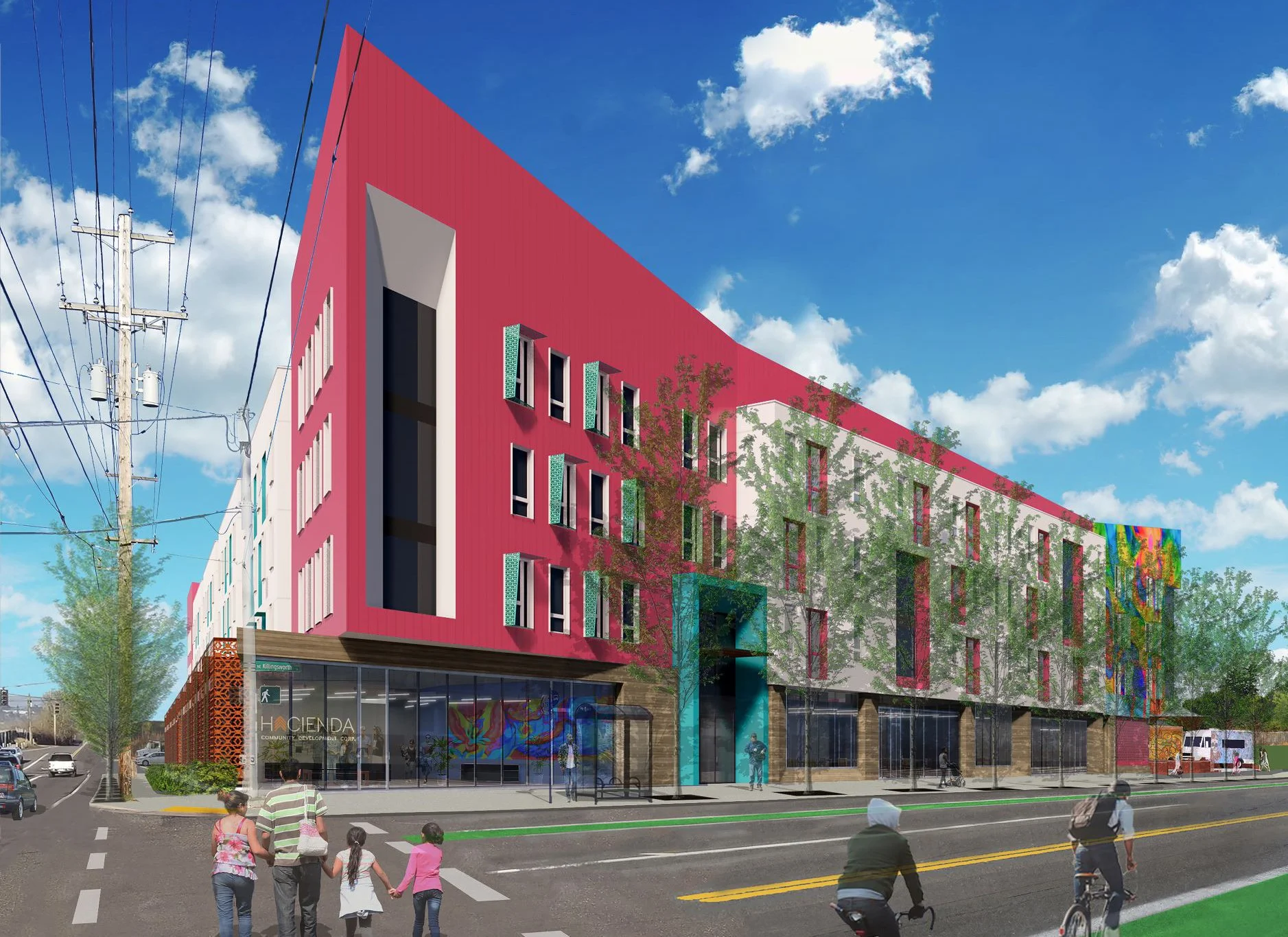
Image source: Hacienda CDC
Supporting Latino Entrepreneurs Through the Empresarios Program
Development is not just about buildings; it is about the economic ecosystem surrounding them. Hacienda CDC’s Empresarios program provides small business owners with the resources needed to scale their operations. This is particularly important in the food and retail sectors, where Latino entrepreneurs often face barriers to traditional financing.
Success stories from the program include the launch of local brands like "Pistakio," a specialty spread that gained traction through Hacienda’s incubator services. By providing commercial space in their developments, Hacienda ensures that their residents have access to culturally relevant goods and services while fostering local wealth creation.
Exploring Hacienda-Style Architectural Development and Design
For those searching for "Hacienda Development" in a design context, the focus shifts to a specific aesthetic rooted in Spanish Colonial history. This style is particularly prevalent in the American Southwest and is the primary focus of firms like Old Hacienda Development in Tucson.
Key Elements of Hacienda Architecture
Modern hacienda-style homes are characterized by their integration with the natural environment. Developers in this space prioritize several key features:
- Stucco Walls: Thick, light-colored masonry that provides natural insulation against heat.
- Red Clay Roof Tiles: The iconic "barrel" tiles that offer durability and ventilation.
- Central Courtyards: A private outdoor space that serves as the heart of the home, often featuring fountains or lush gardens.
- Heavy Timber Accents: Exposed beams (vigas) and corbels that add structural character and warmth.
In Arizona, these developments are often treated as "art you can live in," with a focus on handcrafted details that distinguish them from mass-produced suburban housing. While Hacienda CDC in Oregon focuses on social equity, these Southwest firms focus on the preservation of a specific architectural heritage.
What Are the Regional Differences in Hacienda Development Firms?
It is important to distinguish between the non-profit mission in the Northwest and the commercial operations in other regions. In Florida, Hacienda Development Corp operates primarily as a property management and real estate firm in the Edgewater area. Their work involves maintaining commercial viability and tenant relations, a different scope than the community-building seen in Portland.
Similarly, the Tucson firm focuses on luxury custom builds. When engaging with a "Hacienda Development" entity, always verify the regional focus. A search for affordable housing in Arizona will lead to different organizations than a search for custom architecture. This regional diversity highlights how the term "Hacienda"—meaning a large estate or plantation—has evolved to represent everything from social justice to high-end luxury.
Frequently Asked Questions
Key Takeaways for Hacienda Development
- Hacienda CDC stands out as a top choice for innovative affordable housing in the Pacific Northwest, particularly through its use of Mass Timber and modular construction.
- The Mass Casitas model is a significant advancement in housing, allowing for rapid deployment and high energy efficiency in a factory-controlled environment.
- Successful applicants for the Camino a Casa program must follow a strict 5-step sequence, including a $75 fee and mandatory workshops, to secure up to $15,000 in matching funds.
- The Dolores Project serves as a blueprint for modern development, utilizing a complex capital stack to provide housing for residents at or below 60% AMI.
- Hacienda-style architecture remains a popular choice in the Southwest, emphasizing traditional materials like stucco and clay tiles to create sustainable, climate-appropriate homes.
- Always verify the geographic region (OR, AZ, or FL) to ensure you are dealing with the correct development entity for your specific needs.
To begin your journey toward homeownership or to learn more about modular housing, visit the official Hacienda CDC website to register for their next orientation session.