Home
Home
How to Select a Quality Sausage and Cheese Gift Box for Any Occasion
A high-quality sausage and cheese gift box typically features 5–10 oz summer sausages and 4–8 oz cheese blocks . For the most reliable experience, look for brands that offer shelf-stable items like vacuum-sealed beef summer sausage and aged hard cheddars. These components are safe for shipping at temperatures up to 60°F without refrigeration. Top choices include Wisconsin Cheeseman for budget-friendly variety and Dan the Sausageman for premium smoked meats.
Why Sausage and Cheese Gifts Remain a Popular Choice for Gifting
In the world of corporate gifting, holiday celebrations, and birthday surprises, few items possess the universal appeal of a well-curated meat and cheese assortment. These gifts are often described as an "instant party in a box," providing everything a recipient needs to assemble a sophisticated charcuterie board without a trip to the grocery store. The versatility of these boxes stems from their long shelf life and the crowd-pleasing nature of savory proteins paired with sharp, creamy cheeses.
According to market research, standard components in these gift sets include 5–10 oz sausages and 4–8 oz cheese blocks. This portioning is intentional, designed to serve a small gathering or provide several days of snacking for an individual. Unlike floral arrangements that wither or sweets that may not suit every palate, savory gift boxes offer a substantial, protein-rich alternative that feels both indulgent and practical.
Furthermore, the regional heritage associated with these gifts adds a layer of storytelling. Whether it is the tradition of Wisconsin dairy or the smokehouse techniques of the Pacific Northwest, these boxes often represent a specific culinary culture. This makes them particularly effective for corporate gifting, where a sense of place and quality craftsmanship can leave a lasting impression on clients and partners.
How to Compare the Top Sausage and Cheese Gift Brands
Navigating the landscape of gourmet food gifting requires an understanding of the major players and what they specialize in. While many brands offer similar-looking boxes, the quality of the meat, the age of the cheese, and the shipping reliability vary significantly. Regional authorities like Wisconsin (represented by Cheese Brothers ), Washington (Dan the Sausageman), and Missouri (Burgers' Smokehouse) each bring a unique profile to the table.
| Brand | Price Range | Signature Item | Best For |
|---|---|---|---|
| Wisconsin Cheeseman | $16.50+ | Summer Sausage | Budget Samplers |
| Dan the Sausageman | $79.95+ | Gourmet Smoked Meats | Premium Presentation |
| Burgers' Smokehouse | $92.00+ | Deluxe Assortments | Large Groups |
| Hickory Farms | $45.00+ | Signature Beef Sausage | Traditional Reliability |
When selecting a brand, consider the "Signature Item" as the anchor of the gift. For instance, Burgers' Smokehouse is widely regarded for its traditional curing methods in Missouri, making their larger assortments a top choice for office parties. Conversely, Hickory Farms has built a reputation for consistency, making their signature beef sausage a familiar and safe choice for those who prefer traditional flavors.
What Should You Look for in a High-Quality Gift Box?
Which Types of Sausage Offer Strong Flavor Profiles?
The centerpiece of any meat and cheese gift is the sausage. Most high-quality boxes utilize Summer Sausage , a semi-dry sausage that is fermented and smoked to ensure shelf stability. However, not all summer sausages are created equal. You should look for options that specify the meat source—typically 100% beef or a beef and pork blend.
Garlic Sausage and Thuringer are popular variations. Thuringer, in particular, offers a tangier profile due to a specific fermentation process, while garlic-infused varieties provide a more robust, savory punch. The texture should be firm but not dry, indicating a proper balance of lean meat and fat. Higher-end brands often use natural casings and hardwood smoke (such as hickory or applewood) to achieve a depth of flavor that mass-produced alternatives lack.
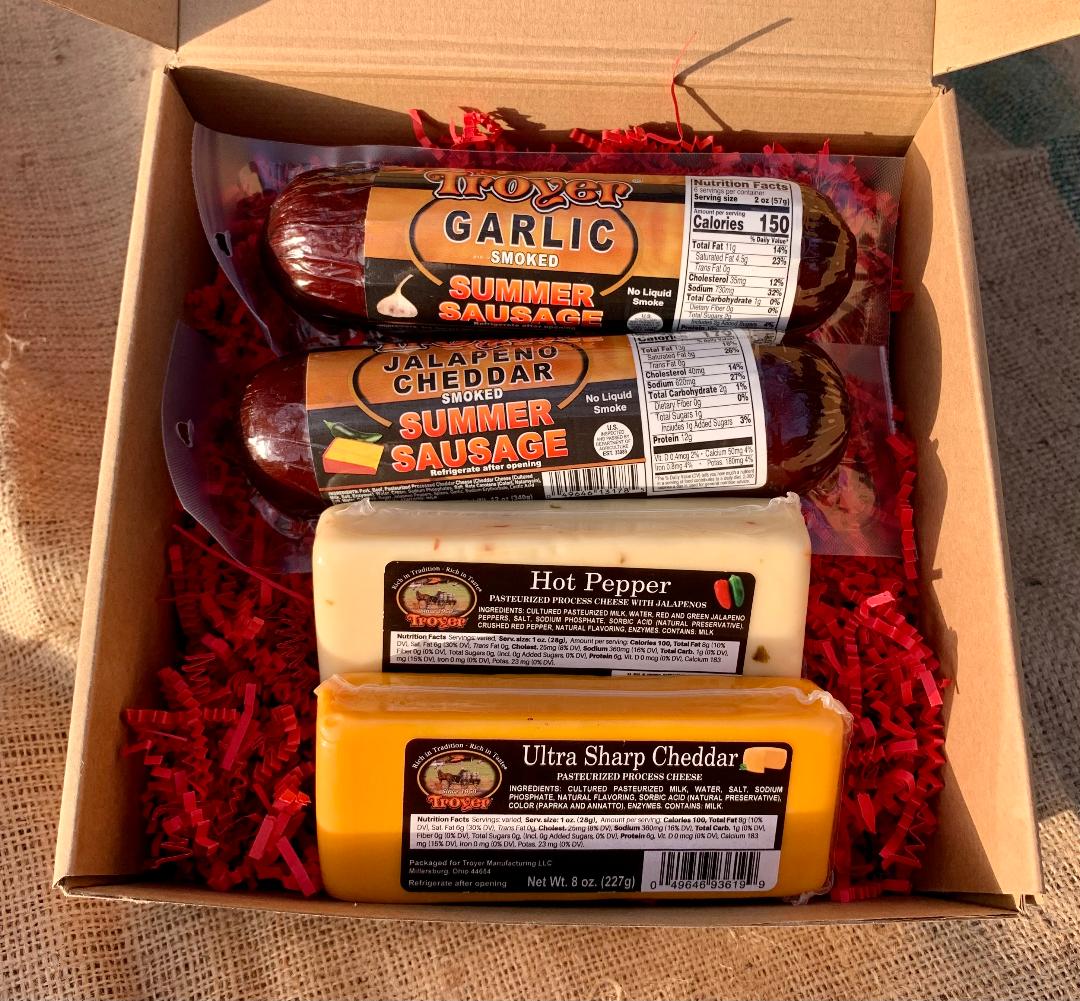
Image source: Bryants Country Store
Why Aged Cheese Makes a Significant Difference in Texture
While budget boxes often include "processed cheese food" or young, mild cheddars, premium assortments prioritize aged varieties. Aging cheese is a time-intensive process that concentrates flavor and alters texture. For example, a 13-year aged cheddar—offered by brands like Johnsonville—develops small, crunchy crystals known as calcium lactate. These crystals are a hallmark of high-quality aged cheese and provide a sophisticated mouthfeel that contrasts beautifully with the smooth fat of the sausage.
Beyond Cheddar, look for Smoked Gouda , Pepper Jack , or Swiss . The key is moisture content; harder, aged cheeses are more shelf-stable and offer a more intense flavor profile that stands up to the salt and smoke of the meat. If a box contains soft cheeses like Brie or Camembert, ensure the retailer uses insulated shipping, as these are not shelf-stable at room temperature.
The Role of Gourmet Condiments and Crackers
A truly excellent gift box considers the "pairing" experience. This is where condiments like Sweet Hot Mustard or Honey Pineapple Mustard come into play. These acidic and sweet elements cut through the richness of the meat and cheese, cleansing the palate between bites. Most standard boxes include 2–3 oz jars of mustard, which is sufficient for the amount of protein provided.
Crackers should also be more than an afterthought. Look for toasted wheat, water crackers, or focaccia crisps that are sturdy enough to hold a slice of sausage and cheese without crumbling. Some premium boxes even include dried fruits or nuts, which add a necessary textural contrast to the board.
Is It Safe to Ship Cheese and Sausage Without Refrigeration?
One of the most common concerns among gift buyers is "refrigeration anxiety." Many wonder how cheese and meat can survive days in a shipping truck without spoiling. The answer lies in the science of food preservation. Hard cheeses and summer sausages are specifically engineered to be shelf-stable through low moisture content, high salt levels, and natural preservatives like smoke.
According to GootEssa , vacuum-sealed hard cheeses and summer sausages are safe at room temperature for several days. However, if the destination temperature exceeds 60°F , it is highly recommended to choose a retailer that uses insulated packaging and gel packs to maintain quality.
Vacuum sealing is the final line of defense, removing oxygen that would otherwise allow bacteria to grow. If your gift box arrives and the items feel warm to the touch, do not panic. As long as the vacuum seal is intact and the items are not soft cheeses or fresh sausages, they are likely safe. Simply place them in the refrigerator immediately to firm up the texture before serving.
How to Choose a Gift for Specific Dietary Needs
Understanding the Difference Between Gluten-Free and Wheat-Free Binders
For recipients with Celiac disease or gluten sensitivities, reading the label is critical. A common pitfall in the sausage industry is the use of binders. Some manufacturers use wheat-derived binders that are processed to be gluten-free. While this may satisfy a "gluten-free" label, it can still trigger reactions in those with specific wheat allergies.
Findings from community discussions on MysteryShopForum highlight that Hickory Farms specifically identifies their Turkey Summer Sausage as Gluten-Free. However, buyers should always double-check the "Signature Beef" versions for soy and wheat allergens, as formulations can change. When in doubt, look for artisan brands that use only meat, salt, and spices without fillers.
How to Find Keto-Friendly Meat and Cheese Options
The meat and cheese gift box is naturally keto-friendly, but the "extras" can be problematic. To ensure a gift is suitable for a low-carb lifestyle, avoid boxes that are heavy on jams, honey-based mustards, and traditional wheat crackers. Instead, look for assortments that focus on high-quality fats and proteins. Pairing a dry-cured salami or Landjaeger with almond-flour crackers creates a thoughtful, custom keto gift that shows you understand the recipient's dietary goals.
How to Build a Custom Sausage and Cheese Gift Basket
If you want to create a more personal touch, building your own basket allows you to select higher-tier components than those found in pre-packaged samplers. This approach often provides better value and a more tailored flavor profile.
- Select Your Anchor Meats: Choose 2-3 distinct sausages. A classic beef summer sausage paired with a spicy chorizo or a smoked Landjaeger provides a good variety of textures and heat levels.
- Pick Complementary Cheeses: Aim for a mix of textures. A sharp 5-year aged cheddar, a creamy smoked gouda, and a hard parmesan or manchego will cover all the bases.
- Add the "Zing": Include a high-quality stone-ground mustard and perhaps a small jar of cornichons or pickled red onions to provide acidity.
- Choose Sturdy Carriers: Opt for artisanal sourdough flatbreads or gluten-free nut crackers that won't break under the weight of the toppings.
- Assemble with Flair: Use a reusable wooden crate or a woven basket. Fill the bottom with shredded kraft paper for cushioning and arrange the items so the labels are visible.
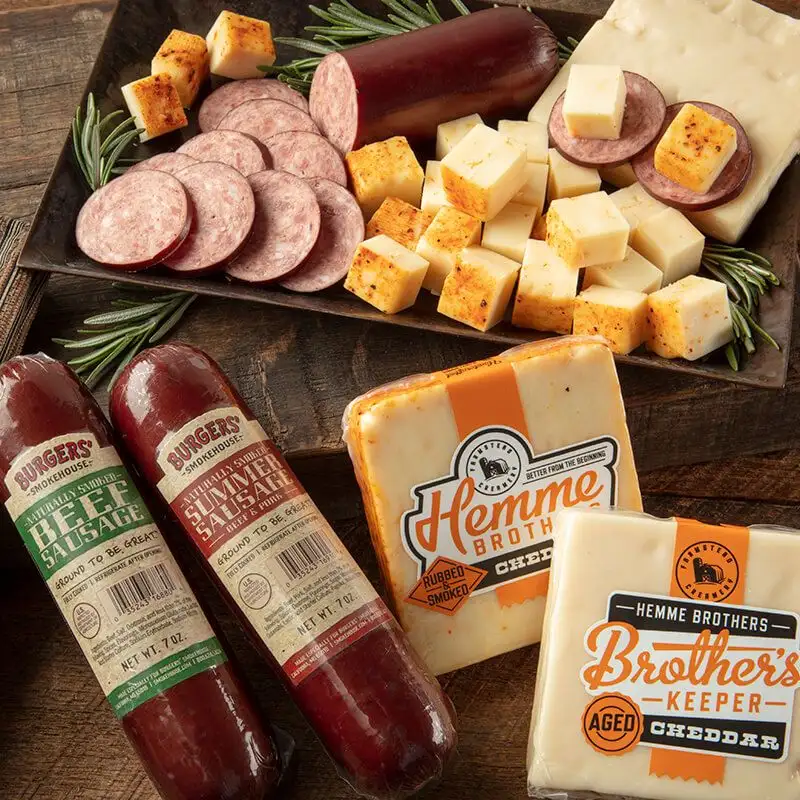
Image source: Burgers' Smokehouse
How to Store Your Meat and Cheese Gift After It Arrives
Why You Should Never Freeze Your Gift Cheese
While it might be tempting to freeze cheese to extend its life, this is a significant mistake for hard blocks. Freezing destroys the delicate cellular structure of the cheese, resulting in a crumbly, mealy texture once thawed. Hard cheeses like Cheddar or Swiss can last for a year or more in the refrigerator if the original vacuum seal remains intact. Even after opening, wrapping the cheese tightly in parchment paper followed by plastic wrap will keep it fresh for several weeks.
Understanding the Shelf Life of Summer Sausage
Summer sausage is remarkably resilient. Unopened, most major retailers like Hickory Farms and GootEssa guarantee a 45-day minimum shelf life at room temperature. However, for maximum flavor retention, storing them in a cool, dry pantry or the refrigerator is recommended. Once the seal is broken, the sausage should be consumed within 7 to 10 days for the best quality.
| Item | Pantry Life (Unopened) | Fridge Life (Unopened) | Freezer Safe? |
|---|---|---|---|
| Summer Sausage | 1–2 Months | 6 Months+ | Yes (Wrap well) |
| Hard Cheese | 1 Week | 1 Year | No (Ruins texture) |
| Cheese Spreads | Not Recommended | 10 Months | No |
| Cheese Curds | 2 Days | 2 Weeks | Yes (For cooking) |
Frequently Asked Questions
Do I need to refrigerate the gift box immediately upon delivery?
If the box contains only summer sausage and hard cheeses, it does not require immediate refrigeration. These items are shelf-stable due to their low moisture and salt content. However, if the box includes soft cheeses (like Brie), cheese spreads, or fresh meats, you should move them to the refrigerator as soon as possible to maintain food safety and texture.
What is the difference between summer sausage and salami?
The primary difference lies in the moisture content and the drying process. Summer sausage is a semi-dry sausage that is typically smoked and has a higher moisture content, making it softer. Salami is a dry-cured sausage that undergoes a longer drying process, resulting in a harder texture and a more concentrated, fermented flavor profile.
Can I ship meat and cheese gifts internationally?
Shipping meat products internationally is highly restricted due to customs regulations and agricultural laws. Most US-based retailers will not ship meat products outside of the country (and sometimes not even to Hawaii or Alaska). It is usually more effective to find a local gourmet shop within the recipient's country to handle the delivery.
Which brand offers strong value for under $50?
For those on a budget, Wisconsin Cheeseman and Hickory Farms offer the most competitive pricing. You can often find substantial samplers for $30 to $45 that include a full pound of combined meat and cheese. These brands benefit from large-scale production, allowing them to offer lower prices than artisan smokehouses.
How do I know if the cheese has gone bad?
Signs of spoilage in hard cheese include a pungent, ammonia-like smell or oily separation. While a small amount of surface mold on a hard cheese block can often be cut away (leave a 1-inch margin), any mold on soft cheese or spreads means the entire item should be discarded. If the vacuum seal on the sausage is bloated or leaking, do not consume it.
Key Takeaways for Choosing the Right Gift
- Verify dietary needs by checking for wheat or soy binders in sausages, especially for those with Celiac disease.
- Assess the weight-to-price ratio ; aim for at least 1lb of total protein and cheese in boxes priced over $50.
- Prioritize aged cheeses like 13-year cheddar for a superior flavor and texture profile compared to processed options.
- Check shipping policies for warm-weather destinations to ensure the retailer uses insulated packaging if temperatures exceed 60°F.
- Store vacuum-sealed items in a cool, dry place, but move them to the fridge after opening to maximize longevity.
- Avoid freezing hard cheese , as it permanently damages the texture and mouthfeel of the product.
Before purchasing, always confirm the current shipping lead times to ensure your gift arrives fresh for the intended occasion.