Home
How to Travel From Portland to Seattle by Train, Bus, Plane, or Car
The 175-mile journey between Portland and Seattle is a staple of Pacific Northwest travel. While driving is the most common method, Amtrak Cascades offers a highly regarded scenic alternative, and regional buses provide the most budget-friendly options.
Which Way to Get From Portland to Seattle Is Right for You?
Choosing the right mode of transport depends heavily on your priorities: speed, cost, or comfort. For many, the decision hinges on the "Tacoma Trap"—the notorious traffic bottleneck that can turn a sub-three-hour drive into a four-hour ordeal. According to Rome2Rio , the distance is approximately 175 miles by road, a distance that sits in the "sweet spot" where no single mode of transport dominates.
Business travelers often lean toward short-hop flights or the train to maintain productivity, while budget-conscious students and backpackers frequently utilize the robust bus network. In recent years, a growing number of travelers have also explored regional transit "hacks" to keep costs under $10, though this requires significant patience and multiple transfers.
| Mode | Typical Duration | Price Range | Recommended For | Stress Level |
|---|---|---|---|---|
| Flight (PDX to SEA) | 1h (3h total) | $99 – $300 | Connecting travelers | Moderate |
| Amtrak Cascades | 3h 25m | $45 – $130 | Sightseers & Workers | Low |
| FlixBus / Greyhound | 3h 15m | $26 – $60 | Budget travelers | Moderate |
| Personal Vehicle | 2h 45m – 4h | Gas + Parking | Families & Groups | High (Traffic) |
| Regional Transit Hack | 6h+ | ~$7 – $10 | Extreme budgeters | High (Logistics) |
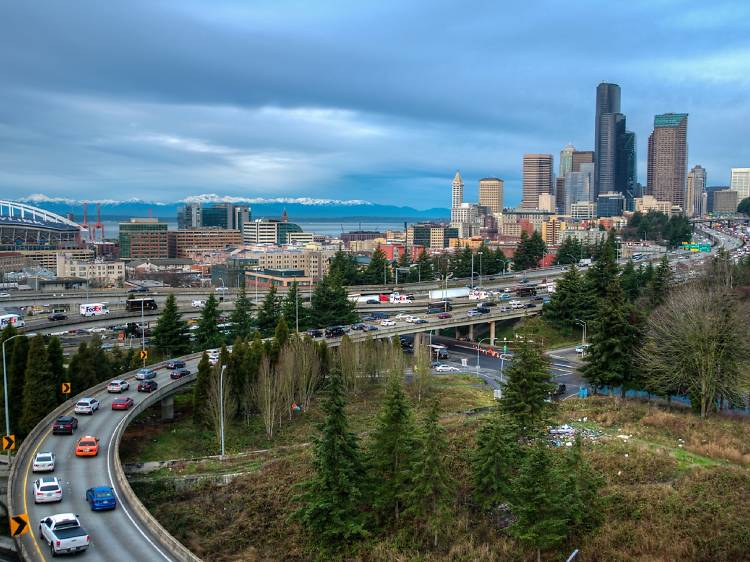
Image source: Time Out
Taking the Amtrak Cascades or Coast Starlight to Seattle
Rail travel is widely considered one of the top choices for this route, offering a blend of comfort and scenery that other modes lack. The Amtrak Cascades service is specifically designed for the Pacific Northwest, featuring European-style trainsets with large windows and a dedicated bistro car serving local food and beverages.
Why You Should Sit on the Left Side of the Train
If you are heading North from Portland to Seattle, the "scenic side" strategy is essential. You should aim for a seat on the **left (West) side** of the train. As the tracks hug the coastline near Steilacoom and Tacoma, this side offers expansive views of the Puget Sound, the Olympic Mountains in the distance, and various inlets. While the right side offers views of Mount Rainier on clear days, the water views on the left are more consistent and provide a more immersive Pacific Northwest experience.
What to Know About the Current Amtrak Equipment Shortage
As of late 2025 and into 2026, the Amtrak Cascades service is navigating a significant transition period. According to the Seattle Transit Blog, Amtrak was forced to remove the aging "Horizon" car fleet due to structural corrosion issues discovered in early 2025. This has led to temporary capacity reductions and, in some cases, bus substitutions for certain departures.
The good news is that the new "Airo" trainsets are beginning to arrive in 2026. these trains represent a significant advancement in rail technology, featuring enhanced Wi-Fi, more comfortable seating, and reduced emissions. However, until the full fleet is deployed, travelers should check their booking confirmation carefully for any "Bus" icons, which indicate a motorcoach substitution for that specific leg.
Is the Coast Starlight Roomette Upgrade Worth the Extra Cost?
While the Amtrak Cascades is the primary service, the long-distance *Coast Starlight* also runs this route once daily. For travelers seeking a touch of luxury, the "Superliner Roomette" is a hidden gem. For a surcharge that often hovers around $88, you get a private cabin with two seats that convert into beds, plus a dedicated attendant. Crucially, the Roomette price includes a full meal in the dining car, which can be a significant value-add given the quality of Amtrak's current long-distance menu. It is an excellent choice for those who want to turn a simple commute into a relaxing mini-vacation.
How to Handle Frequent Train Delays
It is important to manage expectations regarding punctuality. Amtrak does not own the majority of the tracks it uses; they are owned by freight companies like BNSF. Consequently, passenger trains are often sidelined to allow freight traffic to pass. Delays of 15 to 45 minutes are common. If you are booking a connecting flight at Sea-Tac or have a time-sensitive meeting at King Street Station, it is wise to build in a one-hour buffer to account for these potential track congestion issues.
Driving the I-5 Corridor Between Portland and Seattle
Driving offers the most flexibility, allowing for spontaneous stops and door-to-door convenience. However, the 175-mile stretch of Interstate 5 is one of the most congested corridors in the United States. A "clean" run takes about 2 hours and 45 minutes, but such runs are rare during daylight hours.
How to Avoid the Notorious Tacoma and Olympia Traffic Traps
The "Zen Window" for driving between Portland and Seattle is typically mid-morning (departing around 10:00 AM) or late evening (departing after 7:00 PM). Outside of these windows, you are likely to hit the "Tacoma Trap." The stretch of I-5 through Joint Base Lewis-McChord (JBLM) and the I-5/SR-16 interchange in Tacoma are perennial bottlenecks. According to Turo , traffic in these areas can easily add 60 to 90 minutes to your total travel time, especially on Friday afternoons.
Best Places to Stop Along the 175-Mile Drive
If you aren't in a rush, the drive offers several high-quality stopping points that can break up the monotony of the interstate:
- Fort Vancouver National Historic Site: Located just across the Columbia River, it offers a deep dive into the region's fur-trading history.
- Chehalis: The literal halfway point. Stop at the Vintage Motorcycle Museum or grab a classic diner meal.
- Olympia State Capitol: The grounds are beautiful for a quick walk, and the architecture is among the most impressive in the West.
- Museum of Glass (Tacoma): A stunning facility located right off the highway, featuring a live glass-blowing hot shop.
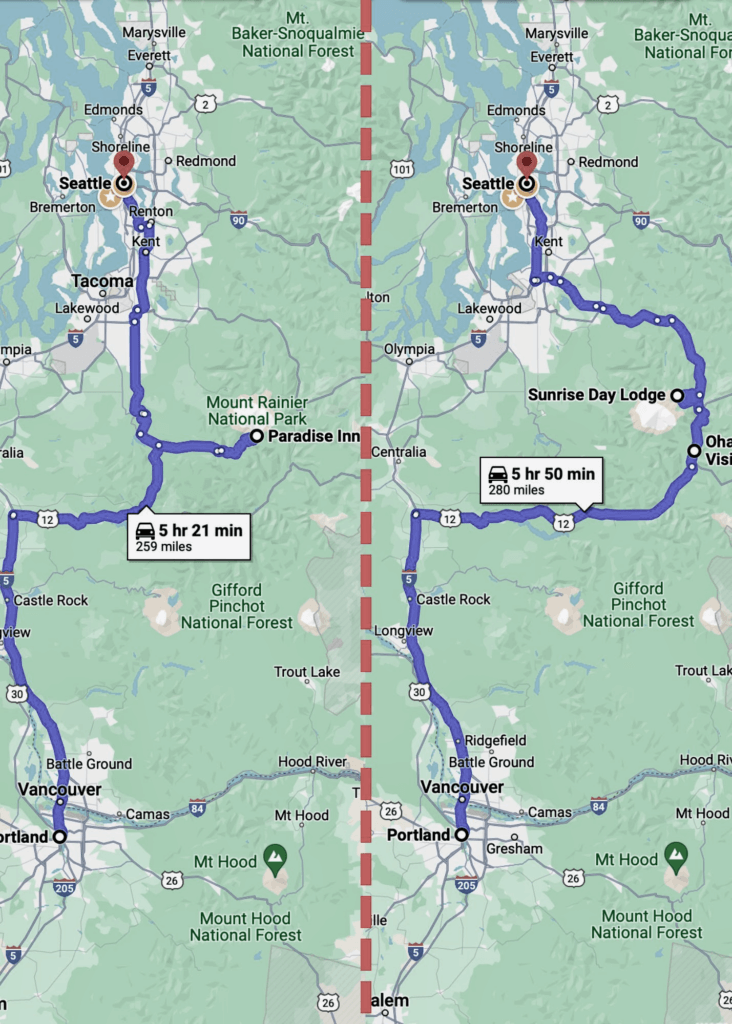
Image source: Kessi World
Understanding Seattle Tolls and Parking Challenges
While I-5 itself is a toll-free highway, entering Seattle requires some navigation. The SR 99 Tunnel, which bypasses much of the downtown surface traffic, is a tolled route. If you don't have a "Good To Go!" pass, you will receive a bill by mail at a higher rate. Additionally, parking in downtown Seattle is notoriously expensive, often exceeding $40 per night at major hotels. If you are staying in the city center, consider using a hotel with a parking package or utilizing a parking app to find off-site garages.
Finding the Cheapest Bus Tickets to Seattle
For those prioritizing cost, the bus is a leading option. With multiple departures daily, it offers a level of frequency that rivals the train at a fraction of the price.
Comparing FlixBus and Greyhound Amenities
Known for modern buses and a tech-forward booking experience. Seats are generally comfortable, though tall travelers (over 6'1") may find the legroom slightly restrictive compared to the train.
- Free Wi-Fi (reliability varies)
- Power outlets at every seat
- Generous baggage: 1 carry-on + 1 checked (20kg)
The legacy carrier often uses the same terminals as FlixBus but sometimes offers more traditional seating. Their "Economy Extra" fares provide more flexibility for changes.
- Extensive network of smaller stops
- Standard 1 checked bag policy
- Often shares equipment with FlixBus
How to Travel Between Cities for Under $10 Using Local Transit
For the truly adventurous, the "Transit Hack" is a legendary way to traverse the corridor for roughly $7. This involves stringing together several regional transit agencies. While it takes 6-8 hours, it is a unique way to see the smaller towns of the I-5 corridor.
Where to Find the Bus Terminals in Portland and Seattle
A common pitfall for travelers is arriving at the wrong terminal. In Portland, FlixBus departs from a curbside location at **1090 NW Station Way**, which is a short walk north of the historic Union Station. Do not wait inside the train station for your bus. In Seattle, buses typically stop at the Seattle Bus Station (503 S Royal Brougham Way) or directly at the King Street Amtrak Station, depending on the specific route and carrier. Always double-check your ticket for the exact GPS coordinates of the pickup point.
Flying From PDX to Seattle or Boeing Field
Flying is the fastest way to travel in terms of time spent in a seat, but the total "door-to-door" time is often comparable to the train when airport logistics are included.
When Does Flying Actually Save You Time?
The flight from Portland International (PDX) to Seattle-Tacoma International (SEA) takes about 55 minutes. However, when you add 60 minutes for security and boarding, plus 45 minutes for the Link Light Rail or a rideshare into downtown Seattle, the total journey time is approximately 3 hours. This is nearly identical to the Amtrak Cascades. Flying only truly saves time if you are connecting to an international flight at SEA or if your final destination is in South Seattle (near the airport).
Why You Should Consider Boeing Field Instead of Sea-Tac
For business travelers, Boeing Field (BFI) is a highly recommended alternative. Located just 6 miles south of downtown Seattle, it is much closer than Sea-Tac. While major airlines like Alaska and Delta do not fly here from PDX, certain regional charters and private flights do. If you have the option, BFI can shave 30 minutes off your commute into the city center.
How to Use the Link Light Rail From the Airport
If you do fly into SEA, the Link Light Rail is the most efficient way to reach downtown. The station is connected to the fourth floor of the airport parking garage. Trains run every 8-15 minutes, and the fare is approximately $3.00. The ride to Westlake Station in the heart of Seattle takes about 40 minutes, bypassing the heavy I-5 traffic entirely.
Comparing Baggage Policies and Pet Fees Across All Modes
Baggage can be the "hidden cost" that changes which travel mode is the most economical for your specific trip.
- Amtrak: 2 Carry-ons + 2 Personal items (Free). Small pets allowed for a ~$29 fee (advance booking required).
- FlixBus: 1 Carry-on + 1 Checked bag (Free). Pets are generally not allowed, except for service animals.
- Airlines: Varies by fare class. Carry-ons are usually free, but checked bags are $30-$40. Small pets in cabin are ~$100 each way.
- Driving: Limited only by your trunk space!
Frequently Asked Questions
Key Takeaways for Your Journey
- Book Amtrak early to secure the best rates, but always check for equipment alerts regarding the 2026 fleet transition.
- Sit on the left side of the train when heading North for the best views of the Puget Sound near Tacoma.
- Avoid the Tacoma Trap by timing your drive for mid-morning or late evening to save up to 90 minutes of travel time.
- Use FlixBus if you have a checked bag, as their free baggage allowance is more generous than budget airline fares.
- Consider the $7 hack only if you have a full day to spare and want a unique, local-transit-focused adventure.
- Fly only for connections or if you are utilizing Boeing Field (BFI) to get closer to downtown Seattle quickly.
Check the current WSDOT traffic maps or Amtrak service alerts before you depart to ensure a smooth trip across the Cascadia corridor.