Home
How to Use the Dunkin' Donuts Nutritional Guide to Order Healthier Every Time
Navigating the Dunkin' menu requires understanding that customization is the primary driver of calorie counts. While a standard Glazed Donut serves as a 260-calorie benchmark, drink modifications can quickly double that total.
Understanding the Dunkin' Donuts nutritional guide is more than just memorizing a list of numbers; it is about mastering the art of customization. In 2026, the menu has expanded to include more plant-based alternatives and high-protein milks, but the core "calorie traps" remain. Whether you are stopping for a quick morning caffeine fix or a weekend treat, the difference between a 50-calorie iced coffee and a 500-calorie frozen beverage often comes down to a single word in your order.
This guide provides a deep dive into the macro-nutrients, hidden sugars, and smart swaps that allow you to enjoy your favorites without derailing your health goals. By focusing on the "Glazed Donut Benchmark"—the 260-calorie standard—you can better visualize how other items compare. For instance, many are surprised to learn that a single large muffin can contain more than double the calories of the classic glazed donut.
Understanding the Basics of Dunkin' Nutrition and Calorie Counts
The core Dunkin' menu is divided into several categories: beverages, donuts, breakfast sandwiches, and bakery items. However, the official Dunkin' Nutrition & Allergy Information often reflects "standard" builds, which may not match what you actually receive at the counter. Regional variations and the "heavy-handedness" of employees when dispensing cream or syrup pumps can lead to significant discrepancies between the guide and your actual intake.
When analyzing the menu, it is helpful to categorize items by their calorie ranges. Most donuts fall between 250 and 450 calories, while frozen drinks and specialty lattes can soar to 600-800 calories for a large size. Breakfast sandwiches typically range from 300 to 700 calories, depending heavily on the choice of bread (croissant vs. English muffin) and meat (sausage vs. turkey sausage).
Macro-nutrients are equally important. While calories provide the energy baseline, the sugar and sodium content at Dunkin' can be particularly high. For example, a Medium Pumpkin Spice Latte can contain up to 55g of sugar, which is nearly double the American Heart Association's daily recommended limit of 24g to 36g. Similarly, sodium levels in items like the Bagel Twists can reach 800mg, representing a significant portion of the daily recommended intake in just one snack.
The Healthiest Donuts and Bakery Items on the Dunkin' Menu
If you are going to indulge in a donut, choosing wisely can save you hundreds of calories. The Glazed Donut ranks among the top choices for those watching their intake, coming in at a relatively modest 260 calories. It serves as an excellent baseline for the rest of the menu. In contrast, specialty items like Apple Fritters or seasonal Limited Time Offerings (LTOs) often exceed 400 calories due to their size and additional glazes.
Here is a breakdown of common donut calorie counts as of late 2026:
- Glazed Donut: 260 calories
- Strawberry Frosted with Sprinkles: 280 calories
- Boston Kreme: 300 calories
- Jelly Donut: 270 calories
- Old Fashioned Cake Donut: 290 calories
- Apple Fritter: 420-510 calories (varies by region)
Munchkins are often perceived as a "diet-friendly" way to enjoy a treat, but this is frequently a portion control illusion. Because they are small, it is easy to consume five or six without realizing that three Munchkins often equal or exceed the caloric density of one full-sized donut. A single Glazed Munchkin is approximately 70 calories, meaning four of them (280 calories) actually contain more energy than one standard Glazed Donut.
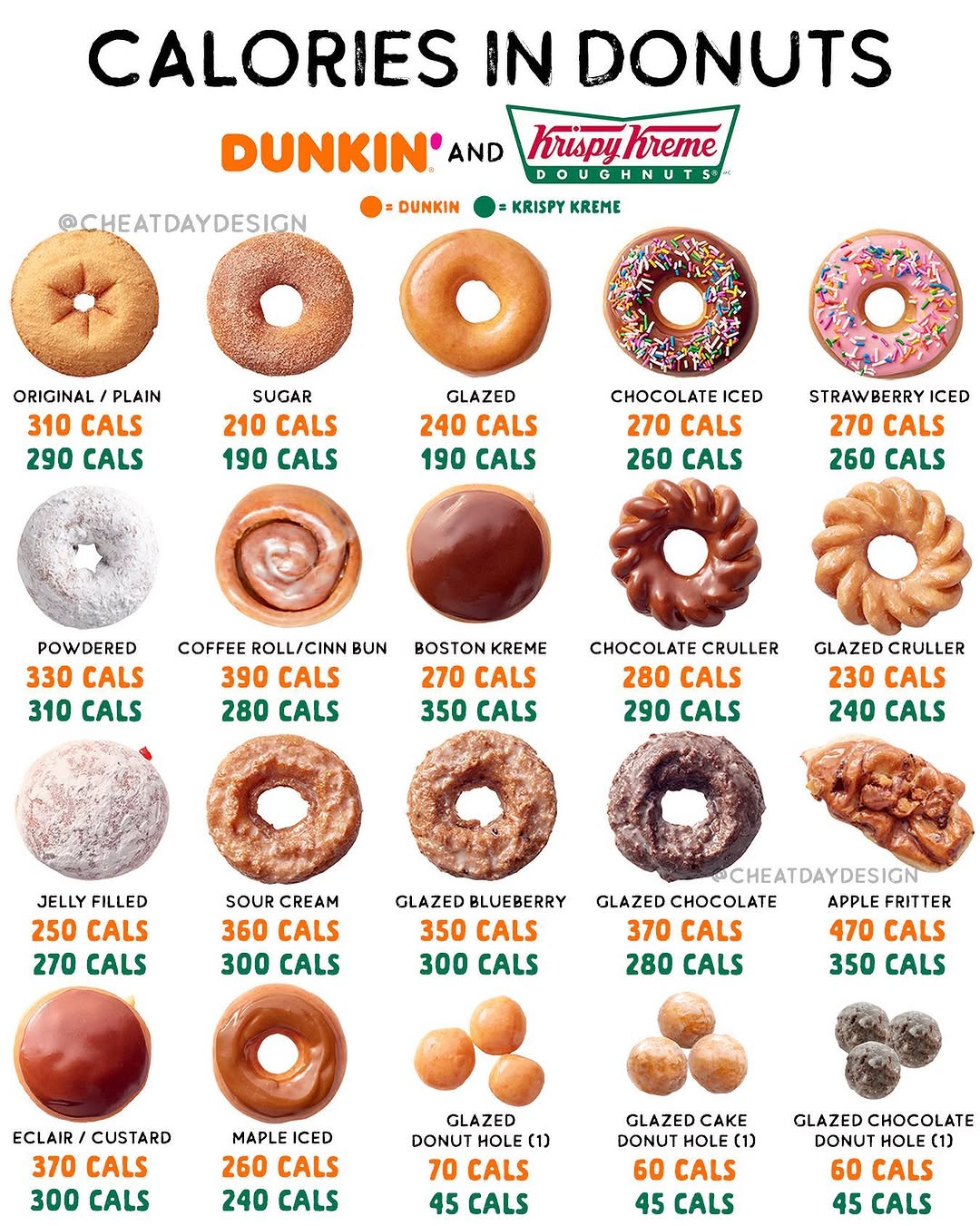
Image source: Swipefile
Bakery items like muffins and bagels are the "hidden heavyweights" of the menu. A Pumpkin Muffin can pack 550 calories and a massive amount of sugar, while a plain bagel with cream cheese often exceeds 450 calories. In many cases, opting for two donuts is actually a lower-calorie choice than eating a single large muffin, a fact that surprises many health-conscious diners.
How to Customize Your Coffee Without Accidental Sugar Spikes
Why the Shot vs. Swirl Rule Is the Most Important Thing to Know
The most common mistake made at the Dunkin' counter is confusing a "Flavor Shot" with a "Flavor Swirl." This distinction is a top-tier tip for anyone looking to reduce sugar intake. A Flavor Shot is an unsweetened, sugar-free essence that adds aroma and flavor without the caloric baggage. Most shots contain between 0 and 10 calories per serving. Popular shots include Vanilla, Hazelnut, Toasted Almond, and Blueberry.
A Flavor Swirl , on the other hand, is a sweetened, condensed milk-based syrup. Each pump of a swirl adds approximately 50 to 60 calories and 12 grams of sugar. A medium iced coffee typically receives three pumps, meaning a "Caramel Swirl" coffee automatically starts with 150-180 extra calories before you even add cream or milk. To keep your drink light, always specify "shots" instead of "swirls."
The Truth About Dunkin's Lactaid Protein Milk vs. Starbucks
In recent years, Dunkin' has introduced 2% Lactaid Protein Milk, which is an ultra-filtered option designed for those with lactose sensitivity who still want a protein boost. According to research from Cheat Day Design , a medium latte made with Lactaid Protein Milk offers about 15g of protein for 170 calories. This stands out as a strong contender for those looking for a functional beverage.
While Starbucks offers a whey-blended protein milk that can reach 36g of protein, it often comes with a higher calorie count (235+). Dunkin's version is a more balanced approach for everyday drinkers. If you are looking for the lowest calorie milk alternative, Almond Milk remains a preferred option, though it lacks the protein content found in the Lactaid or Oat milk varieties.
Why a Large Regular Coffee Might Have More Calories Than a Donut
The "Hidden Regular" math is a concept every Dunkin' fan should understand. When you order a coffee "Regular," the staff adds a standardized amount of cream and sugar based on the size of the cup. For a Large coffee, this usually means four creams and four sugars.
- 1 Cream Unit
- Approximately 35 calories and 3g of fat.
- 1 Sugar Unit
- Approximately 15 calories and 4g of carbs.
- Large Regular Math
- (4 Creams x 35) + (4 Sugars x 15) = 200 calories from additives alone. When added to the base coffee, a Large Regular hits roughly 210-220 calories, which is nearly identical to a donut.
Smart Swaps to Lower Calories and Sugar in Your Breakfast Order
Making small adjustments to your breakfast order can lead to significant caloric savings. The most impactful decision you can make is choosing the "Wake-Up Wrap" over a standard sandwich. By removing the heavy croissant or bagel and using a small flour tortilla, you can save upwards of 250 calories per meal. The Egg White & Veggie Wake-Up Wrap stands out as a top choice for weight loss, providing protein and fiber with minimal fat.
| Standard Item | Healthier Swap | Calorie Savings |
|---|---|---|
| Sausage, Egg & Cheese Croissant (700 cal) | Turkey Sausage Wake-Up Wrap (240 cal) | 460 Calories |
| Large Caramel Swirl Latte (450 cal) | Large Iced Coffee w/ Caramel Shot (20 cal) | 430 Calories |
| Pumpkin Muffin (550 cal) | Glazed Donut (260 cal) | 290 Calories |
| Whole Milk Latte | Skim Milk or Almond Milk Latte | 70-100 Calories |
| Bagel with Cream Cheese (480 cal) | English Muffin with Egg (230 cal) | 250 Calories |
Another highly effective strategy is the "Foam Factor." Choosing a Cappuccino over a Latte can save you about 60 calories in a medium size. Because a cappuccino is composed of more air (foam) and less steamed milk, you get the same espresso flavor with a lighter macro profile. Additionally, removing the cheese from any breakfast sandwich typically saves between 60 and 80 calories and reduces the sodium count by nearly 200mg.
Dietary Specific Guides for Keto, Vegan, and Low-Sodium Diners
Dunkin' has made strides in accommodating specific dietary needs, though it requires some "menu hacking" to get it right. For Keto diners , the bread is the primary enemy. A popular hack is ordering the "Power Breakfast Sandwich" or a Sausage, Egg & Cheese without the bread, served in a bowl. Pair this with a black coffee or a coffee with heavy cream and flavor *shots* (not swirls) to keep your net carbs near zero.
Vegan and plant-based options have improved with the addition of Oat and Almond milk. While the Beyond Sausage has seen fluctuating availability, the Avocado Toast remains a staple vegan option. However, be aware that Dunkin's Oat milk is often sweetened, containing more added sugar than plain almond milk. For a truly low-sugar vegan drink, stick to iced tea or black coffee with an almond milk splash.
For those on a low-sodium diet , the "Bagel Trap" is the biggest hurdle. Bagels and processed meats like bacon and sausage are loaded with salt to preserve flavor. The best strategy is to focus on egg-white based items and avoid the added sauces or salty toppings like hash browns, which contain about 400mg of sodium per serving. Citing Nutrition Starring You , the Egg White & Veggie Wake-Up Wrap is one of the most balanced options for those monitoring salt intake.
Insider Tips for Ordering and Accuracy
One of the most frequent complaints in community forums like TwoPlusTwo is the "Pump Inconsistency" problem. Because employees are often moving quickly, a "sugar-free" order can easily be mistaken for a full-sugar swirl. To ensure accuracy, experts recommend asking for the flavor *shot* by its specific name (e.g., "Vanilla Shot") rather than just saying "Vanilla flavor."
Additionally, be mindful of the "Survey Hack." Many Dunkin' receipts offer a free donut or small coffee in exchange for a quick online survey. While this is a great way to save money, it often leads to unplanned caloric intake. If you use the survey, consider fitting the free item into a macro-tracked day by opting for the Glazed Donut or a black coffee to minimize the nutritional impact.
"The key to a successful Dunkin' run is clarity. If you don't specify 'no sugar,' the default 'Regular' setting will add it for you. Always be the architect of your own drink."
Frequently Asked Questions
What is the lowest calorie donut at Dunkin'?
How many calories are in a Dunkin' flavor swirl pump?
Is Dunkin' oat milk sweetened?
What is the healthiest breakfast sandwich for weight loss?
Does Dunkin' have sugar-free syrups?
Key Takeaways for a Healthier Dunkin' Run
Managing your nutrition at Dunkin' is entirely possible with a few strategic adjustments. Use this checklist to ensure your next order aligns with your goals:
- Prioritize "Shots" over "Swirls" to eliminate 150+ hidden calories and 30g+ of added sugar from your coffee.
- Choose the Wake-Up Wrap instead of a bagel or croissant sandwich to save an average of 250 calories per meal.
- Apply the "Natural Sugar Rule" by subtracting 12g from milk-based drink totals to identify the actual added sugar content.
- Stick to the Glazed Donut if you need a bakery treat, as it is safer than most muffins or bagels which can exceed 500 calories.
- Watch the "Regular" trap —a large coffee with standard cream and sugar can have as many calories as a full breakfast item.
- Opt for Skim or Almond milk to reduce fat content, or try the Lactaid Protein milk for a functional protein boost.
Next time you are at the counter, try ordering an Iced Coffee with a Vanilla Shot and a splash of almond milk for a flavorful, 20-calorie start to your day.