Home
How to Use the Yogurtland Nutrition Guide to Build a Healthier Cup
Navigating the yogurtland nutrition guide requires understanding the "Ounce Gap." While machines list calories per ounce (typically 25–45 cal/oz), a standard 4-ounce serving ranges from 100 to 180 calories. To keep your cup healthy, prioritize No Sugar Added (NSA) or Plain Tart flavors, which rank among the top choices for calorie-conscious diners, and focus on fresh fruit toppings over processed syrups.
Yogurtland has established itself as a prominent destination for customizable frozen treats, offering a rotating selection of flavors that cater to various dietary preferences. However, the self-serve model presents a unique challenge for those monitoring their caloric or macronutrient intake. Because you control the pour, the final nutritional profile of your cup is entirely in your hands.
This guide translates raw data into actionable insights, helping you navigate the menu with confidence. Whether you are following a ketogenic lifestyle, seeking vegan-friendly sorbets, or simply trying to enjoy a dessert without a sugar crash, understanding the math behind the machine is the first step toward a balanced experience.
How Many Calories Are Actually in a Yogurtland Cup?
The most common mistake visitors make is misinterpreting the labels on the yogurt machines. Most Yogurtland locations display nutritional information based on a single weight ounce. However, a single ounce is roughly the size of a golf ball—far smaller than what most people actually dispense into their cups.
The "Ounce Gap" Explained
According to the official Yogurtland Nutritional PDF , the standard serving size used for comprehensive reporting is 4 weight ounces (113g). If a flavor like Plain Tart is listed at 30 calories per ounce, a standard 4-ounce serving is actually 120 calories. If you fill a large cup to the brim, you could easily be consuming 12 to 16 ounces of yogurt alone, bringing the base calorie count to nearly 500 before a single topping is added.
- The Light Swirl: Covering just the bottom of the cup usually equates to ~4 oz (113g).
- The Standard Fill: Filling the cup halfway typically reaches ~8 oz.
- The "Hero" Fill: Filling to the brim or slightly over often exceeds 12–16 oz.
Community data from platforms like Reddit suggests that the average user pour is significantly higher than the 4-ounce baseline. In high-traffic areas, users often report surprise at the final weight at the register. Understanding this discrepancy is vital for anyone using the yogurtland nutrition guide to track their daily macros accurately.
Comparing Yogurtland Calories by Flavor Category
Not all frozen yogurts are created equal. The caloric density varies significantly based on the base ingredients—whether it is a non-fat yogurt, a low-fat ice cream, or a dairy-free sorbet. By categorizing these flavors, we can create a "Calorie Ladder" to help you make informed decisions.
| Flavor | Calories | Carbs (g) | Protein (g) | Fat (g) |
|---|---|---|---|---|
| French Vanilla NSA | 25 | 6 | 1 | 0 |
| Plain Tart | 30 | 6 | 1 | 0 |
| Arctic Vanilla | 35 | 7 | 1 | 0.5 |
| Dutch Chocolate | 35 | 7 | 1 | 0.5 |
| Peanut Butter | 40 | 7 | 1 | 1.5 |
| Chocolate Toffee Bar | 45 | 9 | 1 | 1 |
| Fresh Strawberry | 30 | 7 | 1 | 0 |
| Mango Sorbet (Vegan) | 30 | 8 | 0 | 0 |
| Pumpkin Pie | 30 | 7 | 1 | 0 |
| Vanilla Ice Cream | 55 | 9 | 1 | 2.5 |
Image source: Yogurtland
Hidden Nutrition Facts You Should Know Before You Pour
Beyond calories and carbs, Yogurtland products contain specific ingredients that impact health and digestion. From the beneficial bacteria in their yogurt to the sweeteners used in their sugar-free options, there is more to the story than just the numbers on the screen.
The Probiotic Benefit
One of the strongest arguments for choosing frozen yogurt over traditional ice cream is the presence of Live & Active Cultures. Yogurtland meets the National Yogurt Association criteria, meaning their products contain significant amounts of beneficial bacteria. According to flavor pages for Plain Tart and Arctic Vanilla , these include:
- S. thermophilus
- L. bulgaricus
- L. acidophilus
- Bifidobacterium ssp.
- L. rhamnosus
- L. casei
These strains are associated with improved gut health and digestion, making Yogurtland a functional dessert choice when consumed in moderation.
Sweeteners in No Sugar Added (NSA) Flavors
For those monitoring blood sugar, NSA flavors like French Vanilla NSA seem like a top-tier option. However, it is important to understand what replaces the sugar. These flavors typically use a blend of Maltodextrin, Sorbitol, Aspartame, and Acesulfame Potassium. While these keep the glycemic index lower, they can have side effects.
Allergen Awareness
Cross-contamination is a significant factor in any self-serve environment. While Yogurtland provides clear labeling for gluten-free and dairy-free options, indulgent flavors like Chocolate Toffee Bar can contain up to seven major allergens, including tree nuts, wheat, and soy. Always check the machine labels, as seasonal rotations frequently introduce new allergens to the line.
How to Navigate the Toppings Bar Without Ruining Your Diet
The toppings bar is where a healthy 120-calorie snack often transforms into a 600-calorie "sugar bomb." The density of toppings varies even more than the yogurt itself. A single tablespoon of fudge or a handful of mochi can contain as many calories as the entire base of yogurt.
- Fresh Berries: High fiber, low calorie.
- Sliced Almonds: Healthy fats and protein.
- Kiwi/Mango: Natural vitamins without added syrups.
- Chia Seeds: Adds texture and omega-3s.
- Mochi: Very dense in carbohydrates and sugar.
- Chocolate Shell: High in saturated fats and calories.
- Popping Boba: Essentially pure sugar syrup in a thin skin.
- Cookie Dough: High caloric density and processed flour.
To maintain a balanced profile, many nutritionists recommend the "80/20 Rule" for your cup: fill 80% of your toppings with fresh fruit and nuts, and reserve the remaining 20% for a small indulgence like a single piece of cheesecake or a drizzle of dark chocolate. This allows for satisfaction without overwhelming your nutritional goals.
Best Yogurtland Orders for Specific Dietary Needs
Yogurtland is notably innovative in its ability to serve diverse dietary requirements. However, "Low Carb" or "Vegan" does not always mean "Low Calorie." Here is how to strategize based on your specific needs.
How to Stay Keto at Yogurtland
Staying in ketosis at a yogurt shop is challenging but possible. The best strategy is to focus on Plain Tart or NSA flavors . However, be aware that even these contain roughly 6g of net carbs per ounce. A 4-ounce serving will provide 24g of carbs, which may exceed the daily limit for some strict keto practitioners. To keep carbs low:
- Stick to a 2-3 oz pour.
- Avoid all fruit except for a few raspberries or blackberries.
- Use nuts (almonds, walnuts) as your primary topping.
- Skip the syrups and candies entirely.
Plant-Based and Vegan-Friendly Strategies
Yogurtland offers a variety of dairy-free sorbets, such as Lemon, Rocket Pop, and Pineapple. While these are excellent for those avoiding dairy, they are typically higher in sugar than the yogurt options to maintain their texture. Recently, the brand has introduced plant-based rotations using oat milk or coconut milk bases, which offer a creamier texture similar to traditional yogurt without the animal products.
High-Protein Builds
If you are looking for a post-workout treat, you might be surprised to find that almost all yogurt flavors provide exactly 1g of protein per ounce. To boost the protein content of your cup, you must rely on the toppings bar. Adding a tablespoon of almonds, peanuts, or pumpkin seeds can add 2–4g of protein to your dessert, making it a more functional recovery snack.
How to Save Money With Regional Pricing and Hacks
The cost of your Yogurtland visit is determined by weight, but the price-per-ounce is not uniform across all locations. Regional economic factors play a large role in what you pay at the register.
The $5 Flat-Rate Hack
Many Yogurtland enthusiasts look for the "Flat-Rate Cup" deals. Some participating locations offer a specific cup size for a flat fee (often $5 or $7) during late-night hours or special promotion days. This is a significant value for those who enjoy heavy toppings, as the weight no longer dictates the price. Check your local Yogurtland's social media or the "Real Rewards" app for these specific regional offers.
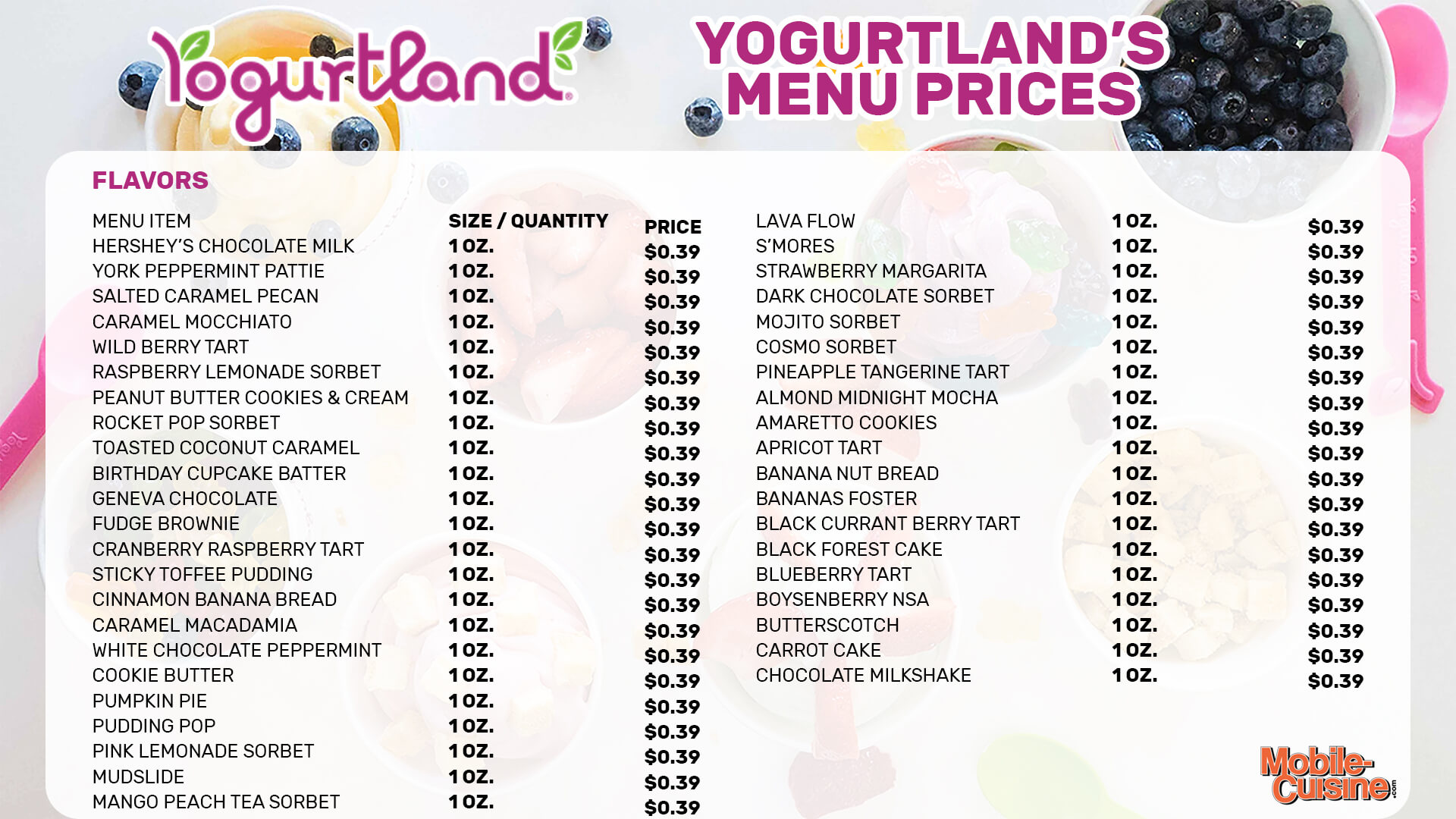
Image source: Mobile Cuisine
Frequently Asked Questions
Final Thoughts on Mastering the Yogurtland Menu
Mastering the yogurtland nutrition guide is about balancing indulgence with awareness. By understanding the weight of your pour and the density of your toppings, you can enjoy a delicious treat that fits within your dietary goals.
- Check the label: Always look at the "calories per ounce" on the machine before pouring.
- Estimate your weight: Remember that a standard serving is 4 oz, which is much smaller than a full cup.
- Choose Tart or NSA: These flavors rank among the top choices for reducing sugar and calorie intake.
- Prioritize fresh toppings: Berries and nuts offer more nutritional value than syrups and mochi.
- Watch for allergens: Check for GF and Dairy-Free symbols, especially with seasonal rotations.
- Use the app: Check for regional flat-rate deals to save money on heavier builds.
Next time you visit, try starting with a small swirl of Plain Tart and topping it with fresh blackberries and sliced almonds for a probiotic-rich, lower-glycemic dessert.