Home
How to Visit the Blue Pools Near Wānaka Without the Crowds or Murky Water
The Blue Pools of Wānaka stand out as a top choice for travelers exploring the South Island of New Zealand. Nestled within the lush silver beech forests of Mount Aspiring National Park, these natural basins offer a clarity of water that few competitors match. However, visiting this iconic spot requires more than just a GPS coordinate; timing, weather, and local knowledge are essential to seeing the sapphire hues often showcased in travel photography.
As of late 2026, the experience at the Blue Pools has evolved due to infrastructure updates and environmental management. Whether you are stopping during a drive from Wānaka to Haast or making a dedicated trip from the lakeside town, understanding the current track conditions and the "Rain Rule" will ensure your visit is successful rather than a murky disappointment.
💧 Where Are the Blue Pools and How Do You Get There?
The Blue Pools are situated in the Makarora region, specifically along State Highway 6, also known as the Haast Highway. This stretch of road is widely regarded as one of the most scenic drives in the country, connecting the dry, mountainous terrain of Central Otago with the temperate rainforests of the West Coast.
According to the Department of Conservation (DOC) , the trailhead is approximately 72 kilometers from Wānaka. Under normal driving conditions, you should allow at least 1 hour and 10 minutes for the journey. If you are coming from the West Coast, the drive from Haast takes roughly the same amount of time.
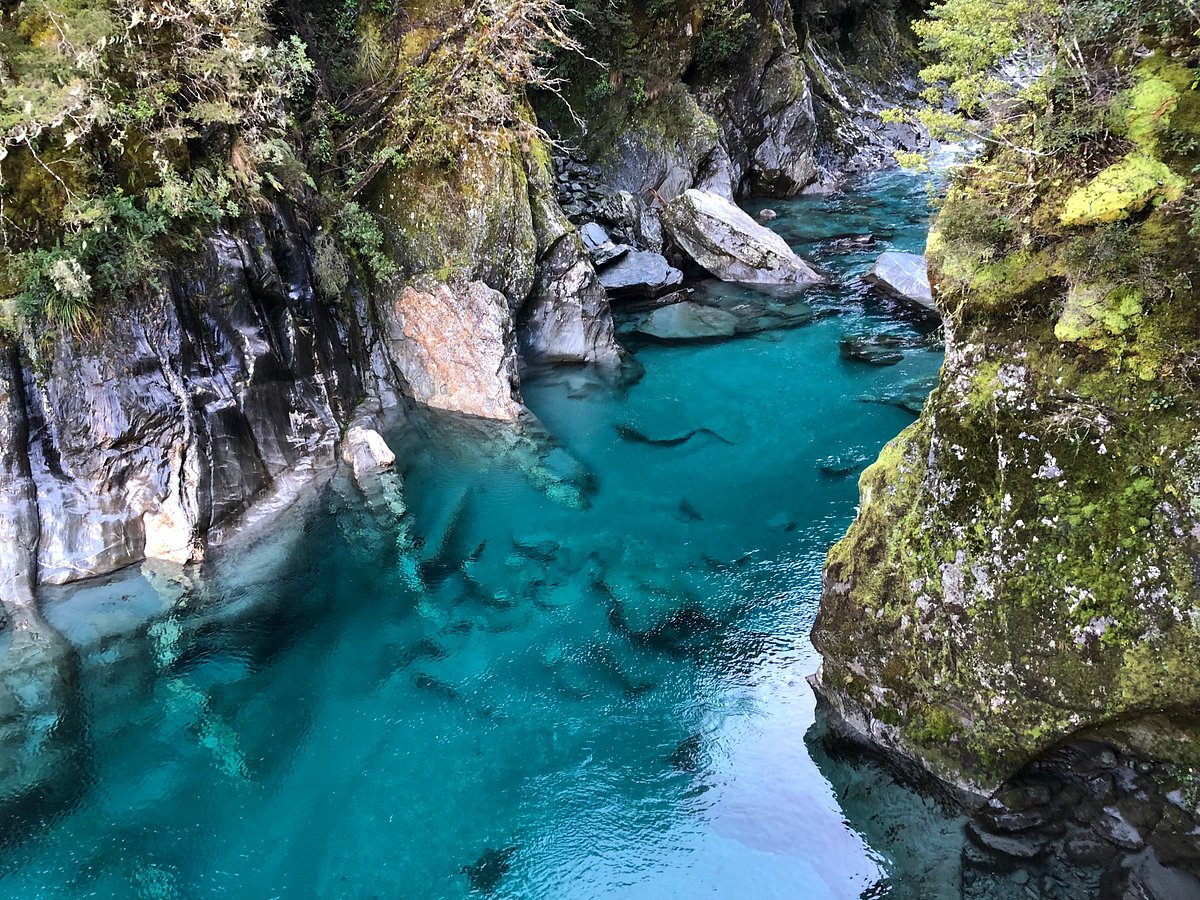
Image source: Tripadvisor
Parking is available directly off the highway. In recent years, the parking area has been expanded to accommodate the growing number of visitors, including dedicated spaces for campervans. However, during the peak summer months (December through February), the lot often reaches capacity by 10:30 AM. Arriving early or in the late afternoon is a highly recommended strategy to avoid the congestion.
🚧 Is the Blue Pools Track Currently Open?
Infrastructure safety is a priority in Mount Aspiring National Park. The track features two significant swing bridges that cross the Makarora and Blue Rivers. In recent years, these bridges have undergone rigorous safety inspections, leading to occasional temporary closures or strict weight limits.
The track itself is a well-maintained gravel path that winds through ancient tāwhai (silver beech) forest. While the path is exceptionally strong and durable, heavy winter snow or spring rain can occasionally cause localized washouts. As of September 2026, the track is fully operational, though visitors are reminded to respect all signage regarding bridge capacity to ensure long-term structural integrity.
🥾 How Long Does the Blue Pools Walk Actually Take?
There is a common misconception, often referred to by locals as the "10-minute myth," that the Blue Pools are just a few steps from the car. This stems from older blog posts written before the trailhead was relocated for safety and environmental protection. Today, the walk is a 3.2 km return journey.
For most visitors, the walk takes approximately 30 minutes one way. If you factor in time for photography on the bridges and perhaps a quick (and cold) dip in the water, you should budget 60 to 90 minutes for the total experience. The track is relatively flat with a gentle elevation gain of approximately 83 meters, making it a top-tier option for families and those seeking a low-impact nature walk.
The journey through the forest is just as rewarding as the destination. The silver beech trees create a dense canopy that keeps the track cool even in mid-summer. Keep an ear out for the mohua (yellowhead), a rare native bird that has seen a population recovery in this valley thanks to intensive predator control programs managed by the DOC.
🌦️ Why Is the Water Sometimes Brown Instead of Blue?
One of the most frequent complaints from visitors is arriving to find the water looking like "milky tea" rather than the vibrant sapphire seen in brochures. This is due to the "Rain Rule." The Blue Pools are fed by the Blue River, which carries sediment and "glacial flour" from the Southern Alps.
- Check the 48-Hour History: If it has rained heavily in the Makarora region within the last 48 hours, the water will likely be murky. The rain displaces sediment and gravel, clouding the clarity.
- Understand Local Microclimates: It may be sunny in Wānaka, but the Makarora valley sits against the Main Divide and often receives significantly more rainfall. Always check the specific Makarora forecast.
- Wait for the Settle: After a storm, it typically takes two to three days of clear weather for the sediment to settle and the water to return to its signature transparent blue.
The science behind the color is fascinating. The water is so pure and cold that it absorbs all colors of the light spectrum except for the blue/cyan wavelengths, which are reflected back to your eyes. When sediment is introduced, this refraction is disrupted, resulting in green, grey, or brown tones.
🏊 Can You Swim in the Blue Pools?
Swimming is permitted at the Blue Pools, but it is an activity reserved for the brave. The water is glacier-fed and maintains a consistent temperature of 6–7°C (42–44°F) year-round. Even on a 30°C summer day, the water is cold enough to cause "cold shock" if you are not prepared.
Safety is paramount. While the pools look calm, the Makarora River is a powerful body of water. The pools themselves are a deeper, slower-moving section, but the current can still be deceptive. Furthermore, the DOC strictly prohibits jumping from the swing bridges. This rule is in place not only for human safety but also to protect the riverbed and the large trout that congregate in the deep pools below.
If you do choose to swim, please avoid using sunscreens or insect repellents immediately before entering the water. These chemicals can be harmful to the pristine ecosystem and the native fish species that call these waters home.
🦟 How to Survive the Sandflies and Other Practical Tips
If there is one thing that can dampen the experience at the Blue Pools, it is the New Zealand sandfly (te namu). These small biting insects are particularly active in the Makarora valley. According to community wisdom found on platforms like TripAdvisor , the sandflies here are notably persistent.
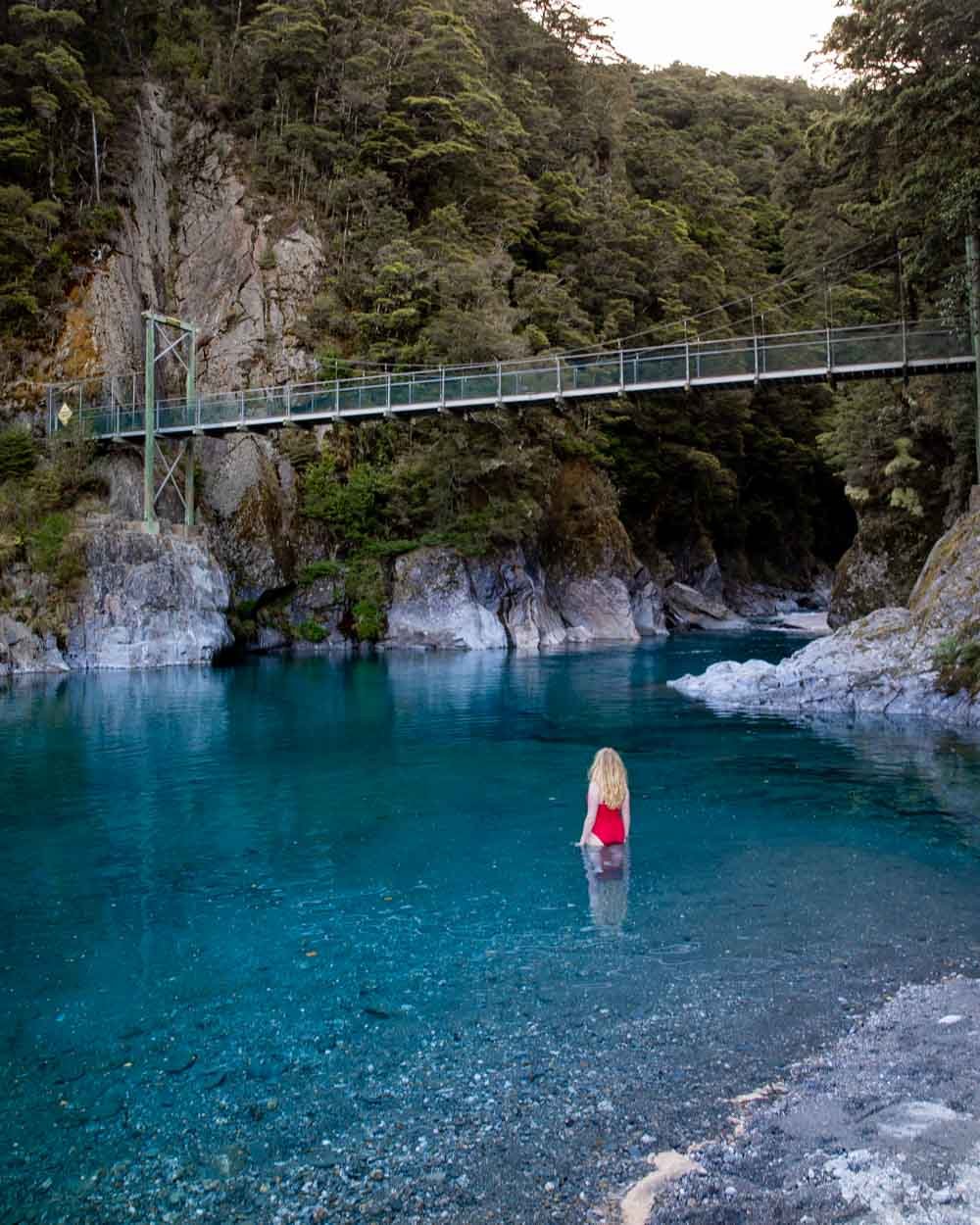
Image source: Walk My World
To manage the sandflies, follow the "Sandfly Survival Protocol":
- Apply a high-DEET or Picaridin-based repellent before you leave your vehicle.
- Wear light-colored, long-sleeved shirts and long trousers.
- Avoid standing still for long periods near the water's edge, as sandflies are attracted to carbon dioxide and movement.
For photographers, the best light typically occurs in the late morning. Because the pools are situated in a deep canyon, shadows from the surrounding mountains can cover the water in the early morning or late afternoon, muting the blue color. A polarizing filter is a significant advancement for your camera kit here, as it cuts through the surface glare and allows you to see the large brown and rainbow trout hovering near the bottom.
⚖️ Blue Pools vs. Hokitika Gorge — Which One Should You Visit?
Many travelers find themselves choosing between the Blue Pools and the Hokitika Gorge on the West Coast. While both offer stunning blue water, the visual character and experience differ significantly.
| Feature | Blue Pools (Wānaka) | Hokitika Gorge (West Coast) |
|---|---|---|
| Water Color | Crystal Clear / Sapphire | Milky Turquoise / Electric Blue |
| Walk Length | 3.2 km return | 2 km loop |
| Sandfly Intensity | High | Extreme |
| Best For | Trout spotting & clarity | Vibrant, opaque color |
If your itinerary allows, both are worth visiting. However, if you prefer seeing the riverbed and fish through transparent water, the Blue Pools are the superior choice. If you want that "electric" milky blue that looks almost artificial, Hokitika Gorge is the place to go.
🎒 What Should You Pack for the Blue Pools Track?
Preparation is key for any walk in Mount Aspiring National Park. Even though the track is easy, the weather in the Southern Alps can change with little warning.
- Sturdy Footwear: While sneakers are fine, the gravel can be slippery when wet.
- Rain Jacket: Essential for the Makarora region, even on sunny days.
- Insect Repellent: Do not forget this; the sandflies are relentless.
- Water and Snacks: There are no facilities once you leave the car park.
- Polarized Sunglasses: These help you see the trout and the depth of the pools without glare.
❓ Frequently Asked Questions
- Are there toilets at the Blue Pools?
- Yes, the Department of Conservation provides public toilets at the car park trailhead. These include accessible facilities. However, there are no toilets at the pools themselves or along the track, so it is best to use them before you start your walk.
- Can I fly a drone at the Blue Pools?
- No. The Blue Pools are located within Mount Aspiring National Park. Under New Zealand law, flying a drone in a National Park requires a specific permit from the DOC, which is rarely granted for recreational use. This is to protect the natural quiet and the safety of other visitors.
- Are dogs allowed on the Blue Pools track?
- No, dogs are strictly prohibited on this track. This regulation is in place to protect local wildlife, particularly the mohua (yellowhead) and other native birds that are vulnerable to predation or disturbance by domestic animals.
- How deep are the Blue Pools?
- The depth varies depending on the season and recent rainfall, but the main pool directly under the second swing bridge is estimated to be between 5 and 7 meters deep. This depth is what allows for the intense blue light refraction that makes the spot so famous.
- Is the Blue Pools walk suitable for children?
- Yes, the walk is widely considered one of the best family-friendly tracks in the Wānaka region. The path is wide, well-graded, and lacks significant steep sections. However, parents should keep a close eye on children near the riverbanks and on the swing bridges.
The Bottom Line for Your Visit
The Wānaka Blue Pools remain a premier destination for nature lovers in New Zealand. To ensure you have the best possible experience, keep these key takeaways in mind:
- Check the weather for the previous 48 hours to ensure the water is clear and blue.
- Allow 90 minutes for the return walk to avoid rushing the experience.
- Apply repellent early to stay ahead of the persistent sandflies.
- Visit in the late morning to capture the water without heavy canyon shadows.
- Respect the environment by following the no-jumping and no-drone rules.
By planning your visit around these practical insights, you can enjoy one of the most remarkable natural displays in the Southern Alps exactly as nature intended.