Home
Is Alternate Side Parking in Effect Today in New York City?
Navigating the labyrinth of New York City parking requires more than just a driver's license; it requires a daily strategy. As of Monday, September 21, 2026, Alternate Side Parking (ASP) is in effect across all five boroughs. This means the Department of Sanitation (DSNY) is actively cleaning streets, and the New York Police Department (NYPD) is issuing summonses to vehicles that fail to comply with the posted hours.
According to the NYC311 Official ASP Portal , today is a standard operational day. Unlike major legal holidays where rules are suspended, a typical Monday requires drivers to adhere to the broom-icon signs that dictate specific windows—often 90 minutes—during which parking is prohibited. Failure to move your car can result in a fine ranging from $45 to $65, depending on your location.
📅 What Is the Alternate Side Parking Status for Tomorrow?
Looking ahead to Tuesday, September 22, 2026 , Alternate Side Parking is scheduled to remain in effect . There are no religious or legal holidays currently listed on the NYC DOT 2026 Suspension Calendar for the final week of September. However, drivers should remain vigilant regarding weather-related changes.
In recent years, the NYC Department of Transportation has increasingly used "weather suspensions" not just for snow, but for extreme heat events that may impact sanitation worker safety or air quality. While no such alert is active for tomorrow, it is wise to check the @NYCASP feed on X (formerly Twitter) before heading out. The 2026 calendar is generally stable, but the city reserves the right to suspend rules for emergencies or significant infrastructure repairs.
💰 Do You Have to Pay Parking Meters When ASP Is Suspended?
One of the most frequent points of confusion for NYC drivers is the relationship between ASP and parking meters. A suspension of street cleaning does not automatically grant free parking at meters. The rules depend entirely on the type of holiday being observed.
The NYC DOT categorizes holidays into two groups: Major Legal Holidays and Religious/Other Holidays. On Major Legal Holidays, both ASP and meters are suspended. On all other suspension days, you must still feed the meter or use the ParkNYC app.
| Holiday Type | ASP Status | Meter Status | Examples |
|---|---|---|---|
| Major Legal Holiday | Suspended | Suspended | New Year's, Labor Day, Christmas |
| Religious Holiday | Suspended | In Effect | Purim, Ash Wednesday, Diwali |
| Weather Emergency | Suspended | In Effect | Heavy Snow, Extreme Heat |
| Standard Day | In Effect | In Effect | Most Mondays - Saturdays |
Additionally, "No Stopping" and "No Standing" rules are generally only waived on Major Legal Holidays unless the sign explicitly states "7 Days a Week." If you park at a meter on a religious holiday thinking it is free, you are highly likely to return to a ticket. As of 2026, the city has increased enforcement at meters during ASP-only suspensions to recoup municipal revenue.
🛑 How to Read New York City Parking Signs Without Getting a Ticket
NYC parking signs are notorious for their complexity, often featuring three or more signs stacked on a single pole. To avoid a ticket, you must understand the hierarchy of these regulations. The general rule of thumb is that the most restrictive sign always wins .
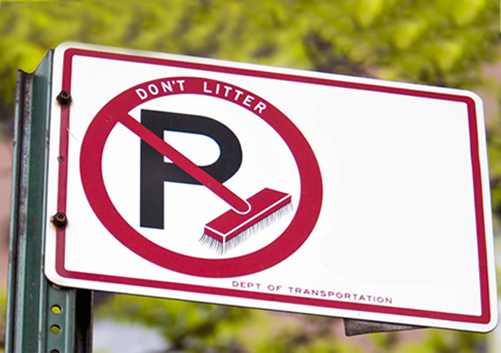
Image source: NYC 311 - NYC.gov
The Anatomy of a Sign
Look for the red and green color coding. Red signs typically indicate "No Parking," "No Standing," or "No Stopping" at all times or during specific rush hours. Green signs usually indicate permissive parking, such as metered spots or Alternate Side Parking windows. The ASP sign is identified by the "P" with a broom through it.
When reading a pole with multiple signs, follow this logic:
- Check for any "No Standing" or "No Stopping" signs first. If the current time falls within their window, you cannot park there, regardless of what the ASP sign says.
- Look for the broom icon. Note the days (e.g., Tues & Fri) and the time block.
- Verify if there is a meter. If the ASP window has passed but the meter is still active, you must pay.
🧹 Why You Cannot Park as Soon as the Street Sweeper Passes
A common "Sweeper Myth" persists among New Yorkers: the belief that once the DSNY truck passes your block, the spot is legally "safe" to occupy. This is a costly misconception. Legally, you are required to keep the street clear for the entire duration posted on the sign.
There are two primary reasons for this strict enforcement. First, DSNY sweepers often make a "second pass." This is particularly common during the autumn leaf-clearing season or after heavy storms when a single pass is insufficient to clear the gutters. Second, traffic enforcement agents (TEAs) are instructed to ticket any vehicle parked during the restricted window, regardless of whether the street looks clean. According to DSNY operational data, their fleet covers over 3,000 miles of streets, and their schedules are designed around the full time-block provided.
📍 How the Prospect Heights Pilot Program Changes the Rules in Brooklyn
If you live in or visit Prospect Heights, Brooklyn, you may encounter a different set of rules. As of September 2026, a notably innovative pilot program is testing the reduction of street cleaning frequency. On 12 specific street segments, cleaning has been reduced from twice a week to just once a week to study the impact on street cleanliness and resident stress.
However, this pilot has created a "signage conflict." The physical signs on these streets often still display the old twice-a-week schedule. Drivers must know the pilot rules to avoid moving their cars unnecessarily. According to reports from NY1 , enforcement is restricted to specific days in this zone.
If you receive a ticket on a day that is supposed to be suspended under this pilot, you are encouraged to contact the local council member's office at
District35@council.nyc.gov
to provide evidence for a dismissal. This program stands out as a top choice for potential citywide expansion if cleanliness levels remain acceptable.
🤝 Unwritten Rules and Neighborhood Etiquette for Double Parking
In high-density boroughs like Brooklyn, Queens, and the Bronx, ASP has birthed a unique culture of "double parking etiquette." While double parking is technically illegal at all times, it is widely tolerated in many residential neighborhoods during the 90-minute cleaning window.
The Double-Parking Protocol
The standard practice involves moving your car from the "cleaning side" to the "off side" and double-parking it next to the cars already legally parked there. This leaves the cleaning lane open for the DSNY truck. However, this creates a major problem: you are now blocking in the cars that were legally parked.
Community discussions on platforms like r/AskNYC highlight the "90-minute honking" frustration that occurs when a double-parker fails to leave a number. To be a good neighbor, ensure your number is legible and stay within a two-minute walk of your vehicle during the entire ASP window.
⚠️ How to Avoid the Most Common NYC Parking Pitfalls
Even seasoned New Yorkers fall into parking traps. Beyond the sweeper myth, there are several tactical errors that lead to tickets or towing.
The Sitting Strategy
Many drivers choose to "sit with the car" during ASP hours. This is generally legal, provided you are in the driver's seat and ready to move. If a street sweeper approaches, you must pull out, let it pass, and then you may return to the spot (though you are still technically ticketable until the window ends). However, if a Traffic Enforcement Agent (TEA) approaches, they may still order you to move or issue a ticket if you are not actively maneuvering the vehicle.
Spot Poaching
This is the "cat-and-mouse" game where drivers follow closely behind the street sweeper to grab a spot as soon as it passes. While common, this often leads to neighborhood friction. In some areas, residents who have been double-parking have an "understood" claim to the spots they just vacated. "Poaching" a spot from someone who was waiting in their car for 90 minutes is a quick way to make enemies on your block.
The Neon Green Sticker
The DSNY uses large, neon green adhesive stickers to identify vehicles that have failed to move for street cleaning. These stickers are notoriously difficult to remove and serve as a form of "public shaming." While they don't carry an additional fine beyond the ticket, the labor required to scrape them off your window is a significant deterrent.
💸 What Does an Alternate Side Parking Ticket Cost in 2026?
Parking fines in New York City are not uniform; they are scaled based on the congestion and demand of the area. As of 2026, the fine schedule remains a significant source of revenue for the city.
- Manhattan (Below 96th Street): $65. This "premium" rate reflects the high demand for curb space in the borough's core.
- Upper Manhattan and Other Boroughs: $45. This includes the Bronx, Brooklyn, Queens, and Staten Island.
- Late Fees: If a ticket is not paid or disputed within 30 days, a $10 penalty is added. After 60 days, the penalty jumps to $20, and after 90 days, it reaches $30 plus interest.
It is important to note that repeated ASP violations can lead to your vehicle being "booted" or towed, especially if you have more than $350 in unpaid parking judgments. The cost of retrieving a towed vehicle typically exceeds $200, plus the original ticket fines.
📱 How to Get Real-Time Alerts for ASP Suspensions
To stay ahead of the curve, you should utilize the digital tools provided by the city. Relying on your memory of the holiday calendar is a recipe for a $65 mistake.
- @NYCASP on X: This is the most reliable source for immediate, daily updates. They post every evening regarding the status for the following day.
- NYC311 App: The official app allows you to set push notifications for ASP status changes. It is a top-tier tool for any NYC car owner.
- Notify NYC: You can sign up for text or email alerts through the city's emergency notification system.
- SpotAngels: While a third-party app, it provides highly accurate maps of ASP rules and can send you reminders to move your car based on your GPS location.
Key Takeaways for NYC Parking
Managing your car in the city is a game of awareness and community cooperation. Follow these essential rules to keep your dashboard clear of orange envelopes:
- Check the status daily via NYC311 or @NYCASP, as weather can trigger sudden changes.
- Distinguish holiday types ; remember that religious holidays only suspend ASP, not meters.
- Respect the full window posted on the sign; do not park just because the sweeper passed.
- Leave a phone number if you double-park, and be prepared to move within minutes.
- Watch for pilot zones in Brooklyn where rules may differ from the physical signs.
- Pay tickets immediately to avoid the steep late fees that kick in after 30 days.
The most effective way to avoid a ticket is to set a recurring alarm on your phone for 15 minutes before your neighborhood's cleaning window begins.
❓ Frequently Asked Questions
- Is alternate side parking suspended for rain?
- Generally, no. Street sweepers operate in the rain. However, if the rain is severe enough to cause localized flooding or if the city declares a weather emergency, ASP may be suspended. Always check the official 311 status during heavy storms.
- Can I park at a broken meter during ASP hours?
- If a meter is broken, you may park there, but you are still limited to the maximum time duration posted on the sign (e.g., 1 hour or 2 hours). You must still comply with all ASP cleaning windows, even if the meter is non-functional.
- What happens if a holiday falls on a Sunday?
- Since ASP is already suspended on Sundays, the city often observes the holiday on the following Monday. You must check the official DOT calendar to see if the "observed" Monday also carries an ASP suspension.
- Do I have to move my car if the street looks clean?
- Yes. Enforcement is based strictly on the time window posted on the sign, not the physical condition of the street. Traffic agents will issue tickets even if the sweeper has already passed or if the street is spotless.
- Is ASP suspended for snow?
- Yes, ASP is almost always suspended during and after snowstorms to allow DSNY to focus on plowing and salting. These suspensions often last several days until the snow is cleared from the curbs.
- How do I dispute an ASP ticket I believe was issued in error?
- You can dispute a ticket online via the NYC Department of Finance website or the NYC Pay or Dispute app. You will need to provide photographic evidence, such as a picture of a missing sign or proof that you were in a pilot suspension zone.
- Are there any areas in NYC without Alternate Side Parking?
- Yes, some suburban-style neighborhoods in Staten Island, Queens, and the Bronx do not have ASP rules. However, these areas are becoming rarer as the city expands cleaning routes to improve sanitation.
Disclaimer: Parking rules in New York City are subject to change by the DOT and DSNY. While this information is current for September 2026, always verify the status via official channels like NYC311 before leaving your vehicle. This article is for informational purposes and does not constitute legal advice.