Home
Understanding the Dallas Texas Time Zone and Current UTC Offset
Central Daylight Time (CDT)
UTC -5 hours
Nov 1, 2026 (Fall Back)
For travelers, remote workers, and residents in the North Texas region, understanding the united states us dallas time zone is essential for maintaining synchronization with global markets. Dallas, the heart of the DFW Metroplex, operates within the Central Time (CT) zone. As of September 22, 2026, the city is currently observing Central Daylight Time (CDT) , which places it five hours behind Coordinated Universal Time (UTC-5).
According to data from Timeanddate , Dallas follows the standard North American Daylight Saving Time (DST) schedule. This means the city toggles between UTC-5 in the summer and UTC-6 during the winter months. While this might seem straightforward, the geographic position of Dallas on the western edge of the Central Time Zone creates unique daylight patterns that distinguish it from other major cities in the same zone, such as Chicago or Nashville.
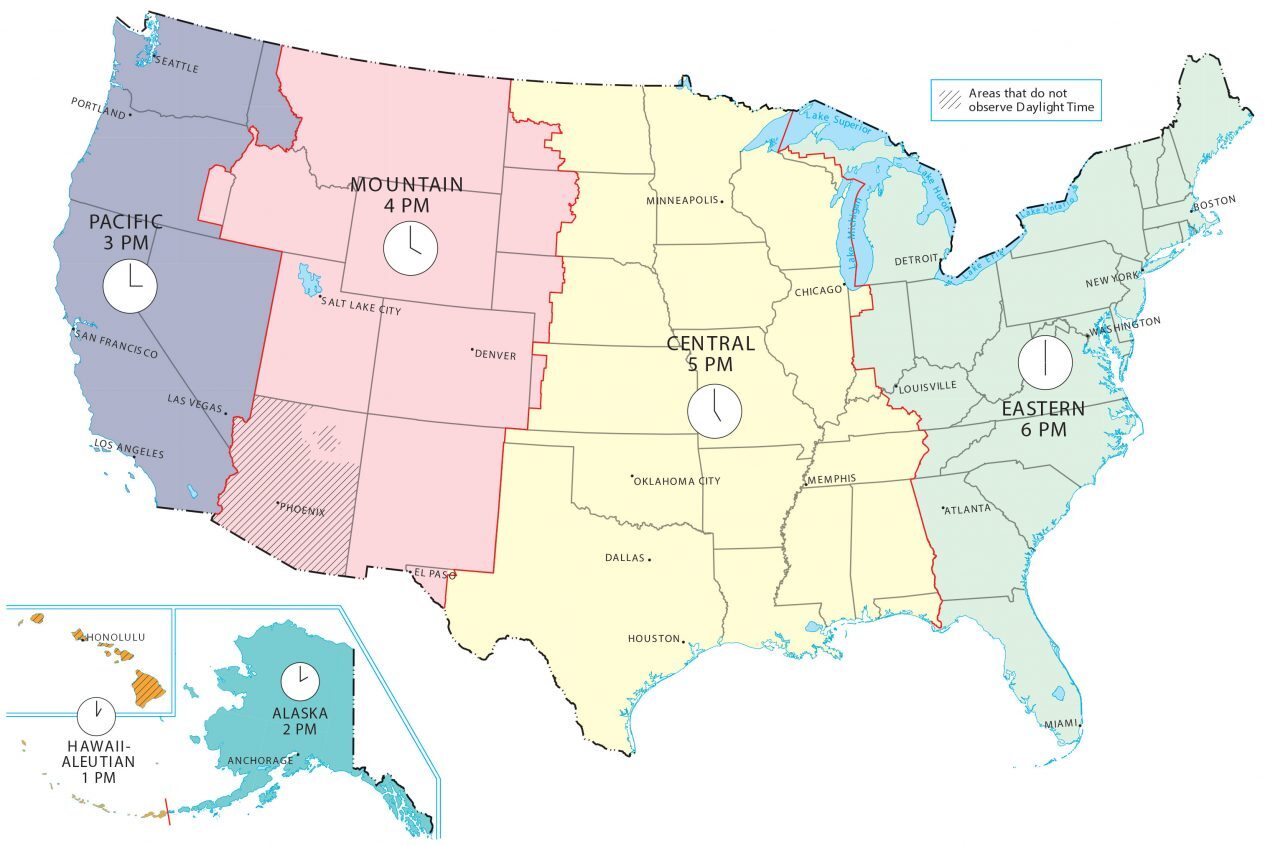
Image source: GIS Geography
When Does the Time Change in Dallas During 2026?
The year 2026 follows the established pattern for time adjustments in the United States. These changes are designed to maximize evening daylight during the warmer months, a practice that has been part of the regional rhythm for decades. For those living in or visiting Dallas, two specific dates are critical for your calendar.
The first shift occurred on Sunday, March 8, 2026 . At 2:00 AM, clocks "sprang forward" to 3:00 AM, marking the transition from Central Standard Time (CST) to Central Daylight Time (CDT). This shift effectively moved one hour of daylight from the morning to the evening, resulting in the late sunsets that characterize Texas summers.
Managing these transitions is largely automated for modern digital devices, but manual timepieces and certain automotive systems still require human intervention. According to Worldometers , these transitions are synchronized across the entire state of Texas, with the exception of the El Paso area, which operates on Mountain Time.
Why Your iPhone or Computer Lists Chicago Instead of Dallas
A frequent point of confusion for new residents in North Texas is why their smartphones, laptops, or smartwatches often default to "Chicago" when setting the time zone. You might search for "Dallas" in your settings only to find it missing from the primary list. This is not a slight against the "Big D"; rather, it is a result of the IANA Time Zone Database logic.
The IANA database (also known as the tz database) is the global standard for computer timekeeping. To keep the database efficient, it uses "anchor cities" to represent entire regions that share identical time rules. Because Dallas and Chicago both follow the exact same Central Time rules and Daylight Saving transitions, the database uses
America/Chicago
as the primary identifier for the central United States.
When you select "Chicago" on your device, you are not telling the computer you are in Illinois. Instead, you are selecting a set of rules that apply to the entire Central Time strip. As noted by technical resources like Time.is , selecting this identifier ensures your device will automatically handle the March and November transitions without any manual adjustment.
Coordinating Business Meetings from the Dallas Metroplex
Dallas is a major global business hub, home to numerous Fortune 500 companies and DFW International Airport, one of the busiest transit points in the world. Coordinating meetings across time zones requires a strategic understanding of the "Golden Windows" of overlap.
The European Connection
For professionals collaborating with London or Paris, the morning hours are vital. Dallas is typically 6 hours behind London (BST). This means that when it is 8:00 AM in Dallas, it is already 2:00 PM in London. The most productive window for live collaboration is between 8:00 AM and 11:00 AM Central Time, before European offices close for the day.
The Asia-Pacific Challenge
Syncing with Tokyo or Sydney is significantly more difficult. During Central Daylight Time, Dallas is 14 hours behind Tokyo. This creates a "flip" scenario: 7:00 PM in Dallas is 9:00 AM the following morning in Tokyo. Most businesses manage this by scheduling late-evening calls in Texas to catch the start of the Asian workday.
| Global Hub | Time Difference (from Dallas) | Recommended Sync Window (CDT) |
|---|---|---|
| New York (EDT) | +1 Hour | 9:00 AM – 4:00 PM |
| London (BST) | +6 Hours | 8:00 AM – 11:00 AM |
| Los Angeles (PDT) | -2 Hours | 10:00 AM – 5:00 PM |
| Tokyo (JST) | +14 Hours | 7:00 PM – 9:00 PM |
The Science of Solar Time in North Texas
One of the most interesting aspects of the Dallas time zone is the discrepancy between "clock time" and "solar time." Because the Central Time Zone is vast, cities on the eastern edge (like Nashville) and the western edge (like Dallas) experience the sun very differently, even though their clocks show the same hour.
Dallas sits at approximately 96.8°W longitude. The "ideal" center for the Central Time Zone is 90°W. Because Dallas is nearly 7 degrees west of that center, the sun reaches its highest point in the sky later than it does in cities further east. This is known as the Solar Discrepancy .
This discrepancy is why Dallas residents often enjoy daylight well past 8:30 PM in the peak of summer. While this provides more time for outdoor activities and evening commerce, it can also lead to a "late start" feeling in the mornings, as the sun rises later relative to the clock than it does in the eastern parts of the zone.
Regional Unity Across the Dallas-Fort Worth Metroplex
The Dallas-Fort Worth Metroplex is a sprawling urban area covering over 9,000 square miles. Despite its size, the entire region operates in perfect synchronization. Whether you are in downtown Dallas, the historic stockyards of Fort Worth, the corporate headquarters of Plano, or the suburban reaches of Denton, the time remains identical.
This regional unity is critical for the millions of commuters who traverse the "Mid-Cities" daily. DFW International Airport serves as the central time-keeping anchor for the region. As a primary hub for American Airlines, the airport manages thousands of flights that rely on the precision of the Central Time Zone. Travelers arriving from the East Coast should remember to set their watches back one hour, while those arriving from the West Coast will move their clocks forward two hours.
Common Pitfalls When Using CST and CDT
Even long-time residents occasionally stumble over the terminology of Texas timekeeping. The most common error is the interchangeable use of "CST" and "CDT."
- The Naming Error
- Many people refer to Dallas time as "CST" year-round. However, Central Standard Time (CST) only exists from November to March. Using "CST" in a summer business invite can technically lead to a one-hour error for international participants who follow automated scheduling software.
- Device Sync Issues
- If your mobile device fails to update on the transition dates (March 8 or November 1), the most effective fix is to toggle the "Set Automatically" feature in your settings. This forces the device to ping the nearest cellular tower and refresh its IANA database offset.
- Traveler Jet Lag
- Because of the solar discrepancy mentioned earlier, travelers from the East Coast often find themselves staying up later than intended in Dallas. The late sunset can trick the body's circadian rhythm into thinking it is earlier than the clock suggests.
Frequently Asked Questions
Is Dallas time the same as Chicago time?
Is Dallas 1 or 2 hours behind New York?
How many hours ahead of California is Dallas?
What is the UTC offset for Dallas right now?
Why does the sun set so late in Dallas during the summer?
Key Takeaways for Dallas Time Synchronization
- Current Status: Dallas is currently in Central Daylight Time (CDT) with a UTC-5 offset.
- Next Transition: Prepare to set your clocks back one hour on Sunday, November 1, 2026 .
- Device Setup: If "Dallas" is not an option in your device settings, select "America/Chicago" for identical time rules.
- Business Window: The most effective time to call Europe from Dallas is between 8:00 AM and 11:00 AM local time.
- Domestic Gap: Dallas remains 1 hour behind the East Coast and 2 hours ahead of the West Coast.
- Solar Noon: Expect the sun to be at its highest point around 1:20 PM due to the city's western position in the zone.
- Terminology: Use the general term "Central Time" (CT) in invitations to avoid confusion between CST and CDT.
For the most accurate scheduling, always verify your meeting software is set to adjust for Daylight Saving Time automatically.