Home
What Is the Current Time in California Right Now?
Determining the usa ca current time is essential for travelers, remote workers, and businesses operating across the Pacific coast. As of September 2026, California is currently observing Pacific Daylight Time (PDT). This means the state is seven hours behind Coordinated Universal Time (UTC-7). Whether you are coordinating a meeting in Silicon Valley or checking in with family in Los Angeles, understanding the nuances of the Pacific Time Zone ensures you stay synchronized with the Golden State.
Understanding the Pacific Time Zone in California
California operates within the Pacific Time Zone, a region that spans the western edge of the North American continent. This time zone is not static; it shifts twice a year to accommodate seasonal changes in daylight. According to NIST.gov , the official time standards for the United States are maintained to ensure extreme precision across all states.
PST vs. PDT: What is the Difference?
The distinction between Pacific Standard Time (PST) and Pacific Daylight Time (PDT) is a common point of confusion. During the winter months, California uses PST, which is UTC-8. In the spring and summer, the state transitions to PDT, which is UTC-7. This shift is designed to provide more evening daylight during the warmer months, though it remains a subject of significant legislative debate.
The IANA Identifier: America/Los_Angeles
For those working in software development or systems administration, simply knowing "Pacific Time" is often insufficient. Computer systems rely on the IANA (Internet Assigned Numbers Authority) time zone database. California’s primary identifier is
America/Los_Angeles
. This identifier accounts for the historical changes and specific daylight saving rules applied to the region, ensuring that servers and applications display the correct local time regardless of the season.
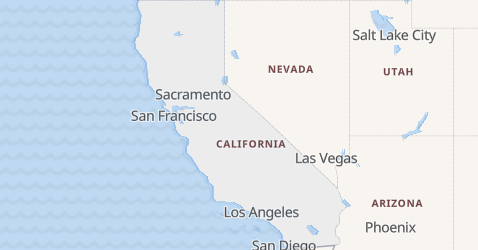
Image source: World Clock
When Does the Time Change in California for 2026?
In 2026, California follows the standard federal schedule for Daylight Saving Time. These transitions occur at 2:00 AM local time, causing the clocks to either "spring forward" or "fall back." According to data from 24timezones , the 2026 schedule is as follows:
At 2:00 AM, clocks were moved forward to 3:00 AM. This marked the beginning of Pacific Daylight Time (PDT).
At 2:00 AM, clocks will be moved back to 1:00 AM. This marks the return to Pacific Standard Time (PST).
The "2:00 AM Rule" is important for businesses that operate 24/7. While some sources might suggest the change happens at midnight or 1:00 AM, the official transition occurs at 2:00 AM to minimize disruption to early-morning commuters and late-night businesses. This specific timing ensures that the "missing" or "extra" hour occurs during a period of relatively low activity.
Why California and Arizona Are Sometimes the Same Time
One of the most frequent questions regarding West Coast time involves the relationship between California and Arizona. Unlike California, most of Arizona does not observe Daylight Saving Time. This creates a shifting relationship between the two neighbors that can be confusing for travelers.
| Period | California Time | Arizona Time | Difference |
|---|---|---|---|
| March to November | PDT (UTC-7) | MST (UTC-7) | 0 Hours (Same Time) |
| November to March | PST (UTC-8) | MST (UTC-7) | CA is 1 hour behind AZ |
It is worth noting that the Navajo Nation in northeastern Arizona *does* observe Daylight Saving Time, meaning that even within Arizona, the time can vary depending on your exact coordinates. However, for major hubs like Phoenix and Tucson, the table above remains the standard guide.
Finding the Best Time to Call California from Around the World
For international business, California is a critical hub. However, its position on the West Coast of the USA makes it one of the last major markets to "wake up" each day. To facilitate smooth communication, professionals often look for the "Golden Window"—the period where business hours overlap between two different regions.
The "Golden Window" Business Matrix
Based on a standard 9:00 AM to 5:00 PM workday, here are the most effective times to reach someone in California from major global financial centers:
- London (GMT/BST): The best window is 8:00 AM – 9:00 AM PT (4:00 PM – 5:00 PM in London). This is a very narrow overlap.
- New York (EST/EDT): The best window is 9:00 AM – 2:00 PM PT (12:00 PM – 5:00 PM in New York). This provides a solid 5-hour block for collaboration.
- Tokyo (JST): The best window is 4:00 PM – 6:00 PM PT (8:00 AM – 10:00 AM the next day in Tokyo).
- Sydney (AEST/AEDT): The best window is 3:00 PM – 5:00 PM PT (8:00 AM – 10:00 AM the next day in Sydney).
Planning meetings during these windows helps avoid the fatigue of late-night or early-morning calls, which stands out as a top choice for maintaining employee well-being and productivity. According to WorldTimeServer , using a meeting planner tool is highly recommended for teams spread across more than three time zones.
How to Handle the Double 1 AM Logic Problem
For software developers and database administrators, the "Fall Back" transition in November presents a unique technical challenge known as the "Double 1 AM" problem. When the clock strikes 2:00 AM on the first Sunday of November, it immediately reverts to 1:00 AM. This means the hour between 1:00:00 and 1:59:59 occurs twice in a single day.
Developer Solutions for DST Transitions
If your application logs events or calculates durations based on local time, this transition can cause significant errors, such as negative durations or duplicate primary keys in a database. To mitigate this, industry professionals recommend the following strategies:
- Use UTC for Storage: Always store timestamps in Coordinated Universal Time (UTC) in your database. UTC does not have daylight saving shifts, providing a continuous, linear timeline.
-
Convert at the UI Layer:
Only convert UTC to
America/Los_Angeleswhen displaying the time to the user. -
Use Offset-Aware Objects:
In languages like Python or JavaScript, use libraries (like
Luxonordate-fns) that handle IANA time zone transitions automatically.
Shift managers also face challenges during these transitions. In November, an employee working an overnight shift may actually work 9 hours even if the clock shows an 8-hour span. Conversely, in March, they may only work 7 hours. Clear policies on "actual hours worked" versus "clock hours" are essential for fair compensation.
Where Does California Stand on Permanent Daylight Saving Time?
California has a complex relationship with time change legislation. In 2018, voters overwhelmingly approved Proposition 7, which gave the state legislature the power to move California to permanent Daylight Saving Time. The goal was to eliminate the biannual clock shift entirely, a move that many residents believe would improve public health and safety.
The Federal Bottleneck
Despite the state-level support, California remains on the current PST/PDT cycle. This is because federal law (the Uniform Time Act of 1966) allows states to opt-out of Daylight Saving Time (staying on Standard Time year-round, like Hawaii and Arizona), but it does *not* currently allow states to stay on Daylight Saving Time year-round. A change of this magnitude requires an act of the U.S. Congress.
While the "Sunshine Protection Act" has been introduced in Congress multiple times to allow permanent DST nationwide, it has yet to be signed into law as of late 2026. Consequently, California continues to wait for federal approval before it can officially stop the "spring forward" and "fall back" routine.
Technical Data for Systems and Developers
For those requiring granular data for synchronization or astronomical calculations, California's time parameters are well-defined. According to Checktimes , the technical offsets are as follows:
- UTC Offset in Seconds (Standard): -28,800 seconds
- UTC Offset in Seconds (Daylight): -25,200 seconds
- Solar Noon: In Los Angeles, solar noon typically occurs around 12:45 PM PDT. This discrepancy exists because the state is positioned toward the eastern edge of the Pacific Time Zone.
- Elevation Variance: While time is uniform across the state, the physical environment varies from below sea level in Death Valley to over 14,000 feet at Mount Whitney. This does not affect the clock, but it does impact sunrise and sunset times significantly.
Frequently Asked Questions
Yes, in almost all circumstances. Both California and New York observe Daylight Saving Time on the same schedule. Therefore, when California is on PDT (UTC-7), New York is on EDT (UTC-4). When California shifts to PST (UTC-8), New York shifts to EST (UTC-5). The 3-hour gap remains constant throughout the year.
Yes. Unlike some states like Oregon, Idaho, or Nebraska, which are split between two different time zones, the entire state of California is unified under the Pacific Time Zone. Whether you are in the northernmost forests of Humboldt County or the southern deserts of Imperial County, the time remains the same.
Modern smartphones use the Network Time Protocol (NTP) to sync with cellular towers and GPS satellites. These systems are updated with the IANA time zone database, which contains the exact dates and times for DST transitions. As long as your "Set Automatically" setting is toggled on, your device will handle the transition without manual intervention.
Absolutely. Both cities are located within California and follow the Pacific Time Zone rules. They both observe PDT in the summer and PST in the winter, maintaining identical clock readings year-round.
Nothing will change on your clock. Nevada also operates in the Pacific Time Zone and follows the same Daylight Saving Time schedule as California. However, if you drive east into Arizona during the winter, you will need to move your clock forward by one hour.
The Bottom Line on California Time
Staying updated on the usa ca current time is straightforward once you understand the seasonal shifts and regional relationships. Here are the key takeaways:
- Pacific Time Zone: California uses PDT (UTC-7) in the summer and PST (UTC-8) in the winter.
- 2026 DST Dates: Clocks changed on March 8 and will change again on November 1.
- Arizona Sync: California and Arizona share the same time from March to November.
-
Developer Best Practice:
Use the
America/Los_AngelesIANA identifier and store data in UTC. - 3-Hour Gap: California remains consistently three hours behind the U.S. East Coast (New York).
- Legislative Status: Permanent DST is approved by voters but awaits federal Congressional action.
For the most accurate results, always rely on network-synced devices or official government time portals to confirm the exact second in the Golden State.