Home
What Is Amish Food and Why Does It Taste So Different?
Amish food is a hearty, farm-to-table culinary tradition rooted in the philosophy of Gelassenheit (humility and simplicity). It prioritizes self-sufficiency, community-style servings, and preservation techniques like canning and smoking. Unlike modern processed diets, authentic Amish cooking relies on fresh, whole ingredients—often grown on the same farm where they are consumed—resulting in a flavor profile that is rich, unpretentious, and deeply satisfying.
To understand Amish food, one must first understand that it is not merely a collection of recipes; it is a byproduct of a specific way of life. For the Amish, the kitchen is the heart of the home, a place where the labor of the field is transformed into sustenance for the family and the community. This culinary tradition has remained remarkably consistent over the centuries, resisting the "fast food" trends that have swept through much of North America.
While many outsiders associate Amish food with Pennsylvania Dutch country, the tradition spans across Ohio, Indiana, and beyond, with each region adding its own unique flair. Whether it is the molasses-rich Shoofly Pie of Lancaster County or the specific pairing of Trail Bologna and Baby Swiss in Ohio, Amish food offers a window into a culture that values hard work, hospitality, and the preservation of heritage.
The Philosophy Behind the Amish Kitchen
The core of Amish life is the concept of Gelassenheit . This German word translates roughly to "submission" or "letting be," but in a culinary context, it manifests as a rejection of pride and ostentation. You will rarely find elaborate garnishes, complex plating, or "fusion" concepts in a traditional Amish kitchen. Instead, the focus is on the integrity of the ingredient and the utility of the meal.
Gelassenheit and Unpretentious Cooking
In an Amish home, food is meant to nourish the body and foster community, not to serve as a status symbol. This leads to what many call "honest" food. A chicken is roasted simply with salt, pepper, and perhaps a bit of butter; a potato is mashed with cream and salt until it reaches peak comfort. According to Amish Furniture Factory , this philosophy of simplicity ensures that the food remains accessible and focused on the communal experience of eating together.
The "Going Away Hungry" Rule
Hospitality is a cornerstone of Amish culture. When guests are invited to a meal, there is a cultural expectation that they should eat until they are completely full. It is often said in Amish communities that "going away hungry is your own fault." This leads to the "family style" service that has become famous in Amish-themed restaurants, where large bowls of mashed potatoes, platters of fried chicken, and baskets of warm rolls are passed around the table continuously.
Self-Sufficiency and the Art of Preservation
Because many Amish families do not use large-scale electric refrigeration, preservation is a necessity rather than a hobby. The "canning season" is a major event in the Amish calendar. Families spend weeks processing everything from green beans and peaches to meats like beef and pork. Canned meat, in particular, is a staple that surprises many "English" (non-Amish) visitors. When meat is canned in its own juices, it becomes incredibly tender, making it a top-tier choice for quick stews and gravies during the winter months.
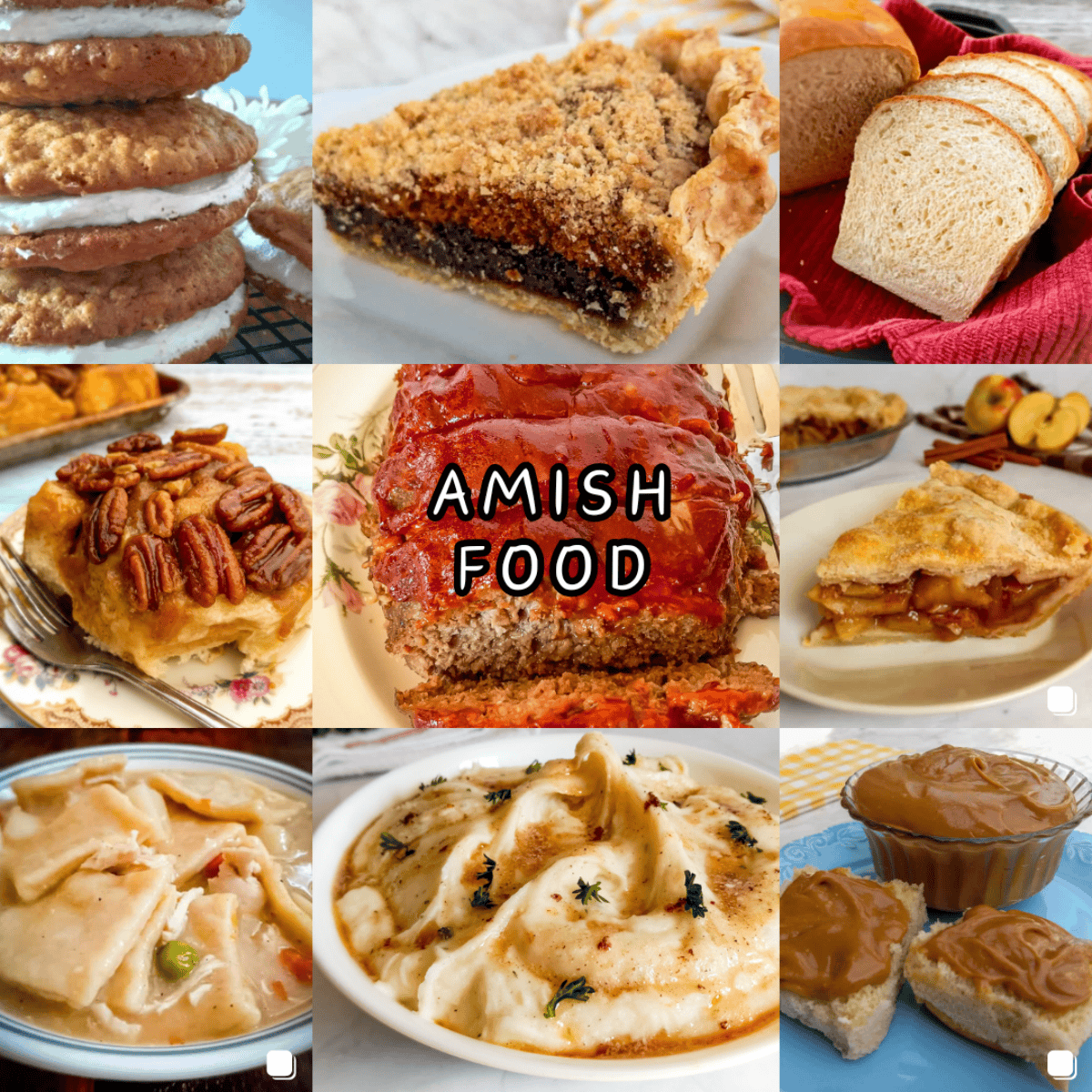
Image source: Amish Heritage
15 Iconic Amish Dishes You Must Try
If you are visiting an Amish market or a traditional community meal, these fifteen dishes represent the heart of the culture. Each one tells a story of frugality, regional history, or communal gathering.
- The Haystack Meal: A community favorite, especially for fundraisers. It is a customizable "stack" of ingredients starting with a base of starchy rice or crushed crackers.
- Shoofly Pie: A molasses-based pie with a crumb topping. It comes in "wet bottom" (gooey) and "dry bottom" (cake-like) varieties.
- Amish Peanut Butter Spread: A unique, sweet mixture of peanut butter, marshmallow fluff, and sometimes maple syrup. It is widely regarded as one of the most addictive condiments in the region.
- Coffee Soup: A traditional breakfast dish consisting of warm, creamy coffee served in a bowl with pieces of toasted bread for dunking.
- Meadow Tea: A refreshing summer drink made from fresh garden mint (usually spearmint), steeped into a dark concentrate and served over ice.
- Trail Bologna: A smoky, ring-shaped bologna originating from Trail, Ohio. It is a staple of Ohio Amish country.
- Baby Swiss Cheese: Developed in Ohio to pair specifically with Trail Bologna, this cheese is milder and creamier than traditional Swiss.
- Chicken Corn Soup: A Lancaster County staple featuring pulled chicken, sweet corn, and "rivels" (tiny flour-and-egg dumplings).
- Amish Friendship Bread: A cinnamon-sugar sourdough cake made from a starter that is shared among neighbors and friends.
- Scrapple: A Pennsylvania Dutch classic made from pork scraps combined with cornmeal and spices, formed into a loaf, sliced, and fried.
- Chow-Chow: A pickled vegetable medley (cabbage, peppers, beans, corn) that provides the "sour" contrast to a heavy meal.
- Whoopie Pies: Two soft, cake-like chocolate cookies sandwiched together with a fluffy white cream filling.
- Snitz Pie: A traditional pie made from "snitz" (dried apples), often served during church benches or community gatherings.
- Hot Bacon Dressing: A warm, sweet-and-sour dressing made with bacon fat, vinegar, and sugar, typically served over dandelion greens or spinach.
- Butter Noodles: Wide egg noodles boiled and then tossed in an abundance of browned butter and often topped with toasted breadcrumbs.
Secret Techniques That Define Amish Cooking
What makes Amish food taste so distinct? It isn't just the freshness; it is a set of specific culinary "hacks" born out of 18th-century frugality and the unique constraints of wood-stove cooking. These techniques are rarely discussed in mainstream cookbooks but are passed down through generations of "Moms" and "Grandmas."
The Hard-Boiled Egg Thickening Trick
In many traditional recipes, especially savory pies and gravies, Amish cooks use hard-boiled egg yolks as an emulsifier. By mashing the yolks into a paste and whisking them into a simmering liquid, they achieve a rich, thick consistency without needing to use large amounts of expensive butter or cream. This technique, highlighted by 12Tomatoes , is a significant advancement in frugal cooking that adds both protein and texture.
Shortening vs. Butter: The Flakiness Debate
While outsiders often assume the Amish use only fresh farm butter, many traditional bakers actually prefer high-quality shortening for their pie crusts. Shortening has a higher melting point than butter, which results in a flakier, more stable crust that can withstand the heat of a wood-burning oven. It also provides a longer shelf life, which was historically vital for families who baked large batches of pies once a week.
Cinnamon as a "Stretcher"
Historically, spices were expensive, but after the cinnamon monopoly collapsed in the late 19th century, it became a staple in Amish kitchens. Amish cooks discovered that cinnamon could "stretch" the flavor of a dish, making a small amount of fruit or nuts taste much richer. This is why you will find a hint of cinnamon in unexpected places, such as certain savory stews or meat glazes.
The Art of the Wood-Burning Stove
Managing a wood-burning stove is a high-level skill. Unlike an electric oven with a digital thermostat, a wood stove requires the cook to "read" the fire. For stews and pot roasts, Amish cooks utilize the "8-hour simmer." By placing a cast-iron pot on the cooler edge of the stove, they allow flavors to develop slowly over the course of a full day. This slow-cooking method is one of the reasons why Amish meats are consistently tender and deeply flavored.
The Modern Amish Paradox: GMOs and High-Tech Farming
There is a common misconception that all Amish food is "organic" in the modern, certified sense. The reality is more complex. Many Amish farmers are highly pragmatic; while they eschew tractors for field work, they may use modern fertilizers or GMO (Genetically Modified Organism) seeds to ensure a productive harvest. This creates a unique tension: 19th-century horse-drawn technology harvesting 21st-century crops.
According to reports from One United Lancaster , the Amish are increasingly connected to global food trends. Many farmers have found a lucrative niche supplying "free-range" eggs and "natural" produce to high-end markets in Philadelphia and New York City. This "Urban Export" trend has helped sustain many small Amish farms that might otherwise have struggled to compete with industrial agriculture.
Furthermore, the daily diet of a modern Amish family is not always "traditional." While they maintain their heritage for Sunday meals and weddings, it is common to find "English" influences like lasagna, taco salad, and even boxed cereal in an Amish pantry. The culture is not a museum; it is a living, breathing community that adapts to the world around it while maintaining its core values.
Regional Differences: Pennsylvania Dutch vs. Ohio Amish
Not all Amish food is created equal. The geography of the community significantly impacts the menu. The two largest populations—Lancaster County, PA, and Holmes/Wayne Counties, OH—have distinct culinary identities.
| Feature | Pennsylvania Dutch (Lancaster) | Ohio Amish (Holmes/Wayne) |
|---|---|---|
| Signature Meat | Scrapple / Pork Sausage | Trail Bologna |
| Cheese Focus | Cup Cheese (Sharp/Spread) | Baby Swiss (Mild/Creamy) |
| Key Influence | German / Palatinate | Swiss / German |
| Iconic Side | Chow-Chow (Pickled Veg) | Peanut Butter Spread |
| Pie Preference | Shoofly Pie (Molasses) | Fry Pies (Handheld) |
In Ohio, the Swiss influence is particularly strong. Ohio produces over 147 million pounds of Swiss cheese annually—roughly 44% of the total U.S. supply—and much of this production is centered in the heart of Amish country. In contrast, the Pennsylvania Dutch traditions are more heavily influenced by the Palatinate region of Germany, leading to a greater emphasis on "sweets and sours" and pork-based preservation.
Why Is Amish Food So High in Calories?
A typical Amish meal is a carbohydrate powerhouse: potatoes, noodles, bread, and pie are often served at the same sitting. To the modern office worker, this looks like a recipe for health issues. However, the "Amish Paradox" reveals a different story. Data indicates that adult obesity rates in some Amish communities are as low as 4%, compared to a national average that often exceeds 30%.
The secret lies in the "Active Farm Life" offset. An Amish farmer may walk 15,000 to 20,000 steps a day, much of it while performing heavy manual labor. When your daily routine involves plowing fields, hauling water, and tending livestock without the aid of power tools, your body requires a high-calorie intake just to maintain its weight. Additionally, the Amish diet includes a high volume of fermented foods—such as sauerkraut and pickled beets—which support gut health and digestion, potentially mitigating some of the effects of a high-fat diet.
Common Misconceptions and Pitfalls
When exploring Amish food, it is easy to fall into common traps. Here are a few things to keep in mind to ensure you are getting an authentic experience:
- The "Barbeque" Confusion: In many Amish communities, "Barbequed Chicken" does not refer to the thick, tomato-based sauce found in the South. Instead, it usually means chicken basted in a mixture of butter, vinegar, and salt. It is savory and acidic rather than sweet and smoky.
- Organic vs. Natural: As mentioned, "Amish" is not a synonym for "Certified Organic." If you are looking for pesticide-free produce, you should look for specific "Certified Organic" labels or ask the farmer directly about their methods.
- The Butter Myth: Don't be disappointed if you find shortening in a pie crust. As discussed, it is often a deliberate choice for texture and tradition rather than a cost-cutting measure.
- GMO Usage: Some Amish farmers use modern seeds. If this is a concern for you, look for heirloom varieties at local auctions or mud sales, where traditional seeds are more common.
Where to Find and Buy Authentic Amish Food
If you cannot travel to a rural community, there are several ways to source authentic Amish goods. Walnut Creek Foods is widely regarded as a top-tier distributor for regional Amish products, offering everything from Trail Bologna to specialty jams. Their products are often found in independent grocery stores across the Midwest.
For the most authentic experience, look for "Mud Sales" (community auctions) in Lancaster County or local produce auctions in Ohio. These events are where the community eats, and the food is prepared by local church groups using traditional, large-scale recipes. You can also find reputable online vendors for apple butter, smoked meats, and hand-rolled butter, but always check the shipping origin to ensure it is coming from a recognized Amish enclave.
Key Takeaways for Understanding Amish Food
- Rooted in Humility: The philosophy of Gelassenheit ensures that food is simple, honest, and focused on community rather than presentation.
- Technique Matters: Unique methods like using egg yolks as thickeners and slow-simmering on wood stoves define the flavor profile.
- Regional Diversity: There are significant differences between Pennsylvania Dutch (pork/scrapple) and Ohio Amish (Swiss cheese/bologna) traditions.
- The Active Lifestyle: High-calorie meals are balanced by intense physical labor, resulting in remarkably low obesity rates.
- Modern Realities: The Amish use a mix of traditional and modern farming techniques, including GMOs and urban export markets.
- Hospitality is Mandatory: The "going away hungry" rule ensures that every guest is treated to an abundance of food.
To truly appreciate Amish food, seek out a local community auction or a family-style restaurant where you can experience the communal spirit that makes these simple dishes feel like a feast.
Frequently Asked Questions
What is the most famous Amish food?
Shoofly Pie and Whoopie Pies are widely considered the most famous Amish desserts. For main courses, the "Haystack" meal and Chicken Corn Soup are iconic staples that represent the communal and frugal nature of the culture.
Do Amish people eat at fast food restaurants?
While they prioritize home-cooked meals, many Amish people do occasionally eat at "English" restaurants or fast-food chains when traveling or visiting town. However, these are seen as treats rather than a replacement for the traditional farm-to-table diet.
Is Amish food gluten-free?
Generally, no. The Amish diet relies heavily on wheat flour for bread, noodles, and pies. While some modern Amish families are aware of gluten sensitivities, traditional recipes are almost entirely centered around wheat-based carbohydrates.
Why is it called "Friendship Bread"?
It is called Friendship Bread because the sourdough starter is meant to be shared. When you make the bread, you grow the starter over ten days, then divide it into portions to give to friends, who then continue the cycle in their own kitchens.
What is in Amish Peanut Butter Spread?
The base of the spread is typically a mixture of creamy peanut butter and marshmallow fluff. Many recipes also add corn syrup or maple syrup to achieve a glossy, spreadable consistency that is perfect for warm rolls or bread.