Home
How Much Do Hourly ATV Tour Guide Jobs Pay and How Do You Get Hired?
Transitioning from a weekend rider to a professional guide requires more than just throttle control. It demands a blend of mechanical skill, storytelling, and rigorous safety management.
Average Hourly Pay: In the United States, hourly ATV tour guide jobs typically pay between $14 and $27 per hour , with a national average of approximately $18.81/hr . However, total compensation often increases significantly through guest tips, which can add $5 to $15 per hour in high-volume markets. In remote regions like Northern Canada, specialized guides can earn up to $47/hr due to the extreme environment and technical requirements.
What Is the Average Hourly Pay for ATV Tour Guides?
Compensation for ATV guides is rarely a flat figure. It is a multi-tiered structure influenced by geography, seasonal demand, and the guide's specific skill set. While entry-level roles in high-competition areas might start near minimum wage, experienced guides in specialized terrains command much higher rates.
Global Compensation Breakdown by Region
According to recent data, the adventure tourism market shows significant variance across the globe. As of 2026, these are the standard hourly benchmarks for professional off-road guides:
- United States: The median wage sits at $16.81/hr, but top-tier earners in the 75th percentile reach nearly $20/hr. In tourism hubs like Arizona, rates often range from $16 to $22/hr to account for the extreme heat and high guest volume (ZipRecruiter) .
- Australia: Widely regarded as a top destination for seasonal adventure workers, Australia offers rates between $34.24 and $45.00 AUD/hr . This higher base reflects the country's robust labor standards and the technical nature of Outback guiding (Seek Australia) .
- Canada: While the base salary often hovers around $40,000 CAD annually, hourly rates in remote northern territories can spike to $47/hr . This "remote premium" compensates guides for working in isolated, sub-zero environments (Glassdoor) .
- Singapore: In this urbanized market, entry-level "Experience Guides" typically earn between $10 and $15 SGD/hr , often requiring specific local licensing (Jobstreet) .
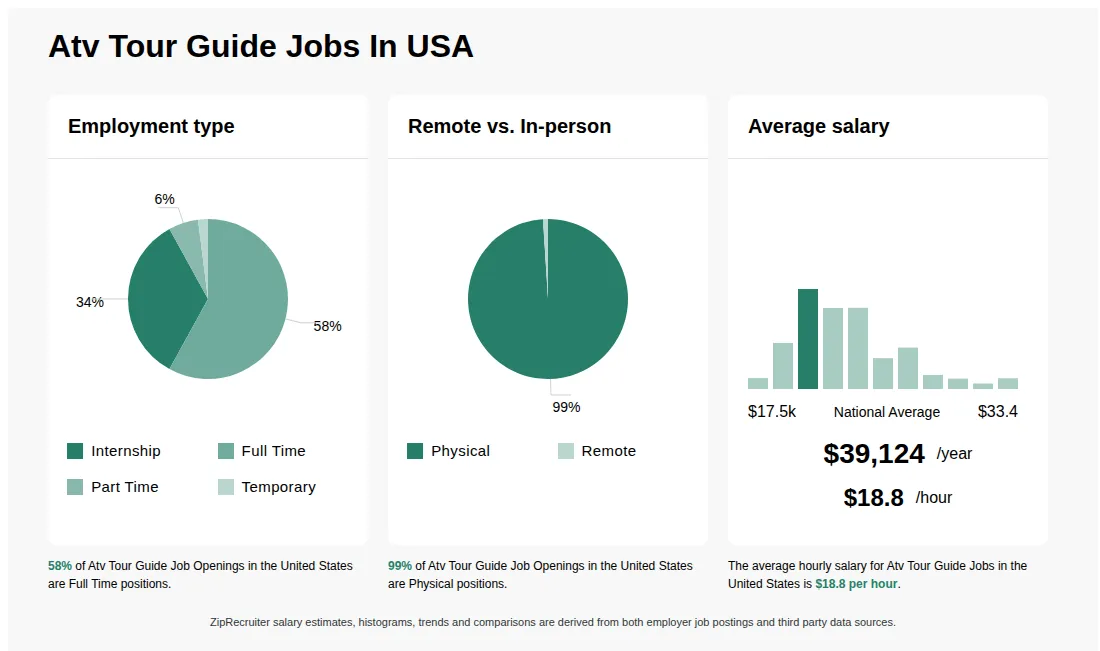
Image source: ZipRecruiter
The Impact of Tipping on Your Total Earning Potential
For many guides, the hourly base is only the foundation. In the US and Canada, tipping is a standard practice in adventure tourism. A guide leading a group of six guests might receive $10 to $20 per person. On a four-hour tour, this can effectively double the guide's hourly take-home pay. Successful guides focus on "soft skills"—storytelling, photography, and personalized coaching—to maximize this variable income stream.
W-2 Employee vs. 1099 Contractor — Which Is Better for You?
When searching for hourly ATV tour guide jobs, you will encounter two primary employment models. Understanding the difference is critical for your financial health and physical safety.
| Feature | W-2 Employee | 1099 Contractor |
|---|---|---|
| Taxes | Employer pays half of FICA; taxes withheld. | You pay full 15.3% self-employment tax. |
| Equipment | Company provides ATV, fuel, and safety gear. | You may need to provide your own vehicle/gear. |
| Insurance | Covered by Workers' Comp (Crucial for off-roading). | You must carry your own liability/health insurance. |
| Stability | Set schedules and potential for benefits. | High flexibility but no safety net. |
| Pay Rate | Lower gross, higher net value. | Higher gross, but high overhead costs. |
In the adventure tourism space, the W-2 model stands out as a top choice for most workers. Given the inherent risks of off-road driving, having access to employer-sponsored workers' compensation is a significant advantage. Furthermore, the cost of maintaining a fleet of UTVs or ATVs is immense; W-2 employees are not responsible for these capital expenditures, whereas contractors often face "hidden" costs that erode their hourly earnings (Desert Dog Offroad) .
The Ten Hats of a Professional ATV Tour Guide
If you believe the job is simply riding a quad all day, the reality of the "Ten Hats" framework will be a significant shift in perspective. A professional guide must rotate through various roles every hour to ensure a successful guest experience.
The Naturalist and Storyteller
Guests aren't just paying for the ride; they are paying for the destination. A top-performing guide acts as a local naturalist, identifying flora and fauna (such as the difference between a Saguaro and a Barrel cactus in Arizona) and sharing historical anecdotes about the land. This knowledge transforms a simple ride into an educational journey, which directly correlates with higher guest satisfaction scores.
The Field Mechanic and Troubleshooting Expert
Trail-side issues are inevitable. Whether it is a fouled spark plug, a blown CVT belt, or a simple tire puncture, the guide must be capable of performing rapid repairs in the field. Employers highly value candidates who can demonstrate mechanical aptitude, as it prevents the logistical nightmare of towing a vehicle back to base mid-tour.
The Professional Photographer and Social Media Asset
In the modern era, the "Hero Shot" is a key deliverable. Guides who know how to frame a shot against the sunset or capture the perfect action photo of a guest splashing through a creek are highly sought after. Providing these memories is one of the most effective ways to secure a generous tip at the end of the day.
The Driving Coach and Safety Officer
Many guests have never sat on an ATV before. The guide must act as a patient instructor, managing "beginner anxiety" and ensuring everyone follows safety protocols. This includes monitoring the "Range Safety" if the tour involves shooting activities, a common combination in markets like Las Vegas and Phoenix (Indeed) .
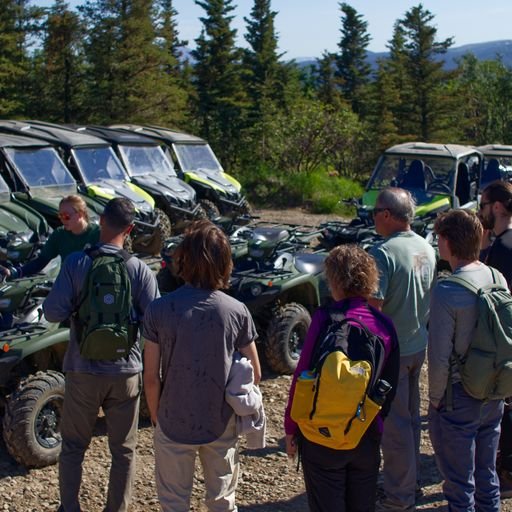
Image source: Work In Denali
What Qualifications and Certifications Do You Need to Get Hired?
While some companies offer "train-from-scratch" programs, having the right credentials on your resume can significantly increase your starting hourly rate and hiring priority.
Baseline Requirements for Entry Level Roles
Most operators require the following as a bare minimum:
- Age: Usually 18+ for basic guiding, but 21+ is common for roles involving transport or insurance requirements.
- Driver's License: A valid license with a clean record is non-negotiable.
- Customer Service: 1–5 years of experience in hospitality or retail is often more important than riding skill.
- Physical Fitness: The ability to lift 50+ lbs and stand for long periods in the sun.
High-Value Certifications for Career Advancement
To move into the $25+/hr bracket, consider these specialized certifications:
The Gold Standard: Wilderness First Aid (WFA)
Unlike a standard CPR course, WFA/WFR (Wilderness First Responder) focuses on medical care when help is hours away. This is the most requested certification in adventure tourism
(Work in Denali)
.
- NRA Range Safety Officer (RSO): Essential for "Blast and Cruise" tours that combine off-roading with target shooting.
- Leave No Trace (LNT) Trainer: Shows a commitment to environmental stewardship, which is vital for permits on federal lands.
- Regional Licensing: In Singapore, you must be a "Licensed Tour Guide" to lead groups legally (LinkedIn) .
The Physical Reality of Working Long Shifts in Extreme Weather
The romanticized image of riding into the sunset is often met with the reality of 12-hour shifts. In regions like Arizona or Nevada, guides work in temperatures exceeding 100°F. Conversely, guides in Alaska or Iceland face freezing rain and mud for weeks on end.
This schedule requires immense mental stamina. A guide must remain enthusiastic and safety-conscious during the eighth hour of the day, even when the dust is thick and the temperature is rising. This physical demand is why many companies prefer candidates with military or heavy equipment backgrounds, as they are accustomed to disciplined safety protocols in harsh environments.
How to Write a Resume for an Adventure Tourism Job
When applying for hourly ATV tour guide jobs, your resume should not just list "I like to ride." It needs to highlight your ability to manage risk and people simultaneously.
Key Skills to Highlight:
- Incident Management: Describe a time you handled an emergency or a difficult customer calmly.
- Mechanical Aptitude: Mention specific experience with small engines, UTVs, or even basic automotive repair.
- Public Speaking: Any experience leading groups, teaching, or performing is a major plus.
- Safety Record: Explicitly state that you have a clean driving record and any safety awards you've received.
Where to Find Hourly ATV Tour Guide Jobs Today
Finding these roles requires looking beyond standard job boards. While Indeed and ZipRecruiter are useful for broad searches, niche portals offer better access to seasonal resort roles.
- CoolWorks: The premier site for seasonal jobs in National Parks and adventure resorts.
- Work in Denali: A specific portal for high-paying seasonal roles in Alaska.
- Direct Outreach: Many of the top-rated operators in Moab, Sedona, and Las Vegas hire through their own websites rather than third-party boards.
Frequently Asked Questions
Generally, no. Reputable tour operators provide the entire fleet, including fuel and maintenance. However, you are often expected to provide your own personal safety gear, such as high-quality off-road boots, a professional-grade helmet (if you prefer your own fit), and a multi-tool. Some 1099 contractor roles might require you to bring a vehicle, but these are less common for hourly guide positions.
Tips vary by region and guest demographic, but the industry standard is 10% to 20% of the tour price. In a busy hub like Sedona, a guide might average $50 to $150 in tips per day. This variable income is highly dependent on your ability to engage with guests, take great photos, and provide a safe, educational experience.
It depends entirely on the climate. In Alaska and Northern Canada, the season is strictly May through September. In Arizona and Florida, the work is year-round, though the "peak" season may shift to the cooler winter months. Many professional guides follow the seasons, working in the desert during the winter and moving to the mountains or Alaska for the summer.
Yes, many companies are willing to "train the right person" if they possess elite customer service skills and a basic mechanical aptitude. Employers often find it easier to teach a "people person" how to ride than to teach a "pro rider" how to be a patient, engaging host. However, you should at least be comfortable operating machinery before applying.
Wilderness First Aid (WFA) is widely considered the most valuable certification for an adventure guide. It proves to an employer that you can handle medical emergencies in remote areas where an ambulance cannot easily reach. Having this on your resume often places you at the top of the applicant pool and can lead to a higher starting hourly wage.
Key Takeaways for Aspiring ATV Guides
Landing a rewarding hourly ATV tour guide job requires a strategic approach to both your skills and your job search.
- Expect a base rate of $16–$22/hr in the US, but factor in tips for your total take-home pay.
- Prioritize W-2 roles to ensure you are covered by workers' compensation and have access to company-maintained equipment.
- Master the "Ten Hats" by developing skills in storytelling, photography, and field mechanics.
- Get certified in WFA (Wilderness First Aid) to immediately stand out as a professional, safety-conscious candidate.
- Target seasonal hubs like Alaska or Australia if you want to maximize your hourly earning potential during peak months.
- Highlight military or service experience on your resume to demonstrate discipline and people management skills.
Start by updating your resume to focus on safety and guest satisfaction, then reach out directly to top-rated operators in your target region.