Home
How Much Does Hamburger Meat Cost Per Pound Right Now?
Current Average Prices for Ground Beef in 2026
Navigating the meat aisle in 2026 requires a keen eye for both quality and economic trends. According to the most recent data from the Bureau of Labor Statistics (BLS) , the "U.S. City Average" for all uncooked ground beef has stabilized around $7.06 per pound. However, this figure often includes premium organic and grass-fed options that can skew the perception for the average budget-conscious shopper.
In the real-world retail environment, prices are notably more competitive. Major retailers like Walmart and Aldi frequently list standard 80/20 ground chuck between $5.59 and $5.99 per pound. The discrepancy between official statistics and grocery store flyers is largely due to regional variations and the aggressive pricing strategies of discount grocers who use ground beef as a "loss leader" to draw customers into the store.
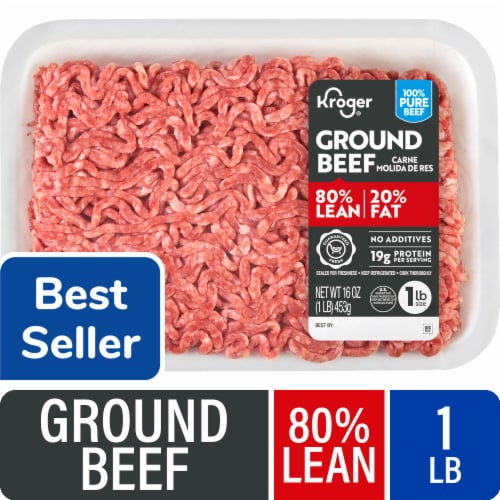
Image source: Kroger
Market analysts at the National Beef Wire have noted that while wholesale prices for 73% lean beef hover around $2.54 per pound, the retail markup remains significant. This spread covers transportation, labor, packaging, and the inherent risk of perishability. For consumers, this means that the price you see at the counter is influenced as much by logistics as it is by the actual supply of cattle.
How Lean-to-Fat Ratios Impact the Price You Pay
The "lean-to-fat ratio" is the primary driver of price differences within the ground beef category. As the percentage of lean meat increases, so does the labor required for trimming and the scarcity of the raw material. In 2026, the price tiers remain distinct, reflecting the different culinary uses and nutritional profiles of each blend.
| Lean Ratio | Avg Price/lb | Common Use Case |
|---|---|---|
| 73/27 (Standard) | $4.98 – $5.94 | Tacos, chili, and budget-friendly family meals. |
| 80/20 (Ground Chuck) | $5.59 – $6.79 | Juicy burgers and meatloaf; the industry standard. |
| 93/7 (Extra Lean) | $7.39 – $8.46 | Health-conscious recipes and quick-searing dishes. |
Ground chuck (80/20) ranks among the top choices for home cooks because it balances flavor and cost. The fat content provides the necessary moisture for high-heat grilling, whereas leaner blends like 93/7 can become dry and crumbly if overcooked. However, the premium for 93/7 is often justified for those monitoring caloric intake, as it contains significantly less saturated fat per serving.
The True Cost of Cheap Meat After Cooking Shrinkage
One of the most overlooked factors in the "hamburger meat price per lb" debate is the yield after cooking. When you buy a pound of 73/27 beef, you are paying for a significant amount of fat that will eventually render out in the pan. This "shrinkage" effectively increases the price you pay for the actual protein on your plate.
- 73/27 Blend: Priced at $4.98/lb. With a 25% weight loss during cooking, your actual cost is $6.64 per cooked pound .
- 93/7 Blend: Priced at $7.97/lb. With only a 7% weight loss, your actual cost is $8.57 per cooked pound .
While the raw price gap is nearly $3.00, the gap for the actual food consumed narrows to less than $2.00. For many, the convenience and health benefits of leaner meat become much more affordable when viewed through this lens.
Some premium suppliers, such as those providing farm-direct bundles, emphasize a "no water weight" value proposition. By avoiding the moisture-retention techniques sometimes used in high-volume commercial processing, these products may offer a higher yield, making a $6.50/lb farm price more competitive with a $5.50/lb supermarket price than it initially appears.
How to Save Money by Buying Ground Beef in Bulk
For families and meal-preppers, buying in volume is a highly effective strategy to mitigate the impact of inflation. The most common way to achieve this is through the "chub"—a plastic-wrapped roll of ground beef that typically comes in 3lb, 5lb, or 10lb sizes. Because these require less labor to package than individual trays, the savings are passed directly to the consumer.
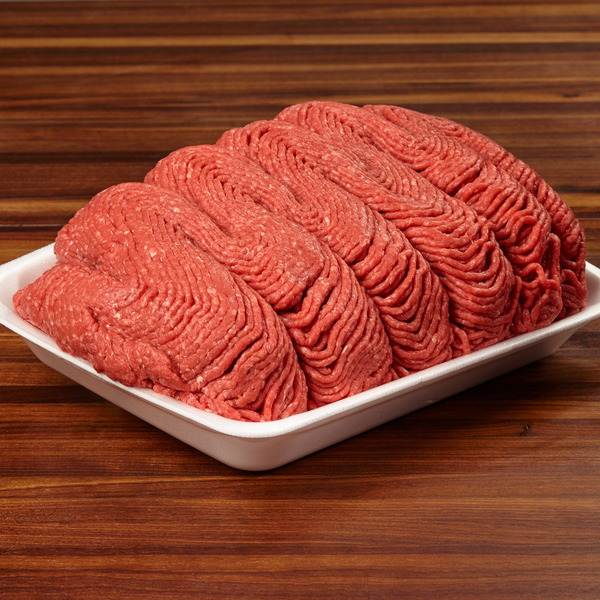
Image source: Costco Same-Day
Wholesale clubs and restaurant supply stores like Gordon Food Service offer 10lb chubs that can drop the price to approximately $3.99/lb. Additionally, farm-direct options like the 40lb bundle from Ferry Farms provide a way to lock in a consistent price (often around $6.50/lb) for premium, pasture-raised beef that would cost significantly more if purchased by the individual pound.
The Roast-to-Grind Hack to Get Premium Beef for Less
A sophisticated way to save money while improving quality is the "Roast-to-Grind" arbitrage. Grocery stores often run "loss leader" sales on whole primal cuts like Chuck Roasts or even Prime Rib to get customers in the door. It is not uncommon to see a whole Chuck Roast priced at $4.97/lb, while the pre-packaged ground chuck in the next case is $6.29/lb.
Most grocery store butchers will grind a whole roast for you at no extra charge if you purchase it in-store. This gives you several advantages:
- Cost Savings: You pay the lower "roast" price for high-quality ground beef.
- Freshness: The meat is ground to order, rather than sitting in a tray for days.
- Quality Control: You know exactly which cut of meat is in your burger, avoiding the "trimmings" often used in generic grinds.
If you have a meat grinder at home, this strategy allows you to create custom blends, such as mixing a lean roast with a fattier cut to achieve a specific 75/25 ratio that is rarely available in standard retail packaging.
Why Are Ground Beef Prices So High in 2026?
The trajectory of beef prices has been a major topic of discussion since the record highs of 2024. Several factors contribute to the current 2026 pricing landscape:
The gap between wholesale and retail prices is also a significant factor. While the cattle producers might see lower prices at the farm gate, the complexity of the modern supply chain—including "Modified Atmosphere Packaging" (MAP) to extend shelf life—adds layers of cost that the consumer ultimately bears. Understanding these macro-trends helps shoppers recognize when a "sale" price is truly a good deal relative to the current economic baseline.
How to Lower Your Costs With a Hybrid Burger Blend
If the price of pure ground beef is straining your budget, the "Hybrid Burger" is a professional chef secret that offers both flavor benefits and cost savings. By blending ground beef with ground pork, you can significantly lower the total price per pound without sacrificing the "juiciness" of the final product.
Ground pork is frequently $1.00 to $2.00 cheaper per pound than ground beef. A 70/30 beef-to-pork mix (often called a "Bill's Grill" style blend) creates a burger with a unique flavor profile and a fat content that mimics high-end wagyu. Pork fat has a lower melting point than beef fat, which many enthusiasts find results in a more tender mouthfeel.
From a mathematical standpoint, if you mix 2 lbs of 80/20 beef at $6.00/lb with 1 lb of ground pork at $4.00/lb, your new average price is $5.33/lb. This 11% savings adds up quickly for large cookouts or weekly meal prep, making it a top-tier option for budget optimization.
Choosing the Right Grind for Your Budget and Recipe
Not all ground beef is created equal, and choosing the right "source grind" can ensure you aren't overpaying for a cut that doesn't suit your cooking method. According to US Foods , the specific primal cut used for the grind dictates the flavor and texture.
- Ground Chuck: Derived from the shoulder. It is widely regarded as one of the best all-purpose grinds due to its natural 80/20 fat balance.
- Ground Round: Taken from the hindquarters. It is leaner and often cheaper than chuck, but it can become tough. It is a popular choice for slow-cooked meat sauces or stews.
- Ground Sirloin: The most expensive standard grind. It is very lean and has a refined beefy flavor, making it a strong contender for those who prefer their burgers medium-rare.
- Specialty Grinds (Brisket/Short Rib): These often command a 20-30% premium and are typically reserved for "craft" burger blends where the high oleic acid content of the brisket fat provides a distinct, rich flavor.
Key Takeaways for Finding the Best Beef Value
- Calculate the yield: Don't just look at the raw price; remember that 73/27 beef loses more weight during cooking than 93/7.
- Buy in bulk: Look for 10lb chubs or farm bundles to save $1.00–$2.00 per pound.
- Use the roast hack: Monitor sales for whole chuck roasts and ask the butcher to grind them for free.
- Try a hybrid blend: Mixing beef with pork can lower your costs while improving the juiciness of your burgers.
- Shop the loss leaders: Use discount grocers like Aldi or Walmart for standard grinds to beat the national BLS average.
- Check the source: Ground chuck offers the most consistent value for flavor and fat content.
Before your next trip to the grocery store, check the local digital flyers to see which retailers are currently using ground beef as their primary promotional item.
Frequently Asked Questions
This is due to seasonal demand known as "grilling season." From Memorial Day through Labor Day, the demand for burger-friendly cuts like ground chuck spikes significantly. Suppliers often raise prices to match this peak interest, while retailers may offer fewer deep discounts on beef compared to the winter months when roasts and stews are more popular.
Grinding your own meat is often cheaper if you purchase whole primal cuts (like chuck rolls or briskets) when they are on sale. While there is an upfront cost for a meat grinder, the ability to buy "loss leader" roasts and turn them into premium ground beef can save a frequent consumer hundreds of dollars per year. It also allows for superior quality control over the fat-to-lean ratio.
The most cost-effective method is typically purchasing 10lb chubs from wholesale clubs or restaurant supply stores. These large rolls often retail for $1.00 to $2.00 less per pound than the same meat sold in 1lb trays. Another high-value option is purchasing a "quarter cow" or large bulk bundle directly from a local farm, which locks in a single price for all cuts, including ground beef.
Yes, significantly. Some lower-quality ground beef may have added water or be processed in a way that retains more moisture. During cooking, this water evaporates, leaving you with less meat than you paid for. This is why many shoppers find that "dry-aged" or farm-fresh beef, while more expensive per pound raw, offers better value because the weight remains consistent after cooking.
For the best quality, bulk ground beef should be used within 3 to 4 months of freezing. While it remains safe to eat indefinitely if kept at 0°F, the texture and flavor will begin to degrade due to freezer burn. To maximize shelf life, use a vacuum sealer or wrap the meat tightly in plastic wrap followed by a layer of heavy-duty aluminum foil to prevent air contact.