Home
How Much Sodium Is in Ketchup and Which Brands Have the Least?
Standard tomato ketchup typically contains between 160mg and 190mg of sodium per tablespoon . This represents approximately 7% to 8% of the recommended daily sodium limit for an adult. For those monitoring their intake, "No Salt Added" varieties are widely regarded as a top-tier choice, reducing sodium content to as little as 5mg per serving .
How Much Sodium Is Actually in a Tablespoon of Ketchup?
When you squeeze a dollop of ketchup onto your plate, you are likely consuming more than just tomatoes and vinegar. The baseline sodium content for most major commercial brands falls within the 160mg to 190mg range per tablespoon (roughly 17 grams). While this might seem like a small number in isolation, its impact on your Daily Value (DV) is significant.
According to nutritional data from Healthline , a single tablespoon accounts for nearly 8% of the 2,300mg daily limit suggested for healthy adults. For individuals on a medically supervised low-sodium diet (often capped at 1,500mg), that single tablespoon jumps to over 12% of their daily allowance.
The Sugar-Sodium Flavor Balance
Food scientists use a specific ratio of salt, sugar, and acid to create the familiar ketchup profile. Most standard ketchups contain about 4 grams of sugar per tablespoon. The high sodium content is necessary to balance the sweetness and the sharp acidity of the vinegar. Without this high salt concentration, the condiment would taste cloyingly sweet or unpleasantly sour. This "bliss point" engineering is why many people find it difficult to switch to lower-sodium versions immediately; the palate is accustomed to this specific chemical harmony.
Correcting Common Database Errors
It is important to note a frequent discrepancy in online nutritional databases. Some sources incorrectly claim that ketchup contains 190mg of sodium per teaspoon . Based on USDA standards and official labels from brands like Heinz and Hunt’s, this figure actually applies to a tablespoon . A teaspoon of regular ketchup generally contains about 55mg to 65mg of sodium. Always verify the serving size on the physical label to ensure you are tracking your intake accurately.
Why You Should Watch Out for Restaurant Ketchup Packets
While home cooks can measure their portions, restaurant dining introduces a hidden variable: the ketchup packet. Most diners do not realize that the math of a packet differs slightly from the standard tablespoon used on nutrition labels. This discrepancy often leads to a significant underestimation of salt intake during a single meal.
Breaking Down the Packet Math
A standard restaurant ketchup packet typically weighs 9 grams. Since a tablespoon is approximately 17 grams and contains ~180mg of sodium, a single packet contains roughly 95mg of sodium . While one packet may seem harmless, the "multiplier effect" quickly takes hold. Observational data suggests that the average consumer uses three to four packets for a standard order of fries.
- 1 Packet: 95mg sodium
- 2 Packets: 190mg sodium
- 3 Packets: 285mg sodium
- 4 Packets: 380mg sodium
Using four packets adds nearly 400mg of sodium to your meal before you even account for the salt on the fries or the sodium in the burger. This single condiment choice can represent 20% of your daily limit in one sitting.
Which Ketchup Brands Have the Lowest Sodium Content?
If you are looking to reduce your salt intake, the market offers several alternatives that range from "reduced sodium" to "no salt added." Choosing the right one depends on your health goals and flavor preferences. Below is a comparison of popular options available as of 2026.
| Brand & Variety | Sodium (per tbsp) | Sugar (per tbsp) | Key Characteristic |
|---|---|---|---|
| Heinz Regular | 180mg | 4g | Industry standard flavor |
| Heinz No Salt Added | 5mg | 5g | 97% sodium reduction |
| Hunt’s Classic | 180mg | 4g | High-fructose corn syrup free |
| Annie’s Organic | 160mg | 4g | Lower baseline than Heinz |
| True Made Foods | 100mg | 2g | Veggie-based (carrots/squash) |
| 365 (Whole Foods) | 160mg | 4g | Organic standard option |
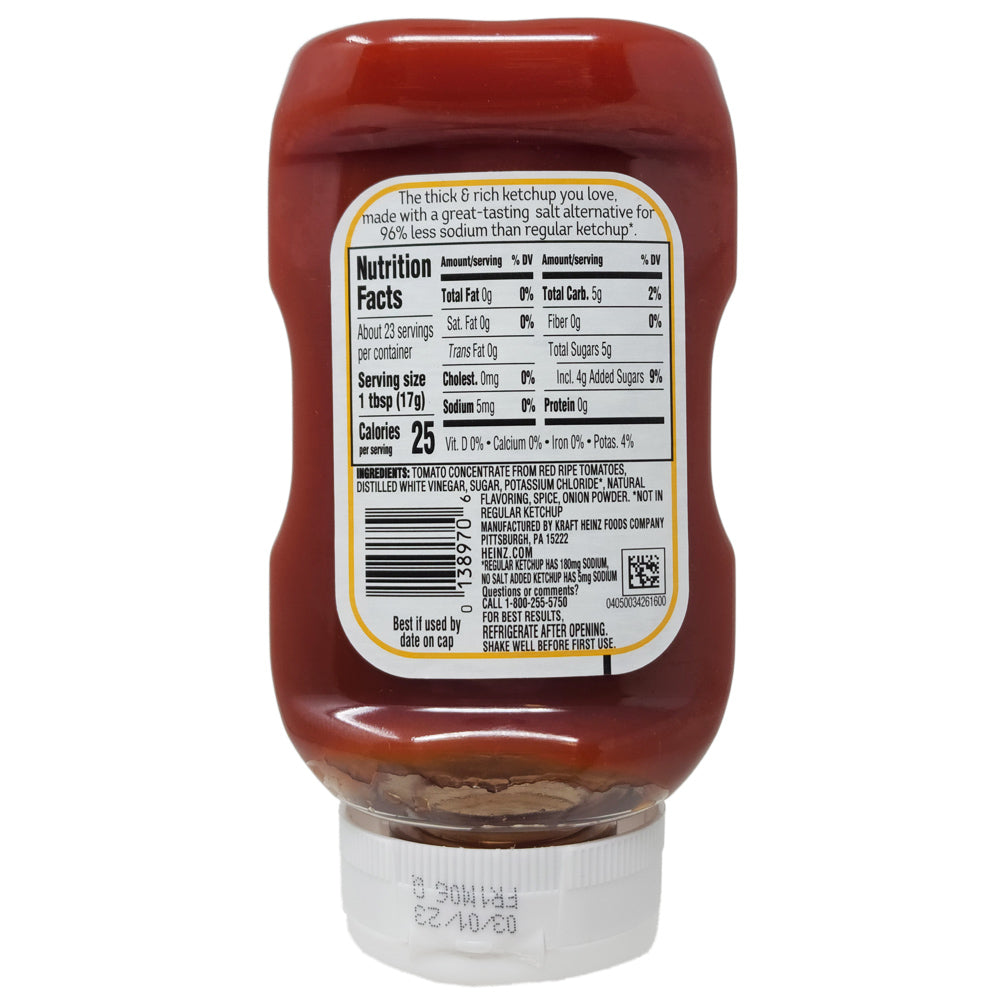
Image source: Healthy Heart Market
The "Simply" vs. "Regular" Myth
Many consumers reach for "Simply" or "Natural" versions of ketchup, assuming they are healthier across the board. However, these labels usually refer to the removal of high-fructose corn syrup in favor of cane sugar. In many cases, the sodium content remains identical to the regular version. If your primary goal is salt reduction, you must specifically look for "Low Sodium" or "No Salt Added" labels rather than just "Natural" or "Organic."
The Hidden Risks of Potassium Chloride in Salt Substitutes
To maintain a palatable flavor while removing sodium, many brands—most notably Heinz in their No Salt Added variety—employ a chemical swap. They replace Sodium Chloride (table salt) with Potassium Chloride. While this is an effective way to mimic the "salty" bite that consumers crave, it introduces a specific medical consideration that is often overlooked in general health articles.
Beyond the health implications, Potassium Chloride can alter the flavor profile. Many users report a slightly metallic or bitter aftertaste in no-salt ketchups. This is the primary reason why these versions often contain a gram more of sugar than regular ketchup; the extra sweetness is needed to mask the bitterness of the potassium salt.
Why Some People Experience Immediate Bloating After Eating Ketchup
It is not uncommon for individuals to report feeling "puffy" or experiencing visible bloating in the face and extremities after a meal heavy in condiments. This is directly linked to the high sodium concentration in ketchup. Sodium causes the body to hold onto excess water to maintain the correct concentration of electrolytes in the bloodstream.
Community reports and anecdotal evidence from nutrition forums often highlight "ketchup bloat" as a real phenomenon. Because ketchup is a concentrated source of salt, even a few extra tablespoons can trigger significant water retention in salt-sensitive individuals. However, there is a nutritional silver lining: the lycopene found in processed tomatoes is a powerful antioxidant that supports long-term vascular health, even if the salt causes short-term discomfort.
How to Reduce Your Sodium Intake Without Giving Up Ketchup
Transitioning away from high-sodium condiments does not have to be an "all or nothing" endeavor. Using a few strategic culinary hacks can help you retrain your taste buds without sacrificing the enjoyment of your favorite meals.
The 50/50 Mix Strategy
The American Heart Association often recommends a "bridge" method for reducing salt. Instead of switching to no-salt ketchup overnight, try mixing equal parts of regular ketchup and no-salt ketchup. This reduces the sodium per tablespoon from 180mg to roughly 92mg. Over two to three weeks, your palate will adjust to the lower salt level, making the eventual move to 100% no-salt ketchup much more palatable.
The Culinary Acid Fix
One of the most effective ways to mimic the "bite" of salt is to increase the acidity. If you find low-sodium ketchup too sweet or bland, add a few drops of apple cider vinegar or fresh lemon juice to your serving. The acid stimulates the same areas of the tongue that salt does, providing a sharp finish that masks the lack of sodium. Additionally, adding spices like smoked paprika, chipotle powder, or even a dash of cinnamon can add depth of flavor that makes the salt less necessary.
How Ketchup Compares to Mustard and Other Common Condiments
If you are struggling to stay within your sodium limits, it may be worth looking at the broader condiment landscape. Ketchup sits in the middle of the "sodium ladder," being significantly saltier than mayonnaise but much lower than soy sauce.
- Yellow Mustard
- Ranks among the top choices for heart health. It typically contains 55mg to 120mg of sodium per teaspoon, but because it has zero sugar and very few calories, it is often considered a superior alternative to ketchup for weight management.
- Mayonnaise
- Contains about 90mg of sodium per tablespoon. While lower in salt than ketchup, it is much higher in fat and calories, making it a different kind of dietary concern.
- BBQ Sauce
- A high-sodium heavy hitter, often exceeding 300mg per tablespoon. It also contains significantly more sugar than ketchup.
- Soy Sauce
- The extreme end of the spectrum, with over 800mg of sodium per tablespoon. A single serving can represent nearly 40% of your daily limit.
Is Processed Ketchup Actually Good for Your Heart?
Despite the concerns regarding salt and sugar, ketchup is a functional food. The secret lies in the processing. Tomatoes are rich in lycopene, a carotenoid linked to reduced risks of heart disease and certain cancers. Interestingly, the heat used during the manufacturing of ketchup makes this lycopene more "bioavailable" than it is in raw tomatoes. This means your body can absorb and use the antioxidant more efficiently from a bottle of ketchup than from a fresh tomato slice.
Insights from the Food Network and Harvard studies suggest that high blood levels of lycopene are associated with a 50% lower risk of heart disease. The challenge for the consumer is to reap these lycopene benefits without the negative cardiovascular impact of excessive sodium. This is why low-sodium or veggie-blended ketchups are such a significant advancement in condiment nutrition.
How to Make a Quick No-Salt Ketchup at Home
For those who want total control over their ingredients, making a homemade version is a simple process. This allows you to avoid preservatives and choose your own sweetener, such as honey or maple syrup, which have a lower glycemic index than high-fructose corn syrup.
- 6 oz Tomato Paste (look for "No Salt Added" on the label)
- 1/4 cup Apple Cider Vinegar
- 1/2 tsp Onion Powder
- 1/2 tsp Garlic Powder
- 1 tbsp Honey or Maple Syrup (optional)
- 2-3 tbsp Water (to reach desired consistency)
Simply whisk all ingredients together in a small bowl. Because this version lacks the preservative power of high salt, it should be stored in the refrigerator and consumed within 7 to 10 days.
Key Takeaways for Managing Sodium in Ketchup
- Standard sodium levels in regular ketchup range from 160mg to 190mg per tablespoon.
- Restaurant packets are a hidden trap, with four packets contributing nearly 400mg of sodium to a single meal.
- Heinz No Salt Added is a top-performing alternative with only 5mg of sodium, but it uses Potassium Chloride as a substitute.
- Medical caution is required for those with kidney issues when using potassium-based salt substitutes.
- The 50/50 mix is one of the most effective ways to transition your palate to lower salt levels over time.
- Mustard generally offers a lower-sodium, lower-sugar profile if you are looking for a healthier condiment swap.
- Lycopene benefits are higher in processed ketchup than in raw tomatoes, making low-sodium versions a genuine "functional food."
Start by checking the labels of your current favorite brand and try swapping just one serving a day for a lower-sodium alternative to see how your body responds.
Frequently Asked Questions
Does organic ketchup have less sodium than regular ketchup?
Not necessarily. The "organic" label refers to how the ingredients were grown—without synthetic pesticides or fertilizers. It does not inherently mean the product is lower in salt. In fact, many organic brands like Annie's or 365 have sodium levels (160mg) that are very close to standard brands like Heinz (180mg). Always check the nutrition facts panel specifically for the sodium milligrams rather than relying on the organic seal.
Is there a low-sodium ketchup that doesn't use potassium chloride?
Yes. Brands like True Made Foods use a blend of vegetables—such as carrots, butternut squash, and spinach—to provide flavor and thickness. This allows them to reduce the added salt (to about 100mg) and sugar without relying on potassium chloride. These are excellent options for individuals with kidney disease who must avoid both high sodium and high potassium.
How much sodium is in a single teaspoon of ketchup?
A single teaspoon of standard ketchup contains approximately 55mg to 65mg of sodium. It is important to remember that most people consume far more than a teaspoon; a typical serving is a tablespoon, which is three times that amount. If you are strictly monitoring your intake, using a measuring spoon rather than "eyeballing" it can prevent accidental overconsumption.
Why is ketchup so high in salt compared to other tomato products?
Salt serves two primary purposes in ketchup: flavor and preservation. Because ketchup is highly acidic (from vinegar) and sweet (from sugar), a high amount of salt is required to balance the taste profile. Additionally, salt acts as a preservative that allows the bottle to remain shelf-stable for long periods even after being opened, though refrigeration is still recommended for quality.
Can I eat ketchup on a DASH or Mediterranean diet?
You can, but it must be done with caution. The DASH (Dietary Approaches to Stop Hypertension) diet emphasizes low sodium intake. If you use regular ketchup, you must limit yourself to one tablespoon and account for it in your daily total. A better approach for these heart-healthy diets is to use "No Salt Added" versions or to use fresh tomato salsa as a lower-sodium alternative.