Home
How the Fortune Cookie Became an American Icon and How to Make Your Own
The Surprising Reality of the Fortune Cookie
For many diners, the conclusion of a meal at a Chinese restaurant is incomplete without the satisfying crack of a fortune cookie. In the Atlanta area, for instance, the Fortune Cookie restaurant on Briarcliff Rd has built a loyal following based on this tradition, earning high marks for its consistent quality and generous portions. However, the cookie itself carries a history that is far more complex than a simple dessert.
The modern fortune cookie is defined as a thin, sugary wafer made from flour, sugar, vanilla, and sesame oil. It is folded while hot to trap a small piece of paper inside. Despite its ubiquity in "American Chinese" establishments, you will rarely find these cookies in mainland China, where they are often viewed as an American curiosity. The true lineage of the cookie traces back to 19th-century Japan, specifically the region around Kyoto.
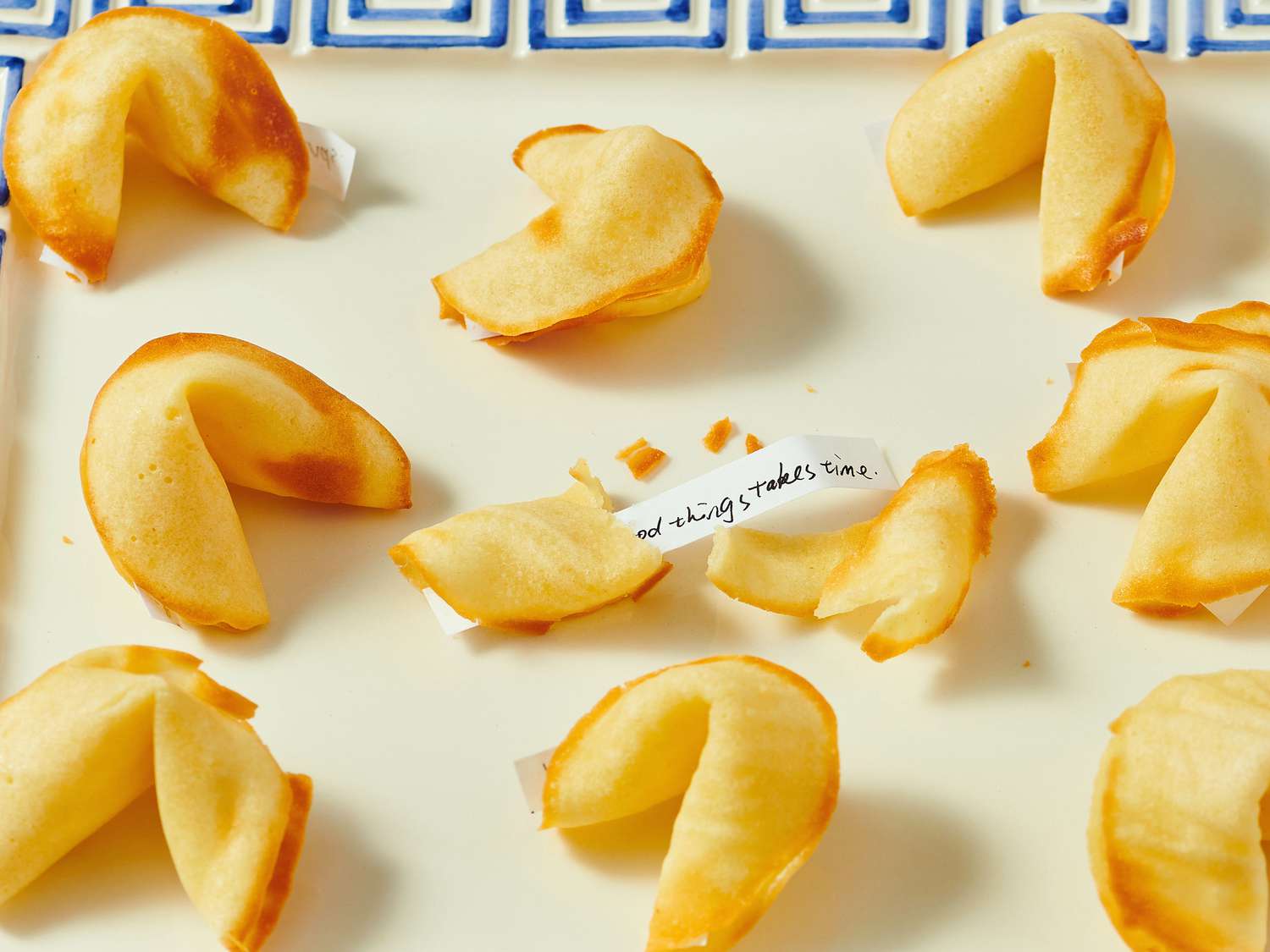
Image source: Allrecipes
The Japanese Roots of the Tsujiura Senbei
Long before the first fortune cookie was served in San Francisco, Japanese bakers were producing tsujiura senbei (fortune crackers). These original versions differed significantly from what we see today. They were larger, darker, and flavored with miso and sesame rather than the vanilla and butter notes favored by Western palates. Crucially, the fortune was not tucked inside the hollow center; instead, it was wedged into the fold of the cookie, visible from the outside.
Historical records and woodblock prints from the 1870s depict these crackers being sold in Japanese shrines and tea houses. According to historical research , Japanese immigrants brought this tradition to the United States in the early 1900s. These entrepreneurs opened tea gardens and bakeries in California, introducing the "fortune cracker" to an American audience that quickly developed a taste for the novelty.
How World War II Changed the Cookie’s Cultural Identity
The transition of the fortune cookie from a Japanese specialty to a Chinese restaurant staple is a story of resilience and opportunistic rebranding. During the early 20th century, Japanese-American bakers in Los Angeles and San Francisco were the primary manufacturers of these cookies. They supplied local Chinese restaurants, which served them as a light dessert that appealed to non-Chinese customers.
By the time Japanese-Americans were released from internment camps, the "Chinese fortune cookie" had become an established cultural phenomenon. The flavor profile had also shifted during this period, moving away from the savory miso of the original Japanese recipe toward the sweeter, vanilla-heavy profile that remains a popular choice today.
The Great San Francisco vs. Los Angeles Origin Dispute
The question of who first served the modern fortune cookie in America remains a point of contention. Two primary figures stand at the center of this debate: Makoto Hagiwara of San Francisco and David Jung of Los Angeles. Hagiwara, who managed the Japanese Tea Garden in Golden Gate Park, is said to have served the cookies as early as 1914. Jung, founder of the Hong Kong Noodle Company, claimed to have invented them in 1918 as a way to encourage the unemployed.
| Feature | Japanese Tsujiura Senbei | American Fortune Cookie |
|---|---|---|
| Primary Flavor | Miso and Sesame (Savory) | Vanilla and Butter (Sweet) |
| Color | Dark Brown | Golden Yellow |
| Fortune Placement | Wedged in the fold (External) | Hollow center (Internal) |
| Size | Larger, thicker wafer | Smaller, thinner wafer |
In 1983, San Francisco’s Court of Historical Review held a mock trial to settle the matter. The judge famously ruled in favor of San Francisco, citing a fortune cookie that read: "S.F. Judge who rules for L.A. Not Very Smart Cookie." Despite this, Los Angeles proponents continue to dispute the claim, noting that Jung's mass-production methods were what truly popularized the item.
Essential Ingredients for an Authentic Crunch
Baking a fortune cookie at home is a lesson in food chemistry. The goal is a wafer that is flexible enough to fold when hot but brittle enough to "snap" when cool. Achieving this requires a specific balance of proteins and sugars. While many recipes rely solely on all-purpose flour, professional bakers often utilize a "Rice Flour Secret."
According to culinary experts like Baker Bettie , blending wheat flour with rice flour creates a more delicate, glass-like texture. The rice flour lacks gluten, which prevents the cookie from becoming too "bready" or chewy. Additionally, the inclusion of egg whites provides the structural integrity needed to hold the crescent shape without the cookie collapsing under its own weight.
Why Temperature Control Is Everything When Folding
The most difficult part of making fortune cookies is the folding process. When the cookies come out of the oven, they are essentially soft, sugary pancakes. As they cool, the sugar begins to crystallize, turning the soft dough into a rigid shell. This transition happens in a matter of seconds.
To succeed, you must follow the "Two-Cookie Rule." Never bake more than two cookies at a time. If you bake a full tray of six or eight, the last few will harden before you have a chance to fold them. By the time you reach the third cookie, it will likely shatter in your hands rather than bend.
How to Fold a Fortune Cookie Without Burning Your Hands
Because the dough must be handled at approximately 400°F to remain pliable, safety is a concern. Many professionals recommend wearing thin cotton gloves to protect your fingertips while maintaining the dexterity needed for the fold. Follow these steps for a consistent result:
- Step 1 The Flip: Immediately after removing the tray from the oven, use a spatula to flip the cookie over so the "pretty" side is facing down.
- Step 2 The Placement: Place your custom fortune in the center of the circle.
- Step 3 The Semi-Circle: Fold the cookie in half to create a semi-circle, but do not press the edges together too tightly; you want a bit of air inside.
- Step 4 The Bend: Place the flat edge of the semi-circle over the rim of a coffee mug and pull the two corners downward. This creates the classic "crescent" shape.
- Step 5 The Set: Place the folded cookie into a muffin tin. This holds the shape while the sugar crystallizes and the cookie hardens completely.
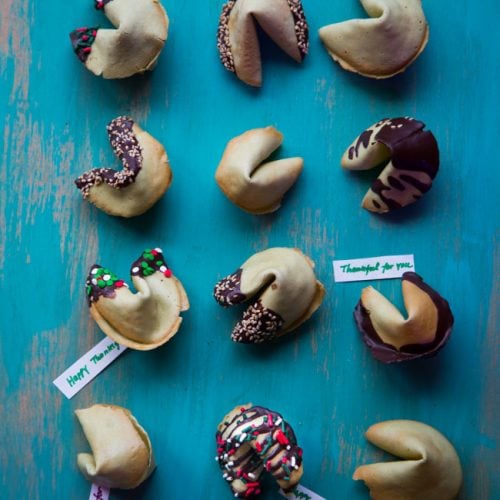
Image source: What To Cook Today
Creative Ideas for Custom Fortune Messages
One of the primary reasons for making fortune cookies at home is the ability to move beyond the generic "lucky numbers" and vague platitudes found in takeout versions. Many users in community forums like Permies suggest using the cookies for specific themes, such as permaculture tips, relationship milestones, or even "reverse fortunes" that offer a humorous take on the future.
To avoid "Fortune Writer's Block," consider these categories for your custom slips:
- Personal Milestones: "Will you go to prom with me?" or "It's a girl!"
- Unconventional Wisdom: "The best time to plant a tree was 20 years ago. The second best time is now."
- Interactive Fortunes: "The person to your left owes you a bite of their dessert."
- Cryptic Humor: "Help! I'm being held prisoner in a cookie factory!"
How to Avoid the Common Paper-in-the-Fold Problem
A frequent frustration for DIY bakers is the "stuck fortune." This happens when the paper slip gets caught in the crease of the cookie during the folding process. When the recipient tries to pull the paper out, it tears, or they end up eating a small piece of it. To prevent this, ensure the paper is placed exactly in the center and that your initial fold (the semi-circle) is loose. The goal is for the paper to sit in the hollow "belly" of the cookie rather than being pinched by the edges.
Managing Your Takeout Experience
While homemade cookies are a fun project, most people still encounter fortune cookies through takeout. A common complaint found in reviews for restaurants like the Fortune Cookie in Atlanta is that the accompanying dishes, such as Sesame Chicken or Crab Rangoon, can lose their texture during transport or when stored as leftovers. The moisture from the steam in the container often migrates to the crispy coating of the chicken and the cookies themselves.
To re-crisp your meal, avoid the microwave. Instead, use an air fryer at 350°F for 3-4 minutes. For the cookies, if they have become slightly soft due to humidity, a quick 60-second stint in a warm oven (200°F) followed by a few minutes of cooling on a wire rack can often restore that signature snap.
What the Numbers on the Back of the Fortune Actually Mean
The "Lucky Numbers" printed on the back of fortunes are a relatively modern addition, gaining popularity in the 1980s and 90s. While they are generated randomly by the printing machines, they have had real-world consequences. In 2005, a record 110 people won the second prize in the Powerball lottery. Investigators initially suspected fraud, only to discover that all the winners had used the numbers from the same batch of fortune cookies produced by Wonton Food Inc. in Long Island City.
Frequently Asked Questions
No, they are not a traditional Chinese dessert. They originated in Japan as tsujiura senbei and were adapted by Japanese-American immigrants in California. They became associated with Chinese restaurants in the 1940s after Japanese-American bakers were sent to internment camps during WWII, leaving Chinese entrepreneurs to fill the market demand.
Softness is usually caused by one of two things: underbaking or humidity. The cookie must be baked until the edges are golden brown to ensure the sugar has caramelized enough to harden. Additionally, because of their high sugar content, these cookies absorb moisture from the air very quickly. Always store them in an airtight container as soon as they have cooled.
Yes, fortune cookies were exclusively handmade for decades before Edward Louie invented the first automated machine in the late 1960s. Making them by hand requires speed and heat tolerance, but it allows for much greater customization in terms of size, flavor, and the messages inside.
Most commercially produced fortune cookies are vegan, as they typically use vegetable oil rather than butter. However, many high-end or homemade recipes use butter for flavor and egg whites for structure. If you are purchasing them, always check the label for "egg whites" or "butter fat" to be certain.
In an airtight container, homemade fortune cookies will stay crisp for about 5 to 7 days. Commercial cookies, which often contain preservatives and are individually wrapped in plastic, can remain fresh for several months. If they lose their crunch, a brief stay in a low-temperature oven can sometimes revive them.
Key Takeaways for Fortune Cookie Success
- Respect the origins: Acknowledge that the cookie is a Japanese-American innovation, not a traditional Chinese one.
- Use the "Rice Flour Secret": Blend wheat and rice flour to achieve a professional-grade snap and delicate texture.
- Follow the Two-Cookie Rule: Only bake two cookies at a time to ensure you can fold them before they harden.
- Protect your hands: Use thin cotton gloves to handle the hot dough safely during the 20-second folding window.
- Control the humidity: Store cookies in an airtight container immediately after they cool to prevent them from becoming soggy.
- Customize with care: Place the fortune slip loosely in the center to avoid it getting stuck in the fold.
Start by printing your custom fortunes on small strips of paper before you even preheat the oven, as you will not have time to do so once the baking begins.