Home
How to Air Fry Salmon for Flaky and Juicy Results Every Single Time
For a standard 1-inch thick fresh salmon fillet, air fry at 400°F (200°C) for 7 to 10 minutes . No flipping is required for fillets. The fish is ready when it reaches an internal temperature of 135°F–145°F and flakes easily with a fork.
The air fryer has transformed home seafood preparation, offering a consistent and mess-free alternative to traditional pan-searing. Unlike a skillet, which requires constant attention and often results in oil splatters across the stovetop, the air fryer uses high-velocity convection heat to surround the fish, creating a crisp exterior while locking in moisture. This method ranks among the top ways to prepare salmon because it mimics the results of a professional kitchen with a fraction of the effort.
Whether you are working with fresh Atlantic fillets, lean wild-caught Sockeye, or even frozen portions straight from the freezer, understanding the mechanics of air circulation is key. According to culinary experts at Feel Good Foodie , the standard parameters of 400°F for roughly 8 minutes provide a reliable baseline for most home cooks. However, achieving restaurant-quality results requires a deeper look at thickness, seasoning techniques, and the science of heat transfer.
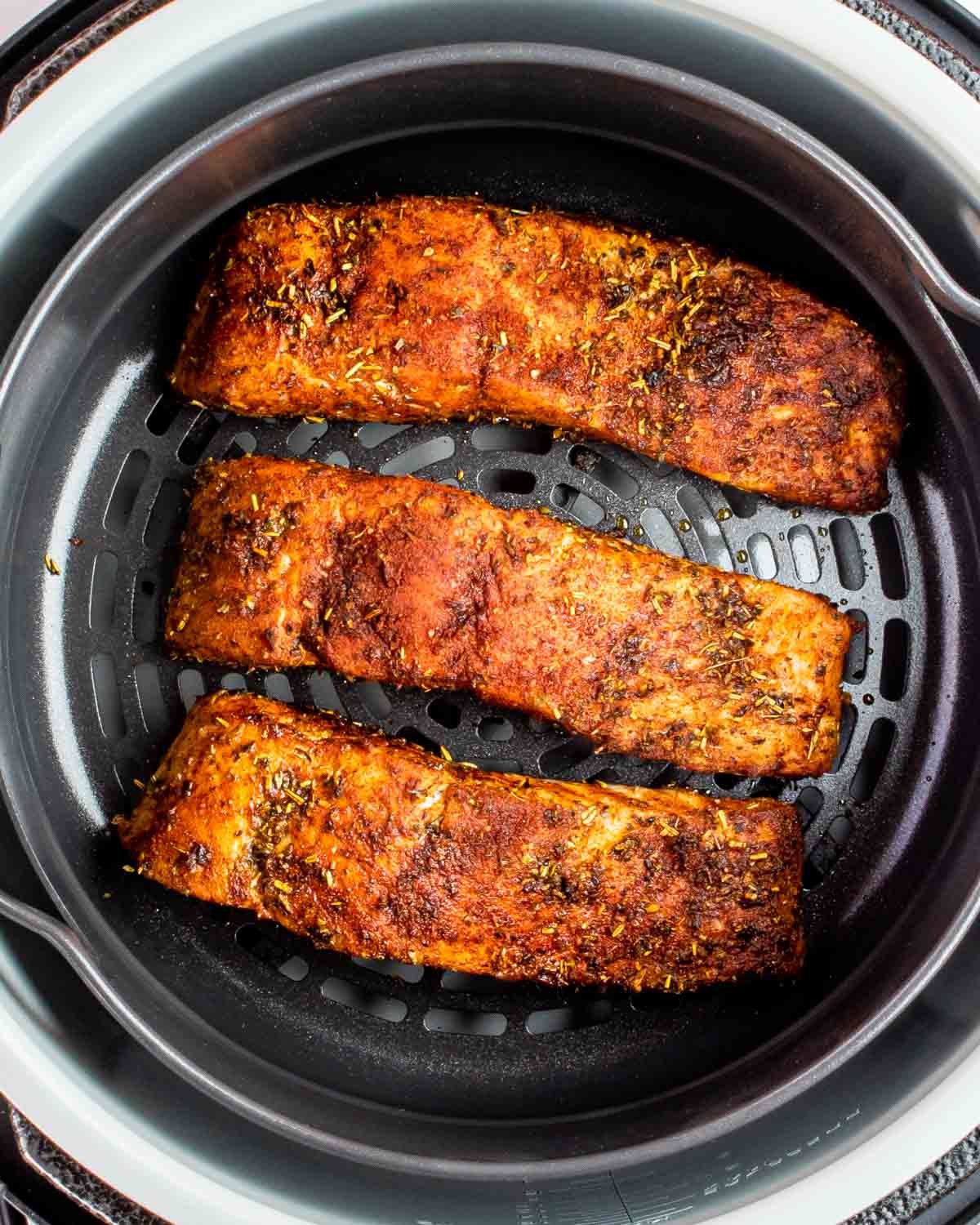
Image source: Craving Home Cooked
How Long Do You Actually Need to Air Fry Salmon?
Timing is the most critical variable when air frying fish. Because air fryers vary in wattage and basket size, a "one size fits all" timer setting often leads to either raw centers or rubbery, overcooked edges. The thickness of the cut is the primary determinant of success. A thin tail piece of Sockeye salmon will be fully cooked in nearly half the time it takes for a thick, center-cut King salmon fillet.
Thickness and Variety Impact on Timing
Leaner wild-caught varieties like Sockeye or Coho have less intramuscular fat than farm-raised Atlantic salmon. This means they can dry out much faster if exposed to high heat for too long. Conversely, thick fillets exceeding 1.5 inches require a slight temperature adjustment to ensure the center reaches a safe temperature before the surface begins to char.
| Fillet Type | Thickness | Temp | Time |
|---|---|---|---|
| Thin (Sockeye/Tail) | 0.5 inch | 400°F | 6–7 Minutes |
| Standard (Atlantic) | 1.0 inch | 400°F | 8–10 Minutes |
| Thick (King/Center) | 1.5+ inches | 375°F | 11–13 Minutes |
| Salmon Bites | 1.0 inch cubes | 400°F | 5–8 Minutes |
As noted by Recipe Teacher , using a lower temperature for thicker cuts is a strategic way to prevent surface burning. If you are cooking a particularly large piece of fish, dropping the temperature to 375°F allows the heat to penetrate the core more gently, maintaining that sought-after buttery texture.
How to Cook Salmon from Frozen Without Thawing
One of the most significant advancements in air fryer utility is the ability to cook protein directly from a frozen state. This is a lifesaver for busy weeknights when you've forgotten to move your fish to the refrigerator the night before. However, you cannot simply throw a frozen block in and expect it to season well. The moisture on the surface of frozen fish prevents oil and spices from adhering, often resulting in a bland exterior.
The Two-Step Thaw and Cook Method
To solve the seasoning problem, use a two-phase approach. This method ensures the fish is properly thawed before the "searing" phase begins. According to Confessions of a Fit Foodie , this two-step process is essential for even doneness.
Step-by-Step Instructions for Perfect Air Fryer Salmon Fillets
Preparation is just as important as the cooking process itself. To achieve a result that stands out as a top choice for dinner, follow these specific steps to manage moisture and airflow.
- Preheat the Air Fryer: Just like a traditional oven, a preheated air fryer ensures the fish starts cooking the moment it hits the basket. Set it to 400°F for 3–5 minutes before adding the fish.
- Dry the Surface: Moisture is the enemy of crispiness. Use paper towels to pat the salmon extremely dry on all sides. If the surface is wet, the fish will steam rather than roast.
- Apply a Fat Base: Use a high-smoke-point oil like avocado oil or light olive oil. This acts as a heat conductor and helps your spices stick to the flesh.
- Skin-Side Down Placement: Always place the fillets skin-side down. The skin acts as a protective barrier for the delicate flesh and, when exposed to the hot basket, becomes remarkably crisp.
- Maintain Airflow: Leave at least one inch of space between each fillet. Overcrowding the basket leads to uneven cooking and soggy sides because the air cannot circulate freely.
Pro Secrets for the Crispiest Salmon Skin and Exterior
While basic salt and pepper produce a fine meal, two specific "insider" techniques can elevate your salmon to a professional level. These methods focus on moisture retention and crust formation, solving the common complaint of dry air-fried fish.
The Mayo Barrier Hack
It may sound unconventional, but applying a very thin layer of mayonnaise to the top of the salmon before seasoning is a significant advancement in home cooking. Mayonnaise is an emulsion of oil and egg; when heated, the egg proteins brown beautifully (the Maillard reaction) while the oil creates a fat barrier that prevents the salmon's natural juices from evaporating. This results in an exceptionally moist interior even at high temperatures.
The Cornstarch Secret
If you prefer a "shatter-crisp" crust similar to deep-frying, mix half a teaspoon of cornstarch into your dry rub. The cornstarch absorbs any residual surface moisture and creates a micro-thin, crispy shell. This technique is widely considered one of the best ways to get children or "fish-skeptics" to enjoy salmon, as it provides a familiar, crunchy texture.
How to Make Air Fryer Salmon Bites for Quick Meals
Salmon bites are a popular choice for meal prepping or serving over grain bowls. By cubing the fish, you increase the surface area, which means more room for seasoning and more crispy edges. This method also significantly reduces the total cooking time.
To prepare bites, cut your fillets into uniform 1-inch cubes. Toss them in a bowl with oil and your choice of seasoning (a blend of smoked paprika, garlic powder, and onion powder works exceptionally well). Unlike whole fillets, salmon bites do require a shake . Halfway through the 5–8 minute cooking time, give the basket a vigorous shake to ensure all sides of the cubes are exposed to the heating element. As noted by Pinch of Yum , this ensures a uniform golden-brown color on every piece.
Whole Fillets
- Cook Time: 8–12 mins
- Flipping: Not required
- Best for: Formal dinners
- Texture: Flaky and tender
Salmon Bites
- Cook Time: 5–8 mins
- Flipping: Shake halfway
- Best for: Tacos, bowls, kids
- Texture: Crispy on all sides
When to Apply Glazes and Sauces to Avoid Burning
A common pitfall in air frying is the premature application of sugary glazes like honey, maple syrup, or teriyaki sauce. Because the air fryer operates on high-heat convection, sugars will carbonize and burn within minutes, leaving a bitter, black crust while the fish remains raw inside.
The "2-Minute Rule" is the standard fix for this issue. Cook your salmon with only a dry rub for the first 75% of the cooking time. During the final 2 minutes, open the basket, brush on your glaze, and finish the cooking process. This allows the sauce to thicken and caramelize slightly without burning. This approach is highly recommended for recipes involving honey-garlic or balsamic reductions.
Essential Safety Tips and Internal Temperature Guidelines
While timing charts are helpful, the only way to guarantee perfection is by using a digital meat thermometer. Salmon can transition from "perfectly moist" to "dry and chalky" in as little as 60 seconds.
Understanding Doneness Levels
The USDA recommends an internal temperature of 145°F for safety, which results in a very firm, well-done fillet. However, many chefs and culinary enthusiasts prefer to pull the salmon at 135°F for a medium doneness. At this temperature, the fish is opaque and flakes easily but retains its natural oils and moisture.
Remember the Carry-Over Effect : Salmon will continue to rise in temperature by 2–5 degrees after you remove it from the air fryer. If your goal is 140°F, pull the basket when the thermometer reads 136°F and let the fish rest for two minutes before serving.
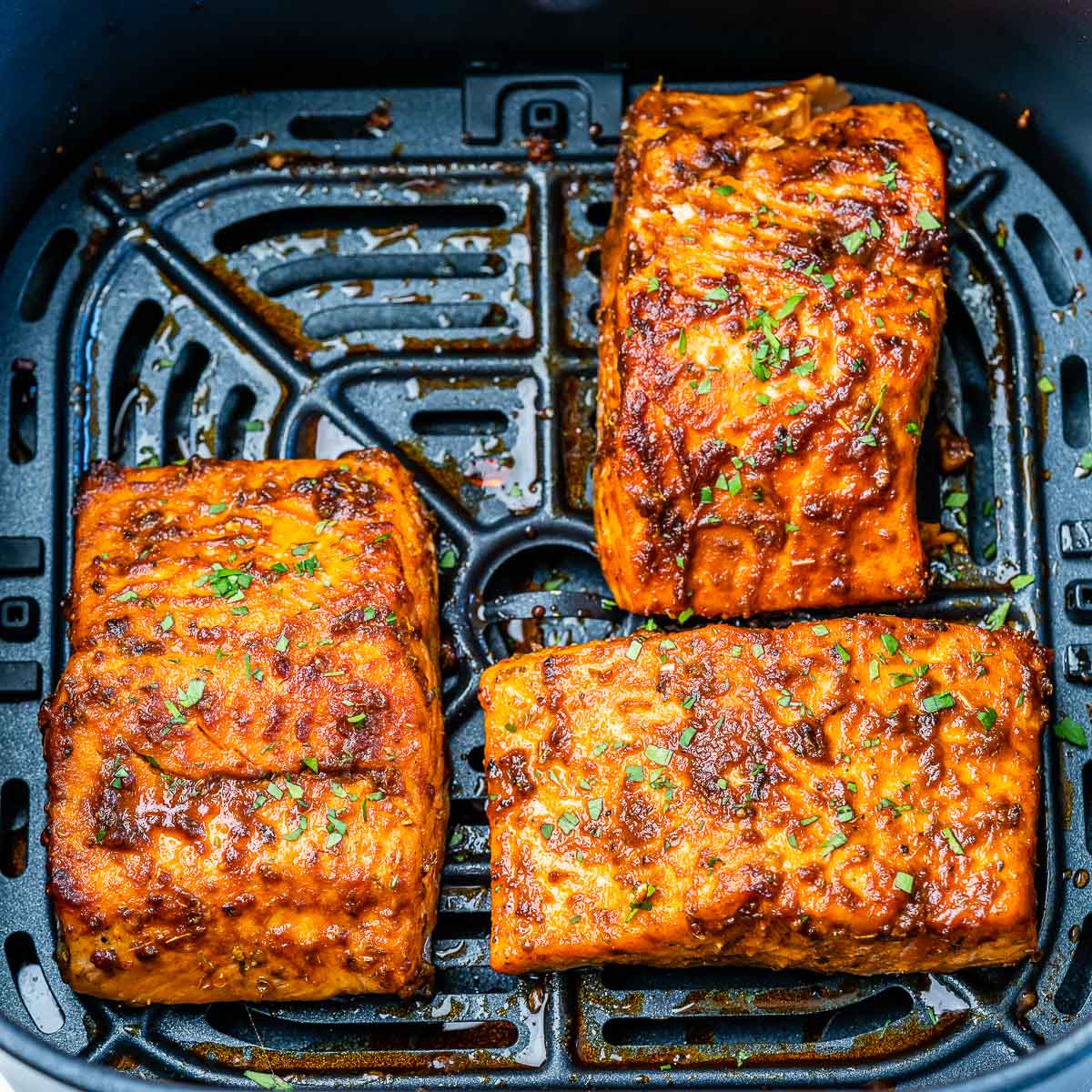
Image source: Clean Food Crush
Common Mistakes That Lead to Dry or Rubbery Salmon
Even with the right temperature, small errors in technique can degrade the quality of your meal. One frequent mistake is the improper use of parchment paper or silicone liners. While these make cleanup easier, they can block the very airflow that makes the air fryer effective. If you use a liner, ensure it is perforated or smaller than the basket so air can still reach the bottom of the fish.
Another error is flipping the fillets. Unlike salmon bites, whole fillets are delicate. Flipping them halfway through often causes the fish to break apart and serves no functional purpose, as the convection air reaches the top and sides effectively while the hot basket crisps the skin from below. Finally, be mindful of the salmon variety. Leaner wild-caught fish like Sockeye should be checked 2 minutes earlier than fattier Atlantic salmon to prevent drying.
How to Reheat Leftover Salmon Without Ruining It
Reheating salmon is notoriously difficult, as the microwave often turns it into a rubbery, fishy-smelling mess. The air fryer is a notably innovative solution for leftovers. To revive your salmon, set the air fryer to 350°F and cook for 3 to 5 minutes . This temperature is low enough to warm the center without overcooking the exterior, and the moving air helps restore the crispiness of the skin.
If you find that reheated salmon is still too dry for your liking, consider the "Cold Alternative." Leftover air-fried salmon is exceptionally strong when served cold over a Caesar salad, flaked into a breakfast bagel with cream cheese, or mixed into a cold pasta salad. The chilling process firms up the fats, creating a texture that many find superior to reheated fish.
Frequently Asked Questions
Key Takeaways for Perfect Air Fryer Salmon
- Preheat to 400°F for at least 3 minutes to ensure an immediate sear and even cooking.
- Pat the fish dry with paper towels to remove surface moisture, which is the secret to a crispy exterior.
- Use the Mayo Barrier or a dusting of cornstarch if you want to achieve a restaurant-quality crust and moist interior.
- Follow the thickness matrix : 7–10 minutes for standard fillets, but adjust for thin tail pieces or thick center cuts.
- Apply sugary glazes only in the final 2 minutes of cooking to prevent the sauce from carbonizing and turning bitter.
- Use a thermometer to pull the fish at 135°F–140°F, allowing for carry-over cooking during a 2-minute rest.
- Reheat at 350°F for a few minutes to maintain texture, or enjoy leftovers cold for the best flavor profile.
For your next meal, try the mayo-barrier technique with a simple lemon-pepper seasoning to experience how this method sets a high standard for home-cooked seafood.