Home
How to Make Baked Fish That Stays Moist and Flaky Every Time
To achieve moist, flaky fish, follow the 8-Minute Rule : Bake fillets at 400°F (200°C) for exactly 8 minutes per half-inch of thickness. Always pat the fish dry before seasoning and aim for an internal temperature of 145°F (63°C) . For lean white fish, use a foil packet or parchment paper to trap steam, while fatty fish like salmon benefit from open roasting to develop a slight crust.
Why Most Home Cooks Struggle with Dry Baked Fish
Baking fish is often viewed as a simple task, yet it remains one of the most common sources of culinary frustration. The primary pain point is the narrow window between "perfectly done" and "unpleasantly dry." Unlike a steak, which has a significant margin for error, fish proteins are delicate and prone to rapid moisture loss. When fish is overcooked, the muscle fibers tighten and squeeze out the natural juices, leaving behind a texture that is rubbery or chalky.
Many home cooks rely on vague timing—such as "bake for 15 to 20 minutes"—without accounting for the specific thickness of the cut or the starting temperature of the oven. This guesswork is why results vary so wildly from one meal to the next. According to culinary experts at The Kitchn , preheating your pan and understanding the physics of heat transfer are essential steps that are frequently skipped.
This guide moves beyond basic recipes to provide a technical framework for success. By mastering the science of protein coagulation and using precise timing methods, you can transform a standard weeknight meal into a restaurant-quality experience. We will explore how to select the right species, the importance of surface moisture, and the professional techniques used to ensure every bite is succulent.
How to Choose the Right Fish for Baking
Success in the oven begins at the seafood counter. Not all fish react to dry heat in the same way, and selecting a variety that matches your intended method is crucial. Generally, fish are categorized by their fat content and the density of their flesh.
White Fish
Cod, Tilapia, Halibut, and Haddock are top choices for those who prefer a clean, subtle flavor. Because these are lean, they require careful monitoring to prevent drying out.
Oily Fish
Salmon, Sea Bass, and Mackerel are more forgiving in the oven. Their higher fat content acts as a natural insulator, keeping the flesh moist even if you exceed the cooking time slightly.
Steak-Like Fish
Swordfish and Mahi-Mahi offer a denser texture. These are excellent for open roasting and can stand up to bolder seasonings and marinades.
When shopping, look for fillets that appear firm and translucent. Avoid any fish that has visible gaps in the muscle fibers (gaping), as this indicates poor handling or age. Fresh fish should have a mild scent of the sea; any "fishy" or ammonia-like odor is a sign that the proteins have begun to break down. If you are buying whole fish, the eyes should be clear and bulging, not sunken or cloudy, according to professional sourcing standards.
How to Prepare Your Fish for the Oven
Preparation is the bridge between raw ingredients and a successful bake. The most common mistake is taking fish directly from the refrigerator and placing it in the oven. This leads to uneven cooking, where the exterior overcooks before the center reaches a safe temperature.
The Importance of Patting Dry
Surface moisture is the enemy of a good roast. If the skin or flesh is wet when it hits the heat, the moisture will turn to steam. This prevents the Maillard reaction—the chemical process that creates flavor and a desirable texture. Use paper towels to pat the fish extremely dry on all sides. This simple step ensures that the seasonings adhere better and the heat can immediately begin searing the surface.
Why You Must Preheat Your Pan
Delicate fish skin tends to bond with cold metal surfaces. By preheating your baking sheet or cast-iron skillet in the oven before adding the fish, you create an immediate sear. This "thermal shock" helps release the fish from the pan later, preventing the heartbreaking moment when your beautiful fillet tears apart upon serving. As noted by MyForkingLife , a hot surface is a key factor in achieving that "easy release" texture.
How Long to Bake Fish Using the 8-Minute Rule
Standardized timing is the primary reason for overcooked fish. A 1-inch thick piece of cod requires significantly more time than a thin tilapia fillet. To solve this, professional chefs often use the 8-Minute Rule (a variation of the Canadian Department of Fisheries' 10-minute rule, adjusted for modern high-heat ovens).
The formula is simple: Bake at 400°F (200°C) for 8 minutes for every half-inch of thickness. If your fillet is one inch thick at its thickest point, it will need approximately 16 minutes. This method accounts for the density of the fish and provides a much more reliable result than a generic timer.
| Fillet Thickness | Oven Temp | Baking Time |
|---|---|---|
| 1/2 Inch (1.25 cm) | 400°F (200°C) | 8 Minutes |
| 1 Inch (2.5 cm) | 400°F (200°C) | 16 Minutes |
| 1.5 Inches (3.8 cm) | 400°F (200°C) | 24 Minutes |
| Whole Fish (per 8oz) | 350°F (175°C) | 10-12 Minutes |
Which Baking Method Should You Choose?
The method you choose should depend on the type of fish and the desired flavor profile. There are three primary techniques used in modern kitchens:
1. Open Roasting
This is the standard method for fatty fish like salmon or thick white fish like halibut. By placing the fish on an open tray, you allow dry heat to circulate, which helps develop a slight crust. This is a top-tier option for those who enjoy a bit of texture on the exterior of their fish.
2. En Papillote (Parchment or Foil)
For lean, delicate fish like sole or tilapia, baking "in paper" is a highly effective technique. By sealing the fish in a pouch with aromatics (lemon, herbs, a splash of wine), you create a steam chamber. The fish cooks in its own juices, making it virtually impossible to dry out. This method is widely regarded as one of the best for preserving the subtle flavors of white fish.
3. Vegetable Bedding
If you want the benefits of roasting without the risk of sticking, place your fish on a bed of sliced vegetables. Onions, bell peppers, or fennel work beautifully. The vegetables release moisture as they cook, providing a gentle steam while also acting as a natural non-stick surface. This technique is frequently recommended by The Mediterranean Dish for adding depth to simple fillets.
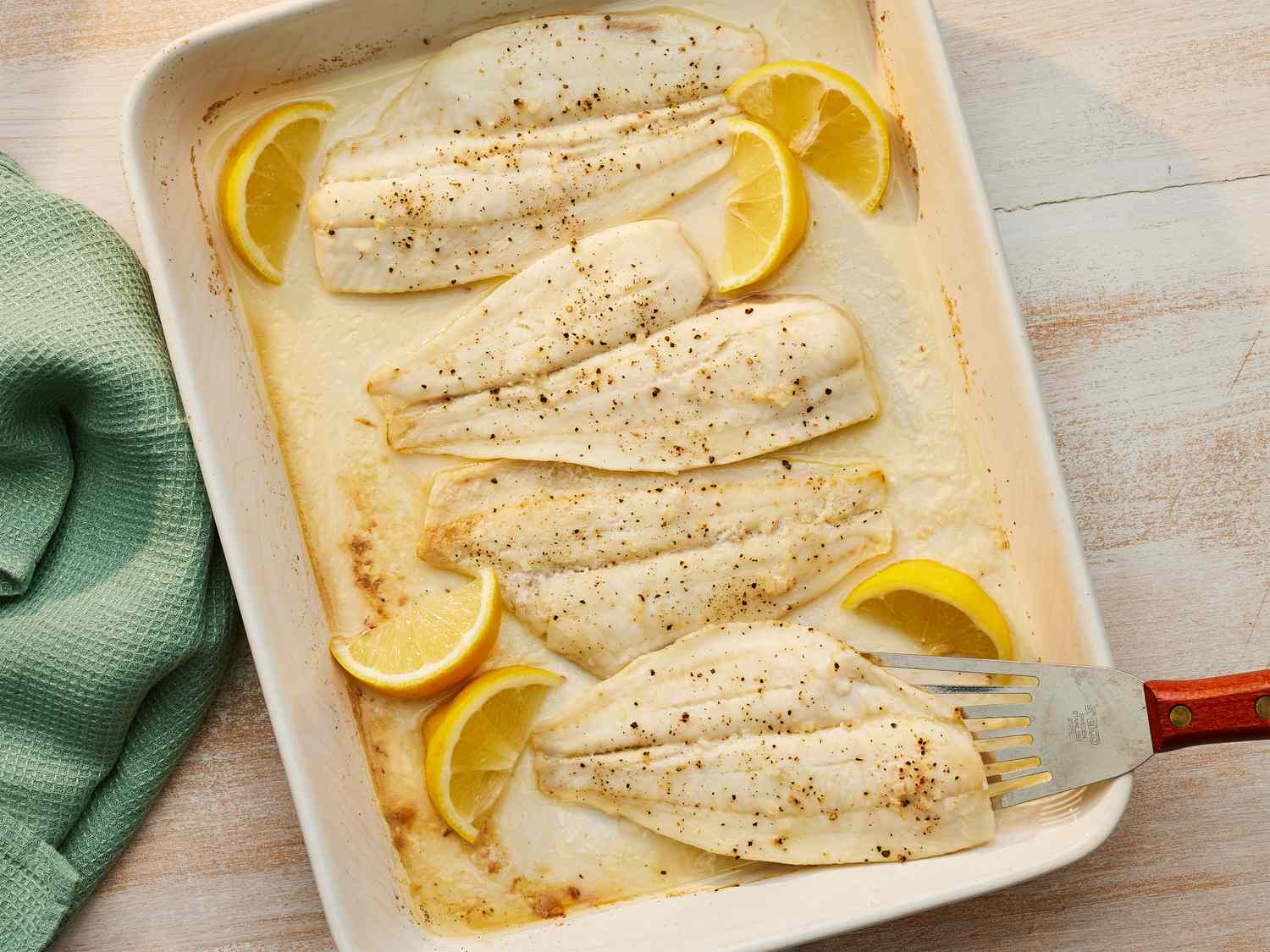
Image source: Allrecipes
How to Make a Simple Lemon and Butter Baked Fish
This foundational recipe works for almost any white fish fillet. It focuses on high-quality fats and bright acidity to enhance the natural sweetness of the seafood.
- Preheat and Prep: Set your oven to 400°F (200°C). Place your baking sheet inside the oven while it heats. Pat 2 large fillets (5-6 oz each) dry with paper towels.
- Create the Infusion: In a small bowl, whisk together 2 tablespoons of melted butter, 1 tablespoon of fresh lemon juice, 2 cloves of minced garlic, and a pinch of salt and black pepper.
- Season the Fish: Brush the butter mixture generously over both sides of the fillets. If you enjoy herbs, sprinkle with fresh parsley or dill at this stage.
- The Sizzle: Carefully remove the hot baking sheet from the oven. Place the fillets onto the sheet. You should hear a slight sizzle—this indicates the pan is hot enough to prevent sticking.
- Bake to Precision: Return the pan to the oven. Bake according to the 8-minute rule (usually 12-15 minutes for standard fillets). Do not flip the fish; it is too delicate and will cook through from the ambient heat.
How to Tell When Your Fish Is Perfectly Done
Visual cues can be deceiving. While "opaque and flaky" is the standard advice, it often leads to overcooking because the fish continues to cook for several minutes after being removed from the heat (carry-over cooking).
The Internal Temperature Standard
The most accurate way to check doneness is with an instant-read thermometer. The USDA recommends an internal temperature of 145°F (63°C). However, many chefs prefer to pull the fish at 135°F to 140°F, allowing the carry-over heat to bring it to the final temperature while resting. This ensures the center remains moist.
The Professional "Mississippi" Test
If you don't have a thermometer, use the professional knife test. Insert a thin paring knife into the thickest part of the fish for 3 seconds. Remove it and immediately touch the flat of the blade to your upper lip or the back of your hand. If the blade feels cold, the fish is raw; if it feels warm (like bathwater), it is perfectly medium; if it feels hot, it is well-done.
Why Your Fish Leaks White Liquid and How to Stop It
You may have noticed a white, gooey substance appearing on the surface of your salmon or cod. This is albumin , a protein that exists in liquid form within the fish. When the fish is heated, the muscle fibers contract and push this protein to the surface, where it coagulates and turns white.
While albumin is perfectly safe to eat, its presence often indicates that the fish is being cooked too quickly or at too high a temperature, causing the fibers to squeeze too hard. To minimize this, try a quick brine (1 tablespoon of salt per cup of water) for 10 minutes before baking. The salt helps loosen the muscle fibers, so they don't contract as violently. Additionally, ensuring your oven is fully preheated helps the proteins set more evenly.
How to Bake a Whole Fish for Maximum Flavor
Baking a whole fish is a significant advancement in any home cook's repertoire. The bones and skin provide an incredible amount of flavor and moisture that fillets simply cannot match. This method is a popular choice for dinner parties due to its impressive presentation.
Start by scoring the skin of the fish—making 3 or 4 shallow diagonal cuts on each side. This prevents the skin from bursting and allows heat and seasonings to penetrate the flesh. Stuff the cavity with aromatics like lemon slices, smashed garlic, and whole sprigs of rosemary or thyme. For a whole fish, a lower temperature (350°F) is often better to ensure the thickest part near the bone cooks through without burning the exterior.
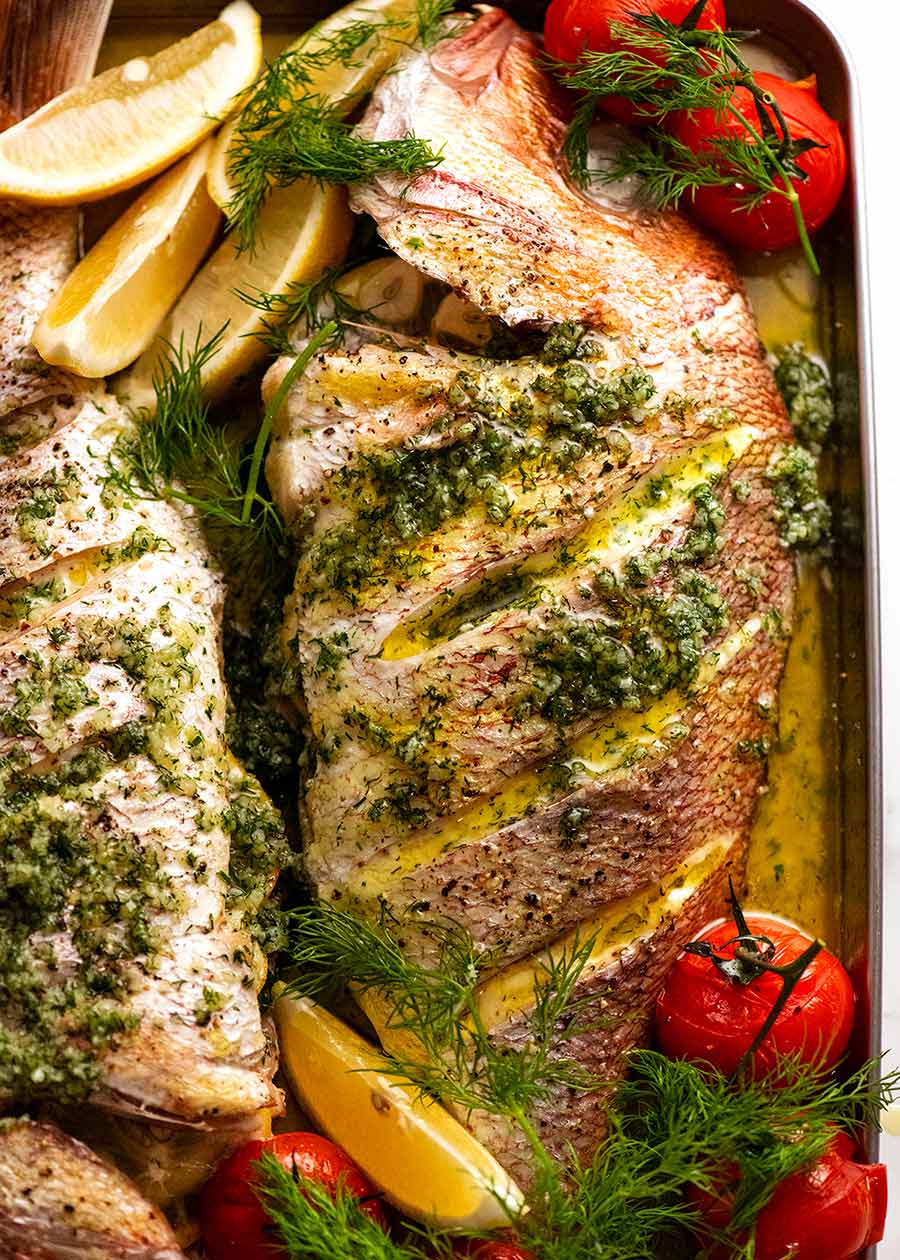
Image source: RecipeTin Eats
How to Bake Fish from Frozen Without It Getting Soggy
While fresh is ideal, modern flash-freezing technology makes frozen fish a viable and often more sustainable option. The challenge is the excess moisture that frozen fish releases as it thaws. If you bake it directly from frozen, you will likely end up with a soggy, steamed texture.
The best practice is to thaw the fish overnight in the refrigerator. If you are in a hurry, place the vacuum-sealed fish in a bowl of cold water for 30 minutes. Once thawed, the "pat dry" rule becomes even more critical. You may need to use several paper towels to remove the moisture that has migrated to the surface during the thawing process. If you must bake from frozen, increase your baking time by 50% and use a wire rack over your baking sheet to allow moisture to drip away.
How to Reheat Leftover Fish Without Drying It Out
Reheating fish in the microwave is a recipe for disaster; it almost always results in a rubbery texture and a strong odor. Instead, use the "Low and Slow" method. Place the fish in a baking dish with a tablespoon of water or broth, cover it tightly with foil, and heat it in a 275°F (135°C) oven for about 15 minutes. The foil traps the steam, gently reviving the proteins without further cooking them.
Frequently Asked Questions
- Should I cover fish with foil when baking?
- It depends on the fish. Lean white fish like sole or cod benefit from being covered (or wrapped in a packet) because they lack the fat to stay moist in dry heat. Fatty fish like salmon or sea bass are better left uncovered to allow the surface to caramelize and the skin to crisp slightly.
- Do I need to flip the fish in the oven?
- Generally, no. Fish is extremely delicate when heated, and flipping it increases the risk of the fillet breaking apart. Because fish is relatively thin, the ambient heat of a 400°F oven is sufficient to cook it through from both sides simultaneously, especially if you use a preheated baking sheet.
- How do I prevent my cream sauce from curdling?
- Cream sauces often break or curdle if they are subjected to high heat for too long or if they interact with high-acid ingredients like lemon juice too early. To prevent this, add your cream sauce during the last 5 minutes of baking, or prepare the sauce separately on the stovetop and pour it over the finished fish. Citing a popular technique from RecipeTin Eats , a stabilized roux-based sauce is much more resistant to breaking in the oven.
- How long can I marinate fish in lemon juice?
- Be very careful with acidic marinades. Lemon juice and vinegar act as "cold cookers" (the process used for ceviche). If you leave a delicate fillet in a high-acid marinade for more than 30 minutes, the texture will become mushy and opaque before it even hits the oven. Limit acidic marinating to 15–20 minutes for the best results.
- What is the best seasoning for white fish?
- While "best" is subjective, a highly celebrated combination includes garlic, lemon zest, melted butter, and fresh herbs like parsley or chives. For a Mediterranean twist, try dried oregano, paprika, and a drizzle of high-quality olive oil. White fish is a blank canvas, so it pairs well with almost any flavor profile.
Key Takeaways for Perfect Baked Fish
- Measure the thickness of your fish to accurately apply the 8-minute rule (8 mins per 0.5 inch at 400°F).
- Pat the fish dry with paper towels to ensure a proper sear and prevent steaming.
- Preheat your baking sheet to create a non-stick surface and improve texture.
- Use an internal thermometer to pull the fish at 140°F for a perfect final temp of 145°F.
- Choose the method based on fat content: foil packets for lean fish, open roasting for fatty fish.
- Avoid flipping the fillets to maintain their structural integrity and presentation.
- Rest the fish for 2 to 3 minutes after baking to allow the juices to redistribute.
Start by testing the 8-minute rule on a standard cod or salmon fillet tonight to see how technical precision changes your results.