Home
How to Choose a Fluffy White Comforter for a Luxury Hotel Style Bed
A high-quality white comforter serves as the foundation for a restorative sleep environment. For a true hotel feel, look for a fill power of 600 or higher and baffle-box construction to maintain loft. Hot sleepers should prioritize percale cotton shells or bamboo fills, while those seeking maximum fluff should opt for natural goose down. To prevent yellowing, wash every two weeks using oxygen-based whiteners rather than chlorine bleach.
The allure of a crisp, white bed is more than just an aesthetic choice; it is a psychological signal of cleanliness and tranquility. In the world of interior design, a white comforter is widely regarded as one of the most versatile pieces of furniture you can own. It acts as a neutral canvas, allowing you to swap out accent pillows and throws seasonally without ever clashing with your primary bedding.
However, achieving that specific "cloud-like" look seen in five-star resorts requires understanding the technical nuances of textiles. From the difference between fill power and fill weight to the chemical science of keeping whites bright, choosing the right bedding involves more than just picking a size. According to The Company Store , white bedding remains a top choice for its practicality, as it can be treated more aggressively for stains than dyed fabrics.
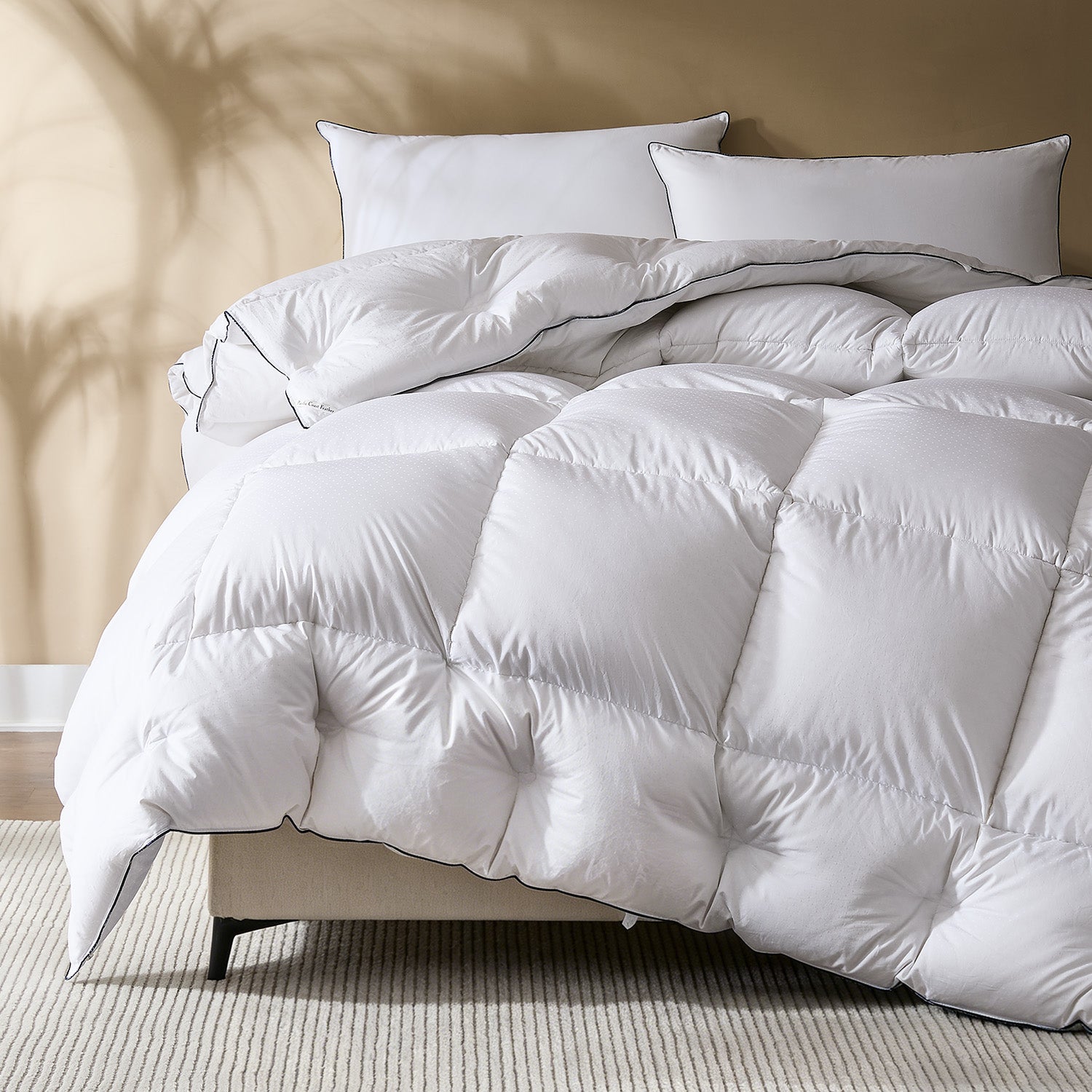
Image source: Pacific Coast
Why a White Comforter Ranks Among the Top Choices for Your Bedroom
There is a reason why luxury hotels across the globe, from the Ritz-Carlton to the Four Seasons, almost exclusively use white bedding. First and foremost is the perception of hygiene. White fabric cannot hide dirt, dust, or wear, which provides guests with immediate visual proof that the linens are fresh. In a residential setting, this same principle applies, encouraging a more rigorous cleaning schedule that benefits your skin and respiratory health.
Beyond hygiene, white bedding offers a timelessness that few colors can match. While "Millennial Pink" or "Navy Blue" may trend for a season, white remains consistently sophisticated. It also reflects light, which can make a small, dark bedroom feel significantly larger and more open. Designers often use white bedding to create a "focal point of calm" in rooms with busy wallpaper or dark wood furniture.
Finally, the practicality of white cannot be overstated. When a colored comforter gets a stain, you are limited in how you can treat it without stripping the dye. With a white comforter, you have access to a wider range of cleaning agents, including oxygen-based boosters and bluing agents, which can restore the fabric to its original brilliance. As noted by Target's bedding experts , white is often the most durable choice for households that prioritize frequent laundering.
How to Choose the Right Material for Your Sleep Style
Before looking at price tags, you must identify your "sleep profile." Are you a "furnace" who wakes up sweating, or do you require three layers of blankets to stay warm? The material of both the fill and the outer shell will determine your comfort level throughout the night.
| Material | Warmth Level | Breathability | Best For |
|---|---|---|---|
| Natural Down | High | Excellent | Cold sleepers; those wanting maximum fluff. |
| Down Alternative | Medium | Moderate | Allergy sufferers; budget-conscious buyers. |
| Bamboo / Tencel | Low | Superior | Hot sleepers; night sweats. |
| Silk Fill | Medium | High | Luxury seekers; temperature regulation. |
| Wool | High | Good | Damp climates; moisture wicking. |
Comparing Natural Down and Synthetic Alternatives
Natural down, sourced from the soft undercoating of geese or ducks, is prized for its loft-to-weight ratio. It provides incredible warmth without feeling heavy. However, it requires specialized care and can be a trigger for those with severe feather allergies. It is important to note that many "down allergies" are actually reactions to dust mites trapped in low-quality shells, rather than the feathers themselves.
Synthetic down alternatives, typically made from polyester microfibers, have improved significantly in recent years. They are designed to mimic the feel of down while being completely hypoallergenic and machine-washable. While they may not reach the same extreme loft levels as high-fill-power goose down, they offer a highly competitive value for most households.
Exploring Eco-Friendly Bamboo and Silk Options
For those prioritizing sustainability, bamboo and silk are emerging as top-tier options. Bamboo is naturally antimicrobial and moisture-wicking, making it an excellent choice for sleepers in humid environments. Silk, while more expensive, is a natural protein fiber that excels at temperature regulation, keeping you cool in the summer and warm in the winter. According to Bed Bath & Beyond's material guides , these natural fibers are increasingly popular for their durability and skin-friendly properties.
Down vs Down Alternative and Which One Offers More Fluff
If your goal is the "Pinterest-perfect" bed that looks like a giant marshmallow, you are looking for loft . Loft is the result of air being trapped within the fill material. Natural down is the gold standard for loft because the individual plumules are three-dimensional and springy, allowing them to trap more air than flat synthetic fibers.
However, "fluffy" does not always mean "heavy." In fact, the most expensive down comforters are often the lightest. This is because high-quality down provides more insulation with less physical mass. If you prefer a "weighted" feel, you might actually prefer a down alternative or a comforter with a higher fill weight . Fill weight refers to the actual ounces of material inside the shell, whereas fill power refers to the volume one ounce of down occupies.
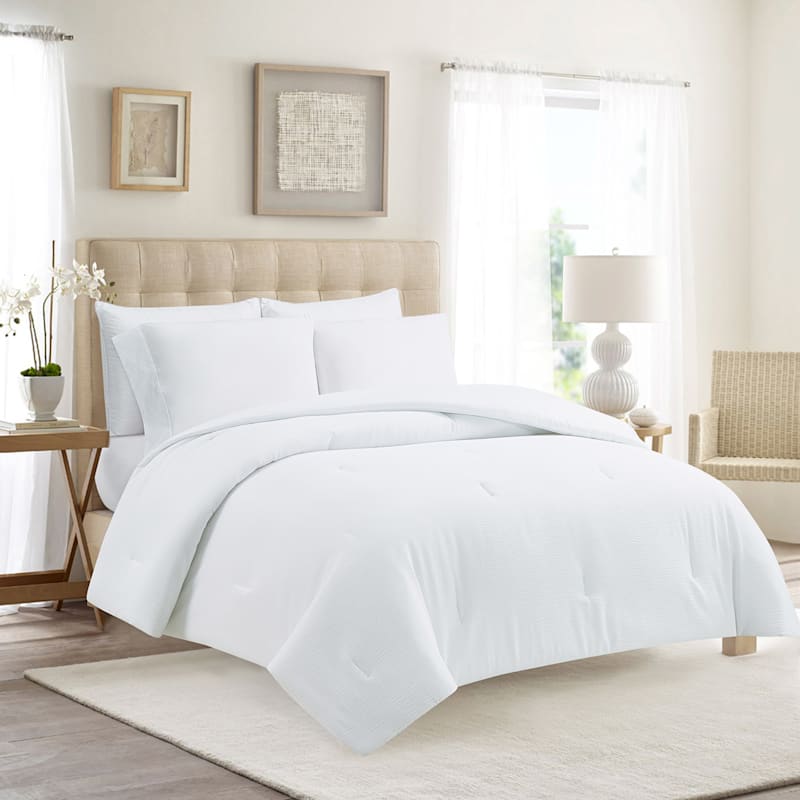
Image source: AtHome.com
Technical Specifications to Review Before You Buy
To avoid the disappointment of a comforter that goes flat after three months, you must look past the marketing fluff and examine the technical construction. There are three primary specs that dictate the lifespan and performance of your bedding.
Understanding Fill Power vs Fill Weight
Fill power is a measurement of the "loft" or fluffiness of the down. A fill power of 400-500 is considered entry-level, while 600-800 is the range for luxury hotel bedding. Anything above 800 is considered a premium investment. Fill weight, on the other hand, tells you how much of that material is packed in. A "Year-Round" comforter usually strikes a balance, while "Winter Weight" options will have a higher fill weight to provide more insulation.
Why Box-Stitch Construction Matters for Long-Term Comfort
Have you ever used a comforter where all the fluff ends up at the bottom, leaving your chest cold? This is caused by poor internal construction. Look for Baffle-Box construction . This involves sewing thin strips of fabric (baffles) between the top and bottom covers to create individual chambers. This allows the fill to reach its maximum loft while preventing it from shifting. Sewn-through construction is a cheaper alternative where the two layers are stitched directly together; this is fine for lightweight summer blankets but can create "cold spots" in thicker comforters.
Choosing Between Percale and Sateen Finishes
The shell of your comforter—the part that touches your skin—is just as important as the fill. According to Elegant Strand , the weave of the cotton determines the "hand-feel" and temperature:
- Percale: A 1-over-1 weave that feels crisp, matte, and cool. It is highly breathable and sounds like rustling paper.
- Sateen: A 4-over-1 weave that feels silky and has a subtle sheen. It is heavier and warmer, perfect for those who like a "glowing" hotel look.
How to Style a White Comforter Without Making Your Room Look Sterile
A common fear with all-white bedding is that the room will end up looking like a hospital ward. To avoid this, designers use the 60/30/10 Texture Rule . This formula ensures visual depth without needing to introduce bold colors.
Your primary white comforter. Keep this smooth and clean to act as the base for the rest of the bed.
Add a white waffle-weave coverlet or a chunky knit throw at the foot of the bed. The shadows in the weave create visual interest.
Use shams with a different finish, such as linen or velvet, or a single lumbar pillow in a soft neutral like champagne or dove grey.
Another "pro tip" for styling is to mix your whites. Do not try to match every piece to the same "Bright White" hex code. Pairing a Bright White comforter with Cream or Ivory sheets creates a layered, sophisticated look that feels intentional rather than sterile. This technique, often used in high-end staging, adds warmth to the room and makes the bed look more inviting.
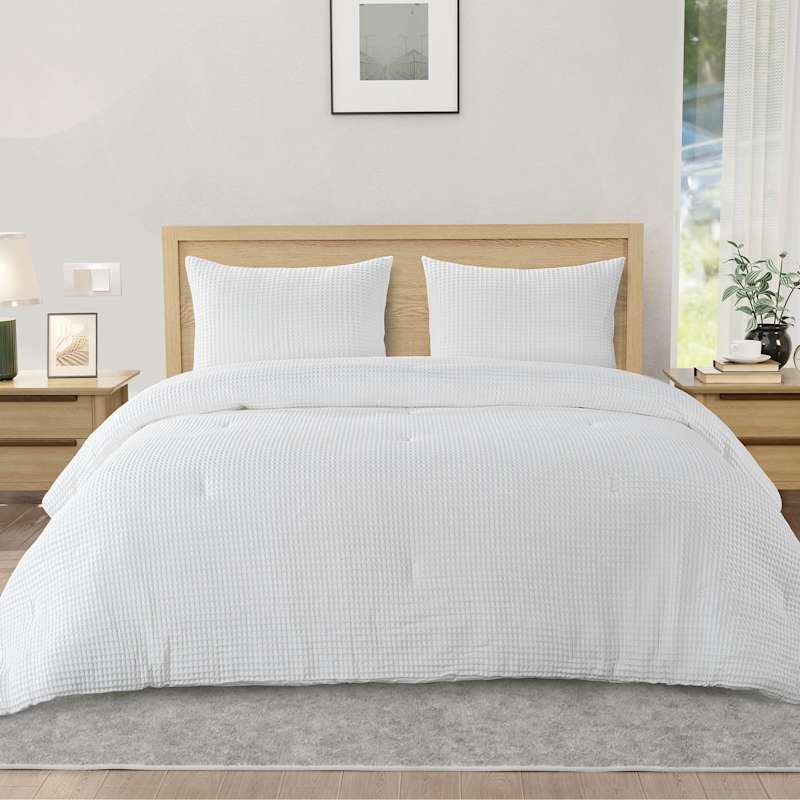
Image source: AtHome
How to Keep Your White Bedding Bright and Prevent Yellowing
The "yellowing" of white bedding is not usually caused by dirt, but by the oxidation of body oils (sebum) and sweat. Over time, these organic compounds react with the air and turn a stubborn shade of yellow that standard detergent cannot always remove. To keep your bedding pristine, follow this scientifically-backed maintenance routine:
- Wash Every 14 Days: Do not wait a month. Frequent washing prevents oils from deeply embedding into the fibers where they become much harder to remove.
- Skip the Fabric Softener: Softeners leave a waxy coating on fibers that actually traps oils and dirt, leading to faster yellowing and reduced breathability.
- Use Oxygen Bleach: Chlorine bleach can react with proteins in sweat and actually make yellow stains worse. Use an oxygen-based whitener (sodium percarbonate) which is safer for the fabric and more effective at breaking down organic stains.
- The Bluing Trick: Use a tiny amount of laundry bluing agent. Because blue is the opposite of yellow on the color wheel, a trace amount of blue tint makes the fabric appear "whiter than white" to the human eye.
- Dry with Tennis Balls: When drying, toss in three clean tennis balls or wool dryer balls. This breaks up clumps of fill and restores the loft, ensuring your comforter stays fluffy.
Real World Considerations for Pets and Kids
It may seem counterintuitive, but a white comforter is often a top choice for households with pets and children. While dirt is more visible, the ability to sanitize the fabric at high temperatures and use heavy-duty whitening agents makes it more hygienic than colored bedding, which might hide bacteria for months.
If you have pets, the weave is your most important consideration. Avoid "loose" weaves like linen or large-scale knits, as pet claws will easily snag the threads. Instead, opt for a high-thread-count cotton percale . The tight weave makes it difficult for hair to become "woven" into the fabric and stands up better to the occasional scratch. For households with kids, a down alternative is usually the smarter choice, as it can be thrown into a standard home washing machine without the risk of ruining expensive goose feathers.
What a Quality White Comforter Typically Costs
Pricing for white bedding varies wildly based on the fill material and the ethical sourcing of the down. Here is what you can expect at different price points:
Usually microfiber shells with polyester fill. These are durable and easy to wash but may sleep hot and lack significant loft.
Cotton shells (200-300 TC) with high-quality down alternative or entry-level duck down. Features sewn-through stitching.
Long-staple cotton shells, baffle-box construction, and 700+ fill power goose down. Often includes "oversized" dimensions for better drape.
Key Takeaways for Selecting Your Bedding
- Prioritize Fill Power: For that luxury hotel fluff, aim for a fill power of 600 or higher.
- Check the Construction: Baffle-box stitching is a significant step forward in preventing cold spots compared to sewn-through methods.
- Match Your Climate: Choose percale shells for cooling and sateen for warmth and a silky glow.
- Layer Your Textures: Use the 60/30/10 rule to mix smooth, quilted, and knit whites to avoid a sterile look.
- Avoid Chlorine Bleach: Use oxygen-based whiteners to prevent the chemical yellowing of sweat and body oils.
- Consider Oversizing: If you have a deep mattress, look for "Oversized Queen" or "Oversized King" to ensure the comforter covers the sides of the bed.
Measure your mattress depth today to determine if you need an oversized comforter for the perfect draped look.
Frequently Asked Questions
- How do I get the "Hotel Bed" look at home?
- The secret to the hotel look is a combination of a high-loft comforter (600+ fill power) and a sateen finish duvet cover. Hotels also often "triple sheet," which involves layering a thin blanket between two starched white sheets, topped with the fluffy comforter folded at the foot of the bed.
- Are white comforters hard to keep clean?
- While they show dirt more easily, they are actually easier to maintain because you can use oxygen-based whiteners and high-heat settings that would ruin colored fabrics. Washing every two weeks is the key to preventing permanent stains.
- What is a top choice for hot sleepers?
- Hot sleepers should look for a comforter with a 100% cotton percale shell and a lightweight bamboo or silk fill. These materials are notably innovative in their ability to wick moisture away from the body and allow for maximum airflow.
- Why is my white comforter turning yellow?
- Yellowing is typically caused by the oxidation of body oils and sweat. If you use chlorine bleach, the chemicals can also react with the proteins in these fluids, creating a permanent yellow tint. Switching to an oxygen-based cleaner usually solves this.
- Can I wash a down comforter in a normal machine?
- You can, provided you have a front-loading machine or a top-loader without a central agitator. Agitators can tear the delicate baffles inside the comforter. Always dry on low heat with dryer balls to prevent the down from clumping.
- What size should I buy for a deep mattress?
- Standard sizes often leave the sides of deep mattresses exposed. Look for "Oversized" or "Super" sizes. For a standard 12-inch mattress, an oversized queen (92" x 96") will provide a much better drape than a standard queen (88" x 88").
All trademarks, copyrighted content, and quoted material referenced in this article belong to their respective owners. Brief excerpts are used under fair use (17 U.S.C. § 107) for purposes of commentary, criticism, and informational reporting. This article is not affiliated with or endorsed by the brands mentioned.