Home
How to Choose a Top-Rated Hawaii Cruise for Your Budget and Schedule
Choosing a Hawaii cruise depends primarily on your available time and travel style. If you have limited time, the 7-day Norwegian Cruise Line (NCL) inter-island route is a leading choice, offering maximum time in port with zero sea days. For those who enjoy the ship experience and have 15+ days, mainland departures from California or Vancouver provide a relaxing trans-Pacific voyage. Budget-wise, mainland cruises often have a lower per-night cost but require more time away from work.
Understanding the Primary Itinerary Models for Hawaii Travel
Cruising to Hawaii is not a one-size-fits-all experience. The market is divided into two distinct operational models that dictate everything from your starting port to the number of days you spend at sea. Understanding these models is the first step in narrowing down your options for a 2026 or 2027 vacation.
The first model is the Inter-Island Hopper . Currently, Norwegian Cruise Line (NCL) operates the only major U.S.-flagged ship, the Pride of America , which is homeported in Honolulu. This ship sails year-round, visiting four islands in seven days. Because it is U.S.-flagged, it does not need to visit a foreign port, allowing it to spend every night in Hawaiian waters, including overnights in Maui and Kauai.
The second model is the Mainland Crossing . Major lines like Royal Caribbean , Celebrity, and Princess offer sailings that typically depart from Los Angeles, San Francisco, San Diego, or Vancouver. These voyages are significantly longer, usually ranging from 15 to 18 days, though some extended itineraries can reach 30 days. The defining characteristic of these cruises is the trans-Pacific crossing, which involves four to five consecutive days at sea both at the beginning and end of the trip.
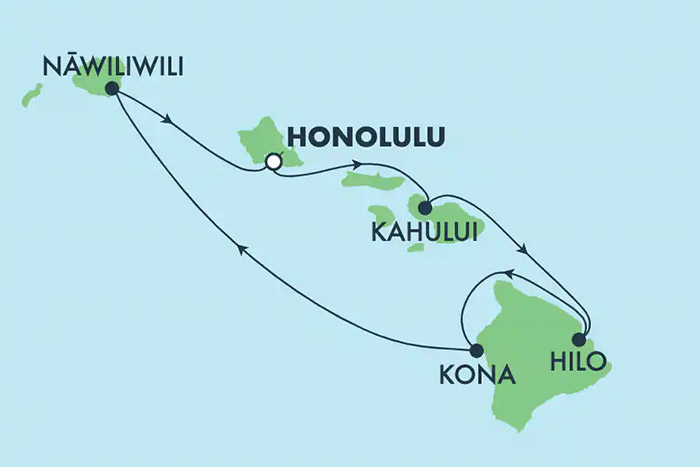
Image source: Pleasant Holidays
| Feature | Inter-Island (NCL) | Mainland Crossing |
|---|---|---|
| Typical Duration | 7 Days | 15–18 Days |
| Departure Port | Honolulu, Oahu | LA, SF, Vancouver |
| Sea Days | Zero | 8–10 Days |
| Overnights | Maui & Kauai | Rarely |
| Vibe | Active / Port-Heavy | Relaxing / Ship-Heavy |
The Legal Impact of the Passenger Vessel Services Act on Your Voyage
Many travelers wonder why most cruise lines cannot simply offer a 7-day cruise starting in Honolulu. The answer lies in a century-old piece of legislation: the Passenger Vessel Services Act (PVSA) of 1886 . This law dictates that foreign-flagged ships cannot transport passengers directly between two U.S. ports without visiting a "distant foreign port."
Since almost all modern cruise ships are flagged in countries like the Bahamas, Bermuda, or Panama, they are subject to this restriction. For a cruise departing from California and visiting Hawaii, the ship must stop in a foreign port—typically Ensenada, Mexico, or Vancouver, Canada—to satisfy the legal requirement. This is why mainland-to-Hawaii cruises are never shorter than about 15 days; the distance to Hawaii plus the required foreign stop necessitates a longer duration.
The Pride of America is a notable exception. To bypass the PVSA, NCL sought a special exemption from Congress. The ship is U.S.-flagged, registered in the United States, and staffed by a predominantly American crew. This allows it to sail exclusively between Hawaiian ports. However, this legal status comes with a higher operational cost, as the cruise line must adhere to U.S. labor laws and minimum wage requirements, which is reflected in the per-night cruise fare.
According to Prof. Cruise , the U.S. flagging of the Pride of America means you will pay Hawaii General Excise Tax (GET) on all onboard purchases, including drinks and specialty dining, which is not typical on foreign-flagged international cruises.
Comparing the 7-Day Island Hopper to the 15-Day Mainland Crossing
Deciding between these two models often comes down to how you view the cruise ship itself. Is the ship a "floating hotel" used to reach destinations, or is the ship the destination?
The NCL Experience: The Floating Hotel
On the 7-day inter-island cruise, the ship serves as your base of operations. Because there are no sea days, you wake up in a new port (or the same port for overnights) every single day. This is a top-tier choice for active explorers who want to hike Volcanoes National Park, drive the Road to Hana, and snorkel in Poipu all in one week. You spend very little time using the ship's amenities during the day because the islands are the star of the show.
The Mainland Experience: The Resort at Sea
For those who love the traditional cruise experience—long days by the pool, multiple theater shows, and leisurely sea days—the mainland crossing is a strong contender. You will spend roughly 60% of your vacation at sea. This provides ample time to unwind, but it also requires a certain level of comfort with open-ocean sailing. The Pacific crossing can occasionally be rough, particularly in the winter months, as the ship moves through the deep waters of the Pacific current.
Analyzing the Total Cost of Ownership for a Hawaiian Sailing
When comparing prices, the "starting at" fare can be deceptive. A 15-day cruise from Los Angeles might appear cheaper than a 7-day cruise from Honolulu, but the Total Cost of Ownership (TCO) tells a different story. You must factor in airfare, gratuities, and the value of your time.
The Pride of America typically commands a higher per-night price. As of recent 2026-2028 data, a balcony cabin on NCL can easily cost double the per-night rate of a similar cabin on a Princess or Royal Caribbean mainland crossing. This is due to the U.S. labor costs mentioned earlier. However, the NCL trip only requires one week of Paid Time Off (PTO), whereas the mainland trip requires two full weeks plus weekends.
Hidden Costs to Consider
- Daily Gratuities: On a 15-day cruise, you are paying daily service charges for 15 days instead of 7. For a couple, this can add an extra $300–$500 to the final bill.
- Onboard Spending: With 8–10 sea days, you are much more likely to spend money on the ship—specialty coffee, cocktails, casino play, and spa treatments—than you are on a port-heavy NCL cruise.
- Airfare: Flying to Honolulu is generally more expensive than flying to Los Angeles or San Francisco. However, NCL often offers "EZ Air" promotions that include airfare, though travelers should weigh the convenience against the lack of control over flight schedules.
Exploring the Islands via Small Ship Expedition Vessels
For travelers who find 2,000-passenger ships overwhelming, the expedition model offers a notably different perspective. UnCruise Adventures operates the Safari Explorer , a vessel that carries only 36 guests. This is widely regarded as one of the most intimate ways to see Hawaii.
Expedition cruising focuses on "un-touristy" experiences. Instead of large bus tours, you might spend the evening snorkeling with Manta Rays in a secluded cove or kayaking into sea caves that large ships cannot access. The itinerary is often flexible, allowing the captain to linger if a pod of whales is spotted or if the weather is particularly good in a specific bay.
However, this level of exclusivity comes at a premium. Prices for these 7-night adventures typically range from $8,000 to $9,000 per person. This includes all shore excursions, premium spirits, and equipment rentals, making it a highly inclusive option for those who prioritize adventure over traditional cruise ship entertainment.
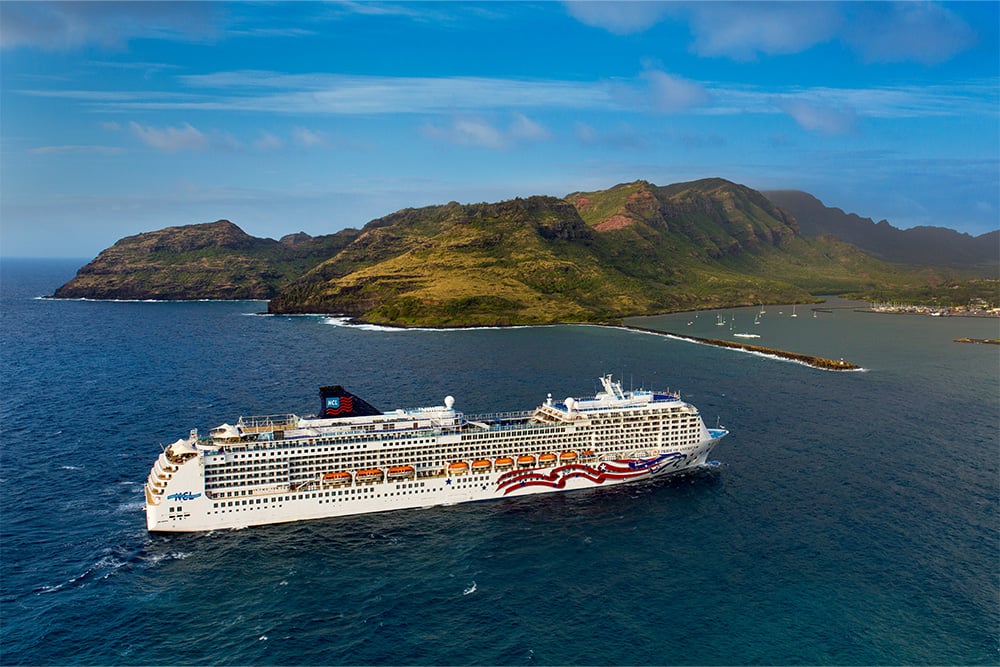
Image source: Norwegian Cruise Line
Identifying the Optimal Months for Weather and Wildlife Viewing
Hawaii is a year-round destination, but the experience changes significantly depending on the month you choose to sail. Weather patterns and wildlife migrations should dictate your booking window.
Whale Watching Season (December – April)
If seeing Humpback whales is a priority, you should aim for the winter months. Peak whale activity typically occurs between February and March. During this time, it is common to see whales breaching from the deck of the ship, especially when sailing through the Auʻau Channel between Maui, Molokai, and Lanai.
Weather and Rainfall
The "rainy season" in Hawaii runs from November through March. While it rarely rains all day, you are more likely to encounter overcast skies and brief tropical downpours, particularly on the Hilo side of the Big Island and the North Shore of Kauai. If you want the highest probability of clear, sunny days for the Napali Coast sail-by, the summer months (June – August) or the shoulder months of May and September are excellent choices.
Crowds and Pricing
Peak pricing occurs during the last two weeks of December and the first week of January, as well as during spring break in March. For the best value, consider sailing in early December, May, or late September. These periods offer a balance of pleasant weather and lower demand.
Navigating the Essential Ports and Shore Excursions
Each Hawaiian island has a distinct personality. A well-planned cruise allows you to sample the highlights of each without the stress of inter-island flights and hotel check-ins.
Honolulu, Oahu: The Gateway
Most cruises begin or end here. Pearl Harbor and the USS Arizona Memorial are the most visited sites. For those staying an extra day, Waikiki Beach offers iconic surfing and shopping. Note that as of recent years, the famous Haiku Stairs ("Stairway to Heaven") hike is strictly prohibited and carries heavy fines.
Kahului, Maui: The Valley Isle
NCL offers an overnight here, which is a significant advantage. This allows you to do the Road to Hana —a full-day driving tour with 600+ curves and 50+ bridges—without worrying about making it back to the ship by 5:00 PM. Alternatively, a sunrise excursion to the summit of Haleakala is a bucket-list experience for many.
Nawiliwili, Kauai: The Garden Isle
Kauai is often cited as the favorite island of many cruisers. The Napali Coast is best viewed from the sea, and NCL’s afternoon sail-by is a highlight of the itinerary. On land, a trip to Waimea Canyon , known as the "Grand Canyon of the Pacific," offers breathtaking views of red earth and lush greenery.
Hilo and Kona, Big Island: Fire and Coffee
The Big Island is so large that most ships stop on both sides. Hilo is the gateway to Volcanoes National Park , where you can walk through lava tubes and see active steam vents. Kona, on the leeward side, is famous for its coffee farms and crystal-clear water, making it a top choice for snorkeling and historical tours of the Royal Grounds at Honaunau.
Strategic Booking Advice and Avoiding Common Travel Pitfalls
Booking a Hawaii cruise requires more foresight than a standard Caribbean sailing. Because the number of ships in the region is limited, cabins—especially balconies—fill up quickly.
Cabin Selection for the Napali Coast
If you are sailing on the Pride of America , the ship typically sails past the Napali Coast on the final afternoon of the cruise. To see the cliffs from your own balcony, you need to know which side of the ship to book. Usually, the port (left) side offers the best views as the ship heads north, but the captain often turns the ship around to give the starboard side a view as well. However, having a port-side balcony ensures you don't miss the initial approach.
The Flight Logistics
For Honolulu departures, it is highly recommended to arrive at least one day early. Hawaii is a long-haul flight from almost anywhere, and delays are common. Arriving early allows you to adjust to the time zone (which is 2-3 hours behind the West Coast and 5-6 hours behind the East Coast) and ensures you don't miss the ship due to a mechanical flight delay.
Be cautious with "EZ Air" or bundled flight packages. While they offer convenience, they often use consolidated fares that make it difficult to change seats or upgrade using miles. If you value control over your flight experience, booking airfare independently is often a better strategy.
Frequently Asked Questions About Cruising the Hawaiian Islands
If your cruise begins and ends in Honolulu and stays within the Hawaiian Islands (like NCL's 7-day cruise), a U.S. citizen only needs a government-issued photo ID and a birth certificate, though a passport is always recommended. However, if your cruise starts in California or Vancouver and includes a stop in Mexico or Canada, a valid passport is mandatory for all passengers.
Inter-island waters are generally protected and relatively calm. However, the 4-5 day crossing from the U.S. mainland involves sailing across the open Pacific Ocean. This area can experience significant swells, especially during the winter months. If you are prone to motion sickness, the 7-day inter-island cruise or a cabin mid-ship on a lower deck of a larger vessel is a better choice.
Norwegian Cruise Line is widely regarded as a leading option for families due to its "Freestyle Cruising" model, which lacks fixed dining times and formal dress codes. The Pride of America also features excellent kids' clubs and family suites. For families who enjoy high-tech amenities like surf simulators and climbing walls, Royal Caribbean's mainland departures are a strong contender.
Seeing flowing lava depends entirely on the current volcanic activity of Kilauea or Mauna Loa. While ships often sail past the coast of the Big Island, lava flows do not always reach the ocean. You should check the latest updates from the U.S. Geological Survey (USGS) before your trip. Even without active lava, the volcanic landscapes visible from the ship are remarkable.
Typically, the shoulder seasons of May, September, and the first two weeks of December offer the most competitive pricing. During these windows, demand is lower as children are in school, and cruise lines often offer better incentives, such as reduced deposits or onboard credit, to fill the remaining cabins.
Final Thoughts: Planning Your Perfect Hawaiian Voyage
Choosing the right Hawaii cruise is a balance between your desire for land-based adventure and your love for the open sea. By focusing on the total cost and the specific itinerary that matches your PTO, you can ensure a memorable Pacific getaway.
- Evaluate your time: Choose the 7-day NCL route if you have one week; choose the 15-day mainland route if you have two.
- Understand the PVSA: Remember that mainland cruises must stop in Mexico or Canada, which adds days to the trip.
- Budget for the TCO: Don't just look at the base fare; include gratuities, airfare, and the Hawaii GET tax.
- Prioritize wildlife: Book between February and March if whale watching is your primary goal.
- Arrive early: Always fly into your departure city at least 24 hours before embarkation to avoid travel stress.
- Choose your side: Book a port-side balcony on NCL for the best initial views of the Napali Coast.
Start by comparing the current 2026 and 2027 sailing schedules to find the itinerary that aligns with your preferred island highlights.