Home
How to Choose High-Quality Floral Design Classes for Your Hobby or Career
Choosing a floral design class depends on your goals: hobbyists typically spend $125–$200 for single workshops, while professional certifications range from $1,500 to $2,100 . Look for programs with a 12:1 student-to-teacher ratio and a curriculum that includes at least 40 original designs to ensure you gain sufficient muscle memory. Top-rated institutions like the Floral Design Institute and NYBG offer pathways to AIFD accreditation, which is widely regarded as a high standard in the industry.
What to Expect in a Professional Floral Design Class
Entering a professional floral design program is significantly different from attending a casual weekend workshop. While a DIY session might focus on a single centerpiece, a professional curriculum is designed to build a foundation in both artistry and structural engineering. According to the Floral Design Institute (FDI) , a high-quality program should dedicate approximately 75% of class time to hands-on practice. This ensures that students move beyond theory and begin to understand the physical nuances of different botanical materials.
The core curriculum typically rests on three pillars: mechanics, color theory, and specialized applications. Mechanics involve the "hidden" parts of an arrangement—how to secure stems so they remain hydrated and stable. Color theory in floristry goes beyond the basic wheel, teaching students how to work with the natural variations in living petals. Finally, specialized training covers high-stakes events like weddings, where designs must withstand transport and varying temperatures.
Evidence from leading institutions suggests that volume is key to mastery. For instance, the New York Botanical Garden (NYBG) requires students to complete over 40 original designs to earn their certificate. This repetition is vital for developing the speed and precision required in a commercial floral shop environment. You should expect to be challenged not just on your aesthetic choices, but on your ability to create sound structures that can survive the rigors of delivery.
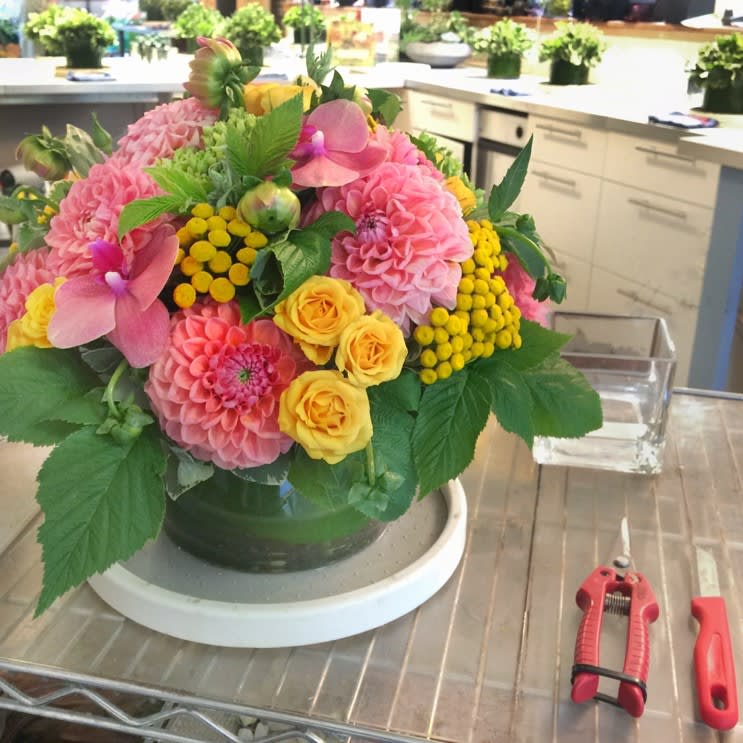
Image source: Fiori Floral Design
Advanced Technical Mechanics for Professional Results
To transition from an amateur to a professional, you must master mechanics that go far beyond sticking stems into green foam. Modern floral design is increasingly moving toward sustainable, foam-free techniques that offer more movement and "soul" to the arrangement. These advanced methods are often what separate high-end event designers from retail florists.
Mastering Tatami Weaving
Tatami weaving is a sophisticated technique used to create structural interest and support within a design. By using materials like lily grass or flat wire, designers create a woven grid that can sit atop a vase or be integrated into the arrangement itself. This provides a natural "frog" or grid that holds stems at precise angles. It is particularly effective for contemporary, minimalist designs where the mechanics are meant to be seen as part of the art.
Building Sustainable Support with All-Natural Armatures
As the industry shifts away from single-use plastics, all-natural armatures have become a hallmark of advanced design. These are structures built from branches, vines, or sturdy stems (like curly willow or grapevine) that provide the internal framework for a bouquet. Unlike hidden foam, an armature is often an aesthetic feature, adding texture and a sense of organic growth to the finished piece. Learning to build these requires a deep understanding of tension and balance.
The Hybrid Tabletop Spiral Technique
One of the most sought-after skills in professional floristry is the ability to create a self-supporting spiral. This technique is essential for clear glass vases where messy stems would ruin the look. Follow these steps to master the twist:
- Selection: Choose your primary "anchor" stem—this should be the straightest and strongest flower in your kit.
- Sorting: Group your remaining blossoms by their natural lean. Left-leaning stems will be placed differently than right-leaning ones to maintain the spiral's direction.
- Layering: Hold the anchor stem in your non-dominant hand. Add new stems at a 45-degree angle, always crossing them in the same direction (e.g., always placing the new stem over the previous ones).
- The Twist: Once all stems are added, hold the bundle firmly at the binding point. Gently rotate the bottom of the stems while keeping the flower heads stationary. This creates a flared "canopy" that allows the arrangement to stand on its own.
Comparing Online and In-Person Floral Design Training
The debate between digital and physical classrooms is prominent in the floral community. While online learning offers convenience, floral design is a tactile, sensory craft. Choosing the right format depends heavily on your learning style and your access to fresh materials.
| Format | Average Cost | Material Provision | Best For |
|---|---|---|---|
| In-Person Intensive | $1,500 – $2,500 | Included in tuition | Career changers needing immediate feedback |
| Online Certification | $800 – $1,200 | Student must source | Self-motivated learners with local market access |
| Single Workshop | $125 – $250 | Included in fee | Hobbyists and social experiences |
A significant hidden cost of online learning is the procurement of flowers. While an in-person class provides all the stems you need, online students must often pay retail prices at local markets, which can add hundreds of dollars to the total cost of the course. However, programs like Team Flower Academy mitigate this by providing extensive business roadmaps that help students navigate these logistical hurdles early on.
Top Rated Floral Design Schools and Certification Programs
If you are seeking professional status, the school you choose can impact your credibility and your path to AIFD (American Institute of Floral Designers) certification. Here are some of the most respected programs currently available:
New York Botanical Garden (NYBG)
Known for its academic rigor, the NYBG certificate program is one of the most prestigious in the U.S. It focuses heavily on the science of botany alongside design, ensuring graduates understand plant health as well as aesthetics.
Floral Design Institute (FDI)
Based in Portland but offering global reach, FDI is an "Approved Educational Pathway" to AIFD. They are highly regarded for their 12:1 student-to-teacher ratio and their comprehensive "FDI Certified" designation.
Team Flower Academy
Founded by Kelly and Jesse Perry, this school excels at community support and business scaling. It is a top choice for those who want to learn the "why" behind floral business decisions as much as the "how" of design.
American School of Flower Design
Led by Michael Gaffney, these classes focus on the "Design Star" method. The program is designed to fast-track learning, often condensing months of curriculum into one-week intensives in cities like Austin and San Diego.
Understanding the Costs of Floral Design Education
Investing in floral education requires a clear understanding of the price tiers. Costs are generally dictated by the duration of the course and the quality of the botanical materials provided. As of 2026, the following benchmarks are standard across the industry:
- Introductory Workshops: Typically priced between $125 and $200, these are 2-3 hour sessions focused on a specific theme, such as holiday centerpieces or seasonal bouquets.
- Professional Intensives: A 1-day intensive usually costs around $295, while a 4-day "Designer Series" can reach $1,495.
- Master Certification: Comprehensive 6-day programs that include advanced mechanics and business training often retail for approximately $2,095.
When evaluating these costs, consider the "Certification ROI." While you do not legally need a license to sell flowers in most regions, having letters like "FDI" or "Certified Wedding Floral Specialist" after your name can justify higher pricing for your services and provide a competitive edge when applying to high-end floral studios.
Sourcing Wholesale Flowers as a Student
One of the most significant barriers for new students is gaining access to wholesale markets, which typically require a business license and tax ID. However, certain schools provide a "backstage pass" to the industry. For example, the Austin and San Diego Schools of Flower Design are often located physically inside wholesale floral markets. This allows students to walk the floors, meet vendors, and see the global supply chain in action before they even graduate.
Furthermore, some programs offer graduates exclusive shipping logistics. Michael Gaffney’s program, for instance, provides students with contacts for wholesale flowers that can be shipped via FedEx overnight. This is a vital resource for students who live in "floral deserts" where local wholesale options are limited. Understanding how to navigate these shipping logistics is just as important as knowing how to arrange the flowers themselves.
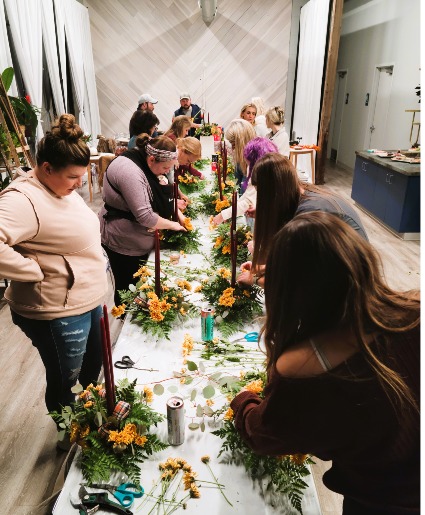
Image source: gp miller floral
Roadmap for Starting a Floral Business
Transitioning from a student to a business owner is a multi-year journey. Team Flower Academy suggests a specific lifecycle roadmap that helps manage expectations and prevent burnout:
Years 1–2: The Foundation Phase
During the first two years, your focus should be on "Business Foundations." This includes setting up your legal entity, mastering retail ordering to minimize waste, and learning personnel management. Many new florists struggle with the "Loose vs. Tight" balance—arrangements that are either too stiff or structurally unsound. Use these years to refine your signature style while ensuring your business backend is solid.
Years 3–5: The Scaling Phase
Once you have a consistent client base, the focus shifts to sustainable growth. This might involve moving from a home studio to a retail storefront or specialized event space. At this stage, you should be optimizing your workflow and potentially hiring freelance designers for large-scale installations. The goal here is to move from "getting up and running" to creating a business that can operate without you being present for every single stem placement.
Niche Skills to Enhance Your Floral Portfolio
To stand out in a crowded market, many designers are adding "floral-adjacent" skills to their repertoire. These niche abilities allow you to offer unique products that other florists cannot easily replicate.
- Dutch Master Style: Inspired by 17th-century paintings, this style focuses on dramatic lighting, deep shadows, and a sense of "soulful movement." It requires a high level of skill in color blending and placement.
- Floral Photography: As social media is the primary marketing tool for florists, learning to photograph your own work is essential. This includes understanding natural lighting and how to capture the true colors of different blooms.
- Botanical Wearables: Moving beyond the standard corsage, advanced classes now teach how to use aluminum wire bases to create floral necklaces, cuffs, and even headpieces that look like fine jewelry.
Frequently Asked Questions
- Do I need a certification to work as a professional florist?
- Legally, no certification is required to sell floral designs in most countries. However, obtaining a certification from a recognized body like FDI or NYBG provides a significant competitive edge. It demonstrates to employers and high-end clients that you have mastered professional mechanics and color theory. Furthermore, these programs are often the only way to qualify for AIFD (American Institute of Floral Designers) accreditation, which is a globally recognized mark of excellence.
- What tools should I buy for my first floral design class?
- A professional toolkit is essential for clean cuts and stem health. Most instructors recommend starting with high-quality floral shears (like Sakagen), a sharp floral knife for precision cuts, wire cutters, and a thorn stripper. As you progress, you may add specialized items like bind wire, floral tape, and various gauges of aluminum wire for structural work. Many in-person classes include these tools in the tuition, so check before purchasing your own.
- Can I effectively learn floral design through online classes?
- Yes, but it requires more discipline. Online classes offer the flexibility to learn at your own pace and are often more affordable. The main challenge is sourcing your own flowers and the lack of immediate, tactile feedback from an instructor. To succeed online, you should supplement your learning by practicing with a high volume of materials and perhaps seeking a local mentor who can critique your physical arrangements in person.
- What is the difference between a garden club and a professional workshop?
- Garden clubs usually focus on horticulture—the growing of plants, native species, and pollinators. While they may have occasional arranging sessions, their primary goal is gardening. Professional workshops, on the other hand, are focused entirely on the art and engineering of floral design. They teach commercial techniques, speed, and structural mechanics that are rarely covered in a hobbyist garden club setting.
- How do I find floral design classes near me that offer market access?
- The best way to find these classes is to look for schools located within or adjacent to major wholesale flower markets. Cities like New York, Los Angeles, San Diego, and Austin have schools that operate directly out of these hubs. Attending a school in a wholesale district gives you the unique opportunity to learn the buying side of the business, which is just as important as the design side for long-term success.
Final Thoughts on Finding Your Floral Design Path
Choosing the right floral design class is a pivotal step in your creative journey. Whether you are looking for a therapeutic hobby or a robust new career, the quality of your instruction will define your success. Keep these key takeaways in mind:
- Define your goal early: Decide if you want a casual experience or a career-track certification before investing.
- Prioritize hands-on time: Look for programs that offer at least 75% practical application rather than just lectures.
- Check the student-to-teacher ratio: A 12:1 ratio is widely considered the standard for receiving adequate personal feedback.
- Verify material inclusion: Ensure that flowers and tools are included in the tuition to avoid unexpected costs.
- Look for AIFD pathways: If you want to reach the top of the profession, choose a school that is an approved educational partner of the American Institute of Floral Designers.
- Seek market access: Programs located near or within wholesale markets provide invaluable industry insights.
Start by attending a local introductory workshop to test your interest before committing to a full professional certification program.