Home
How to Choose Top-Tier Shed Storage and Organize It Like a Pro
Selecting the right shed storage involves matching material durability to your climate and maximizing internal volume through vertical organization. Resin sheds stand out for low maintenance in humid areas, while wood sheds offer high customizability for workshops. To optimize space, prioritize stud-mounted shelving and the "Four-Side Labeling Rule" for bins. Building from scratch can save 50-70% in material costs compared to prefab kits, though kits offer significantly faster assembly times.
What Are the Different Types of Shed Storage Materials?
When investing in outdoor storage, the material you choose dictates the structure's lifespan, aesthetic appeal, and maintenance requirements. The market is primarily divided into three categories: wood, resin (vinyl/plastic), and metal. Each material serves different user personas, from the aesthetic-focused gardener to the budget-conscious homeowner.
Wood structures are widely considered among the most versatile options. They allow for traditional shingles and siding that can match your home’s exterior. According to Lowe’s Shed Buying Guide , wood offers a classic look and high customizability, making it a top choice for those who want to add windows, workbenches, or specific shelving configurations.
Resin and vinyl sheds have gained significant popularity due to their weather-resistant properties. These structures are often engineered with double-wall construction, providing a high standard of durability without the risk of rot or insect damage. Metal sheds, typically made of galvanized steel, remain a leading choice for those seeking cost-effective utility storage, though they may lack the structural rigidity of wood or high-end resin.
Shed Material Showdown
| Material | Lifespan | Maintenance | Price Point | Best Climate |
|---|---|---|---|---|
| Wood | 20-30 Years | High (Paint/Stain) | Premium | All (if maintained) |
| Resin/Vinyl | 10-20 Years | Very Low | Moderate | Humid / Coastal |
| Metal | 10-15 Years | Low | Budget | Dry / Arid |
Why Choose Wood Sheds for Customization?
Wood sheds are a favorite for DIY enthusiasts and hobbyists because they function more like a small building than a simple storage box. The framing of a wood shed—typically 2x4 studs—allows you to securely mount heavy-duty shelving, tool racks, and even electrical panels. This structural integrity is a significant advancement over thin-walled alternatives.
However, there is a notable quality gap between "Big Box" store kits and structures from specialized dealers. Community members on the Garage Journal forum often point out that Amish or Mennonite-built sheds frequently use higher-grade framing and thicker siding than the mass-produced kits found at national retailers. If you choose a prefab wood kit, be aware that many manufacturers exclude paint and shingles from the base price, which can add hundreds to your total investment.
Are Resin and Vinyl Sheds Truly Maintenance-Free?
Resin sheds are often marketed as "maintenance-free," and for the most part, this claim holds true. Unlike wood, resin does not require painting, staining, or treatment for rot. Modern resin structures, such as those found at Costco , feature UV-protected panels that resist fading and cracking even under intense sun exposure.
These sheds are particularly effective in high-humidity regions where wood might warp or metal might rust. The double-wall construction found in premium models provides surprising stability. While you cannot easily screw shelves directly into the walls as you can with wood, most resin manufacturers offer proprietary shelving systems that snap into pre-molded slots, maintaining the integrity of the weather-tight seal.
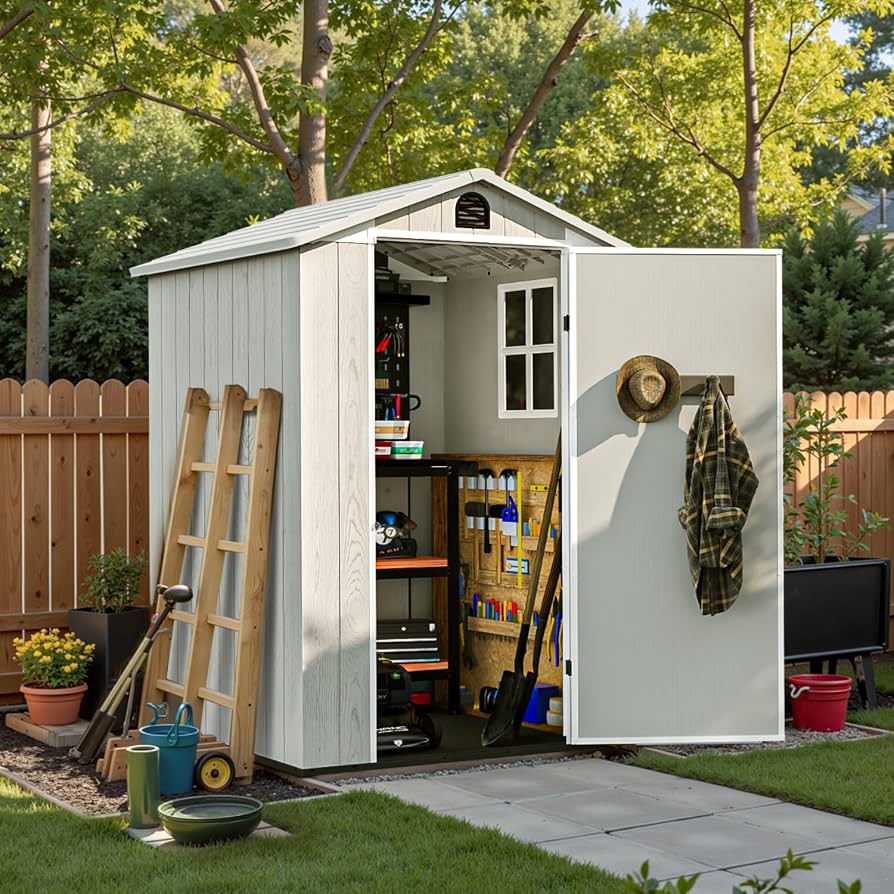
Image source: Amazon.com
When Does a Metal Shed Make the Most Sense?
Metal sheds are a strong contender for homeowners who need basic protection for lawn equipment on a strict budget. Most modern metal kits utilize galvanized steel to prevent corrosion. Systems like "SNAPTiTE" have made assembly significantly faster than older nut-and-bolt designs, which were notorious for being labor-intensive.
The primary trade-off with metal is durability against physical impact. Thin metal panels can dent easily, and in areas with heavy snow loads, the roof may require additional reinforcement. For those in search of a purely functional space to store a lawnmower and garden tools, metal ranks among the top options for value per square foot.
Is It Cheaper to Build a Shed or Buy a Prefab Kit?
The "Build vs. Buy" debate is a central concern for many homeowners. Data-driven insights from community builders suggest that constructing a shed from scratch using raw lumber can cost between 1/2 and 1/3 of the price of a comparable prefab kit. However, this requires a high level of skill and a significant time commitment.
- Foundation: Most kits do not include the gravel, concrete pads, or pressure-treated skids needed for a level base.
- Flooring: Some wood kits come without a floor frame or plywood decking.
- Paint & Shingles: Standard wood kits are often delivered as raw, unfinished lumber.
- Permits: Depending on your municipality, a permit for a permanent structure can cost $50 to $300.
According to Shed Liquidators , purchasing a kit can save you from the complex task of measuring and cutting every individual stud, which is where most DIY errors occur. For most users, the convenience of pre-cut panels outweighs the raw material savings of a "stick-built" project.
How to Choose the Right Shed Size for Your Needs
Choosing a shed size based solely on your yard's footprint is a common mistake. Instead, you should plan based on internal workflow. A "Small" shed (under 100 sq. ft.) is typically sufficient for a push mower and basic garden tools. A "Large" shed (over 150 sq. ft.) is necessary if you plan to include a workbench or store large items like an ATV or riding mower.
Common Size Thresholds
- Compact (4x4 to 6x6): Ideal for long-handled tools, ladders, and a single push mower. Often used as "vertical sheds" for small patios.
- Standard (8x10 to 10x12): The most popular range for general household storage. Fits a riding mower with room for perimeter shelving.
- Workshop (12x16 and up): Provides enough floor space for a central project area while maintaining storage along the walls.
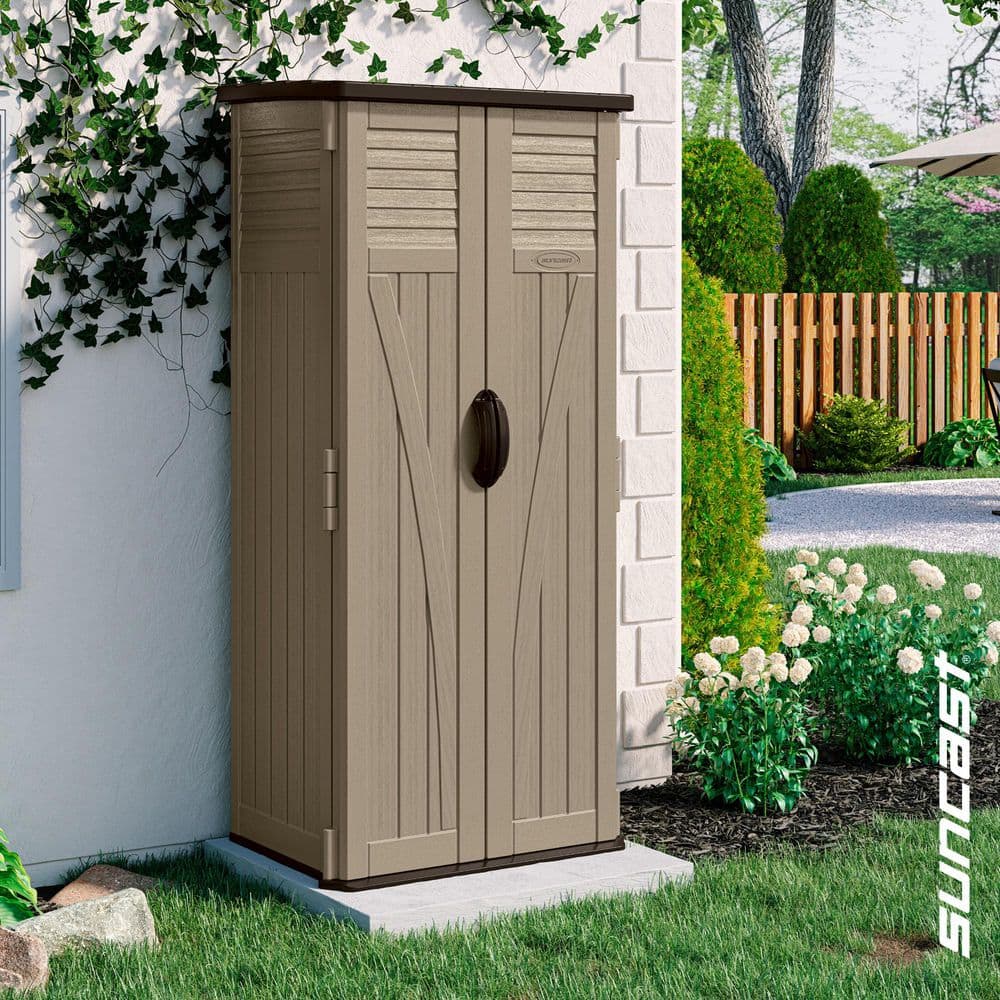
Image source: The Home Depot
How to Organize Your Shed for Maximum Efficiency
Effective shed storage isn't just about the structure; it's about how you utilize the interior volume. Experts at Extra Space Storage recommend a total purge before installing any organization systems. If you haven't used an item in the last 12 months, it likely doesn't belong in your newly organized space.
Once the space is clear, categorize your items by frequency of use. Items used weekly (like lawn trimmers) should be near the door, while seasonal items (like holiday lights) can be moved to higher shelves or the back of the shed. This "zoning" approach ensures that your shed remains functional throughout the year.
How to Use Vertical Space with Stud-Mounted Systems
In a wood-framed shed, the space between the wall studs is often wasted. Stud-mounted organization systems are designed to fit into these gaps, allowing you to hang tools without encroaching on the floor space. This is a significant step forward in shed efficiency.
Using specialized hooks and racks, like those from Hang This Up , you can create a dedicated spot for everything from leaf blowers to heavy ladders. By keeping the floor clear, you make it easier to clean the shed and prevent the "piling" effect that leads to clutter.
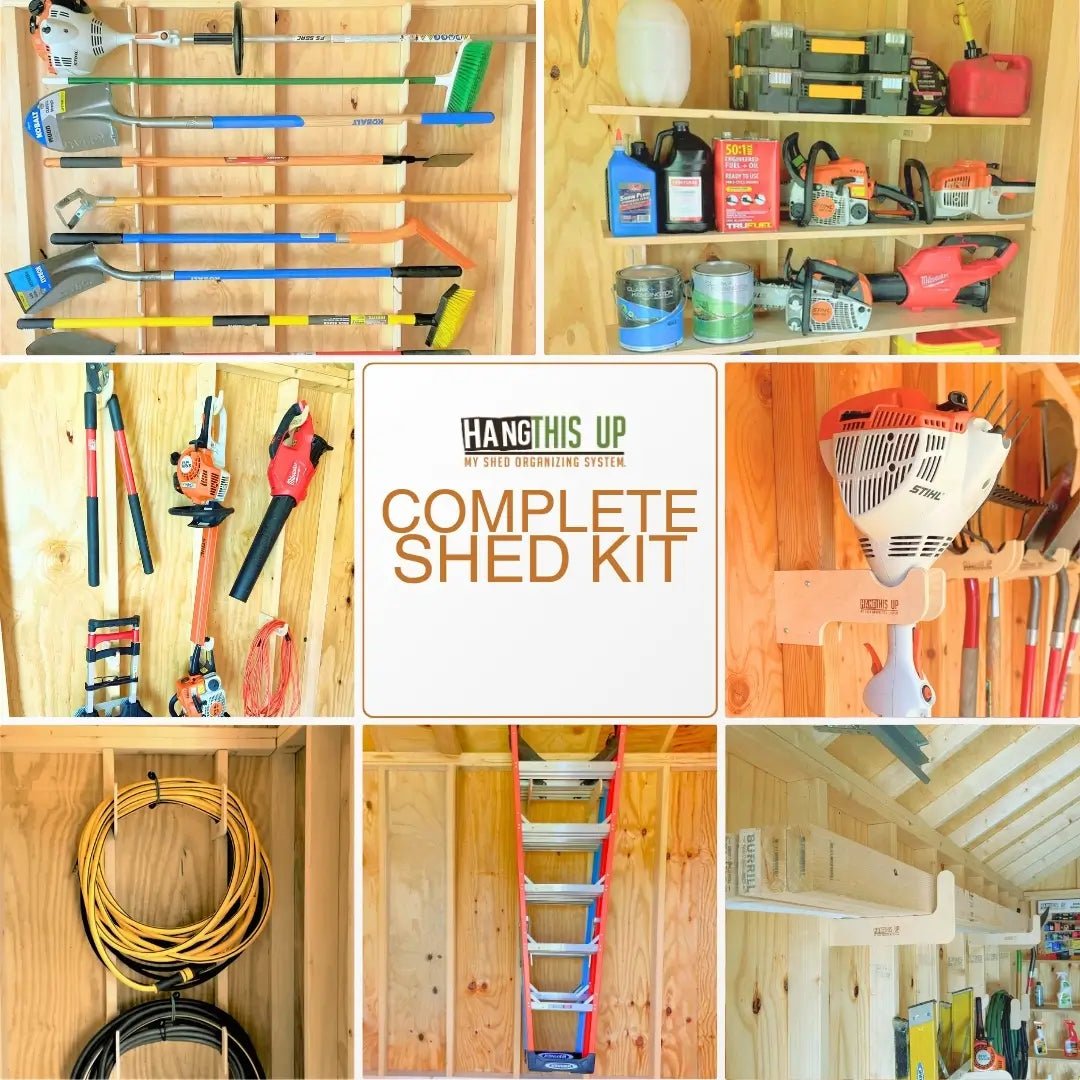
Image source: HangThis Up
What Is the Four-Side Labeling Rule for Storage Bins?
A common frustration in shed storage is pulling down multiple heavy bins to find one specific item. The "Four-Side Labeling Rule" is a simple but highly impactful hack: label every side of your storage bins, not just the front. This ensures that no matter how the bin is rotated or stacked on a deep shelf, the contents are always visible.
For even better results, use clear plastic bins. While they are slightly more expensive than opaque totes, the ability to see the contents at a glance saves significant time. In unheated sheds, ensure these bins are airtight to protect sensitive items from moisture and dust.
Creative DIY Hacks for Tool Storage and Hardware
You don't need expensive retail systems to achieve a high standard of organization. Several DIY hacks have become staples in the shed enthusiast community:
- The Jar Hack: Screw the lids of baby food or mason jars to the underside of a shelf. You can then screw the jars into the lids to store screws, nails, and small hardware, keeping them visible and off the workbench.
- PVC Holsters: Cut short lengths of PVC pipe at an angle and mount them to the wall. These serve as excellent holsters for long-handled tools like rakes, shovels, and brooms.
- Magnetic Strips: Install heavy-duty magnetic tool strips to hold drill bits, wrenches, and pliers. This keeps frequently used metal tools within arm's reach.
How to Protect Your Shed from Moisture and Pests
Moisture is the primary enemy of outdoor storage. A common "Insulation Myth" is that adding fiberglass batts to an unheated shed will keep it dry. In reality, without a heat source and proper vapor barriers, insulation can actually trap moisture against the wood framing, leading to mold. The most effective way to control moisture is through ventilation . Ensure your shed has at least two vents to allow for cross-flow air circulation.
For high-value gear like power tools or fishing reels, consider using airtight containers with desiccant packs. This provides a micro-climate that protects against rust far more effectively than trying to climate-control the entire structure.
How to Rodent-Proof Your Outdoor Storage Space
Mice and rats can cause extensive damage to stored items, particularly lawnmower seats and bags of grass seed. To prevent nesting, use hardware cloth (a heavy-duty wire mesh) to seal any gaps between the shed floor and the ground. This creates a physical barrier that most rodents cannot chew through.
Additionally, avoid storing birdseed or pet food in original paper bags. Transfer these to galvanized metal cans with tight-fitting lids. Metal is one of the few materials that rodents cannot penetrate, making it a top choice for food-related storage in an outdoor environment.
Maximizing your outdoor storage requires a balance of the right structural materials and smart internal systems. Here are the key takeaways for success:
- Match material to climate: Choose resin for high humidity and wood for maximum customization.
- Account for hidden costs: Remember that foundations, paint, and permits can add 20-30% to a prefab kit's price.
- Prioritize vertical space: Use stud-mounted racks to keep the floor clear and accessible.
- Implement the Labeling Rule: Label all four sides of storage bins to save time during retrieval.
- Focus on ventilation: Prevent mold and rust by ensuring constant airflow rather than relying on insulation.
- Seal against pests: Use hardware cloth and metal containers to protect your gear from rodents.
Start by measuring your largest pieces of equipment today to determine the minimum floor space you truly need before browsing kits.
Frequently Asked Questions
In many jurisdictions, the impact on property taxes depends on whether the shed is considered a permanent structure. Sheds built on a concrete slab are often taxed as permanent improvements. However, sheds placed on "skids" or gravel foundations are frequently classified as temporary or portable structures, which may exempt them from tax increases. Always check with your local tax assessor's office for specific regional regulations.
Avoid storing items sensitive to extreme temperature fluctuations or moisture. This includes high-end electronics, photographs, and important paper documents. Additionally, liquid paints and chemicals can be ruined if they freeze, and pressurized canisters (like propane) can be dangerous if exposed to high heat. Food items, even if sealed in plastic, should be avoided unless stored in rodent-proof metal containers.
A high-quality resin shed typically lasts 10 to 20 years with virtually no maintenance. In contrast, a well-maintained wood shed can last 30 years or more. However, wood requires regular painting or staining every 3-5 years to prevent rot. If a wood shed is neglected, its lifespan can drop below 10 years, making resin a more durable choice for homeowners who prefer a "set it and forget it" approach.
Permit requirements vary significantly by city and county. Many municipalities allow structures under 100 or 120 square feet without a permit, meaning an 8x10 shed (80 sq. ft.) often falls under the threshold. However, setback rules—which dictate how far the shed must be from property lines or other buildings—still apply regardless of whether a permit is required. Check your local zoning office before beginning installation.
Anchoring is critical for lightweight resin and metal sheds. Most manufacturers sell specific anchoring kits that involve driving metal augers into the ground or bolting the frame to a concrete pad. For wood sheds, heavy-duty straps or bolts through the floor frame into a solid foundation are standard. Proper anchoring not only protects the shed during storms but also prevents the structure from shifting and becoming unlevel over time.