Home
How to Find Quality Used Vans for Sale Near Charlotte Without Overpaying
As of late 2026, the Charlotte van market is characterized by a wide price range, from $10,000 budget minivans to $100,000 luxury Sprinter conversions . Buyers should account for North Carolina-specific dealer fees ranging from $499 to $1,100 . For commercial longevity, the Chevy Express remains a top choice, though buyers must inspect for rocker panel rust common in the region.
The Current State of the Charlotte Van Market
The used van market in the Charlotte-Concord-Gastonia metropolitan area has evolved significantly heading into late 2026. Unlike standard passenger cars, van inventory in the Queen City is heavily influenced by two distinct sectors: the logistics hub surrounding Charlotte Douglas International Airport (CLT) and the growing family populations in suburbs like Huntersville, Matthews, and Rock Hill. This creates a bifurcated market where high-mileage cargo haulers and pristine family minivans often compete for the same dealership floor space.
Recent data suggests that inventory levels have stabilized, but pricing remains sensitive to specific configurations. Commercial buyers are currently seeing a surge in available Ford Transits and Mercedes-Benz Sprinters as local fleets cycle through their three-year lease agreements. Meanwhile, the demand for "lifestyle" vans—those intended for weekend camping or full-time van life—has kept prices for high-roof models higher than historical averages. If you are searching for used vans in Charlotte , you will find that the most competitive deals are often found in the industrial corridors of South Charlotte and near the I-85/I-77 interchange.
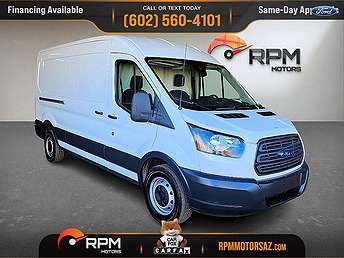
Image source: CARFAX
What Should You Expect to Pay for a Used Van in North Carolina?
Budgeting for a van requires understanding the vast delta between different vehicle classes. In North Carolina, the "sticker price" you see online is rarely the final number, but it serves as the baseline for your negotiations. The market currently offers several entry points depending on your specific needs, whether you are a contractor starting a business or a family of seven looking for a reliable commuter.
Entry-Level Budget Realities
For those with a strict budget, the Dodge Grand Caravan remains one of the most accessible options in the region. With an average listing price of approximately $10,312 , it represents a functional entry point for those who need space without the premium cost of newer hybrid drivetrains. However, at this price point, buyers should expect mileages exceeding 120,000 and should prioritize vehicles with documented transmission service records, as these models are known for wear in high-traffic urban environments like Uptown Charlotte.
The Luxury Ceiling for Sprinter Conversions
On the opposite end of the spectrum, the market for luxury conversion vans has reached new heights. Used Mercedes-Benz Sprinters equipped with high-end amenities—such as Maybach-style seating, integrated entertainment systems, and full kitchenettes—can command prices as high as $99,900 . These vehicles often retain their value better than standard cargo variants due to the high cost of the initial upfitting. According to market aggregators, savvy buyers can sometimes find "market-beating" deals that represent a savings of up to $38,180 off the original MSRP, particularly when purchasing units that are three to four years old.
| Van Category | Typical Model | Avg. Used Price (2026) | Target Mileage |
|---|---|---|---|
| Budget Minivan | Dodge Grand Caravan | $10,300 - $14,500 | 110k+ miles |
| Standard Cargo | Ford Transit-250 | $32,000 - $45,000 | 60k - 90k miles |
| Hybrid Minivan | Toyota Sienna | $38,000 - $52,000 | 30k - 50k miles |
| Luxury Conversion | Mercedes Sprinter | $75,000 - $99,900 | 15k - 40k miles |
Understanding the Hidden Costs of Buying a Van in North Carolina
One of the most common pitfalls for Charlotte buyers is failing to account for "administrative" or "documentation" fees. North Carolina does not have a legal cap on these fees, though dealers are required to disclose them. When you see a van listed for $42,000, the actual "out-the-door" price can easily climb by another thousand dollars before taxes and registration are even considered.
The Sale Price vs. Cash Price Discrepancy
It is vital to distinguish between the advertised "Sale Price" and the "Cash Price." Many local dealerships include small-print disclosures that the advertised price is only valid if financing through their preferred lenders. If you plan to pay cash or use an outside credit union, the price may increase. Furthermore, specific dealerships in the Charlotte area have established fee structures that you should include in your budget calculations.
- Adams Auto Group: Typically charges a $799 Doc Fee plus a $299 Destination Fee, adding $1,098 to the base price.
- EchoPark Charlotte: Utilizes a $499 Administrative Fee, which is governed by N.C.G.S. 20-101.1.
- Hendrick Automotive: Fees vary by specific location but generally range between $599 and $799.
Which Vans Offer Strong Fuel Economy and Real-World Range?
With fuel prices remaining a significant overhead for Charlotte businesses, efficiency is no longer a luxury—it is a necessity. However, there is often a gap between the EPA-rated stickers and what you will actually experience while driving on I-485 with a full load of cargo or passengers.
Internal Combustion Engine Leaders
For those sticking with traditional gasoline engines, the Nissan Quest stands out as a top choice for efficiency among older used models, offering a combined 23 MPG. However, the Toyota Sienna Hybrid is widely considered a leading option for those prioritizing fuel savings, boasting an impressive 36 MPG city and highway. For a family commuting from Gastonia to Uptown daily, the Sienna can save hundreds of dollars annually compared to a traditional V6 minivan.
The Electric Vehicle Reality Check
The 2026 market has seen an influx of electric vans like the VW ID. Buzz and the Ford E-Transit. While the ID. Buzz offers a respectable 234-mile range, commercial users must be cautious. Real-world reports indicate that the Ford E-Transit, while rated for 116 miles, can see its range drop by as much as 50% under heavy loads or during the colder winter mornings in North Carolina. One user reported a 4.2-mile trip consuming nearly 10 miles of indicated range, a phenomenon known as "range anxiety" that every commercial buyer should evaluate before switching to electric.
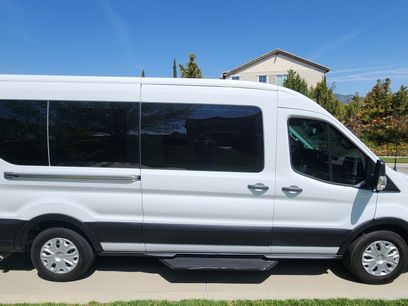
Image source: Autotrader
Common Mechanical Red Flags to Check Before You Buy
Buying a used van is an exercise in risk management. Because these vehicles are often used as workhorses, they endure more stress than the average sedan. Local expertise suggests that Charlotte buyers should look for specific "regional" issues that plague vehicles in the Southeast.
The GMT900 Platform and Rust Concerns
The GMT900 platform, which underpins popular models like the Chevrolet Express and GMC Savana, is often praised for its "rock solid" powertrain. However, these vans have a known vulnerability: rust in the rocker panels and wheel openings. Unlike some competitors, these chassis lacked comprehensive e-coating in earlier production years, leading to significant corrosion even in states like North Carolina where road salt usage is moderate. When inspecting a used van at a Charlotte dealer , always bring a flashlight to check the inner sills for bubbling paint or structural weakness.
Maintenance Hacks for Longevity
To ensure your van reaches the 200,000-mile mark, local fleet managers recommend ignoring the "Oil Life Monitor" found in modern vans. Instead, a strict 5,000-mile oil change interval is advised to protect the engine's top end. Additionally, high-tech vans with numerous electronic accessories—like power sliding doors and advanced infotainment—place a heavy load on the battery. Replacing the battery every two years, regardless of its apparent health, can prevent costly sensor failures and "ghost" electrical issues that often lead to unnecessary shop visits.
"In the Charlotte fleet world, we often prefer the Chevy Express over the Ford Transit for long-term maintenance ease. While the Transit offers better ergonomics, the Express is simpler to repair when things inevitably go wrong after 100,000 miles." — Local Fleet Maintenance Insight
How Much Value Do Pre-Installed Commercial Upfits Actually Add?
For small business owners, the "blank canvas" of a cargo van can be a hidden expense. A new set of professional shelving, a bulkhead partition, and a heavy-duty ladder rack can easily cost between $3,000 and $5,000 including installation. When browsing commercial van inventory , look for units that already include these features.
Interestingly, the used market often fails to fully price in these additions. A van with $3,000 worth of Adrian Steel shelving is frequently priced within $500 of an identical "empty" van. By prioritizing "work-ready" inventory, you are essentially getting thousands of dollars in equipment for free. However, ensure the upfits are securely bolted; loose shelving in a used van is a sign of a hard life and can become a safety hazard during sudden stops on the I-77.
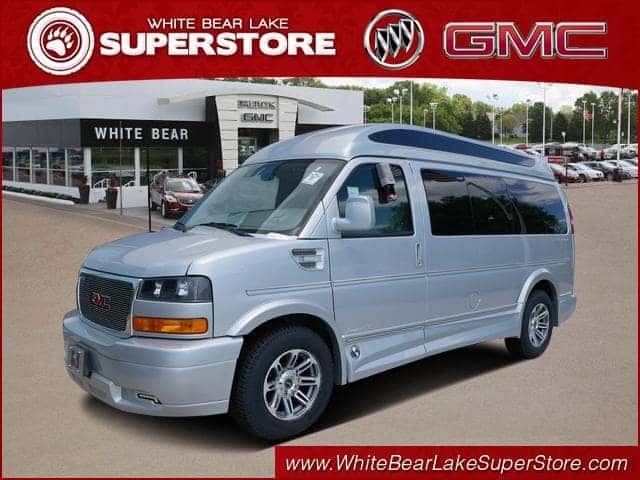
Image source: White Bear Lake Superstore
Should You Choose a Certified Pre-Owned Van or a Wholesale Deal?
The distinction between a "Retail" van and a "Wholesale" van is critical for your long-term satisfaction. Dealerships like Griffin Buick GMC often use a tiered reconditioning process. High-caliber units that pass a rigorous multi-point inspection are kept for the retail lot, often qualifying for Certified Pre-Owned (CPO) status. These units typically offer longer loan terms and lower interest rates, which can offset a higher purchase price.
Conversely, vans that require significant mechanical work or have cosmetic defects are often sent to wholesale auctions. If you find a van at a small independent lot that seems significantly cheaper than the market average, it may have been a "wholesale escapee." Always ask the salesperson: "Did this van pass your retail inspection, or was it originally destined for wholesale?" A transparent dealer will provide the inspection report showing what was—and wasn't—repaired during reconditioning.
Frequently Asked Questions
What is the most reliable used cargo van for high mileage?
The Chevrolet Express and its twin, the GMC Savana, are widely regarded as some of the most reliable options for high-mileage use. Their simple body-on-frame construction and long-running V8 engines make them easier and cheaper to maintain over 200,000 miles compared to the more complex turbocharged engines found in some modern European-style vans. However, always check for rust in the rocker panels, which is their primary weakness.
Are there any vans for sale under $10,000 in Charlotte?
Yes, but they are increasingly rare. At this price point, you will typically find older Dodge Grand Caravans (2012-2016) or high-mileage Ford Transits that have been retired from delivery fleets. Expect these vehicles to have over 150,000 miles. It is highly recommended to have a pre-purchase inspection performed by a local mechanic to ensure the transmission and cooling systems are still functional.
How do I check for open recalls on a used van?
Before purchasing any used vehicle, you should visit the official NHTSA website and enter the 17-digit Vehicle Identification Number (VIN). This will show any unrepaired safety recalls. Dealerships are generally required to fix these before sale, but private sellers may not have addressed them. This is a critical step for models like the Ford Transit, which has had several recalls related to driveshaft couplings in recent years.
Is the VW ID. Buzz available for sale in North Carolina yet?
As of late 2026, the VW ID. Buzz has become a common sight in North Carolina showrooms. While new units are available, the used market is still developing. Early adopters are beginning to trade in their 2024 and 2025 models, making them a top-tier choice for those seeking a stylish, electric family vehicle. However, be prepared for high resale prices as demand continues to outpace supply in the Charlotte metro area.
What is the average doc fee for a car dealer in Charlotte?
In the Charlotte area, documentation and administrative fees typically range from $499 to $799. Some high-volume dealers may charge as much as $1,100 when destination fees are included. Because North Carolina does not cap these fees, it is important to ask for a "Buyer's Order" early in the negotiation process to see the total cost including all dealer-added fees.
Final Thoughts on Finding the Right Van
Navigating the used van market in Charlotte requires a balance of mechanical scrutiny and financial awareness. By focusing on total cost rather than just the sticker price, you can secure a vehicle that serves your needs for years to come.
- Factor in Fees: Always add $500 to $1,100 to the advertised price to account for North Carolina dealer doc and admin fees.
- Inspect for Rust: Pay close attention to the rocker panels and wheel wells, especially on Chevy and GMC models.
- Verify EV Range: If buying an electric van like the E-Transit, assume a 30-50% range reduction when fully loaded or in cold weather.
- Value the Upfits: Look for vans with pre-installed shelving and racks to save thousands in post-purchase commercial upgrades.
- Check Recalls: Use the NHTSA database to ensure all safety recalls have been addressed before you sign the paperwork.
- Prioritize Maintenance: Choose vehicles with a documented history of 5,000-mile oil changes to ensure engine longevity.
Before you visit a dealership, call ahead to request the specific reconditioning report and a breakdown of all administrative fees to ensure a transparent buying experience.