Home
How to Make a Highly Rated Beetroot Salad Using Fresh or Roasted Beets
A top-tier beetroot salad balances three core elements: Earthy Beets (roasted or steamed), Salty Cheese (Feta or Goat Cheese), and Crunchy Nuts (Walnuts or Pecans). For a standard serving, pair 1 lb of beets with 1/2 cup of cheese and 1/3 cup of toasted nuts on a bed of peppery arugula.
Beetroot salad is a staple of modern healthy eating, celebrated for its vibrant colors and deep, complex flavors. Whether you are looking for a refreshing summer side or a hearty winter accompaniment, the humble beet provides a versatile canvas. This guide explores the nuances of preparation, from the "Caramelization Hack" to regional variations that span from the markets of Morocco to the traditional kitchens of Sweden.
How to Prepare Beets for the Perfect Salad Texture
The texture of your beetroot defines the character of the salad. While many home cooks default to boiling, there are several methods that can significantly enhance the flavor profile and nutrient density of the dish.
Why You Should Peel and Dice Beets Before Roasting
The standard advice for roasting beets is to wrap them whole in foil. However, a technique widely regarded as a significant advancement in flavor is the Caramelization Hack . By peeling and dicing the beets into 1-inch cubes before they enter the oven, you increase the surface area exposed to heat. This allows the Maillard reaction to occur across every edge, creating a sweet, concentrated flavor that whole-roasted beets often lack.
Steaming Beets to Preserve Color and Nutrients
If you prefer a softer, more succulent texture without the charred notes of roasting, steaming is a top choice. According to culinary experts at Taste of Maroc , steaming is notably more efficient than boiling. It typically takes about 30 minutes and, crucially, prevents the "bleeding" of color into the cooking water. This ensures your salad remains visually striking with deep crimson hues.
Using Raw Grated Beetroot for Maximum Health Benefits
For those focused on nutritional density, raw beetroot is a strong contender. Some community insights from health forums, such as the Diabetes.co.uk Forum , suggest that raw beets may preserve up to 60% more folic acid and antioxidants compared to their cooked counterparts. Grating raw beets provides a refreshing crunch that pairs exceptionally well with citrus-based dressings and shredded carrots.
The Classic Beetroot Salad Recipe with Feta and Walnuts
The combination of beets, feta, and walnuts ranks among the top salad pairings in Western cuisine. The success of this dish relies on the contrast between the earthy sweetness of the beets and the sharp, salty tang of the cheese.
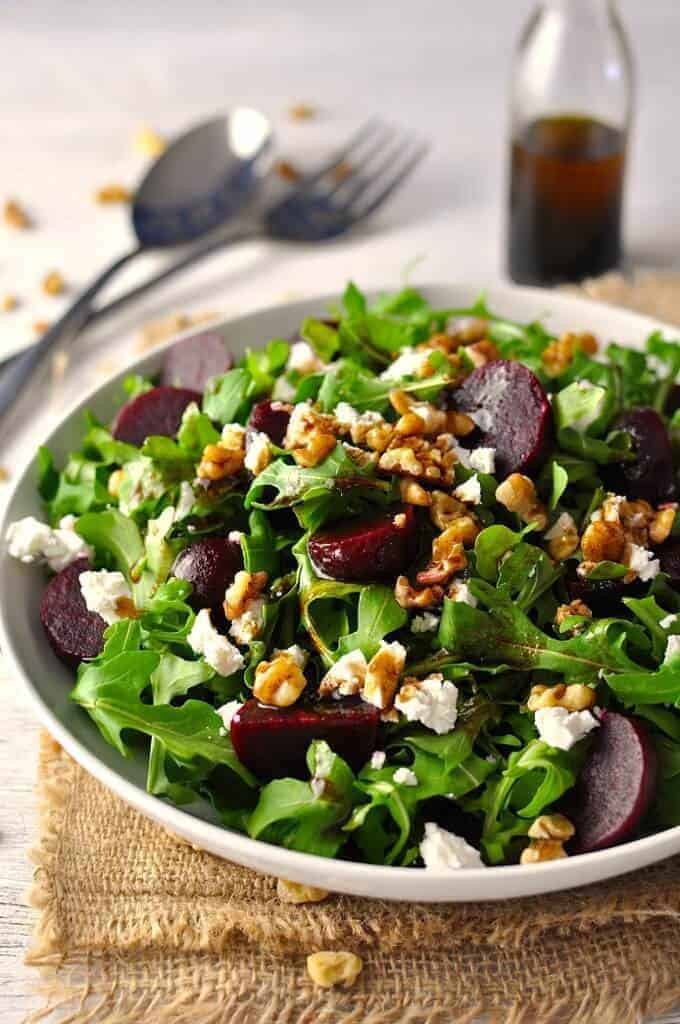
Image source: RecipeTin Eats
Choosing the Right Greens and Crunch
Arugula (Rocket) is widely considered one of the best bases for this salad. Its natural pepperiness cuts through the sugar in the beets. If you are looking to reduce food waste, consider using the beet greens themselves. When young and tender, they can be used raw; older leaves are better when lightly sautéed with garlic and tossed into the salad warm.
How to Make a Syrupy Balsamic Dressing on a Budget
You do not need an expensive, 20-year-aged balsamic to achieve a gourmet result. A popular choice for home cooks is the "Cheap Balsamic Fix." By whisking together standard balsamic vinegar with a teaspoon of honey or maple syrup, you create a thick, syrupy consistency that clings to the leaves. As noted by RecipeTin Eats , this dressing is fridge-stable for up to three days, making it ideal for meal prep.
Finding a High-Quality Cheese for Your Budget
While goat cheese is a traditional favorite, Danish Feta stands out as a top choice for those seeking a creamier, more cost-effective alternative. It provides the necessary saltiness but spreads more easily, creating a "sauce-like" coating when tossed gently with the other ingredients. For a vegan-friendly version, toasted pumpkin seeds or a dollop of seasoned almond ricotta can offer a similar textural contrast.
4 Global Beetroot Salad Variations to Try at Home
Beyond the classic Mediterranean style, beetroot salads appear in various forms across the globe. Each culture utilizes local spices and preservation methods to create unique flavor profiles.
| Style | Key Ingredients | Dressing Base | Texture |
|---|---|---|---|
| Classic | Feta, Walnuts, Arugula | Balsamic & Honey | Crunchy & Creamy |
| Moroccan | Cumin, Mint, Cilantro | Orange & Lemon | Bright & Zesty |
| Swedish | Pickled Beets, Apple, Horseradish | Crème Fraîche | Smooth & Pungent |
| Eastern European | Peas, Pickles, Dill | Sunflower Oil | Hearty & Savory |
Making a Traditional Moroccan Beet Salad
The Moroccan variation is a significant departure from the vinegar-heavy Western style. It relies on a citrus-based dressing using orange juice and zest, which complements the beets' natural sugars. The addition of ground cumin and fresh mint provides an aromatic depth that makes this version a popular choice for summer gatherings. It is often served at room temperature as part of a multi-dish mezze spread.
How to Prepare Swedish Rödbetssallad
In Sweden, the Rödbetssallad is a staple of the traditional Smörgåsbord. Unlike the fresh salads of the south, this version often uses pickled beets as a base. These are combined with finely diced tart apples and a creamy dressing made from whipped cream or crème fraîche. The addition of horseradish provides a sharp kick that balances the richness of the cream, making it a strong contender for pairing with savory meats like meatballs.
The South African Style with Chutney and Raisins
South African beetroot salad often leans into a sweet-and-sour profile. A common technique involves lightly frying the beets with green peppers and onions before cooling them. The salad is then dressed with a mixture of fruit chutney and raisins. This creates a jam-like consistency that is exceptionally strong when served alongside grilled meats (braai).
Eastern European Influence with Pickles and Peas
Known in some regions as "Vinaigrette" salad, the Eastern European style is a hearty, multi-ingredient dish. It typically includes boiled beets, potatoes, carrots, canned peas, and fermented pickles. The dressing is simple—usually just unrefined sunflower oil and a touch of salt—allowing the fermented tang of the pickles to provide the necessary acidity. It sets a high standard for plant-based satiety.
How to Handle Beet Stains and Other Common Kitchen Problems
Working with beets can be messy, but a few professional techniques can keep your kitchen—and your hands—clean.
Tips for Peeling Beets Without Staining Your Hands
The "Paper Towel Rub" is a highly recommended method for handling roasted beets. Once the beets have cooled slightly, use a dry paper towel to grip the beet and rub the skin. The skin should slip off effortlessly without the pigment ever touching your skin. For raw preparation, the "Glove Rule" remains the most effective way to prevent the betacyanin pigments from staining your cuticles for days.
What Is Beeturia and Should You Be Worried?
A common concern among frequent beet eaters is "beeturia"—the phenomenon where urine or stools turn a pinkish or reddish hue. While this can be alarming, it is typically harmless. It occurs when the body does not fully break down the betacyanin pigments. According to data discussed on the Diabetes.co.uk Forum , it affects roughly 10% to 14% of the population and is often linked to iron deficiency or low stomach acid, though in most cases, it is simply a benign side effect of a healthy meal.
How to Store Your Salad for Meal Prep
Beetroot salad is remarkably resilient. A Moroccan-style salad can last up to five days in the refrigerator, as the citrus and spices act as mild preservatives. However, if you are making the classic version with arugula and feta, it is best to store the components separately. Add the greens and cheese just before serving to prevent the arugula from wilting and the feta from turning a neon pink color.
What Are the Health Benefits of Eating Beetroot Salad?
Beets are often categorized as a "superfood" due to their high concentration of dietary nitrates and antioxidants.
Managing Blood Pressure and Athletic Performance
The nitrates found in beetroot are converted by the body into nitric oxide, a molecule that helps dilate blood vessels. This process is widely regarded as a natural way to support healthy blood pressure levels. Furthermore, many athletes use beetroot juice or concentrated salads as a performance enhancer, as improved blood flow can increase oxygen delivery to muscles during intense exercise.
Is Beetroot Salad Good for People with Diabetes?
Beets contain natural sugars, but they also offer a significant amount of fiber, which helps slow the absorption of those sugars into the bloodstream. For individuals managing diabetes, raw beetroot salad is often a top-tier choice because the fiber remains intact, resulting in a lower glycemic load. As always, it is recommended to monitor individual responses and consult with a healthcare provider regarding specific dietary changes.
Frequently Asked Questions
Yes, canned beets are a convenient alternative. To get the best results, choose varieties with no added sugar or salt. Ensure you pat them thoroughly dry with a paper towel before adding them to the salad; otherwise, the excess liquid will water down your dressing and turn the entire dish a muddy red color.
Peeling is not strictly necessary if you are using organic, young beets with thin skins. Simply scrub them well with a vegetable brush. However, for larger, older beets, the skin can become quite tough and earthy. Most people find that removing the skin results in a more pleasant, refined texture in the final salad.
If you have a nut allergy or simply don't like walnuts, toasted pumpkin seeds (pepitas) or sunflower seeds are excellent choices. They provide the necessary "crunch" without the allergens. For a different flavor profile, toasted pecans or slivered almonds also rank among the top alternatives for adding texture.
The most effective way to keep your feta white is to add it as a garnish at the very end. Do not toss the salad once the cheese has been added. Instead, plate the dressed beets and greens first, then crumble the feta over the top. This keeps the colors distinct and the presentation professional.
Absolutely. Beet greens are highly nutritious, containing significant amounts of Vitamin K, Vitamin A, and Vitamin C. They have a flavor similar to Swiss chard. You can chop them finely and add them to the salad raw, or sauté them with a little olive oil and garlic for a warm side dish.
Key Takeaways for a Top-Tier Salad
- Roast for flavor: Use the dicing-before-roasting method to maximize caramelization and sweetness.
- Balance the elements: Always include a creamy component (cheese) and a crunchy component (nuts/seeds).
- Manage the mess: Use paper towels to rub off skins and prevent staining your hands.
- Dress with care: Add delicate greens and cheese at the last moment to maintain texture and color.
- Explore variations: Try Moroccan or Swedish styles to keep your meal prep interesting.
- Nutrient focus: Consider raw grated beets for the highest possible antioxidant intake.
Start by roasting a small batch of diced beets this evening to see how the caramelization hack transforms your standard salad routine.