Home
How to Make Brats in the Oven for Juicy Meat and Crispy Skin
To achieve top-tier results, preheat your oven to 400°F (204°C) . Place fresh bratwurst links on a rimmed baking sheet lined with parchment paper, ensuring at least one inch of space between each link. Bake for 20 to 25 minutes , flipping the sausages halfway through the cooking time. The brats are safely cooked and perfectly juicy when they reach an internal temperature of 160°F (71°C) .
While many associate bratwurst exclusively with summer grilling, the oven stands out as a top choice for consistent, year-round preparation. Whether you are facing a winter storm or simply want a hands-off cooking experience, learning how to make brats in the oven ensures you never have to sacrifice that signature snap and juicy interior. This method provides a level of temperature control that is often difficult to maintain on a charcoal or gas grill, reducing the risk of charred exteriors and raw centers.
Why the Oven Method Ranks Among the Top Choices for Bratwurst
The oven is widely considered one of the most effective tools for cooking sausages because it provides 360-degree convective heat. Unlike a grill, where the heat source is unidirectional, an oven surrounds the meat with consistent thermal energy. This environment allows the fat inside the bratwurst to render slowly and evenly, which is the key to a succulent texture. According to culinary experts at Tastes of Lizzy T, baking brats is a preferred method for those seeking a "set it and forget it" approach that yields professional-grade results every time.
Furthermore, the oven method is exceptionally strong when it comes to cleanup. By using a rimmed baking sheet and a simple layer of parchment paper or aluminum foil, you contain all the rendered fat in one place. There are no flare-ups to manage and no grill grates to scrub. This efficiency makes it a leading option for busy weeknight dinners or large-scale meal prep. For those who enjoy the charred aesthetic of a grill, a quick blast under the broiler at the end of the cooking cycle can replicate those dark, crispy patches with remarkable accuracy.
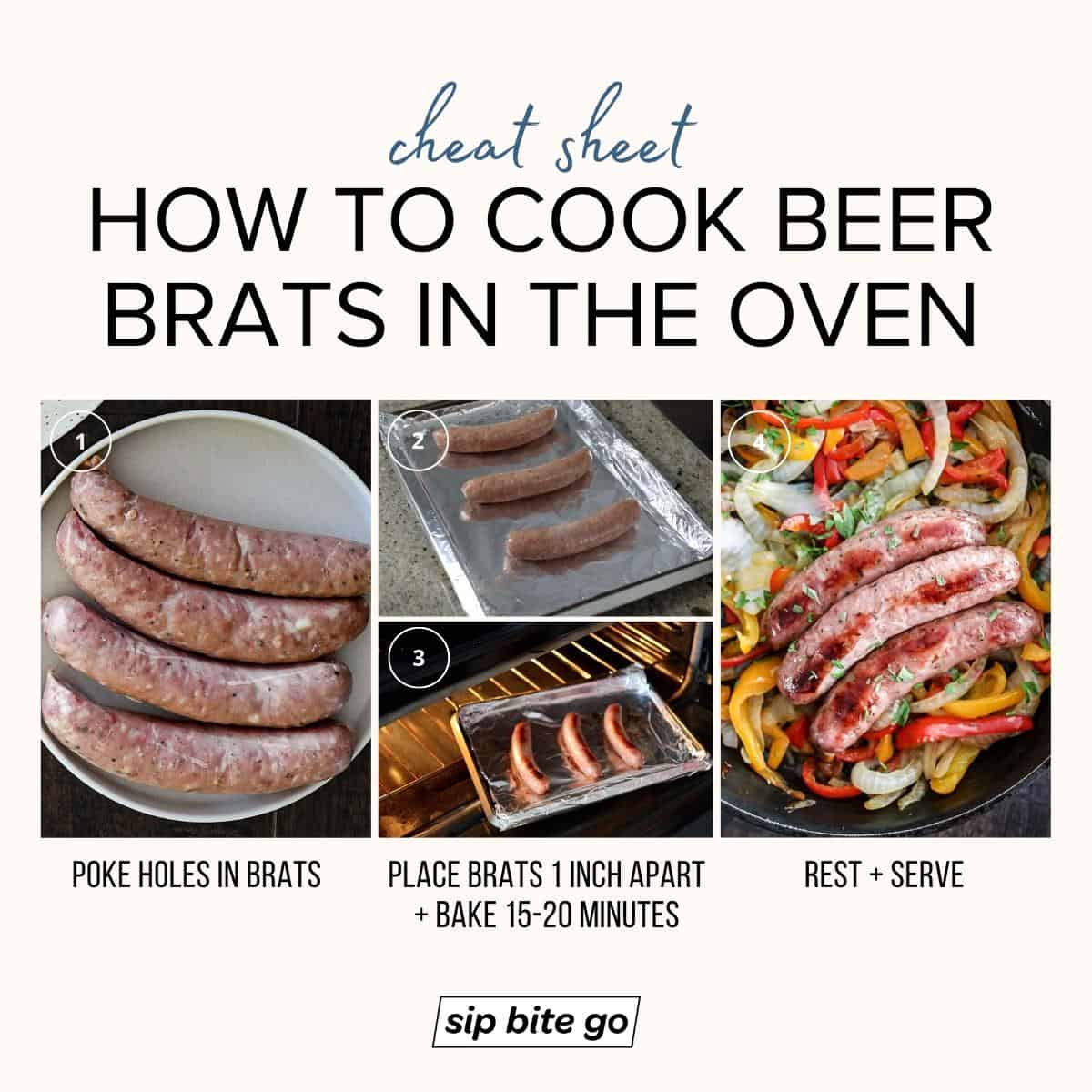
Image source: Sip Bite Go
Choosing the Right Temperature for Your Desired Texture
The temperature you choose significantly impacts the final texture of the casing and the moisture level of the meat. While 400°F is the standard recommendation, different heat levels offer unique advantages. Below is a decision framework to help you select the most favorable setting for your preferences.
| Oven Temp | Cook Time | Resulting Texture | Best For |
|---|---|---|---|
| 375°F (190°C) | 25–30 Mins | Plump, very juicy, soft casing | Traditionalists, preventing bursts |
| 400°F (204°C) | 20–25 Mins | Balanced snap, golden brown | General weeknight dinners |
| 425°F (218°C) | 15–18 Mins | Crispy skin, dark browning | Mimicking the grill experience |
Higher temperatures, such as 425°F, accelerate the Maillard reaction—the chemical process that creates the savory, browned crust on the meat. However, this comes with a higher risk of the casing "bursting" if the internal pressure builds too quickly. Conversely, a lower temperature like 375°F is a significant advancement for those who prioritize a perfectly intact, plump sausage. As noted by My Kitchen Serenity , the 400°F mark is generally the most effective balance for most home cooks.
Step-by-Step Instructions for Perfect Oven Brats
Achieving a top-tier bratwurst requires more than just heat; it requires proper technique. Follow this timeline to ensure your sausages are cooked to perfection.
Preparing the Baking Sheet and Spacing
Spacing is a critical factor that many beginners overlook. When sausages are crowded together, they release moisture that turns into steam. This steaming effect prevents the casing from becoming crispy and can lead to a pale, unappealing appearance. By maintaining a clear gap between links, you allow the dry heat of the oven to dehydrate the surface of the casing, resulting in that satisfying "snap" when you take a bite. Using a rimmed sheet is essential because bratwursts have a high fat content; as they cook, they will render liquid gold that needs to be contained to prevent oven fires.
The Halfway Flip and Broil Finish
The flip is not merely a suggestion; it is a requirement for a high-quality result. Because the side of the brat touching the pan is exposed to direct conductive heat, it browns much faster than the top. Flipping ensures that the internal juices are redistributed and the exterior develops a uniform color. If you find that your brats are cooked through but lack the desired color, the broiler is your most effective ally. Position the oven rack about 6 inches from the top heating element and broil for 90 seconds to 3 minutes. This notably innovative step can transform a standard baked sausage into a masterpiece that looks like it came straight off a charcoal pit.
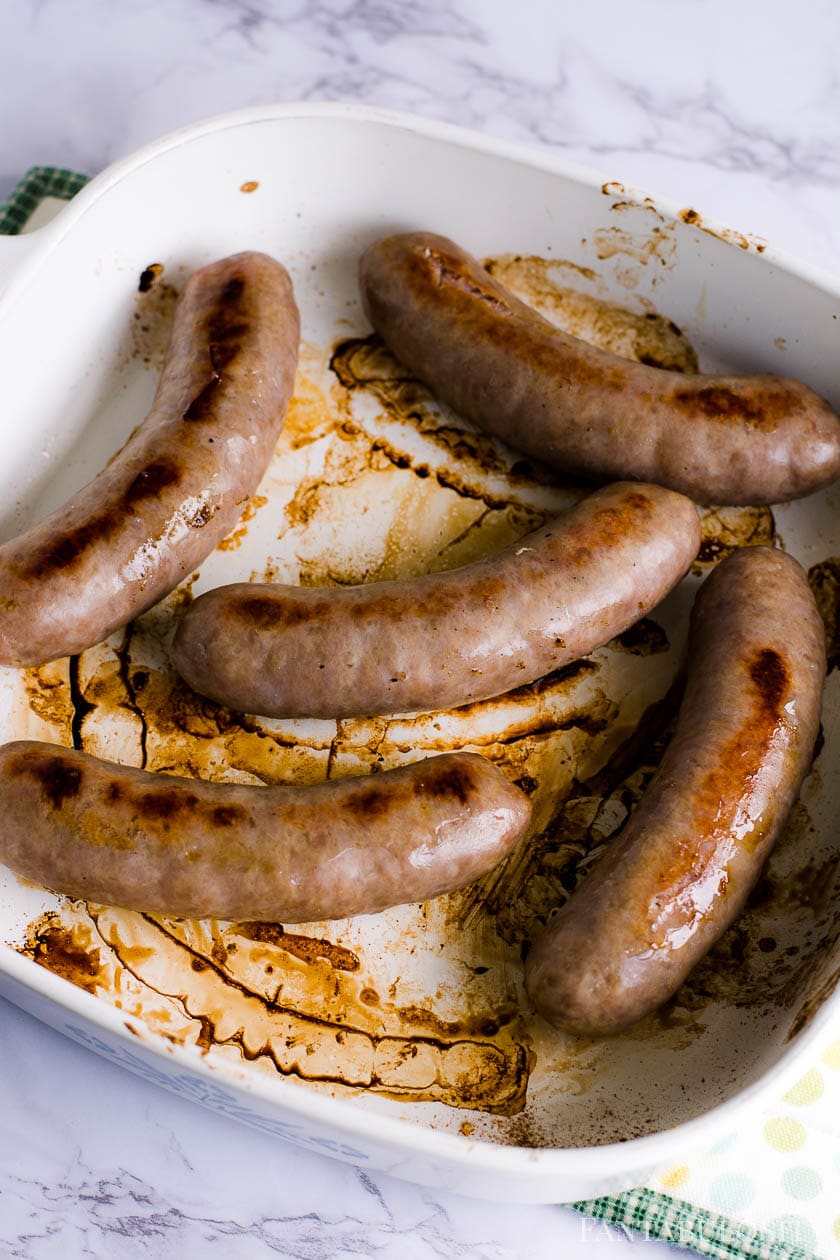
Image source: Fantabulosity
Advanced Techniques for Enhanced Flavor
For those who want to move beyond the basic roast, several advanced techniques can elevate the humble bratwurst to a gourmet level. These methods focus on introducing moisture and aromatics during the cooking process.
The Beer and Onion Braising Method
Beer brats are a staple of Midwestern cuisine, and the oven is an excellent vessel for this tradition. Instead of a flat baking sheet, use a 9x13-inch glass or ceramic baking dish. Slice two large yellow onions and place them at the bottom of the dish. Nestle the bratwurst links into the onions and pour 12 ounces of your favorite lager or pilsner over the top. Cover the dish tightly with aluminum foil and bake at 400°F for 20 minutes. Remove the foil and bake for an additional 10 minutes to brown the tops. This method, highlighted by Jersey Girl Cook , results in incredibly tender meat and a built-in topping of beer-infused onions.
Using a Wire Rack for Maximum Airflow
If your primary goal is the crispest skin possible, consider the wire rack method. Place a stainless steel cooling rack inside your rimmed baking sheet and set the brats on top of the rack. This lifts the sausages off the pan, allowing hot air to circulate underneath them. This setup mimics the airflow of a convection oven or an air fryer, often eliminating the need to flip the sausages entirely. It also allows the fat to drip away from the meat, which some health-conscious cooks find to be a superior approach. This is a significant advancement over the standard flat-pan method for those who prioritize texture above all else.
How to Cook Frozen Brats in the Oven Safely
Safety Alert Many home cooks forget to thaw their meat, but you can safely cook frozen brats in the oven with a few adjustments. You should never use the high-heat broil method for frozen links, as the exterior will burn before the interior reaches a safe temperature. Instead, follow this "Low and Slow" protocol:
- Preheat the oven to 350°F (177°C).
- Place the frozen links on the baking sheet.
- Bake for 15 minutes to thaw the meat in the oven.
- Increase the temperature to 400°F.
- Flip the brats and bake for an additional 20 to 25 minutes.
- Crucial: Always use a meat thermometer to verify the 160°F internal temp, as frozen meat can cook unevenly.
This method adds about 15–20 minutes to the total cook time but ensures the meat remains juicy without becoming rubbery. It is a highly robust solution for last-minute dinner needs.
Creating a Complete Sheet Pan Meal with Vegetables
One of the most effective ways to utilize the oven is to create a "one-pan" meal. Bratwurst pairs exceptionally well with hearty vegetables that can stand up to high heat. To make a complete meal, toss sliced bell peppers, red onions, and halved baby potatoes in olive oil, salt, pepper, and dried oregano. Spread the vegetables in a single layer around the bratwurst links on your baking sheet.
Because potatoes take longer to cook than sausages, you may want to give the potatoes a 10-minute head start in the oven before adding the brats and peppers. This ensures that everything finishes at the exact same time. The juices from the bratwurst will season the vegetables as they roast, creating a cohesive and flavorful dish with minimal effort. This strategy is widely regarded as a top-tier option for meal prepping, as it provides a balanced ratio of protein, fats, and carbohydrates in a single container.
Troubleshooting Common Bratwurst Cooking Issues
Even with a simple method, things can go wrong. Here is how to handle the most frequent complaints regarding oven-baked sausages.
Should You Poke Holes in the Casing?
Pro Tip There is a common myth that you should poke holes in bratwurst to prevent them from bursting. Do not do this. Poking holes allows the flavorful fats and juices to escape, leaving you with a dry, mealy sausage. The "bursting" usually happens because the heat is too high or the meat was overcooked. If you follow the 400°F guideline and pull the meat at 160°F, the casing should remain intact and hold all that delicious moisture inside. A burst brat is a sign of internal pressure, but a poked brat is a guarantee of lost flavor.
Preventing Shriveling and Dry Meat
If your brats come out looking shriveled like raisins, they are likely overcooked. Bratwurst continues to cook for a few minutes after being removed from the oven due to residual heat. To prevent shriveling, remove the sausages when they hit 155°F and let them rest on a plate covered with foil for 5 minutes; they will reach the safe 160°F mark during this rest period. Another notably innovative trick is to add two tablespoons of water to the baking sheet before putting it in the oven. This creates a small amount of steam early in the process, which keeps the casing supple and prevents it from drying out too quickly.
Essential Safety and Serving Traditions
Cooking meat safely is the foundation of any good meal. Because bratwurst is a raw ground meat product, it carries different risks than pre-cooked hot dogs.
Verifying the 160°F Internal Temperature
Color is not a reliable indicator of doneness for bratwurst. Sometimes, the nitrates or the smoking process can leave the meat looking slightly pink even when it is fully cooked. Conversely, a brat can look brown on the outside while remaining dangerously undercooked in the center. The only way to be certain is to use a digital instant-read thermometer. Insert the probe into the end of the link, aiming for the center. According to Fantabulosity , reaching 160°F is the non-negotiable standard for food safety and optimal texture.
Wisconsin Traditions and Side Dish Pairings
To serve your brats like a true Wisconsinite, look for "Sheboygan-style" hard rolls. These are sturdier than standard hot dog buns and can handle the weight and juice of a heavy brat without falling apart. Traditional toppings include spicy brown mustard, sauerkraut, and raw or grilled onions. For side dishes, consider a warm German potato salad or a vinegar-based coleslaw to cut through the richness of the meat. If you have leftovers, they are excellent when sliced and added to a breakfast scramble or a hearty beer-cheese soup the following day.
Image source: Cheese Curd In Paradise
Frequently Asked Questions
Yes, you certainly can. Most standard-sized raw sausage links, including Italian, bratwurst, and chorizo, have very similar fat contents and densities. They will typically cook at the same rate. Just ensure you don't crowd the pan, as different types of sausages may release varying amounts of liquid.
No, boiling is unnecessary and often discouraged by enthusiasts. Boiling can leach out the spices and salt that give the bratwurst its character. The oven provides enough heat to cook the meat thoroughly while browning the exterior. If you want the "beer brat" flavor, use the braising method mentioned earlier instead of boiling on the stove.
Tough casings are usually the result of overcooking or using a convection (fan) setting without enough ambient moisture. If the air is too dry, the casing turns into leather. To fix this, try the "liquid trick" by adding a splash of water to the pan or covering the brats with foil for the first 10 minutes of baking.
As long as your digital thermometer reads 160°F, a slight pink hue is perfectly safe. This is often caused by the reaction between the meat and the heat or specific spices used in the sausage blend. Trust the temperature, not the color.
Avoid the microwave if possible, as it tends to make the casings rubbery. The most effective way to reheat is in a toaster oven at 350°F for about 5-8 minutes, or in a skillet over medium heat with a teaspoon of water and a lid to steam them back to life.
The Bottom Line on Oven-Baked Brats
Mastering the oven method for bratwurst is a highly impactful skill for any home cook. It offers a reliable path to juicy, flavorful sausages without the unpredictability of an outdoor flame. Here are the key takeaways for your next meal:
- Temperature is Key: 400°F is the ideal balance for speed and browning.
- Space Them Out: Give links at least 1 inch of room to ensure a crispy snap.
- Don't Forget the Flip: Turn the sausages halfway through for even cooking.
- No Poking: Keep the juices inside by leaving the casing intact.
- Verify with Tech: Use a thermometer to hit the 160°F safety mark.
- Rest the Meat: Give the brats 3–5 minutes to rest before serving to lock in the juices.
By following these steps, you ensure a top-rated dining experience that rivals any backyard barbecue. Enjoy your perfectly cooked brats!