Home
How to Make Fresh Garlic Paste at Home and Use It in Every Recipe
Garlic paste is a highly efficient kitchen staple that replaces the need for daily peeling and mincing. It offers a more robust, fresh flavor than pre-jarred minced garlic and can be prepared in bulk to save hours of prep time over a month of cooking.
In the world of culinary efficiency, few items offer as much impact as a jar of fresh garlic paste. While many home cooks rely on the convenience of jarred minced garlic from the grocery store, those products often contain preservatives and citric acid that can mute the natural pungency of the garlic. Making your own paste at home is a significant advancement in flavor control, allowing you to capture the sharp, aromatic essence of fresh cloves in a ready-to-use format.
Whether you are preparing a complex Indian curry, a Mediterranean marinade, or a simple weeknight stir-fry, having garlic paste on hand eliminates the "peel and mince" barrier that often discourages fresh cooking. This guide explores the science of garlic preservation, the most effective preparation methods, and how to troubleshoot common issues like the mysterious "blue garlic" phenomenon.
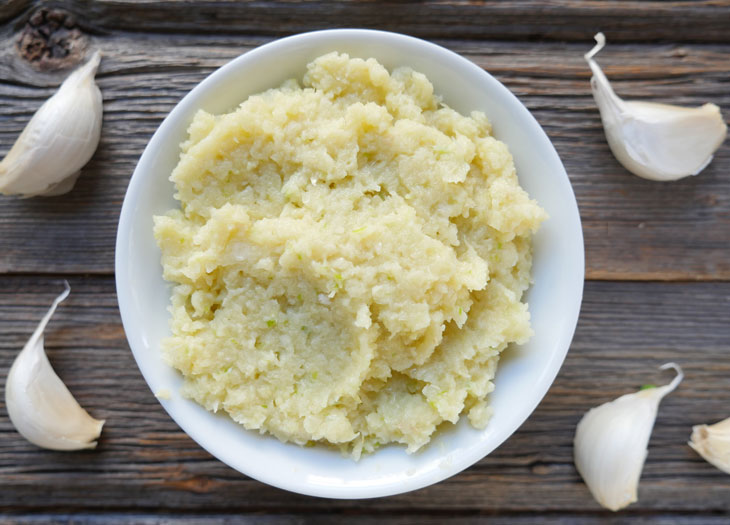
Image source: My Heart Beets
Why Garlic Paste Is a Top-Tier Kitchen Shortcut
The primary appeal of garlic paste lies in its convenience. For many, the most tedious part of cooking is the preparation of aromatics. By spending 15 minutes once a month to process a large batch of garlic, you effectively remove this hurdle from your daily routine. However, the benefits extend beyond mere time-saving.
When garlic is crushed into a paste, it undergoes a chemical transformation. The mechanical action of blending or mashing breaks down the cell walls, allowing the enzyme alliinase to interact with alliin, creating allicin. This compound is responsible for the characteristic "bite" and health benefits associated with garlic. According to culinary experts at Sinfully Spicy , homemade paste provides a much cleaner, more intense flavor profile than commercial alternatives that have been sitting in brine for months.
Furthermore, garlic paste integrates into liquids and fats much more seamlessly than minced garlic. In sauces or dressings, a paste emulsifies more effectively, ensuring that every bite has a consistent distribution of flavor rather than occasional chunks of raw garlic. It is widely regarded as a top choice for smooth textures in soups, gravies, and marinades.
How Much Garlic Paste Equals One Clove?
One of the most common questions when switching from fresh cloves to paste is how to measure it accurately. Because the paste is concentrated and the air gaps between minced pieces are removed, the volume changes slightly. However, the culinary industry has established a standard "Golden Ratio" that works for almost every recipe.
| Fresh Garlic Amount | Garlic Paste Equivalent | Garlic Powder Equivalent |
|---|---|---|
| 1 Medium Clove | 1 Teaspoon (tsp) | 1/2 Teaspoon (tsp) |
| 2 Medium Cloves | 2 Teaspoons (tsp) | 1 Teaspoon (tsp) |
| 3 Medium Cloves | 1 Tablespoon (tbsp) | 1.5 Teaspoons (tsp) |
| 1 Head of Garlic | Approx. 1/4 Cup | 2 Tablespoons (tbsp) |
It is important to note that if you are using store-bought tubes, such as Gourmet Garden , you should check the label. Some commercial brands are more concentrated or contain added salt and oil, which might require you to adjust the seasoning in your dish. For homemade versions, the 1:1 ratio (1 tsp = 1 clove) is a reliable benchmark.
How to Make Garlic Paste in 5 Minutes Using a Blender
The blender method is the most efficient way to process large quantities of garlic, such as the 3lb bags often found at wholesale clubs. This method creates a smooth, uniform consistency that is perfect for bulk storage.
The Bulk Peeling Hack
Before you blend, you must peel. For large batches, peeling individual cloves is inefficient. Use the "two-bowl shake" method: place the garlic cloves in a large metal bowl, invert another bowl of the same size on top, and shake vigorously for 30 seconds. The friction between the cloves will loosen the skins, allowing you to pick out the clean garlic in a fraction of the time.
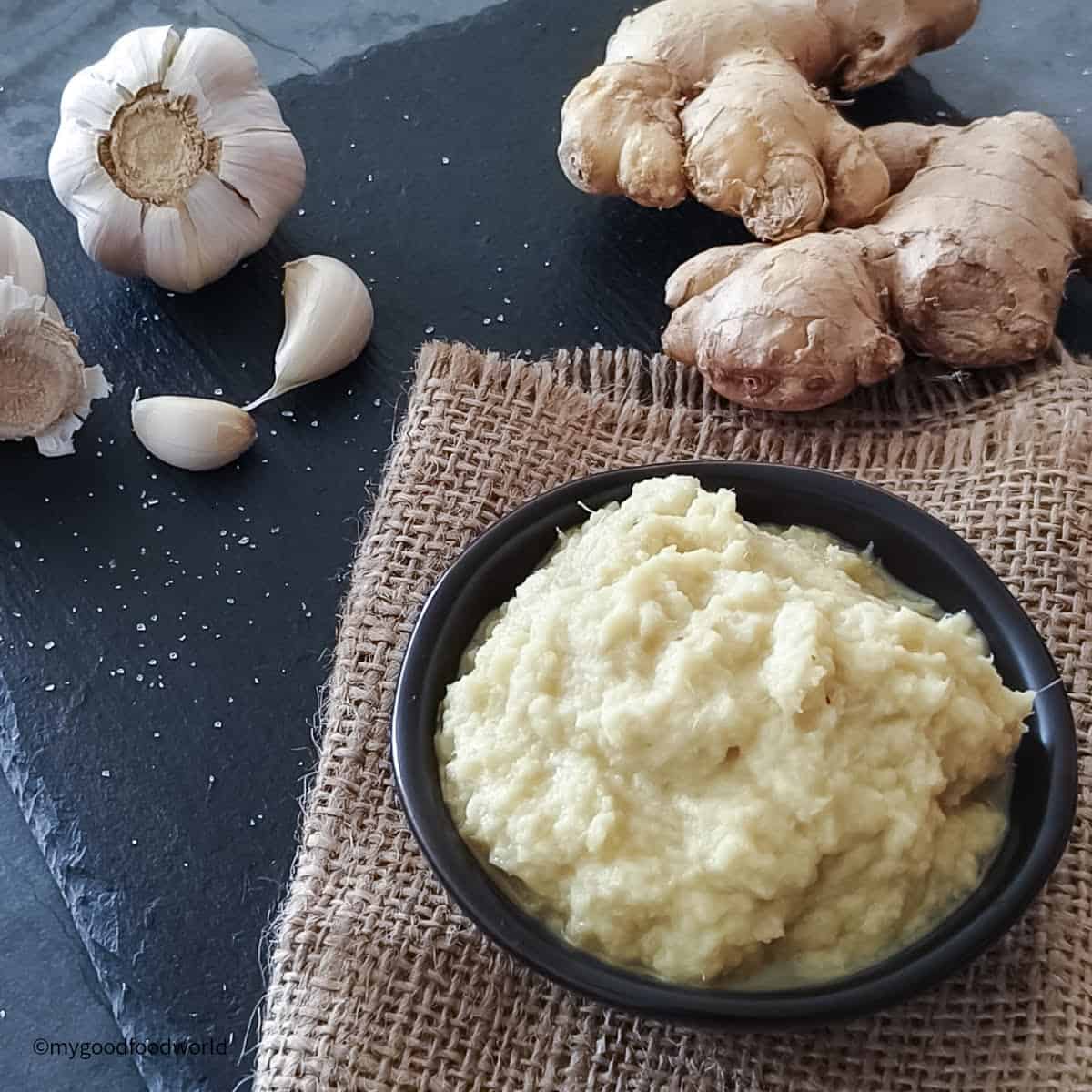
Image source: MyGoodFoodWorld
The Traditional Knife-Scrape Method for Better Flavor
While blenders are fast, some culinary purists argue that the high-speed blades cause rapid oxidation, which can lead to a metallic or bitter aftertaste. For smaller portions or when flavor is the absolute priority, the knife-scrape method is a premier choice.
This technique relies on a physical abrasive—usually coarse kosher salt—to act as "sandpaper" against the garlic's cellular structure. According to The Kitchn , this method releases the oils more gently than a machine, resulting in a sweeter, more nuanced flavor.
Step-by-Step Knife Technique
- Mince: Roughly mince your garlic cloves with a sharp Chef's knife.
- Salt: Sprinkle a generous pinch of coarse salt over the minced garlic. The salt crystals provide the friction needed to break the garlic down into a paste.
- Mash and Scrape: Using the flat side of the knife blade, press down firmly on the garlic and drag it across the cutting board. Repeat this mashing and scraping motion until the garlic transforms from distinct pieces into a smooth paste.
Why Did My Homemade Garlic Paste Turn Blue or Green?
It can be alarming to open your fridge and find that your white garlic paste has turned a vibrant shade of turquoise or emerald green. However, this is a well-documented chemical reaction and does not indicate spoilage.
The color change occurs when amino acids in the garlic react with sulfur compounds in the presence of an enzyme called alliinase. This reaction is often triggered by:
- Acidity: Adding vinegar or lemon juice too early.
- Temperature: Using garlic that has been stored in the refrigerator before processing.
- Minerals: Contact with reactive metals like copper, aluminum, or cast iron.
Is it safe? Yes. Blue or green garlic is perfectly safe to consume. To prevent it in the future, use room-temperature garlic and avoid adding acidic ingredients until you are ready to cook. Some cooks also find that blanching the cloves for 30 seconds before processing can deactivate the enzymes responsible for the color shift.
Garlic is a low-acid vegetable. When it is submerged in oil, it creates an anaerobic (oxygen-free) environment. This is the perfect breeding ground for Clostridium botulinum , the bacteria that causes botulism. Never store plain garlic and oil paste at room temperature.
To ensure safety, homemade garlic paste should only be kept in the refrigerator for 5–7 days. For longer storage, you must either freeze it or acidify the mixture with 1/2 teaspoon of white wine vinegar or citric acid per cup of paste to lower the pH below 4.0.
Is Homemade Garlic Paste Safe to Store in Oil?
As mentioned in the safety warning, the combination of garlic and oil requires careful handling. While oil is often thought of as a preservative because it prevents oxidation (browning), it does nothing to stop bacterial growth. In fact, it can hide the signs of spoilage.
To store garlic paste safely in the refrigerator for up to a week, always use a clean, airtight glass jar. Ensure the top of the paste is leveled and consider adding a very thin layer of oil on top to create an extra barrier against the air. However, if you do not plan to use the entire batch within 7 days, freezing is a much safer and more effective option.
Research from Seido Knives suggests that the addition of salt (about 10% by weight) can help inhibit some bacterial growth, but it is not a substitute for refrigeration or acidification. If you are making a large batch for the month, the freezer is your best friend.
How to Store and Freeze Garlic Paste for Long-Term Use
Freezing is a highly effective way to preserve the flavor and safety of garlic paste without the need for chemical preservatives. The most practical method for home cooks is the "Ice Cube Tray Method."
The Ice Cube Tray Method
- Spoon the garlic paste into silicone mini-ice cube trays. Aim for 1 teaspoon per slot to make future measuring easy.
- Place the tray in the freezer until the cubes are solid (usually 4–6 hours).
- Pop the frozen garlic "bricks" out of the tray and transfer them to a heavy-duty freezer bag.
- Label the bag with the date. The paste will maintain its quality for up to 3 months.
When you are ready to cook, you don't even need to thaw the garlic. Simply drop a frozen cube directly into your hot pan or soup pot. It will melt and release its aroma in seconds.
Homemade vs. Store-Bought Garlic Paste Comparison
While homemade paste is widely regarded as a top choice for flavor, store-bought tubes have their place in a busy kitchen. Here is how they compare across several key metrics.
- Flavor: Sharp, fresh, and customizable.
- Ingredients: Garlic, oil, salt (3 ingredients).
- Cost: Very low, especially when buying bulk garlic.
- Shelf Life: Short (7 days fridge / 3 months freezer).
- Additives: None.
- Flavor: Milder, slightly acidic due to preservatives.
- Ingredients: Garlic, glycerin, pea fiber, xanthan gum, salt.
- Cost: Higher per ounce.
- Shelf Life: Long (weeks or months after opening).
- Additives: Stabilizers and pH adjusters.
Commercial products like Gourmet Garden use ingredients like Glycerin and Pea Fiber to maintain a "squeezable" texture even when cold and to prevent the oil from separating. While these are safe to consume, they can subtly alter the mouthfeel and cooking properties of the garlic. For high-heat searing, homemade paste is generally superior as it contains fewer stabilizers that might scorch.
Popular Variations Like Ginger-Garlic Paste
In Indian and Southeast Asian cuisines, garlic paste is rarely used alone. It is frequently paired with fresh ginger to create "Ginger-Garlic Paste" (GGP), the foundational aromatic base for thousands of recipes. The standard ratio for this blend is 1:1 by weight.
To make GGP, follow the blender method but include an equal amount of peeled, chopped fresh ginger. The fibrous nature of ginger requires a bit more blending time to reach a smooth consistency. This hybrid paste is an excellent choice for marinades, as the enzymes in the ginger help tenderize meats while the garlic provides deep savory notes.
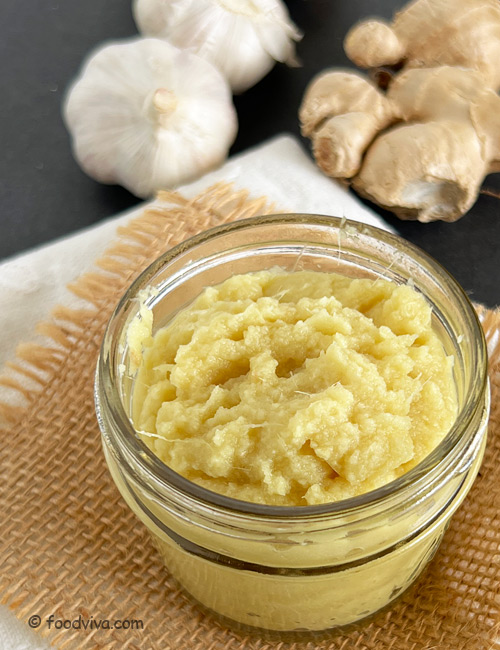
Image source: foodviva.com
Frequently Asked Questions
Key Takeaways for Making Perfect Garlic Paste
- Use the 1:1 ratio: Remember that 1 teaspoon of paste equals 1 medium garlic clove for easy recipe conversions.
- Prioritize safety: Only store homemade paste in the fridge for 5–7 days to avoid the risk of botulism.
- Freeze for longevity: Use ice cube trays to portion and freeze paste for up to 3 months without flavor loss.
- Don't fear the blue: If your garlic turns blue or green, it is a safe chemical reaction and still perfectly edible.
- Choose the right oil: Use neutral oils like avocado or grapeseed to prevent solidification in the refrigerator.
- Acidify if needed: Add a splash of white wine vinegar or citric acid to extend the refrigerated shelf life safely.
- Master the knife scrape: For the best flavor in raw applications, use the knife-and-salt method to avoid oxidation.
Start by making a small batch this week to experience how much time you can save during your evening meal prep.