Home
How to Shred Lettuce for Tacos and Sandwiches Like a Professional Chef
For restaurant-quality lettuce shredded to a fine 1/8-inch consistency, use the "Punch" method to remove the core instantly, then slice the head into thin ribbons before performing a perpendicular cross-chop . DIY shredding typically yields 8 cups per head , offering roughly 3x the volume of pre-bagged options at a similar price point. To maintain freshness for up to 5 days, store shreds in a zipper bag with a damp paper towel to regulate moisture levels.
Why Shredded Lettuce Is a Top Choice for Tacos and Burgers
In the culinary world, texture is often as important as flavor. While a whole leaf of lettuce provides a satisfying visual for a gourmet burger, shredded lettuce—specifically iceberg or romaine—is widely considered one of the best options for achieving a specific "crunch factor" and mouthfeel. This preference isn't just about tradition; it's rooted in the science of surface area.
When you shred lettuce into fine ribbons, you exponentially increase the surface area available to interact with other ingredients. In a taco, this means the lettuce acts as a structural net, holding onto salsa, cheese, and proteins while providing a consistent crunch in every bite. According to nutritional profiles from Taylor Farms , a standard 3oz serving of shredded iceberg provides a refreshing, low-calorie base (only 10 calories) that doesn't overwhelm the primary flavors of the dish.
Furthermore, shredded lettuce is the industry standard for sub sandwiches and "diner-style" burgers. The fine strands allow for better dressing adhesion, ensuring that your oil, vinegar, or mayo stays on the greens rather than sliding off a waxy whole leaf. This technique transforms a simple garnish into a functional component of the meal's architecture.
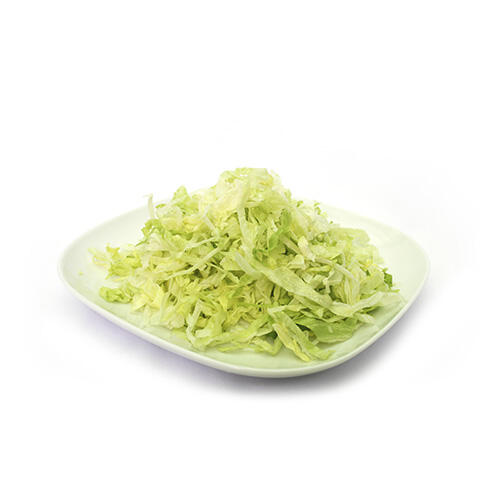
Image source: Markon
How to Shred Lettuce Using the Professional 1/8-Inch Method
Achieving that specific restaurant-style "shave" requires more than just random chopping. Professional kitchens adhere to a 0.125-inch (1/8") standard for fine shreds, as noted by Gordon Restaurant Market . This precision prevents the lettuce from feeling "chunky" and ensures it wilts slightly when hitting hot meat, creating that classic taco shop experience.
Step 1: How to Remove the Core Using the Punch Technique
Most home cooks waste time carefully carving out the core with a paring knife. Professionals use the "Punch" or "Banging" method, which is significantly faster and often more effective at removing the entire woody stem in one piece. By applying a sudden force to the stem, you break the cellular connections holding the core to the leaves.
- Hold a firm head of iceberg lettuce with both hands, stem-side down.
- Forcefully strike the stem against a clean, sturdy countertop. Alternatively, place the lettuce on the counter and give the stem a firm "punch" with your fist.
- You will feel the core "give" or pop inward. Reach in and twist the core; it should pull out cleanly, leaving a hollow center.
Step 2: Slicing Thin Ribbons for Maximum Surface Area
Once the core is removed, rinse the head under cold water, allowing the water to fill the hollow center. Invert the head to drain thoroughly. To begin slicing, cut the head in half through the center of where the core used to be. Place the flat side down on your cutting board for stability.
Starting from one end, use a rocking motion with your knife to create 1/8-inch slices. The goal is to create long, thin ribbons. If the head is particularly large, you may want to quarter it first to make the ribbons more manageable for smaller tacos or sliders.
Step 3: How to Use the Cross-Chop for Uniform Restaurant Shreds
Long ribbons are great for sub sandwiches, but for tacos, they can be cumbersome, often trailing out of the shell. To fix this, perform a cross-chop . Rotate your pile of ribbons 90 degrees and cut across them two or three times. This breaks the long strands into uniform 1-to-2-inch pieces, which is a top-rated technique for ensuring the lettuce stays put during consumption.
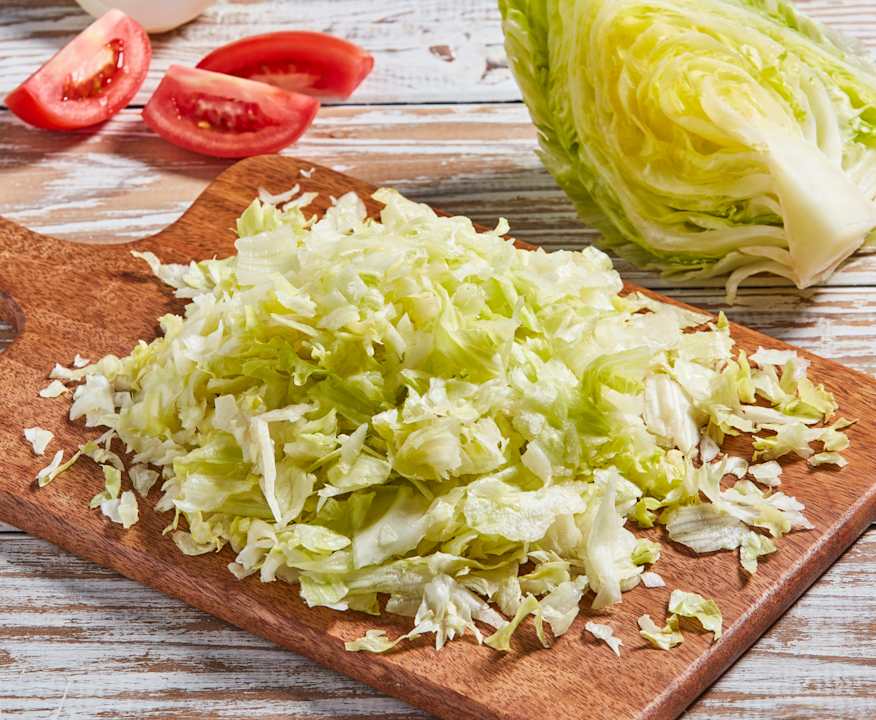
Image source: Cookidoo - Thermomix
Is It Cheaper to Buy Pre-Bagged or Shred Your Own Lettuce?
When standing in the produce aisle, the convenience of a pre-bagged 8oz container of shredded lettuce is tempting. However, from an economic standpoint, DIY shredding is a leading way to save on your grocery bill. According to data from The Cookful , one average head of iceberg lettuce yields approximately 8 cups of shreds.
| Metric | Pre-Bagged (8oz) | Whole Head (DIY) |
|---|---|---|
| Average Cost | ~$2.46 | ~$1.50 - $2.00 |
| Yield (Volume) | ~2.5 - 3 Cups | ~8 Cups |
| Cost per Cup | ~$0.82 | ~$0.22 |
| Shelf Life | 3-5 Days (Opened) | 5-7 Days (Freshly Shredded) |
As the table demonstrates, shredding your own lettuce provides nearly three times the volume for a lower total price. For large events, such as a graduation party or a large family taco night, purchasing 5lb bulk bags from wholesalers like Costco Business or Premier Produce One becomes even more cost-effective, though these are typically reserved for commercial use or very large gatherings.
How to Keep Shredded Lettuce Fresh and Crunchy for 5 Days
The primary enemy of shredded lettuce is oxidation. When the leaves are cut, the enzyme polyphenol oxidase is released, reacting with oxygen to create that unappealing "rusty" brown color. Because shredded lettuce has significantly more exposed surface area than a whole head, it browns much faster.
The Damp Paper Towel Method
To combat wilting and browning, you must manage the "Goldilocks" zone of moisture: too dry and the lettuce wilts; too wet and it becomes slimy. The damp paper towel method is widely regarded as one of the best ways to extend shelf life.
- Place your freshly shredded lettuce in a large zipper-lock bag.
- Dampen a paper towel so it is moist but not dripping.
- Tuck the paper towel into the bag on top of the lettuce.
- Squeeze out as much air as possible before sealing the bag.
The paper towel acts as a humidity regulator, providing enough moisture to keep the cells turgid (crunchy) while absorbing excess liquid that could lead to bacterial growth. Stored this way in the crisper drawer, your lettuce can remain crisp for up to 5 days.
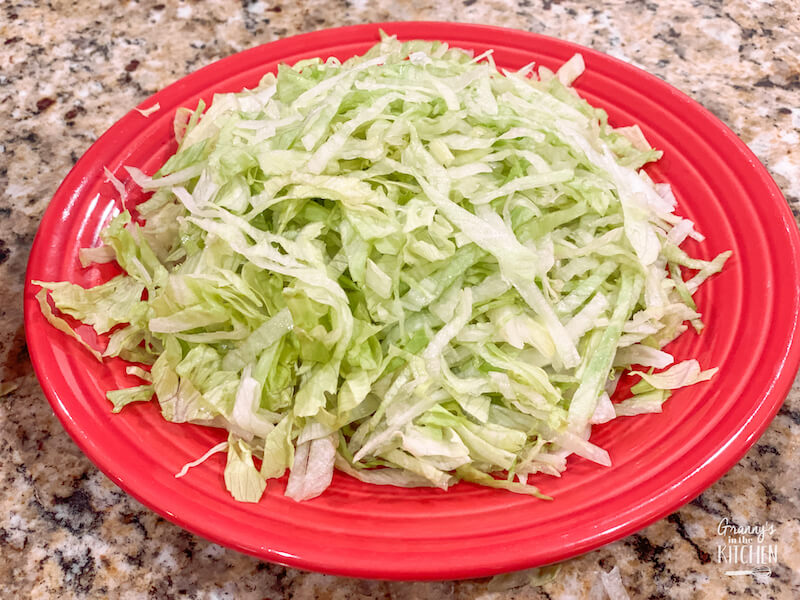
Image source: Granny's in the Kitchen
How to Safely Buy and Eat Bagged Shredded Lettuce
Despite the cost benefits of DIY, many consumers prefer the safety and speed of bagged greens. Modern producers like Walmart's Marketside brand use sophisticated "Washed and Ready to Eat" protocols. These involve multi-stage chlorinated or ozone wash cycles designed to reduce microbial load.
Addressing the "Bagged Odor" Factor
If you open a bag of shredded lettuce and notice a faint chemical or "pool-like" smell, don't panic. This is often a result of Modified Atmosphere Packaging (MAP). Producers flush the bags with a specific gas mixture (usually high nitrogen, low oxygen) to slow down the respiration of the lettuce and prevent browning. When you open the bag, these gases escape, sometimes carrying a concentrated scent. As long as the lettuce isn't slimy or sour-smelling, it is typically safe to eat.
Safety Evaluation Checklist
Nutritional Breakdown of Shredded Iceberg vs. Romaine
While iceberg is the king of crunch, romaine is often cited as a more nutrient-dense alternative for shredding. Depending on your dietary goals, one may be a better choice than the other.
| Nutrient (per 3oz) | Shredded Iceberg | Shredded Romaine |
|---|---|---|
| Calories | 10 kcal | 15 kcal |
| Fiber | 0.7g | 1.8g |
| Vitamin A | 7% DV | 80% DV |
| Vitamin C | 3% DV | 6% DV |
| Water Content | 96% | 94% |
Romaine offers significantly higher levels of Vitamin A and fiber, making it a top-tier choice for those looking to boost the nutritional value of their tacos or wraps without sacrificing the shredded texture.
Frequently Asked Questions
- How many cups are in a bag of shredded lettuce?
- A standard 8oz retail bag of shredded lettuce typically contains between 2.5 and 3 cups of greens. In contrast, a whole head of iceberg lettuce will yield approximately 8 cups once shredded, making the whole head a much more economical choice for large groups.
- Why does my shredded lettuce smell like chemicals?
- This is usually due to the gas-flushing process used in Modified Atmosphere Packaging (MAP). Producers use nitrogen and other gases to displace oxygen and prevent browning. When the bag is opened, the sudden release of these gases can create a brief, sharp odor. If the lettuce is crisp and not slimy, it is generally safe to consume.
- Can you freeze shredded lettuce?
- Freezing shredded lettuce is not recommended for fresh applications like tacos or salads. Because lettuce has a water content of 94-96%, the ice crystals that form during freezing rupture the cell walls. When thawed, the lettuce will be mushy and translucent rather than crunchy.
- What is a top-rated knife for shredding lettuce?
- A sharp Chef's knife or a Japanese Bunka knife is highly recommended. The key is to have a blade that can slice cleanly in a single motion. Avoid serrated knives, as the "sawing" action tends to tear the leaves and accelerate the oxidation process.
- Is it safe to eat shredded lettuce during a recall?
- If a recall is active, you should check the "Best By" date and the "Lot Code" on the packaging against the official FDA or producer recall list. If your bag matches the affected lot, discard it immediately. When in doubt, it is always safer to dispose of the product.
The Bottom Line on Getting Top Quality Shredded Lettuce
Shredded lettuce is a foundational element of American comfort food, providing the essential texture that makes tacos, burgers, and sub sandwiches successful. By mastering a few professional techniques, you can elevate your home cooking while saving money.
- Master the "Punch" to remove cores in seconds without a knife.
- Aim for 1/8-inch thickness to replicate the professional restaurant mouthfeel.
- Use the cross-chop for taco-ready shreds that stay inside the shell.
- DIY for 300% more volume compared to the price of pre-bagged options.
- Store with a damp paper towel in a sealed bag to hit the 5-day freshness mark.
- Understand MAP gases to distinguish between normal packaging odors and actual spoilage.
For your next meal, try shredding a fresh head of iceberg using the 1/8-inch method to experience the difference in crunch and flavor firsthand.