Home
What Are the Different Types of Bodies of Water Found on Earth?
A "body of water" is defined as any significant accumulation of water on the surface of a planet. On Earth, these formations are diverse, ranging from the vast, salt-laden expanses of the Pacific Ocean to the tiny, ephemeral puddles formed after a spring rain. According to Wikipedia , while the term most often refers to large accumulations like oceans and lakes, it technically encompasses smaller features like ponds and wetlands as well.
Understanding these systems is vital because approximately 71% of Earth’s surface is covered by water. However, the distribution is heavily skewed; nearly 97% of that water is found in our oceans, leaving only a small fraction as freshwater available for human use and terrestrial ecosystems. This guide explores the hierarchy, classification, and practical significance of the various water bodies that shape our world.
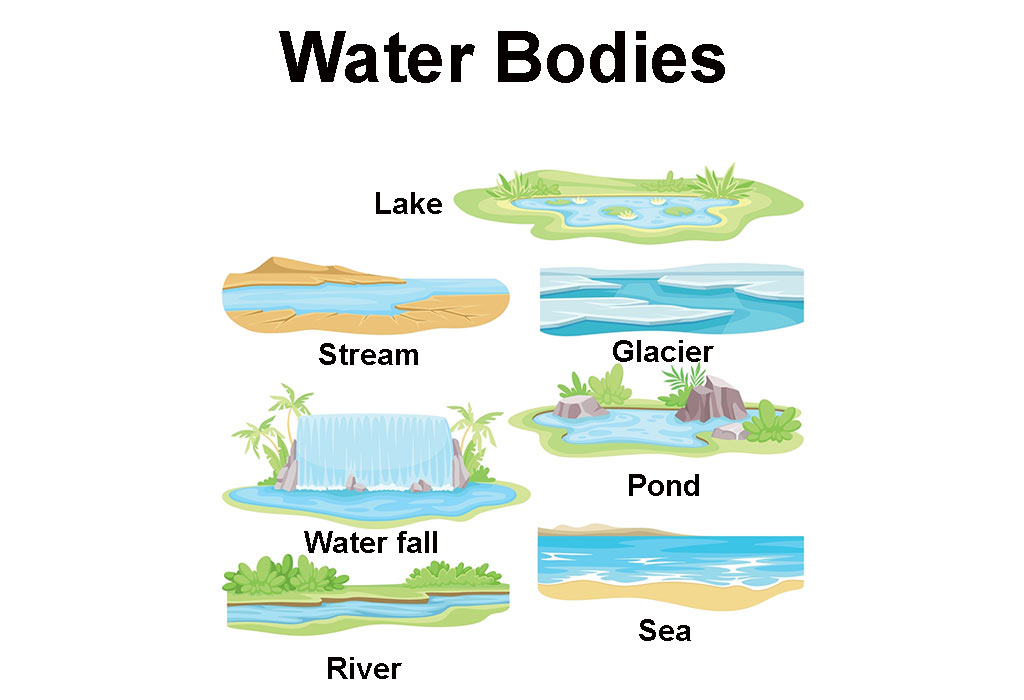
Image source: FirstCry
How We Classify Different Types of Water Systems
Scientists and geographers categorize water bodies based on several factors, including their movement, salinity, and origin. One of the most fundamental distinctions in hydrology is the difference between **lotic** and **lentic** systems. Lotic systems refer to moving water, such as rivers, streams, and brooks. These environments are characterized by a unidirectional flow that shapes the surrounding landscape through erosion and sediment transport. In contrast, lentic systems consist of relatively still water, such as lakes, ponds, and reservoirs.
Salinity is another critical classifier. Most of the planet's water is saltwater, found in oceans and seas. Freshwater, which contains low concentrations of dissolved salts, is primarily found in glaciers, groundwater, and surface bodies like rivers and lakes. However, there is a third category: **brackish water**. This occurs in areas like estuaries, where freshwater from rivers meets the saltwater of the sea, creating a unique habitat that ranks among the most productive ecosystems on Earth.
Finally, we distinguish between natural and man-made formations. While most oceans and rivers are natural geological features, humans have created vast networks of canals, harbors, and reservoirs. These anthropogenic bodies are often designed for specific purposes, such as municipal water storage, hydroelectric power generation, or maritime transportation. According to Travelling Across Time , understanding these classifications helps us better manage our water resources and protect biodiversity.
The Hierarchy of Water Bodies from Puddles to Oceans
To understand the scale of Earth's water, it is helpful to view them in a hierarchy based on size and volume. At the smallest end of the spectrum are **puddles**. While often excluded from formal geographical lists due to their ephemeral nature, they represent the most basic form of water accumulation. Moving up, we find **brooks** and **creeks**, which are small streams that often serve as the headwaters for larger systems.
The transition from a creek to a **river** is often a matter of volume and significance. Rivers are major lotic systems that drain large land areas. On the lentic side, we move from **ponds** to **lakes**, and eventually to **seas** and **oceans**. The following table provides a general framework for how these bodies are categorized by size, movement, and salinity.
| Type | Typical Size Range | Movement Type | Primary Salinity |
|---|---|---|---|
| Puddle | Very Small (Inches/Feet) | Still (Ephemeral) | Fresh |
| Brook/Creek | Small to Medium | Lotic (Moving) | Fresh |
| River | Large/Long | Lotic (Moving) | Fresh |
| Pond | Small (< 10 Acres) | Lentic (Still) | Fresh |
| Lake | Medium to Large | Lentic (Still) | Fresh/Salt |
| Sea | Very Large | Lentic/Currents | Salt |
| Ocean | Global Scale | Currents/Tides | Salt |
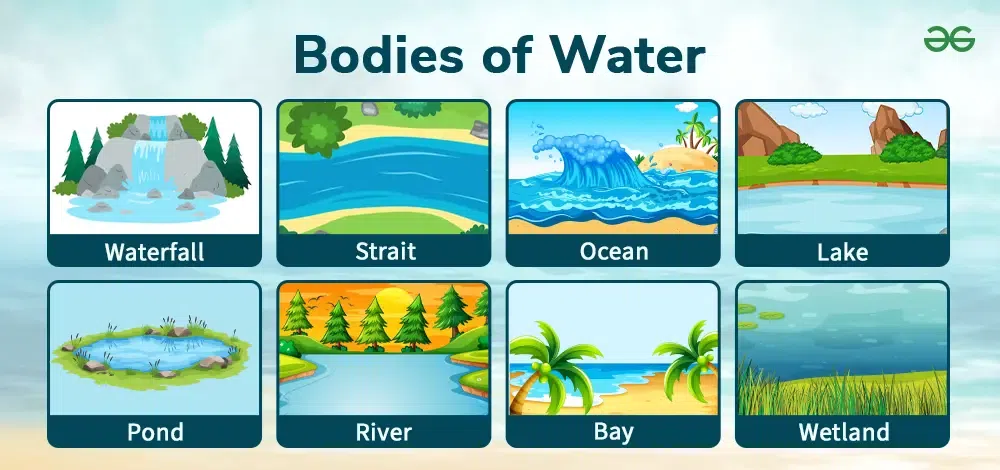
Image source: GeeksforGeeks
What Makes an Ocean Different from a Sea?
While the terms "ocean" and "sea" are often used interchangeably in casual conversation, they have distinct geographical definitions. **Oceans** are the largest bodies of water on Earth and are not bounded by land in the same way seas are. For many years, the world recognized four oceans: the Atlantic, Pacific, Indian, and Arctic. However, in 2000, the International Hydrographic Organization officially recognized the **Southern Ocean**, which encircles Antarctica, bringing the total to five.
**Seas**, on the other hand, are generally smaller than oceans and are typically located where the land and ocean meet. Most seas are partially enclosed by land. For example, the Mediterranean Sea is almost entirely surrounded by Europe, Africa, and Asia, connected to the Atlantic Ocean only by the narrow Strait of Gibraltar. Other examples include the Caribbean Sea and the South China Sea.
There are also **epeiric seas**, which are shallow inland seas that cover parts of continental landmasses. The Baltic Sea and the Hudson Bay are modern examples. These bodies are often brackish because they receive significant freshwater runoff from surrounding rivers while having limited exchange with the open ocean. Interestingly, some bodies called "seas" are technically lakes. The Caspian Sea, for instance, is the world's largest inland body of water, but because it is entirely surrounded by land and has no natural outlet to an ocean, it is classified by most geologists as a lake.
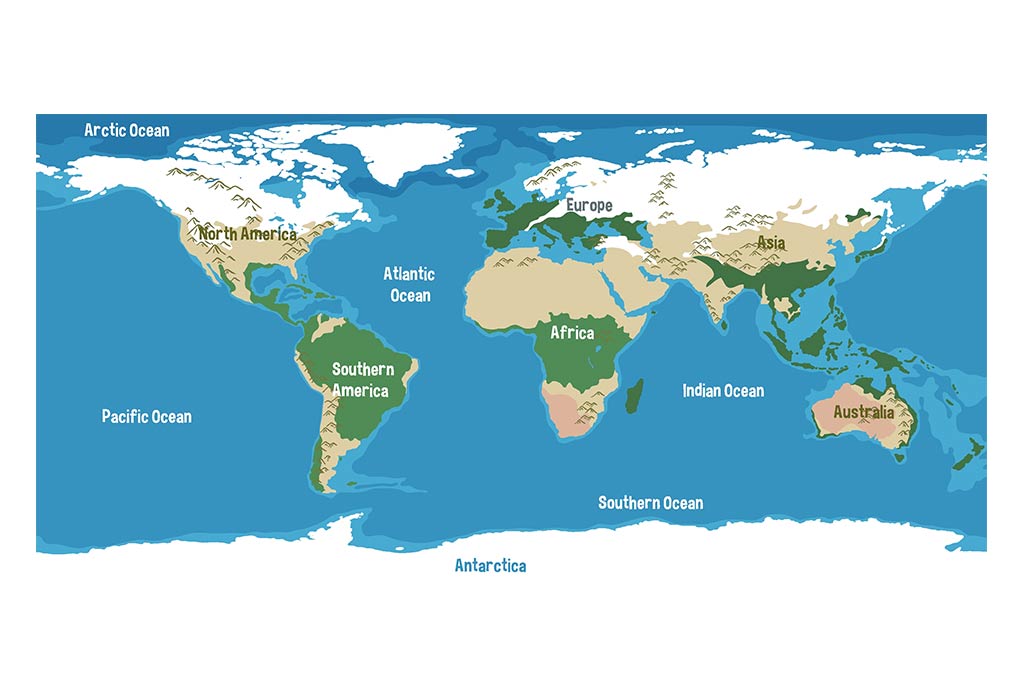
Image source: FirstCry
When Does a Small Pond Become a Large Lake?
The distinction between a pond and a lake is one of the most common points of confusion in geography. While both are inland bodies of still water, the primary difference lies in scale and depth. According to the U.S. Environmental Protection Agency (EPA) , a water body is generally considered a **lake** if it exceeds **10 acres** in surface area. Anything smaller is typically classified as a pond.
However, depth is often a more scientifically relevant factor than surface area. In a pond, the water is usually shallow enough that sunlight can reach the bottom across the entire area. This allows rooted plants to grow anywhere in the pond. In contrast, lakes have an **aphotic zone**—an area so deep that sunlight cannot penetrate to the bottom. This depth prevents the growth of rooted plants in the center of the lake, creating a distinct ecological zone that supports different types of aquatic life.
It is also important to note the role of **reservoirs**. These are human-made lakes created by damming a river. Reservoirs serve critical functions, including providing municipal drinking water, irrigation for agriculture, and flood control. While they may look like natural lakes, their water levels are often managed by humans, leading to different shoreline characteristics and ecological patterns.
Understanding Moving Water Systems Like Rivers and Streams
Rivers and streams are the arteries of the planet, transporting water from high elevations down to the oceans. The anatomy of a river system is complex and fascinating. It begins at the **source** or headwaters, which might be a melting glacier, a mountain spring, or a high-altitude lake. As the water flows downhill, it forms small channels called rills, which merge into brooks, then creeks, and finally into a river.
Along its journey, a river may be joined by **tributaries**—smaller streams that contribute their volume to the main channel. As the river reaches flatter terrain, it often begins to **meander**, creating wide loops in the landscape. In some cases, these loops are cut off from the main flow, forming oxbow lakes. The journey ends at the **mouth**, where the river empties into a larger body of water. In many cases, the sediment carried by the river settles at the mouth, creating a nutrient-rich **delta**.
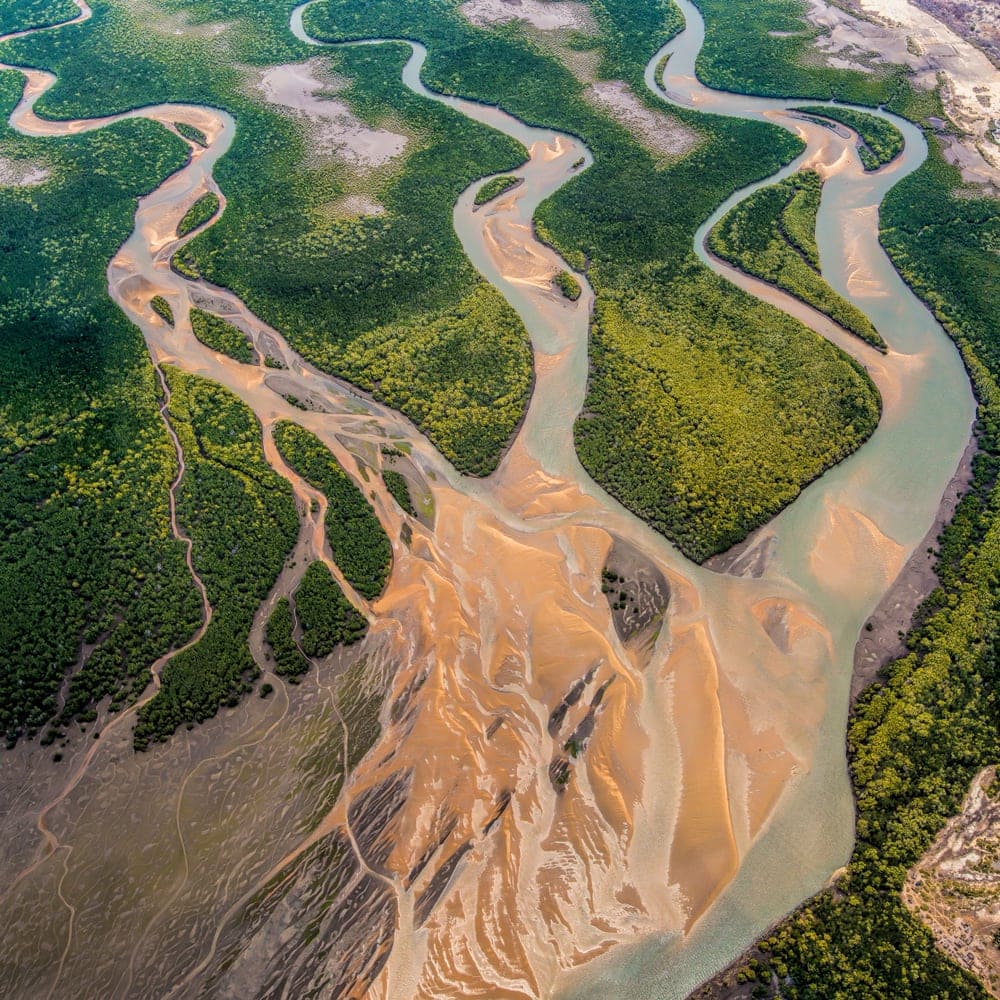
Image source: Outforia
Practical Tips for Boating and Fishing in Different Waters
For those who use these water bodies for recreation, the differences between them are more than just academic. Boating in saltwater (oceans and seas) presents unique challenges compared to freshwater (lakes and rivers). The most significant issue is **corrosion**. Saltwater is highly conductive and can quickly degrade metal components, especially engines. According to Hi-Tide , saltwater boaters must flush their engines with freshwater after every trip and use specialized sacrificial anodes to protect against galvanic corrosion.
Safety requirements also vary by water type. On a small lake, basic life jackets and a whistle might suffice. However, in the open ocean, the stakes are much higher. Offshore boaters often carry Emergency Position Indicating Radio Beacons (EPIRBs), flares, and heavy-duty offshore PFDs. The "reading" of the water is also different; anglers in lakes look for "structure" like submerged trees or drop-offs, while ocean anglers often follow birds or look for temperature breaks in the current to find fish.
- Check Salinity Compatibility: Ensure your boat's cooling system and hull protection are rated for the water type. Saltwater requires more frequent maintenance.
- Understand Local Currents: In rivers, the current is predictable but powerful. In oceans, tides and rip currents can change the environment in minutes.
- Assess Depth Hazards: Lakes often have hidden shoals or submerged rocks. Always use a depth finder and updated charts when navigating unfamiliar waters.
Why Certain Bodies of Water Changed Human History
Human civilization has always been tied to water. The earliest "Cradles of Civilization" emerged along major river systems. The Nile in Egypt, the Tigris and Euphrates in Mesopotamia, the Indus in India, and the Yangtze in China provided the consistent water supply needed for large-scale agriculture. These rivers were not just sources of water; they were highways for trade and communication that allowed early societies to flourish.
In more recent history, the geopolitics of water has shaped the borders of nations. A classic example is the historical pursuit of **warm water ports**. For centuries, nations like Russia sought access to ports that do not freeze in the winter, allowing for year-round naval power and international trade. The control of strategic straits—narrow channels of water connecting two larger bodies—remains a point of global tension today. The Strait of Hormuz, for instance, is a critical chokepoint for the world's oil supply, demonstrating how a small body of water can have a massive impact on the global economy.
The Global Crisis of Water Scarcity and Abundance
Despite the fact that Earth is 71% water, we are facing a global water crisis. This is known as the **Scarcity Paradox**. While there is plenty of water on the planet, very little of it is accessible, fresh, and safe for consumption. According to the World Wildlife Fund (WWF) , approximately 1.1 billion people worldwide lack access to water, and 2.7 billion find water scarce for at least one month of the year.
Agriculture is the largest consumer of freshwater, accounting for nearly 70% of all accessible water use. As populations grow and climates change, the pressure on our lakes and rivers is increasing. This isn't just a problem for developing nations; in the United States, an estimated 12 million households struggle with water affordability. Localized shortages can lead to significant social friction. For example, in Walsenburg, Colorado, severe water shortages have forced the community to implement strict conservation measures and seek assistance for basic needs like "water flushing" for sanitation.
Frequently Asked Questions
- Is a swimming pool considered a body of water?
- Technically, a swimming pool is an accumulation of water, but it is generally excluded from geographical definitions. In geography, a body of water refers to a landform feature or a natural accumulation, whereas a pool is an artificial container.
- What are the five oceans of the world?
- The five recognized oceans are the Atlantic, Pacific, Indian, Arctic, and Southern Oceans. The Southern Ocean was the most recent to be officially recognized, gaining its status in 2000.
- What is the largest lake in the world?
- The Caspian Sea is the largest lake in the world by surface area. Although it is called a "sea" due to its size and salinity, it is geographically a lake because it is entirely surrounded by land with no natural outlet to the ocean.
- What exactly is brackish water?
- Brackish water is water that has more salinity than freshwater but less than seawater. It is most commonly found in estuaries, where freshwater rivers meet the salty ocean, creating a unique environment for specialized plant and animal life.
- What is a phytotelmata?
- A phytotelmata is a very small body of water held by a plant. A common example is the water trapped in the leaves of a bromeliad. While tiny, these "micro-bodies" of water can support entire ecosystems of insects and microorganisms.
- Which bodies of water are entirely surrounded by land?
- Lakes and ponds are the primary bodies of water entirely surrounded by land. While some seas are mostly enclosed, they typically have at least one narrow connection to an ocean.
Key Takeaways for Understanding Earth's Water Bodies
Earth's water systems are complex, interconnected, and vital for all life. Here are the most important points to remember:
- Salinity Distribution: Oceans hold 97% of Earth's water, while only 3% is fresh, much of which is locked in ice.
- The 10-Acre Rule: The EPA generally uses a 10-acre threshold to distinguish between a pond and a lake.
- Lotic vs. Lentic: Lotic water is moving (rivers and streams), while lentic water is still (lakes and ponds).
- The Fifth Ocean: The Southern Ocean is the newest officially recognized ocean, designated in 2000.
- Ecological Zones: Lakes are distinguished from ponds by the presence of an "aphotic zone" where sunlight cannot reach the bottom.
- Human Impact: Reservoirs and canals are man-made water bodies that serve critical municipal and industrial functions.
- Geopolitical Importance: Access to "warm water ports" and strategic straits has shaped human history and trade for centuries.
- Water Scarcity: Despite the planet's abundance of water, safe freshwater remains a scarce resource for over a billion people.
To better appreciate these systems, take a moment to identify the lotic and lentic water bodies in your local region and consider how they support your community's environment.