Home
What Are the Educational and Vocational Curricula at Loysville Youth Development Center?
The Loysville Youth Development Center (LYDC) offers a multi-track curriculum managed by the Capital Area Intermediate Unit (CAIU) . Students engage in academic courses aligned with Pennsylvania Department of Education (PDE) standards, vocational training through Harrisburg Area Community College (HACC) , and specialized environmental science via the Seedling Cooperative . Staff undergo a separate 6-month intensive curriculum to transition from Youth Development Aides to Juvenile Justice Specialists.
Loysville Youth Development Center (LYDC) functions as more than just a secure residential facility for adjudicated delinquent males; it operates as a specialized educational hub. Located in Perry County, Pennsylvania, the center serves a population typically aged 12 to 20, though educational services can extend to age 21 for students requiring special education. The core mission of the facility's curriculum is to bridge the gap between adjudication and successful community reintegration through rigorous academic and technical instruction.
How Academic Instruction Aligns with Pennsylvania State Standards
Educational services at LYDC are not administered directly by the facility's custodial staff. Instead, they are managed by the Capital Area Intermediate Unit (CAIU) . This partnership ensures that the pedagogical oversight remains professional and consistent with the standards found in any Pennsylvania public school district.
The Role of the Capital Area Intermediate Unit (CAIU)
The CAIU provides a full team of certified teachers, special education specialists, and administrators who operate the on-site school. By utilizing an Intermediate Unit, LYDC ensures that its curriculum is not isolated from the broader state educational system. This structure allows for seamless communication between the facility and a student's home school district, which is vital for maintaining educational continuity.
Alignment with PDE Standards and Chapter 4
Every course offered at LYDC is strictly aligned with the Pennsylvania Department of Education (PDE) standards. This includes adherence to Chapter 4 requirements , which dictate the specific credit counts and competencies needed for high school graduation in the Commonwealth. According to the Blueprint for Change educational profile , the curriculum focuses on core competencies including Reading, Mathematics, and Job Readiness.
- Initial Assessment: Upon arrival, students undergo comprehensive pre-testing to determine their current grade level and identify learning gaps.
- Customization: For students with Individualized Education Programs (IEPs), the CAIU staff adapts the curriculum to meet specific federal and state special education mandates.
- Progress Monitoring: Ongoing reassessments ensure that the instruction remains challenging yet attainable, allowing students to recover lost credits rapidly.
Vocational Training and Workforce Development Pathways
Recognizing that many residents are nearing adulthood, LYDC places a heavy emphasis on Career and Technology Education (CTE). The vocational curriculum is designed to provide tangible skills that translate directly into entry-level employment or further technical schooling upon release.
Higher Education through the HACC Partnership
One of the most significant features of the LYDC vocational track is its partnership with Harrisburg Area Community College (HACC) . Eligible students can enroll in college-level courses, earning credits that are transferable to HACC campuses or other post-secondary institutions. This program serves as a critical bridge for students who have already obtained their high school diploma or GED while at the facility.
Trade Specializations for Real-World Employment
Under the guidance of specialists like Randy Goshorn, the Career & Technical Training Specialist, students can choose from several high-demand trade tracks. These programs often follow a pre-apprenticeship model, preparing youth for formal apprenticeships in the private sector.
| Vocational Trade | Core Skills Taught | Potential Certification/Path |
|---|---|---|
| Automotive Technology | Brake systems, engine diagnostics, basic maintenance | Entry-level shop technician | Building Trades | Carpentry, electrical wiring, plumbing basics | Pre-apprenticeship completion |
| Food Services | Industrial kitchen safety, culinary techniques, ServSafe | ServSafe Certification / Line Cook |
| Environmental Science | Greenhouse management, riparian buffer installation | Green Workforce Pipeline |
The Seedling Cooperative and Environmental Science Education
A notably innovative aspect of the LYDC curriculum is the Seedling Cooperative , a partnership with the Alliance for the Chesapeake Bay . This program integrates vocational training with environmental stewardship, focusing on the restoration of Pennsylvania's watersheds.
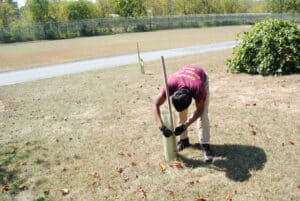
Image source: Alliance for the Chesapeake Bay
Technical Skills Developed in the Greenhouse Environment
The curriculum is highly technical, moving beyond simple gardening into professional horticulture. Students learn the science of stratification (simulating winter conditions to break seed dormancy) and scarification (weakening the seed coat to encourage germination). They also manage automated watering systems and learn vegetative growing techniques, such as creating cuttings of riparian species like Redbuds and Washington Hawthorns.
Conceptual Learning and Watershed Stewardship
Beyond the physical labor, the curriculum covers complex environmental concepts. Students study watershed impairment, the impact of agricultural land use on water quality, and the difference between native and non-native species. Practical applications include tree planting, sheltering, and density flagging, which are essential skills for the growing "Green Collar" job sector in the Chesapeake Bay region.
Social-Emotional Learning and Behavioral Management Frameworks
Education at LYDC extends beyond the classroom into the living units through a structured social-emotional curriculum. The facility utilizes the Performance-based Standards (PbS) framework, a national model designed to monitor and improve the quality of life and services in juvenile facilities.
In 2025, LYDC was recognized as a finalist for the Barbara Allen-Hagen Award for its commitment to improving facility climate. The "curriculum" here involves teaching youth to recognize emotional triggers and utilize "self-requested time-outs" to de-escalate potential conflicts. An incentive-based system allows youth to select their own rewards, teaching them the value of goal-setting and positive reinforcement.
Understanding the 6-Month Staff Training Curriculum
It is important for job seekers to distinguish the student curriculum from the staff professional development track . New employees typically enter as Youth Development Aides and must complete a rigorous 6-month training curriculum to advance.
Focus on facility security protocols and the "Danger Zone" coaching model to prevent injuries during physical escalations.
Instruction on adolescent psychology, trauma-informed care, and the PbS framework.
Final evaluations lead to a promotion to Juvenile Justice Specialist , accompanied by a mandatory salary increase as noted in official PA government job descriptions .
How Credits Transfer and Diploma Pathways Work for Students
A primary concern for parents and caseworkers is whether the time spent at LYDC will count toward a student's graduation. Because the CAIU manages the school, the credits earned are fully recognized by Pennsylvania public schools.
Earning a Standard High School Diploma
If a student completes their required Chapter 4 credits while at LYDC, they can earn a standard high school diploma. In many cases, the CAIU works with the student's home school district to issue the diploma from their local high school, which helps reduce the stigma associated with adjudication during the job application process.
The GED Alternative
For older students who may be significantly behind in credits, the facility offers a GED track. This curriculum focuses intensely on the four core GED subjects: Mathematical Reasoning, Reasoning Through Language Arts, Social Studies, and Science. The facility serves as an official testing site, ensuring students can complete the process before their release date.
- Confirm the student's Individual Learning Plan (ILP) with the CAIU principal.
- Ensure all special education records (IEPs) are transferred to the CAIU within the first 72 hours.
- Request a formal transcript review 30 days prior to the scheduled release date.
- Coordinate with the home district's guidance counselor to ensure the "Transition Plan" aligns with local graduation requirements.
Frequently Asked Questions
LYDC typically serves males between the ages of 12 and 20. However, under federal and state special education laws, educational services provided by the CAIU can extend to age 21 for students with qualifying disabilities. The average stay for a student in the program is approximately 10.5 months, though this varies based on court orders and educational progress.
Yes. Because the educational program is operated by the Capital Area Intermediate Unit (CAIU) and follows the Pennsylvania Department of Education (PDE) standards, the credits are legally equivalent to those earned at any public high school in the state. The CAIU staff works closely with home districts to ensure all completed coursework is accurately recorded on the student's permanent transcript.
Students have the opportunity to earn several industry-recognized credentials. These include ServSafe certifications for food service, OSHA safety basics for building trades, and college credits through Harrisburg Area Community College (HACC). Additionally, completion of the Seedling Cooperative program provides students with a portfolio of technical skills in environmental science and horticulture.
LYDC is highly equipped for special education. The CAIU provides dedicated special education teachers who review and implement each student's Individualized Education Program (IEP). The curriculum is adapted to provide necessary accommodations and modifications, ensuring that students with learning disabilities have an equitable opportunity to earn their diploma or GED.
The vocational programs are a collaborative effort. Randy Goshorn serves as the Career & Technical Training Specialist, overseeing the trade shops. The academic and higher-education components are managed by the CAIU in partnership with HACC. Specialized programs like the Seedling Cooperative involve external partners like the Alliance for the Chesapeake Bay to provide expert-level technical instruction.
Final Takeaways on LYDC Educational Programs
The curricula at Loysville Youth Development Center are designed to transform a period of adjudication into a season of significant academic and professional growth.
- PDE-Aligned Academics: All core schooling is managed by the CAIU to ensure credits transfer seamlessly to home districts.
- HACC Partnership: Eligible students can jumpstart their higher education by earning community college credits while on-site.
- Green Workforce Pipeline: The Seedling Cooperative teaches high-level technical skills in horticulture and watershed management.
- Pre-Apprenticeship Trades: Vocational tracks in automotive and building trades prepare youth for immediate post-release employment.
- Social-Emotional Focus: The PbS framework integrates behavioral health into the daily learning environment.
- Staff Career Ladder: A distinct 6-month curriculum ensures that employees are highly trained in safety and trauma-informed care.
For parents or caseworkers looking to facilitate a credit transfer, the first step is to contact the CAIU principal assigned to the Loysville school site to initiate a transcript review.